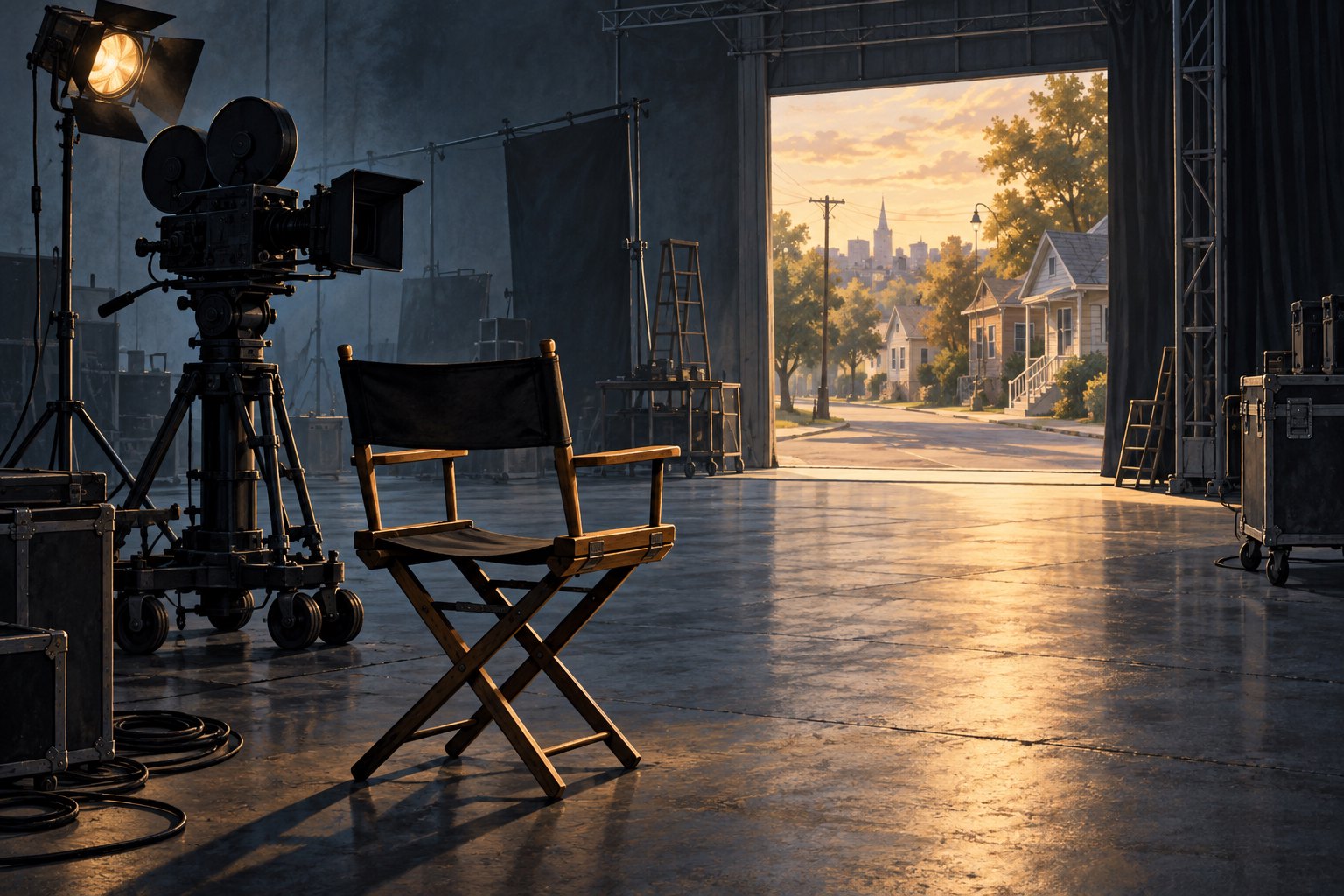
Wayne is reportedly standing in for South Beach on the production set of the Miami Vice reboot, according to the Bergen Record. For readers wondering whether that means the story has moved away from Miami, the distinction matters: a location doubling for another place concerns where images are made, not necessarily where the action takes place. The report describes Wayne playing South Beach, rather than replacing it within the story.
That is a small production detail with a substantial creative question behind it. A convincing screen location needs more than recognizable visual cues. It needs to support the people moving through it: their confidence, vulnerability, relationships, and sense of belonging. For this reboot, the interesting test will be whether the setting becomes part of the drama.
This is spoiler-free production commentary, not a review of the completed reboot. The location news does not provide a basis for evaluating performances, quoting dialogue, describing scenes, or identifying Easter eggs. It does, however, offer a useful starting point for considering what successful screen geography looks like.
What Wayne doubling for South Beach actually establishes
The reported development is specific: Wayne is being used to represent South Beach in connection with the reboot’s production. It does not establish how much of the movie will be filmed there, which scenes use the location, or how prominently those images will appear in the final edit. Even an extensively prepared set can occupy relatively little screen time.
Nor does the location substitution explain itself. Without further verified reporting, attributing it to a particular budget decision, scheduling issue, financial incentive, or creative preference would be speculation. The useful distinction is between the fact of the substitution and possible reasons for it.
For viewers, the immediate implication is simpler. The production is creating an image of one place somewhere else. Its eventual success should be judged by what reaches the screen: whether the environment feels coherent, whether the actors seem to inhabit it, and whether the spaces serve the action. Knowing the address behind the camera cannot settle those questions.
A believable location is built across shots
Think about how little of a setting a single shot may reveal. A doorway, a wall, a stretch of pavement, and a direction of light can establish the immediate surroundings. The next shot supplies another piece. Audiences assemble those pieces into a continuous place, often without consciously noticing the work involved.
That makes continuity more consequential than any isolated decorative flourish. If a character walks out of a bright entrance, the following angle needs to preserve a plausible relationship between the person, the doorway, and the street. Shadows, movement, background activity, and sound all contribute to the impression that the scene occupies one physical world.
These are general filmmaking principles, not descriptions of the Wayne set. Their relevance is that location doubling succeeds through relationships between images. A convincing facade can introduce a place; the subsequent shots must sustain it. A beautiful frame offers little help if the audience becomes confused about where people are standing or what they can see.
Our discussion of the storytelling value of detailed environments in a Cars prequel touches on a related issue: visual specificity becomes more interesting when it supports character. The same standard applies here, even though the materials and filmmaking methods differ.
The character’s view matters more than the postcard
My critical preference is for settings that change meaning depending on who occupies them. An impressive entrance might reassure someone accustomed to privilege while making another person hesitate. A busy public space might offer anonymity to one character and uncomfortable exposure to another. The physical location stays the same; the dramatic experience changes.
Those examples are hypothetical, not proposed scenes from the reboot. They illustrate how a setting can participate in characterization without requiring explanatory dialogue. Where someone pauses, whom they watch, and which route they choose can reveal their relationship to a place.

This is the most productive lens through which to consider Wayne’s reported transformation. The eventual South Beach setting will need to accommodate more than attractive views. It should allow bodies, glances, and movement to carry meaning. A doorway can become a point of hesitation. The distance between two people can express a disagreement before either speaks.
The camera helps determine whose experience we share. Following someone closely can restrict our awareness to what they notice. A wider view can expose something they have missed. Neither choice depends on filming at the story’s literal address, but both depend on understanding the scene’s emotional and physical logic.
What to watch for when footage becomes available
The location report invites curiosity, but it does not support a verdict on the reboot’s visual achievement. When footage is available to assess, three questions will be more useful than simply asking whether the backdrop looks expensive.
- Can we understand the space? Entrances, exits, distances, and sightlines should make the action readable. Deliberate disorientation can serve a scene, but accidental confusion weakens it.
- Does the environment influence behavior? A meaningful setting affects how characters move and interact. If everything could happen identically against any background, the location may be doing little dramatic work.
- Do the details form a consistent world? Light, sound, surfaces, and background movement should support the same impression of place rather than compete for attention.
These questions also guard against overvaluing a striking promotional image. A still can demonstrate composition or suggest atmosphere. It cannot show whether an exchange develops convincingly, whether an action sequence preserves spatial clarity, or whether the setting accumulates meaning over time.
That distinction resembles the issue explored in our commentary on turning Battlefield’s spectacle into character-driven storytelling. Scale and recognizable imagery can attract attention; dramatic choices determine what holds it.
The deeper test: making a borrowed place feel inhabited
There is an appealing paradox in Wayne playing South Beach. An openly artificial process can produce an emotionally credible experience. Viewers do not need every surrounding building to belong to the story’s city. They need the selected details to fit together, and they need the people on screen to behave as though their world extends beyond the frame.
To me, that is where production design becomes interpretation. What a film includes tells us what matters to its characters. What it leaves outside the frame can suggest opportunity, danger, exclusion, or simply ordinary life continuing elsewhere. Place becomes expressive through those choices.
The reported Wayne location is therefore an intriguing piece of the reboot’s construction, rather than evidence of its eventual quality. The most satisfying outcome would be a South Beach that feels inhabited enough for viewers to stop inspecting the illusion and start reading the people within it. That is the point at which a filming location becomes a dramatic place.
Original content by this site's editorial team. Published: October 6, 2026 at 04:47:56 PDT (Los Angeles time)