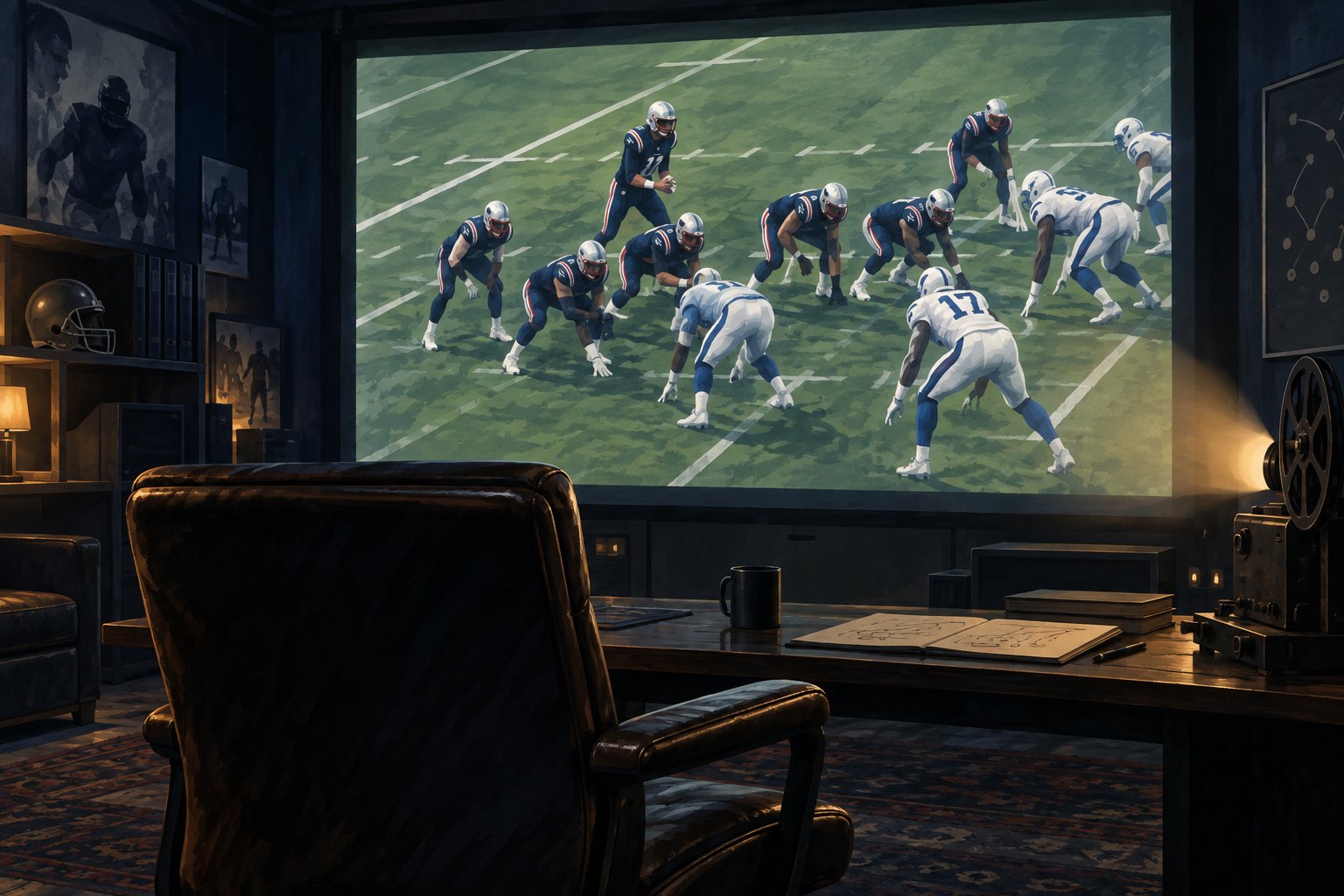
Drake Maye’s performance and New England’s defensive resistance against Josh Allen are the two central threads of the Patriots’ Week 4 victory over Buffalo. The team’s After Further Review coverage brings those threads together through game-film analysis. The useful question is how to divide the credit: what belongs to the quarterback, what belongs to the players around him, and what the defense contributed to the outcome.
Here, film means football footage. This is a viewing guide and commentary on the matchup’s central analytical questions, rather than a movie review or an independently charted account of every snap. The Patriots’ coverage establishes the victory and its focus on Maye and the defense; specific tactical conclusions require evidence from individual plays.
Start With Maye’s Choices Before Judging the Throw
A quarterback’s most visible action is releasing the ball, but the decision that matters may happen earlier. When reviewing Maye, begin with the situation he faces: where defenders align, how the receivers are spaced, and what changes after the snap. Then watch when he commits to a target. That sequence helps distinguish a well-timed decision from a completion rescued by someone else.
Imagine two throws reaching the same receiver for the same gain. On one, the ball arrives as the receiver turns into open space. On the other, it arrives late enough to invite contact. The statistical result may look identical, while the execution differs substantially. This is a general example of what to examine, not a description of a particular Maye completion against Buffalo.
The same care applies to incompletions. A pass can fail because of placement, pressure, a contested catch, or a misunderstanding that the camera cannot explain. Assigning all responsibility to the passer makes the analysis tidy but potentially misleading. For Maye, the strongest assessment would identify both the available opportunity and how effectively he used it.
Watch the Feet Alongside the Eyes
A useful second viewing concentrates on Maye’s lower body. Does he have room to establish his base? Does movement preserve a throwing opportunity or make the next action harder? Does the ball come out before pressure closes the available space? These questions connect mechanics to the play’s circumstances rather than treating every awkward-looking delivery as an error.
Even then, restraint matters. A head turn does not reveal a quarterback’s entire thought process. Without the play call, identifying his intended progression can remain an inference. Good film commentary makes that uncertainty visible instead of presenting access to a player’s mind as expertise.
Keep the Supporting Cast in the Frame
Maye’s review also needs to account for the people making his choices possible. Protection determines how much time he has. Route spacing influences where defenders can help. A receiver’s adjustment can turn an imperfect pass into a successful play. None of those contributions erases the quarterback’s work; they explain it.
This is where watching football resembles watching an ensemble scene. Attention naturally follows the central figure, while essential actions happen elsewhere. Our discussion of the storytelling challenge facing a Battlefield adaptation considers a related issue: making collective action understandable through individual responsibility. On game footage, that responsibility has to be established through visible assignments and movement.
For the Buffalo matchup, resist treating an impressive gain as a self-contained statement about Maye. Rewind to the snap and follow one blocker or receiver instead. A second perspective may reveal why the opportunity existed. It may also show that the quarterback succeeded despite a problem elsewhere. Both possibilities deserve room in the evaluation.
What Does It Mean to Outlast Josh Allen?
The Patriots’ defensive storyline centers on enduring the challenge posed by Allen. That framing should not automatically become a claim of comprehensive defensive control. Winning a game and consistently winning defensive snaps are different measurements. To understand the performance, the review needs to explain which situations New England handled effectively and where Buffalo still found opportunities.
Start with the relationship between coverage and the pass rush. A defender reaching the quarterback may benefit from receivers being covered long enough to delay the throw. Conversely, a hurried release may spare the secondary from having to defend a route for another moment. The decisive action can belong to a player who never touches the ball.
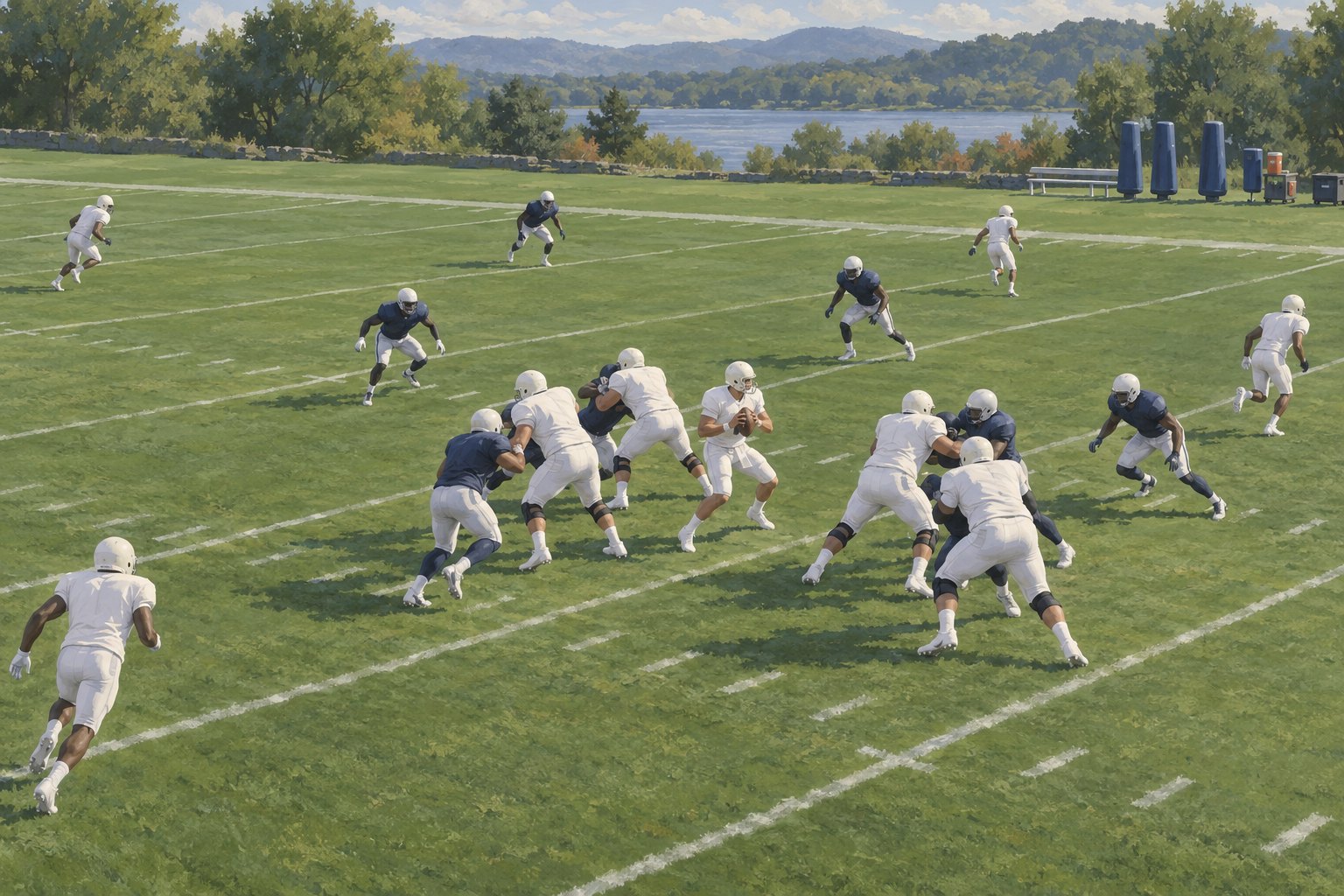
When studying the defense against Allen, watch the space around the pocket as well as the nearest rusher. Does pressure close an escape route or create one? When a defender moves toward the quarterback, what happens behind him? These are questions for the footage, not assertions that New England used a particular pressure package or coverage throughout the game.
My preferred standard for defensive analysis is whether it explains the offense’s available choices. Simply praising effort leaves too much unresolved. Showing how defenders reduced those choices makes their contribution understandable, including on plays that never become highlights.
A Practical Checklist for the Quick-Hit Notes
Short observations can be valuable when they identify something precise. They become less useful when a single snap is asked to prove an entire theory about a player. For this Maye-and-Allen matchup, each quick-hit note should answer a manageable question.
- What was the situation? Down, distance, field position, and game state affect what counts as a useful result.
- What is actually visible? Separate observed movement from an inferred assignment or intention.
- Who created the opportunity? Follow protection, route spacing, coverage, and pressure before assigning individual credit.
- Does the camera show enough? A tight shot may hide the receiver or defender needed to explain a decision.
- Does the pattern repeat? One example can illustrate a possibility; repeated examples support a broader conclusion.
These checks also prevent selective editing from doing the argumentative work. A sequence of successful throws can demonstrate ability without establishing consistency. A sequence of defensive stops can show effective responses without explaining what happened on other possessions. The missing snaps matter.
The Win Is the Ending, Not the Whole Explanation
Knowing New England won creates a powerful temptation to interpret every earlier moment as evidence that victory was coming. Successful risks begin to look inevitable. Mistakes become incidental. Film study is most useful when it interrupts that habit and evaluates decisions using the options available at the time.
That distinction between outcome and meaning also informs our analysis of what makes a racing story compelling in Cars. Fiction can deliberately arrange a finish to reveal character. Football analysis has to work backward more cautiously: the finish is settled, but the explanation still needs evidence.
The strongest reading of the Patriots’ Week 4 victory will give Maye, his supporting players, and the defense separate consideration before bringing their contributions together. A win establishes which team prevailed. Careful viewing asks what each unit can repeat, what depended on circumstance, and which uncertainties remain. That is where an enjoyable result becomes a useful football lesson.
Original content by this site's editorial team. Published: October 6, 2026 at 05:26:38 PDT (Los Angeles time)