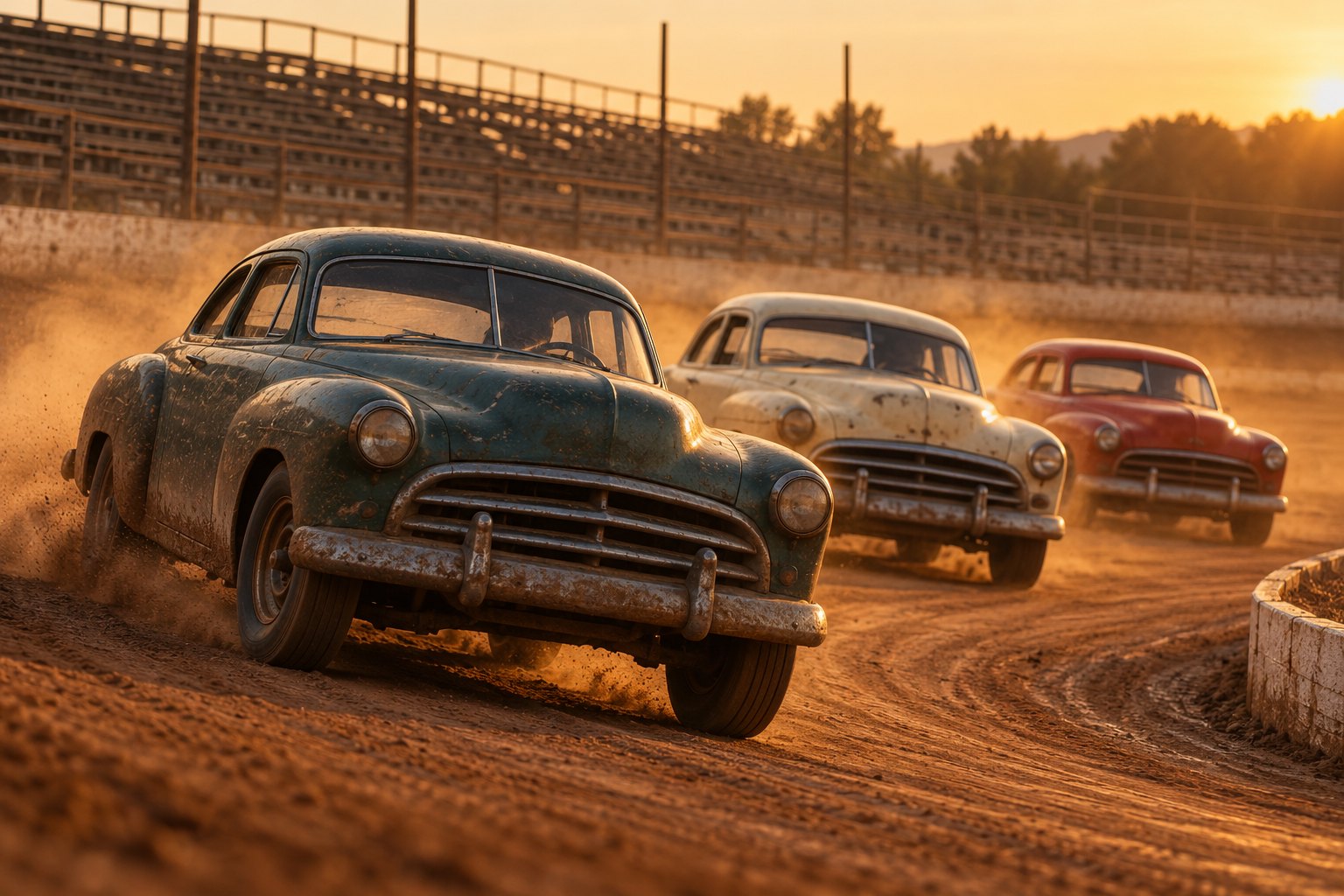
An animator is making a Cars prequel with detailed 3D models inspired by NASCAR icons, according to The Drive. The appeal is immediate: a world built around talking race cars offers unusual opportunities to turn automotive history into character design. A familiar silhouette can suggest an entire racing tradition before anyone speaks.
But the more interesting promise lies beneath the bodywork. The original Cars succeeds when it asks what competitors owe one another, especially after the cheering stops. A prequel drawing on racing legends has an opportunity to explore how those obligations develop—and how ambition makes them difficult to honor.
This is a critical look at the reported project’s premise through the original film, not a review of a completed prequel. Spoilers for Cars follow.
What the prequel’s visual premise actually promises
The reported combination of a prequel and recognizable NASCAR-inspired models establishes a compelling creative direction. It does not, by itself, establish the quality of a screenplay, the effectiveness of a performance, or the emotional force of a finished race sequence. Nor should readers interpret the word prequel alone as confirmation of an official Pixar release.
For viewers, the useful distinction is between recognizing something and understanding someone. An accurate model can reward a racing enthusiast immediately. Drama takes longer: it needs a desire, an obstacle, and a decision that reveals what a character values.
That is also the challenge explored in our commentary on how origin stories turn recognizable figures into dramatic characters. Knowing the destination can create anticipation, but the journey still needs choices whose consequences feel real.
Lightning McQueen mistakes performance for identity
The original Cars gives its protagonist a wonderfully efficient self-description: “I am speed.” Lightning McQueen does not simply believe he drives well. He has collapsed his identity into one measurable advantage. If he is fastest, he matters; if he falls behind, everything he imagines about his future becomes vulnerable.
That makes his arrogance more useful than a collection of jokes about celebrity. He treats assistance as an inconvenience because acknowledging dependence would puncture his preferred story about himself. From his perspective, the ideal career is a straight line connecting talent to recognition.
Radiator Springs interrupts that line. Its residents have priorities that do not revolve around his ranking, and their lives cannot be understood at racing speed. The town forces him to spend time with people whose value is invisible to the competitive system he trusts.
My strongest reservation about the film is that its leisurely middle occasionally repeats this lesson after the audience has understood it. Yet that same slowness has a purpose. We experience some of Lightning’s impatience before the place becomes meaningful to him. A prequel could learn from both sides of that choice: give relationships room to develop, while ensuring that each encounter changes something.
Doc Hudson gives nostalgia an uncomfortable edge
Doc Hudson is the original film’s most persuasive argument against treating racing history as a trophy display. He has the authority Lightning wants, but little interest in performing the grateful role of an admired former champion.
“They quit on me,” Doc says. The accusation changes the meaning of his withdrawal. What looks like stubbornness from the outside contains an experience of being discarded. His bitterness is tied to the gap between what he still believes he can offer and what the racing world is prepared to recognize.
From Doc’s perspective, Lightning brings the values of that world into a place where he has built another life. The young racer’s confidence is therefore more than irritating. It recalls a system that celebrates ability while reserving the right to decide when ability no longer counts.
This is why Doc matters to any discussion of a Cars prequel, regardless of which characters a particular project follows. The original film establishes that an impressive racing past can leave emotional damage. Earlier victories become dramatically interesting when they help explain a later fear, loyalty, or refusal.
A faithful model still needs a performance
Detailed automotive design can carry some of that history. A low stance might suggest confidence; battered surfaces might imply experience. But those impressions remain possibilities until movement and staging give them meaning.
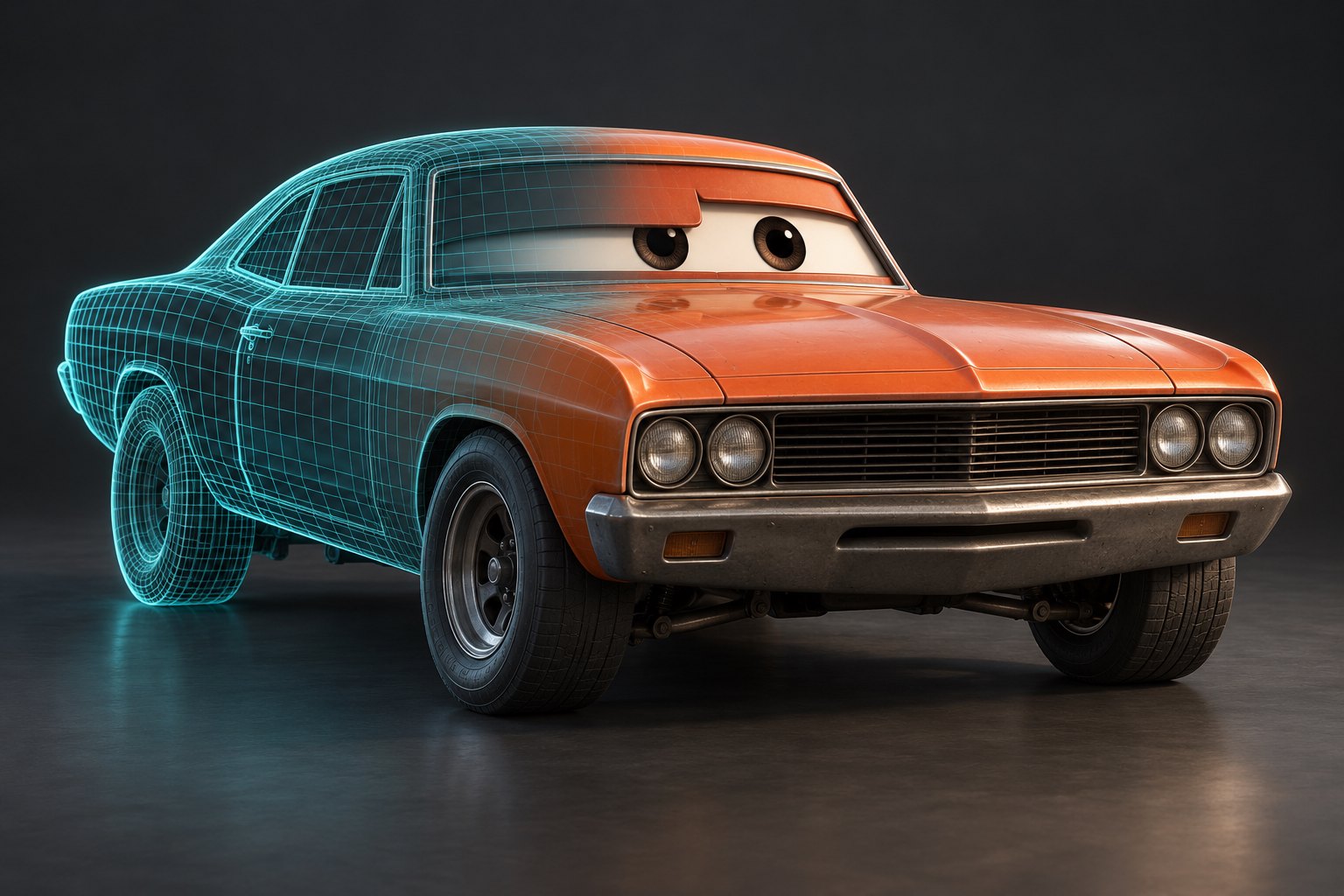
Consider two imagined ways of animating the same vehicle. In one, it rolls forward before another character finishes speaking. In the other, it waits, then turns slightly away. The geometry has not changed, but the audience may read impatience in the first performance and uncertainty in the second. These are illustrative possibilities, not descriptions of footage from the reported project.
That distinction matters when evaluating model showcases. Surface detail demonstrates one kind of craft. Acting, editing, and the rhythm of an exchange demonstrate others. As our discussion of whether impressive individual elements add up to a cohesive film argues, admiration for a component is only the beginning of criticism.
The King makes the finish line mean something different
The original film’s ending supplies the clearest standard for a racing prequel. After Chick Hicks causes The King to crash, Lightning gives up his opportunity to win and returns to help the veteran finish. The sequence connects a physical action to an internal change without requiring a long explanation.
Seen through Lightning’s eyes, the wreck recalls what happened to Doc. Seen through The King’s position, it threatens to reduce an entire career to one humiliating final image. Lightning recognizes a person where he once would have seen an obstacle.
Chick’s victory completes the contrast. He gets the result he wants, but the scene directs our attention elsewhere. The scoreboard can record finishing order; it cannot adequately describe what has happened between the competitors.
For a prequel about racing icons, that is fertile territory. The compelling question is how a racer learns to carry success: whom they listen to, whose labor they acknowledge, and what they are willing to sacrifice when recognition is available. Those questions can sustain suspense even when an audience already knows who becomes famous.
The deeper appeal: giving the past its people back
The most moving idea in Cars is that being passed by does not make someone worthless. Doc and Radiator Springs express different versions of that experience. Lightning matures when he stops assuming that visibility and value are the same thing.
NASCAR-inspired models could give a prequel an inviting visual vocabulary for that theme. My hope is that their accuracy would serve encounters between characters: admiration complicated by jealousy, expertise tested by pride, friendship strained by competition. Beautifully reconstructed machines become memorable when we understand what their occupants—or, in this universe, the machines themselves—stand to lose.
A racing reference with dramatic weight
One established connection worth appreciating in the original film is Richard Petty voicing Strip “The King” Weathers. The casting brings a real racing legend into a story concerned with sporting legacy. That is a reference from the released film, not confirmation of participation in the reported prequel.
Its effectiveness points toward the larger opportunity. Recognition invites knowledgeable viewers inside; character gives everyone a reason to stay. A Cars prequel can honor the sport most fully by making its legends feel capable of doubt, error, generosity, and change.
Original content by this site's editorial team. Published: October 6, 2026 at 02:23:13 PDT (Los Angeles time)