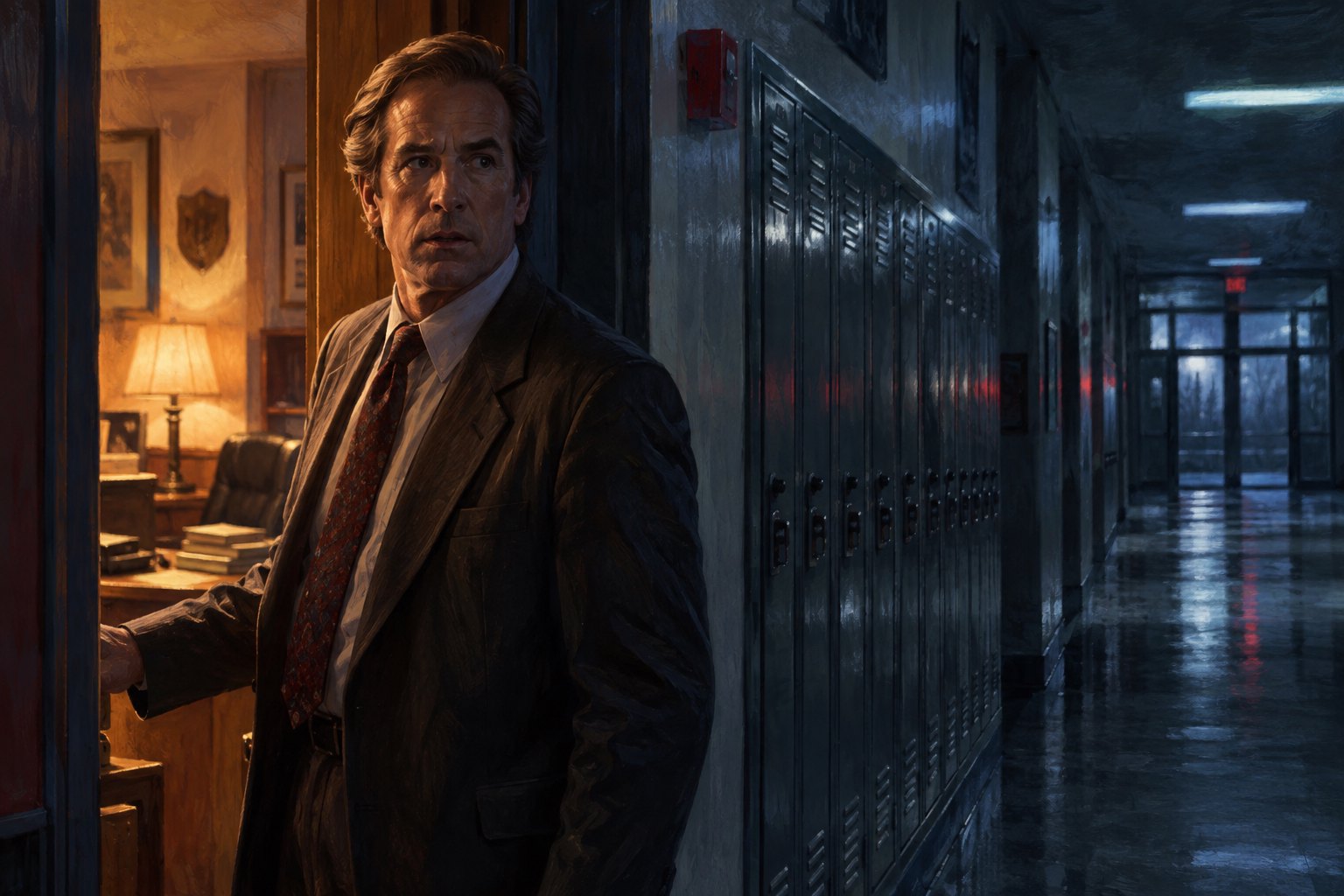
Resident Evil turns an ordinary question into a sustained threat: how do you get out of here? In Zach Cregger’s 2026 film, medical courier Bryan, played by Austin Abrams, encounters a world in which recognizing an exit and reaching it are very different accomplishments. Its most compelling idea is that survival depends on understanding your surroundings while those surroundings keep making your knowledge obsolete.
My reading is that this gives the film a strong organizing principle, alongside a potential weakness. Physical obstacles make fear concrete, but repeated problem solving can also make a nightmare feel procedural. Whether the balance works for you may depend on how much suspense you find in watching someone struggle with the next immediate task.
Spoiler note: This review offers critical analysis based on published scene accounts. It discusses the setup, selected encounters, and game references without detailing the ending.
Bryan’s first mistake is an understandable one
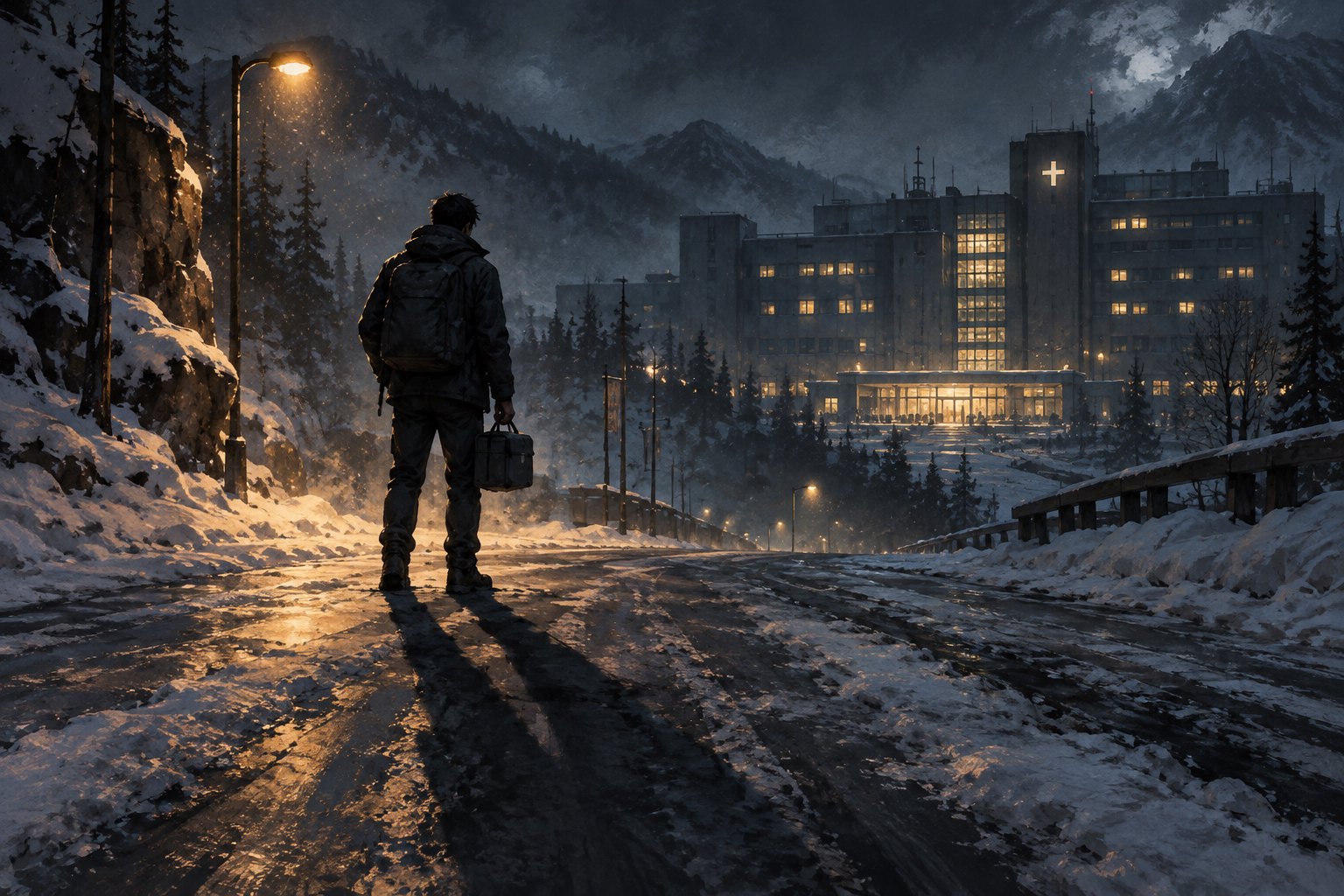
Bryan’s delivery takes him toward Raccoon City through dangerous winter conditions. After striking an infected woman on the road, he initially treats her as someone who needs help. TheWrap’s account establishes the crucial gap: Bryan does not yet understand that he has encountered a zombie. [TheWrap’s review](https://www.thewrap.com/creative-content/movies/resident-evil-2026-review-zach-cregger/)
That misunderstanding deserves more attention than a simple accusation that the protagonist is being foolish. From Bryan’s perspective, stopping to assist someone he believes he has injured is an intelligible response. The audience’s familiarity with the franchise gives it information he lacks. We can anticipate danger without having earned that knowledge ourselves.
This creates an uncomfortable kind of suspense. We want him to behave decently, yet we also want him to recognize the emergency quickly enough to survive it. The encounter makes ordinary moral judgment unreliable without making compassion itself contemptible. Bryan’s problem is that he must act before he knows what kind of situation he is in.
It also establishes a useful standard for the rest of the film: a frightening decision should make sense from inside the character’s limited understanding, even when viewers can see its consequences approaching.
A locked route changes the meaning of movement
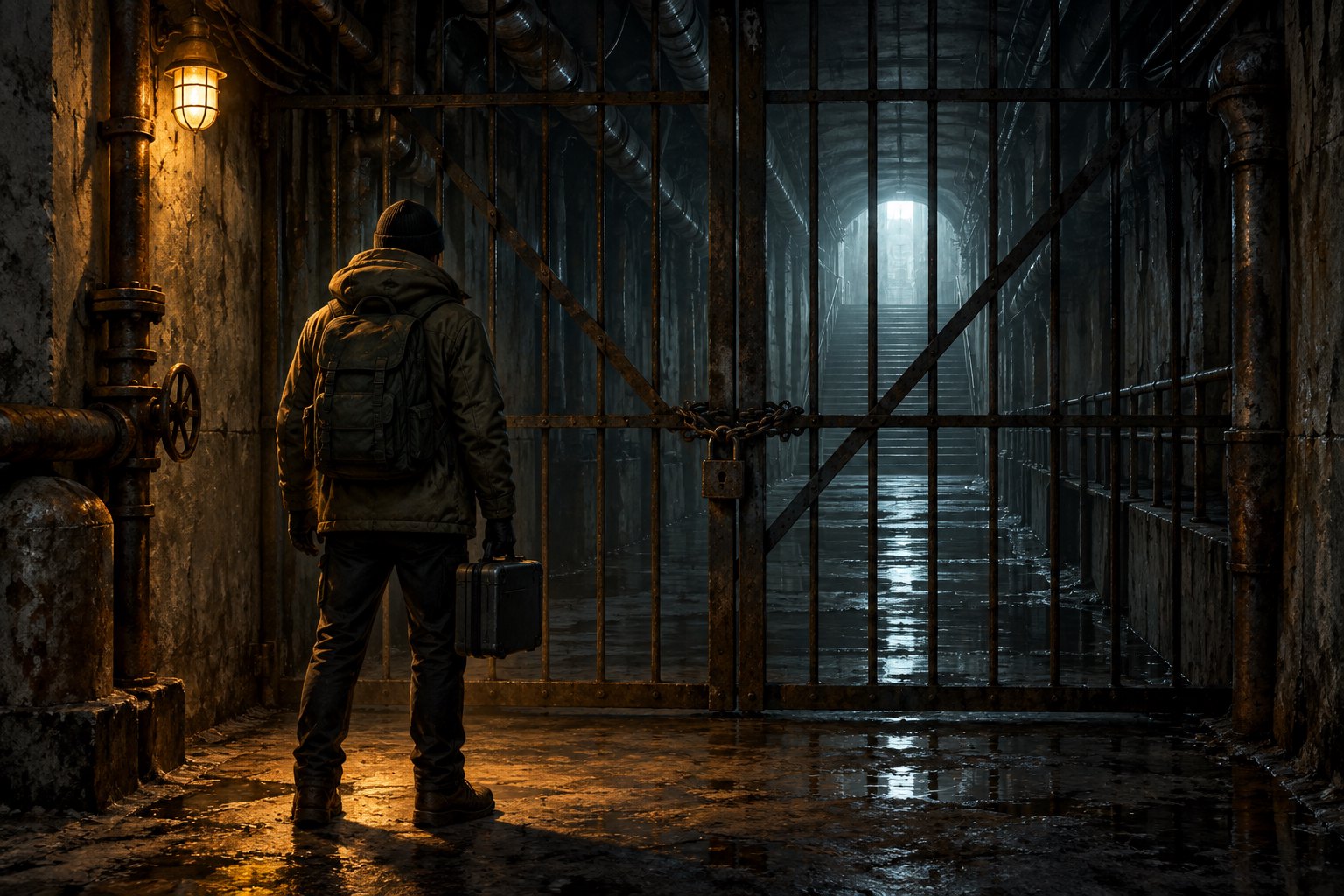
Published descriptions identify padlocked gates, narrow ledges, limited ammunition, and an over-the-shoulder camera position among the film’s recurring devices. These give Bryan’s progress the stop-and-start rhythm of negotiating an unfamiliar environment. [GamesRadar+’s review](https://www.gamesradar.com/entertainment/horror-movies/resident-evil-movie-review/)
Viewed through his perspective, a lock is more than an obstacle placed between action sequences. It confiscates an option. A route that appeared available becomes useless, forcing him to spend time and attention he cannot comfortably spare. The danger comes partly from the interruption: he needs to move, but movement now requires thought.
This is where the courier premise becomes spatially meaningful. Bryan has a destination, but knowing where he is supposed to arrive does not tell him how to cross the next stretch of ground. A familiar distinction between destination and route becomes the machinery of horror.
The over-the-shoulder approach can intensify that distinction. Keeping us near a character’s body limits the reassuring overview that a wider perspective might provide. We may understand the immediate task while remaining uncertain about what lies beyond it. The film invites viewers to assess space alongside Bryan rather than simply wait for another creature to appear.
Owning a weapon does not mean knowing how to use it
“I only use guns in video games,” Bryan says in dialogue reproduced by Time Out. The line neatly identifies the distance between recognizing an object and possessing a usable skill. A firearm can enter the story without giving its holder control of the situation. [Time Out’s review](https://www.timeout.com/movies/resident-evil-review-2026)
The joke also complicates the viewer’s position. Familiarity with survival horror encourages us to recognize what Bryan ought to collect or attempt. But identifying a useful object from a theater seat is a frictionless activity. Handling it under pressure involves uncertainty, coordination, and the possibility of failure.
Bryan’s follow-up—“It’s confusing in real life”—is funny because it punctures the fantasy that familiarity automatically transfers into competence. Read as a statement about the film’s perspective, it is unusually direct. The character lives inside the difficulty that an experienced audience might otherwise dismiss.
Our earlier examination of Austin Abrams and the physical expression of fear considers the performance side of that vulnerability. Here, its structural value matters: uncertainty keeps an apparent advantage from ending the suspense.
When problem solving starts to feel like repetition
The same approach creates a legitimate reservation. Repeated barriers can deepen a character’s predicament, but they can also reveal the machinery arranging it. If each new space mainly supplies another object to acquire or obstruction to overcome, the audience may begin anticipating the pattern instead of fearing the outcome.
A useful distinction is whether an obstacle changes Bryan’s understanding. A complication that forces him to revise an assumption develops the experience. One that merely delays him risks extending it without adding much. Suspense needs variation in what a character must notice, sacrifice, or attempt.
This is also where character perspective places demands on the supporting cast. People encountered during an escape can provide information or assistance, but they should still suggest lives beyond their immediate usefulness. Relentless proximity to one protagonist can make the world intensely personal while leaving its other inhabitants comparatively indistinct.
For viewers who enjoy practical, moment-to-moment suspense, that concentration is likely to be an asset. Those seeking an ensemble drama or a densely developed conspiracy may find the same focus restrictive. The attraction lies in navigating danger, with the broader world understood through the fragments Bryan encounters.
Easter eggs that suggest a moment of relief
Wall of Sound identifies a door-opening homage and First Aid Spray among the film’s game references; TheWrap also notes a typewriter and a silver gun case. These are specific, reported details, rather than grounds for inventing hidden connections or unconfirmed cameos. [Wall of Sound’s review](https://www.wallofsoundau.com/reviews/resident-evil-film-review)
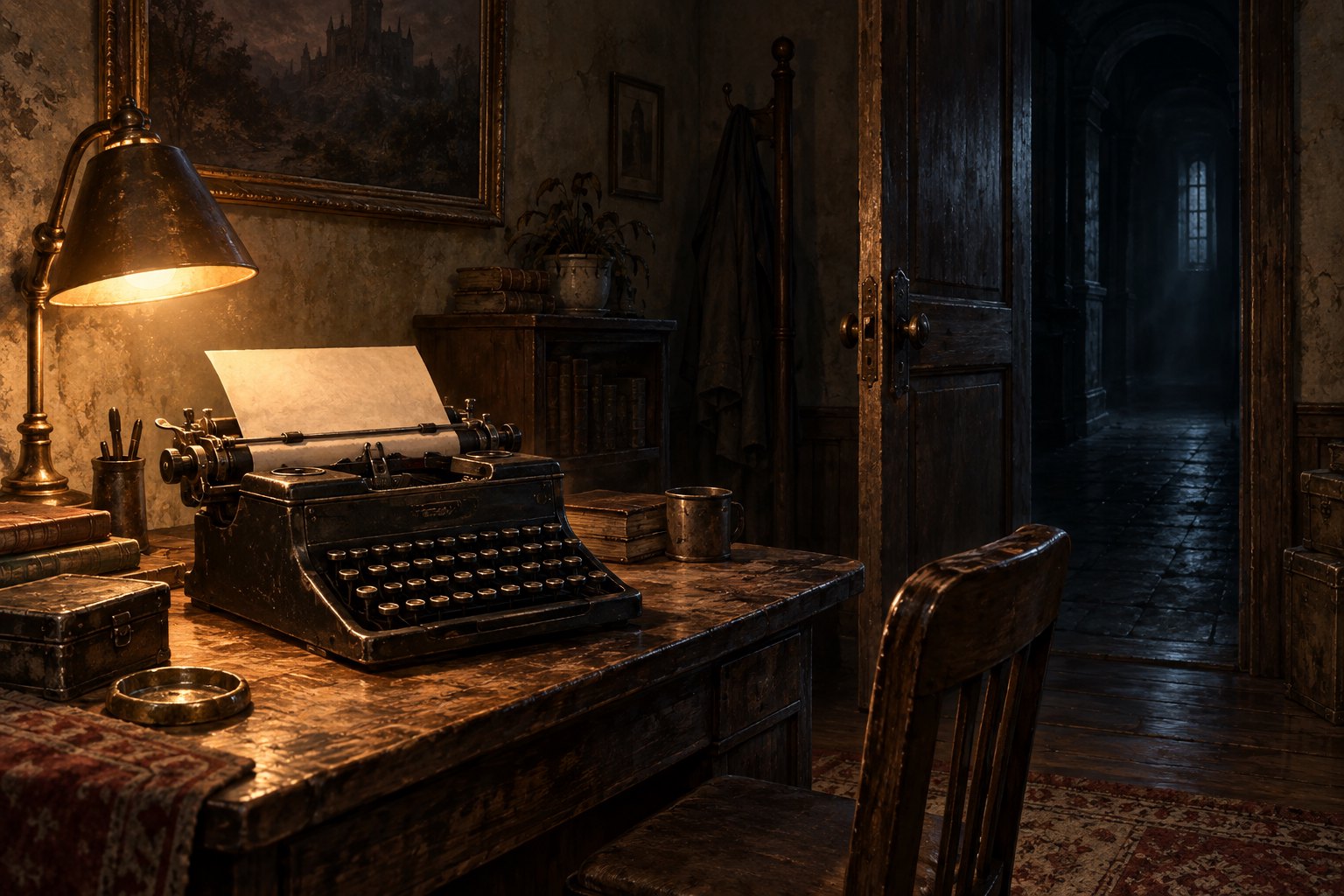
The most interesting interpretive possibility is that familiar objects can change how viewers assess a space. An experienced fan may greet an object with recognition while Bryan remains concerned with its immediate usefulness. The audience and character briefly occupy the same room with different emotional expectations.
That makes these references relevant to more than franchise recognition. They can encourage the desire for a pause: somewhere to gather yourself, examine what you have, and decide what comes next. Our discussion of Resident Evil’s horror beyond continuity accuracy explores the larger adaptation question. Here, the smaller question is whether recognition offers reassurance—and how fragile that reassurance remains.
The deeper fear is losing the ability to trust a place
My strongest interpretation of this Resident Evil is spatial rather than mythological. Bryan needs to distinguish passage from trap, assistance from danger, and possession from actual capability. Each distinction is necessary for survival; none can be made comfortably in advance.
The film’s appeal, on that reading, comes from making progress feel provisional. Getting through one barrier proves only that he has reached the next situation. Survival becomes a sequence of local judgments rather than a state of mastery.
That is a persuasive foundation for horror, even with the risk of repetitive obstacles. A monster threatens the body. An environment that can no longer be read reliably threatens the judgment needed to protect it. Bryan’s predicament brings those fears together: he must keep choosing a direction before he can be certain that any direction is safe.
Original content by this site's editorial team. Published: September 20, 2026 at 03:32:41 PDT (Los Angeles time)