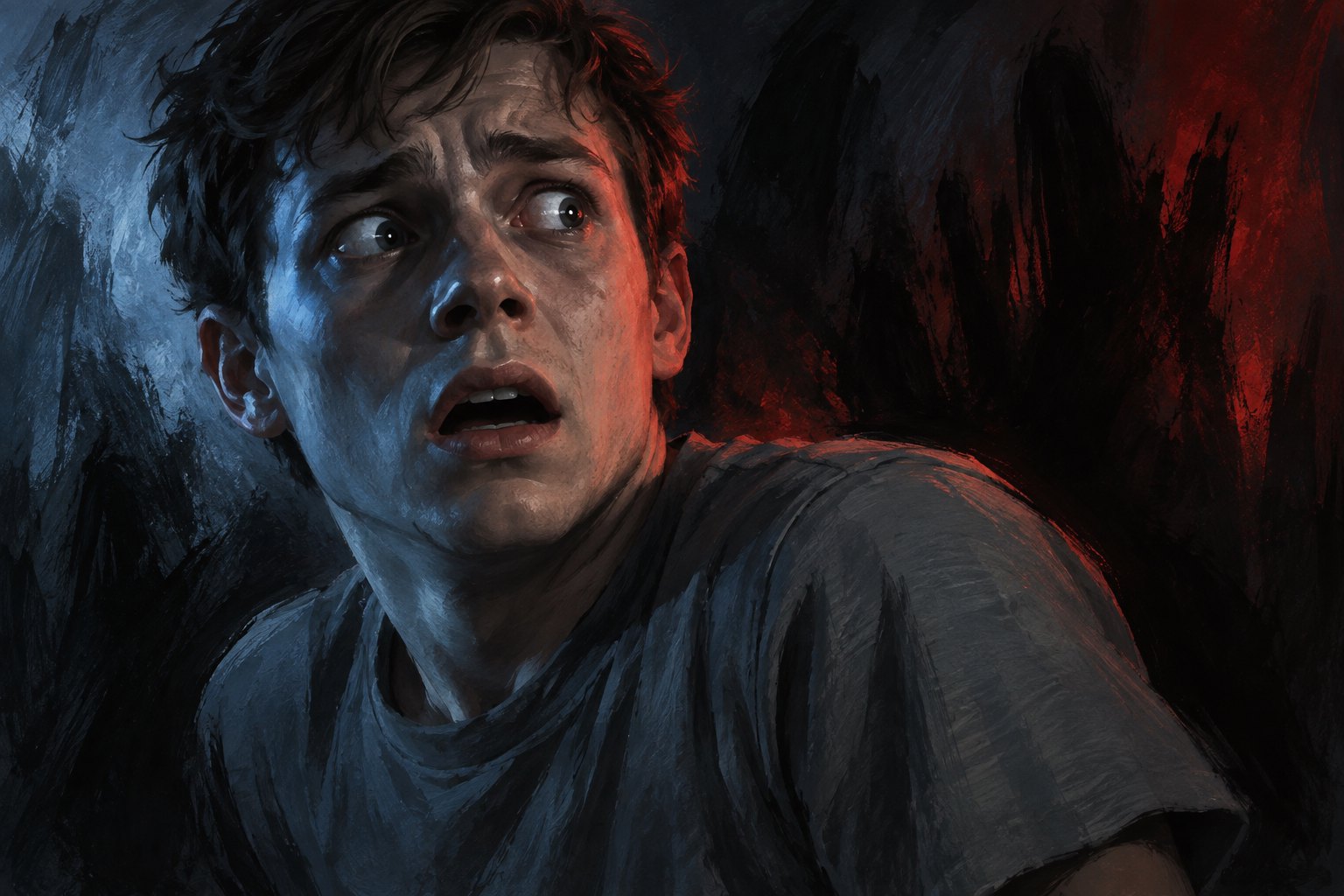
Austin Abrams’ most revealing comment about Resident Evil concerns something action-oriented horror can be reluctant to surrender: looking composed. Variety’s interview headline quotes him as “not trying to look cool” while screaming and describes his transformation as “tragic.” Taken together, those phrases suggest a useful critical angle on his work: fear becomes more affecting when the performer allows it to look embarrassing, and transformation becomes more disturbing when it registers as a personal loss.
The interview also addresses a scene Abrams was not allowed to shoot. That production detail deserves a precise explanation, but the headline alone does not identify the scene or establish why he could not film it. It should not become an invitation to invent a dangerous stunt or a dispute. The clearer starting point is the acting question his remarks raise: what does a horror performance gain when its star stops protecting his image?
Scope and spoiler note: This is an interpretation of Abrams’ reported comments, rather than a firsthand verdict on the complete film. It discusses the broad transformation referenced in the interview headline without describing its mechanics or the ending.
Why an unflattering scream can matter
A scream briefly takes language away from a character. Explanation, negotiation, and the carefully timed comeback all disappear. The body reacts before the person can construct an acceptable version of that reaction. For an actor, allowing that interruption to feel uncontrolled can be more revealing than delivering a polished speech about fear.
Abrams’ comment about coolness is valuable because screen acting always involves an awareness of being watched. A performer can communicate distress while still preserving an attractive silhouette, a measured voice, or an expression that reassures the audience. Those choices have their place. But they also create distance between a person enduring terror and a star presenting terror.
My preference in survival horror is for performances that permit that distance to collapse. An awkward sound or a face contorted beyond dignity can bring a character closer to the viewer’s own imagined response. Most people do not expect to meet catastrophe with perfect posture. Recognition can begin with the uncomfortable thought that we might sound like that, too.
This does not mean every louder scream is a better one. Volume can become monotonous. The useful distinction is whether a reaction appears connected to a particular stimulus and a particular person. Abrams’ stated approach offers a principle for judging the performance, rather than proof that every moment succeeds.
Fear needs variation to remain personal
The challenge of sustained panic is maintaining differences within it. Shock, dread, exhaustion, and disbelief are related experiences, but they should not all produce the same response. A startled cry interrupts a moment; exhausted fear can seem to have no beginning or end. An effective performance helps an audience feel those differences without naming them.
Silence matters here as much as sound. After a forceful reaction, a pause can suggest someone struggling to understand what just happened. A breath taken too quickly can indicate that apparent safety has not reached the nervous system. These are general tools of horror acting, not claims about specific shots in Abrams’ film.
They also explain why conspicuous fear need not make a character less compelling. Courage becomes legible through the relationship between distress and action. If someone is visibly terrified, even a small decision can acquire weight. For a related examination of that relationship, our commentary on Resident Evil and the anxiety of making the next move considers how uncertainty shapes a survivor’s experience.
What the word “tragic” asks of a transformation
Abrams’ description of his transformation introduces a different standard from visual impressiveness. A spectacular change asks viewers to notice what a body becomes. A tragic change asks them to remember the person for whom that body was once familiar.
That distinction changes the emotional center of body horror. The unsettling possibility is not simply that flesh can become strange. It is that someone might lose the ordinary relationship between intention and movement, recognition and appearance, or identity and the way others respond to them.
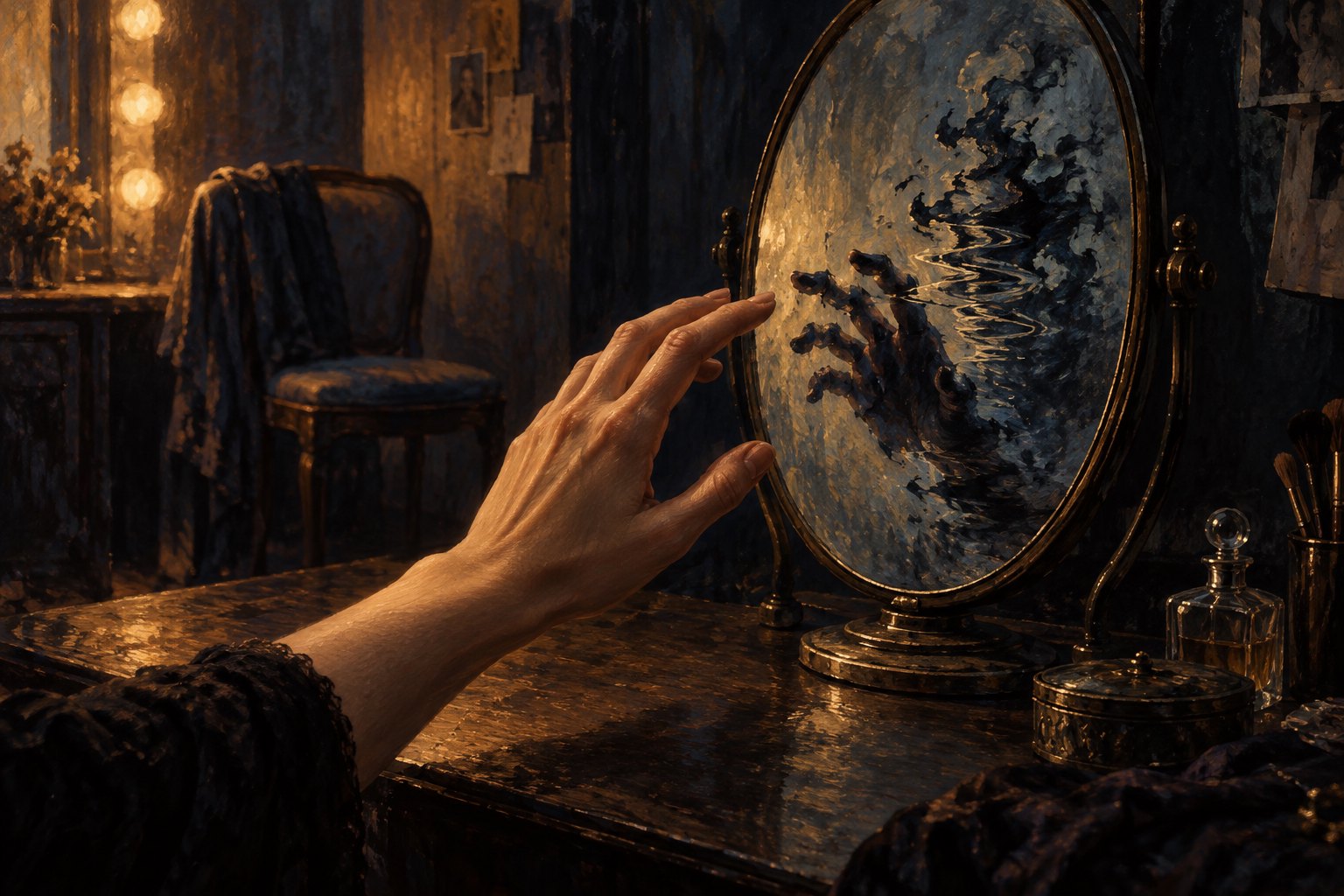
The image above is a thematic illustration, not a depiction of a scene. Its distorted reflection expresses the interpretive question raised by Abrams’ wording: how much of a person can remain emotionally present when their recognizable form becomes uncertain?
Calling a transformation tragic does not, by itself, establish its narrative outcome. It does suggest that loss is central to the actor’s understanding of it. That is an important distinction. An actor’s account can illuminate the emotional intention behind a performance without settling how successfully the finished film communicates it.
For me, the strongest version of this idea would make earlier vulnerability matter afterward. Fear would become part of the audience’s memory of a person, rather than disposable preparation for an effects showcase. This connects with our broader argument about why Resident Evil’s horror depends on more than recognizable lore: familiarity with a fictional world cannot substitute for concern about someone inside it.
The scene he could not shoot is a separate question
The interview’s reference to a scene Abrams could not film naturally invites curiosity. But participation in a particular shot and commitment to a character are different measures. Without the explanation, it would be misleading to attribute his absence to insurance, physical danger, effects requirements, or any other specific cause.
More broadly, screen performance is collaborative. Editing, sound, camera placement, and other performers can all contribute to the impression of one continuous experience. An actor does not have to execute every physical element for a character’s fear to feel convincing. The relevant critical question is whether the assembled moment sustains that character’s presence.
The deeper connection: losing control without losing our attention
The most productive connection between Abrams’ two quoted remarks is the idea of control. A scream can expose the failure to govern one’s outward appearance. A tragic transformation can enlarge that vulnerability into a threat to identity itself. This is an interpretation of his language, not a claim about an unverified sequence of events.
What makes the connection interesting is its potential continuity. The audience first recognizes a person through the unruly evidence of fear; that recognition can then become the source of grief when change threatens the person they recognize. Vulnerability does emotional work that a permanently composed hero cannot always accomplish.
Abrams’ comments therefore offer a useful lens for watching Resident Evil: pay attention to whether fear leaves the character more specific, and whether transformation preserves our concern for him. The promise in those remarks is a performance willing to risk awkwardness so that suffering carries weight. Horror becomes harder to shrug off when the person experiencing it has been allowed to feel human.
Original content by this site's editorial team. Published: September 19, 2026 at 22:40:53 PDT (Los Angeles time)