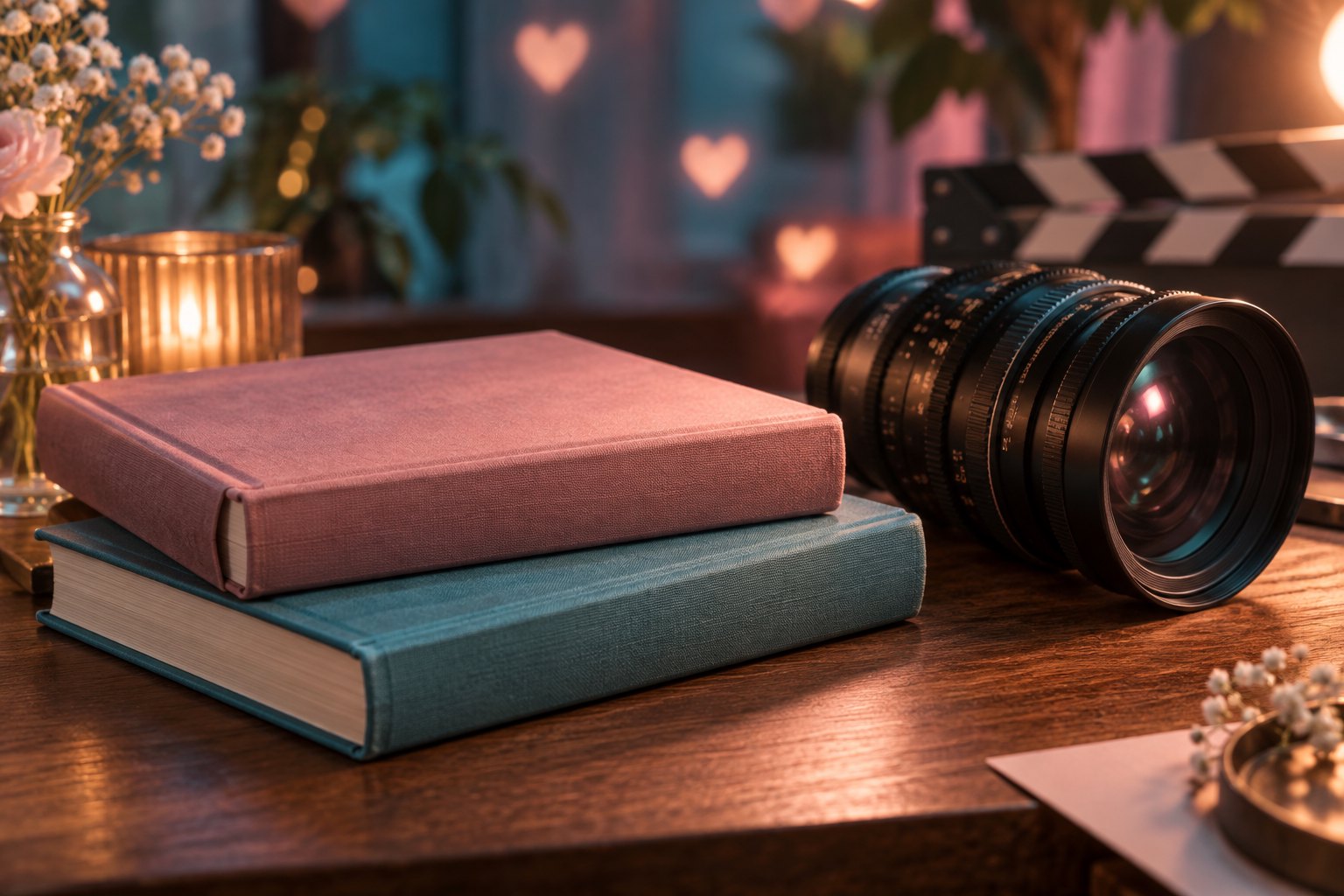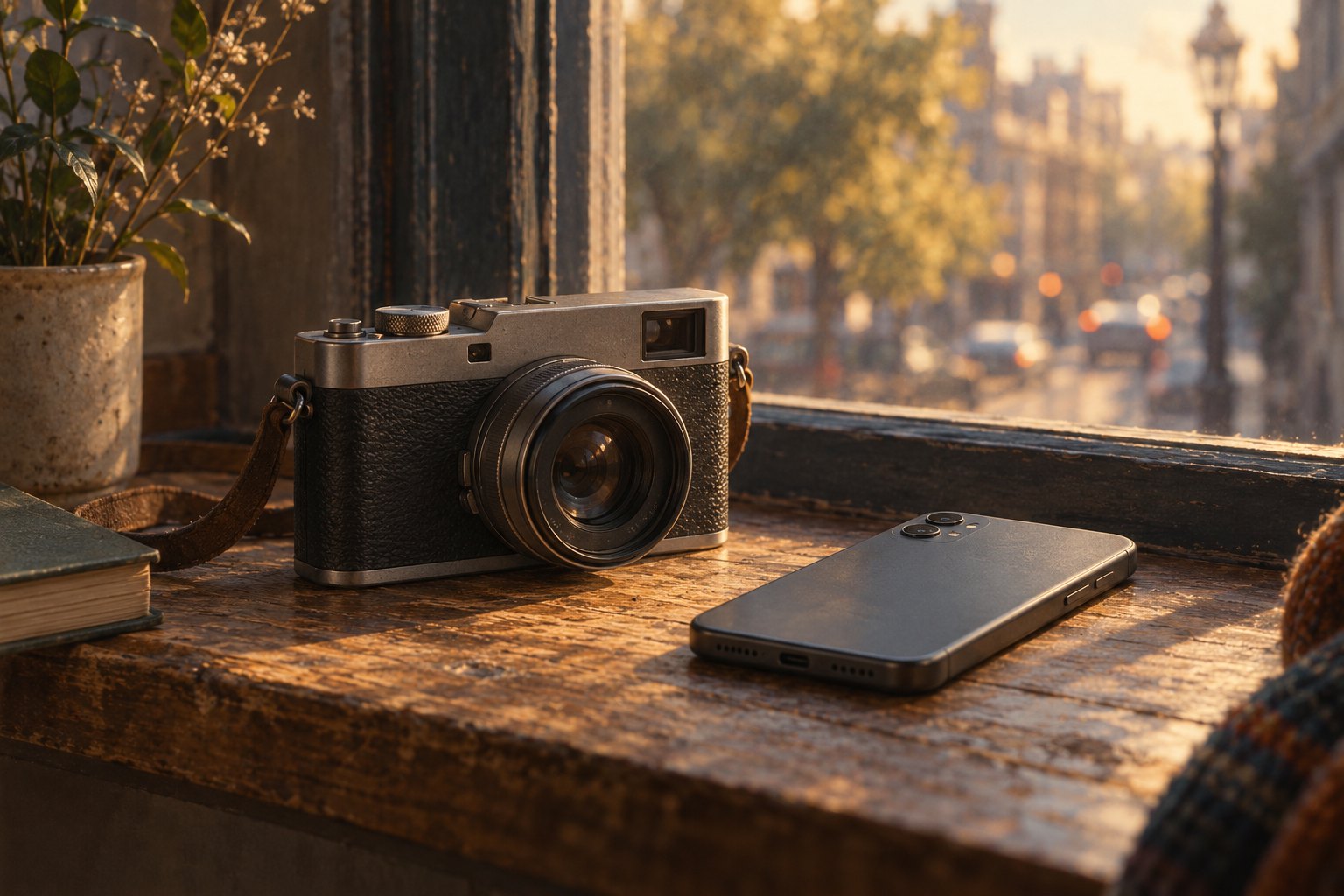
A camera inspired by film photography and aimed at people experiencing digital fatigue offers an appealing proposition: making pictures might feel enjoyable again if the experience asks less of our attention. PetaPixel has highlighted a camera around that premise. The interesting question is whether the appeal comes from the object’s resemblance to older photography or from the possibility of changing what happens before and after taking a picture.
Those are different promises. A nostalgic appearance can make a device desirable. A meaningful change in habit would have to reach beyond appearance, into the urge to check, correct, compare, and share. For movie lovers, that distinction has particular resonance. We spend plenty of time discussing what images mean, but less time considering the conditions under which we actually look at them.
This is commentary on that proposition, not a hands-on camera review. Film-inspired positioning alone does not establish a camera’s recording medium, controls, image quality, or effectiveness at easing digital fatigue. Nor does the subject describe a movie with characters, dialogue, or a plot to assess. Its connection to cinema lies in the practice of looking.
What Does “Film-Inspired” Actually Promise?
Film photography can inspire several distinct things: the appearance of a camera, the rendering of its pictures, or the rhythm of using it. Those qualities should not be treated as interchangeable. A device can resemble an older camera while preserving a thoroughly immediate workflow. A picture can have muted colors or visible grain without requiring its maker to pause for even a second.
The more compelling interpretation, in my view, concerns rhythm. Imagine finishing a photograph and returning your attention to the person or place in front of you. The value would lie in that return, rather than in whether the resulting file resembles an old print. This is a possibility to evaluate, not a performance claim about the camera.
That distinction also matters when we discuss movies. Texture influences how an image feels, but texture alone cannot tell us whether a scene is observant, emotionally precise, or dramatically necessary. A beautiful surface still needs a reason to hold our attention.
The Friction Worth Removing—and the Friction Worth Keeping
The phrase digital fatigue can cover several ordinary frustrations: repeatedly checking a screen, choosing among nearly identical images, or feeling that a private experience needs a public version. Here, it describes those frustrations rather than a medical condition. Different frustrations call for different changes.
If reviewing every photograph interrupts an afternoon, separating capture from review could be useful. If organizing pictures is the exhausting part, an awkward transfer process could add work instead. A camera that feels pleasantly simple in the hand might still leave its owner with a demanding task afterward.
My editorial test would be straightforward: does the constraint protect attention, or merely create inconvenience? An intentional pause may help someone decide what deserves a photograph. An unnecessary obstacle may simply make photography harder. Slowness has value when it creates room for observation; it is not automatically a virtue.
Any serious assessment of this camera would therefore need to follow the whole experience, including retrieving, selecting, and keeping photographs. The satisfying moment of pressing the shutter is only part of the story.
Why This Question Belongs in a Conversation About Movies
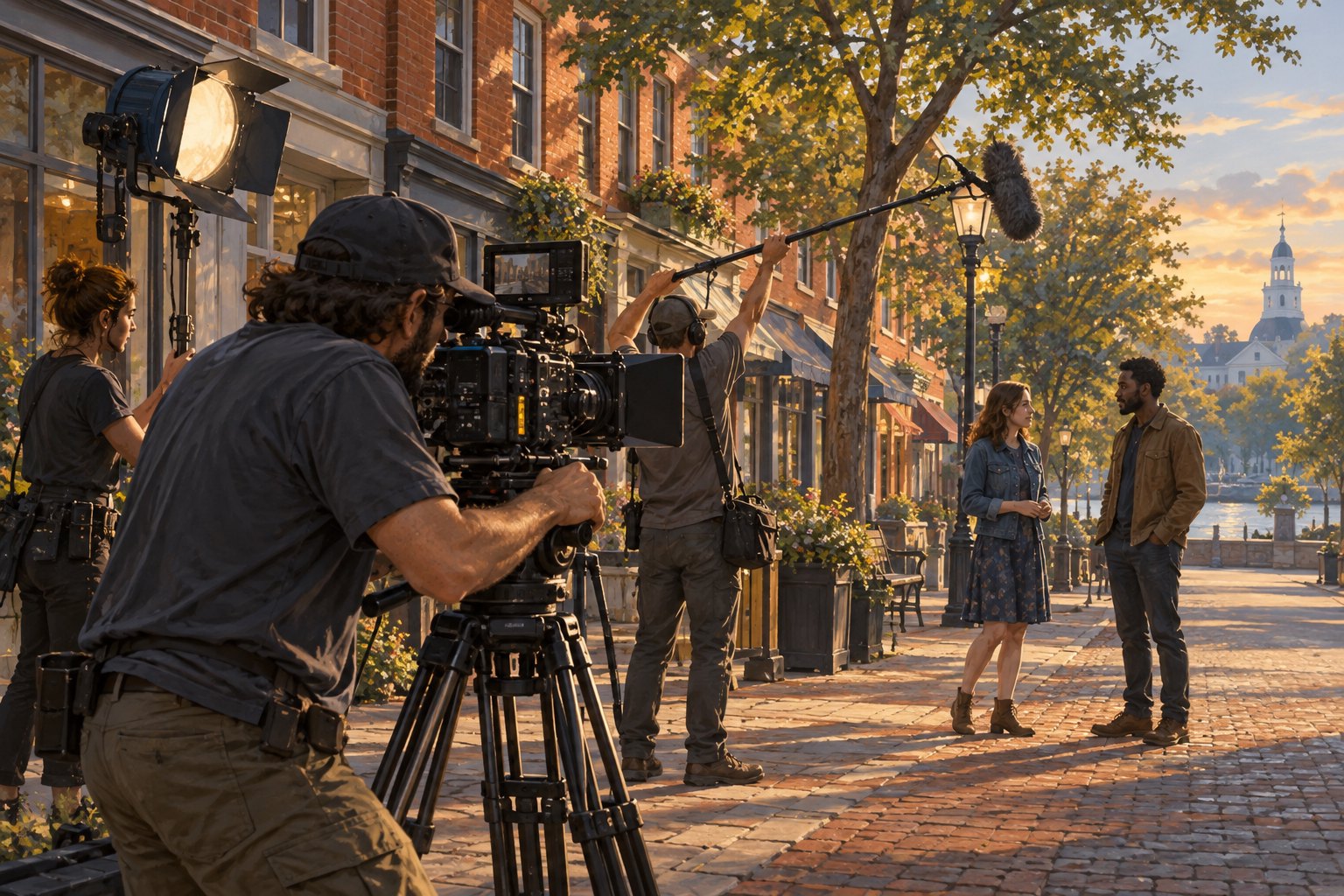
A still photograph offers a manageable way to examine visual choices. Where is the subject positioned? What remains outside the frame? Does empty space suggest freedom, loneliness, or an approaching interruption? These questions also shape film analysis, although a movie adds movement, duration, sound, and the relationship between shots.
Consider a hypothetical scene in which someone waits in a cafe. A wide view might emphasize the empty chairs around them. A closer view could make their attention to the door more noticeable. A detail of an untouched cup might suggest that time has passed. None of those images has a fixed meaning by itself; context gives the choice its dramatic force.
From a character’s perspective, the relevant question becomes what they notice. Someone expecting a friend may keep watching the entrance. Someone avoiding an uncomfortable conversation may study the table. Visual storytelling becomes more revealing when the image expresses a particular person’s attention, rather than merely displaying an attractive location.
That concern connects with our discussion of how a protagonist’s agency shapes a thriller: looking becomes dramatically interesting when it affects what a person understands or does. A camera exercise cannot substitute for character development, but it can help clarify what a frame communicates.
A Three-Frame Exercise for More Deliberate Looking
You can explore the attraction of slower photography with equipment you already have. The following exercise is an editorial suggestion, not a feature attributed to the camera. Choose an ordinary location where photography is permitted, and make three images that describe it differently.
- Establish the space. Make one wide image that shows how its main elements relate. Decide what someone needs to understand before you move closer.
- Choose a point of attention. Photograph one part of the space that seems significant. Let your position change the emphasis rather than making several almost identical exposures.
- Find a revealing detail. Look for something small that changes your reading of the wider scene: an empty chair, a reflection, or a shadow crossing a familiar object.
- Review the sequence together. After you finish, ask whether the three pictures add information or simply repeat one another. Try changing their order and notice how the implied story shifts.

The point is to give each image a job. Three considered photographs can still be unsuccessful, and an unplanned snapshot can be wonderful. What the exercise offers is a clearer relationship between intention and result. It also creates a stopping point, which can be valuable when the act of choosing has become more tiring than taking pictures.
A Different Device Still Needs a Different Habit
There is an understandable attraction to assigning one object one purpose. Picking up a camera can mark the beginning of an activity in a way that opening another function on a multipurpose device may not. Yet the ritual works only if it remains useful to the person practicing it.
A comparable question runs through our commentary on what makes a dedicated moviegoing space meaningful. The setting can support attention, but the experience depends on how that setting is used. Owning an object associated with patience does not guarantee patience any more than entering a theater guarantees engagement.
The strongest idea behind a film-inspired camera for digital fatigue is therefore modest and worth taking seriously: a tool might help establish a boundary around image-making. Whether this particular camera succeeds requires evidence from use. The deeper attraction is already recognizable—the wish to finish making an image without immediately turning it into another obligation.
For photographers and movie lovers alike, the useful question is what that boundary makes possible. Perhaps it is noticing the light before adjusting it, considering a frame before replacing it, or letting an image remain private. A camera earns its place in that process when it helps attention settle on the world in front of the lens.
Original content by this site's editorial team. Published: October 1, 2026 at 06:02:13 PDT (Los Angeles time)