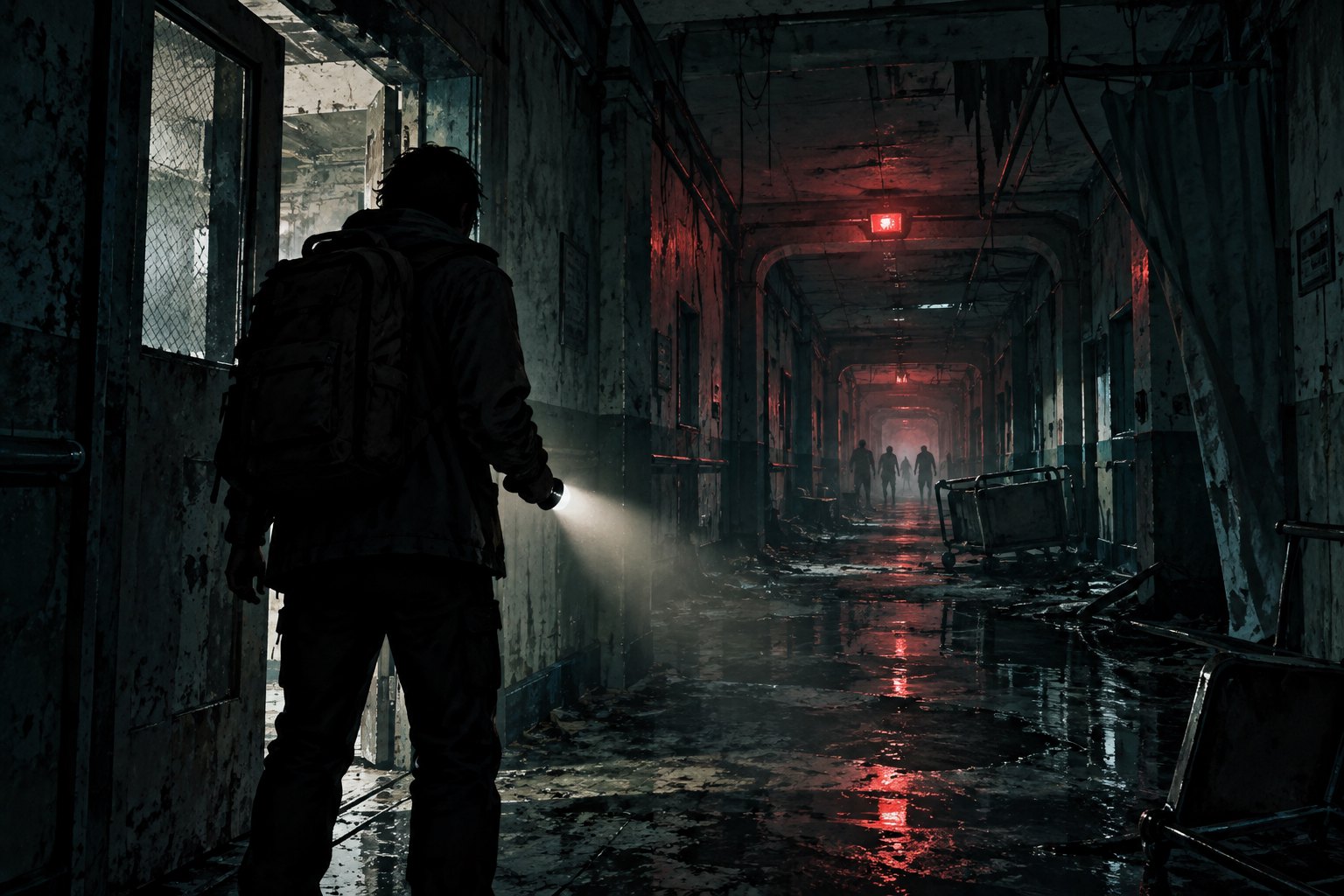
Zach Cregger’s Resident Evil has reached the premiere-reaction stage, with The Hollywood Reporter covering the first responses. For viewers deciding how closely to follow that conversation, the immediate question is practical: how much should you learn before sitting down? Knowing whether a movie sounds appealing can help. Knowing exactly when to expect its biggest surprise can change the experience you hoped to have.
This is spoiler-free commentary on that choice, not a review of the finished film. No individual reaction, character outcome, line of dialogue, or hidden reference is presented here as verified. A report about premiere responses establishes that a conversation has begun; it does not, by itself, establish what every viewer thought or support a detailed account of the movie.
The overlooked spoiler is an expectation
The obvious spoilers reveal events: a death, an identity, an ending. Less obvious ones tell you how to arrange your attention. A reaction that singles out a particular stretch as the moment everything changes can make you wait for a structural turn. A comment celebrating a surprising appearance can send you scanning the edges of every frame.
Those are hypothetical examples, not descriptions of Cregger’s film or quotations from its premiere audience. They illustrate why a post can omit the plot and still disclose something valuable: the shape of discovery. For a viewer who enjoys uncertainty, knowing where to anticipate a surprise may matter almost as much as knowing the surprise itself.
My preference with horror is to learn enough to make an informed viewing decision, then leave the sequence of experiences alone. Someone who dislikes uncertainty may reasonably choose otherwise. The useful distinction is between information that helps you decide whether to watch and information that begins directing your response before the movie does.
Let the characters discover their own predicament
A character’s perspective offers a particularly useful reason to limit advance reading. During a film, we continually compare what a person knows with what we know. Sometimes the camera gives us an advantage. Sometimes it confines us to the same uncertainty. Both approaches depend on the timing of information.
If outside commentary supplies that information early, an understandable decision can start to look foolish. We may judge someone for failing to recognize a danger that the storytelling has not yet made available to them. That changes our relationship with the performance: instead of following a person’s reasoning, we wait for them to catch up with our expectations.
For Resident Evil, this is a viewing principle rather than a claim about any particular scene. A fair character analysis would ask what the person could reasonably perceive, what alternatives were available, and what each choice cost. Those questions require the actual sequence of events. They cannot be answered responsibly by reconstructing a movie from scattered reactions.
Readers interested in that broader approach can also explore our character-first guide to choosing festival films. The shared idea is simple: attention to a person’s experience gives criticism something more substantial to discuss than the scale of the surrounding excitement.
Read for viewing fit, then stop
A useful reaction helps you understand the writer’s experience in terms that relate to your preferences. A superlative alone cannot do much of that work. Two people can agree that a film is intense while meaning very different things: sustained dread, graphic imagery, rapid action, or emotional distress.
Before reading a premiere-reaction roundup, decide what you actually need to know. That keeps curiosity from becoming an open-ended search through increasingly revealing posts.
- For tone: Look for clear descriptions of the viewing experience, while avoiding accounts of individual surprises.
- For content concerns: Seek specific, clearly labeled advisories. Broad enthusiasm is not a substitute for the information you need.
- For franchise accessibility: Look for an explicit discussion of whether prior familiarity matters, rather than assuming recognition and comprehension are the same thing.
- For a critical verdict: Favor an argument supported by observations over an isolated declaration of greatness or disappointment.
These are criteria for assessing coverage, not findings about this film. They also provide a stopping point. Once a piece has answered the question that brought you to it, reading every linked response may add exposure without adding useful guidance.

Why memorable lines belong in context
Dialogue can be especially revealing. Even a short sentence may disclose who has gained confidence, who understands the threat, or how a relationship has changed. A line celebrated for its delivery can also lose its effect when the viewer spends an entire sequence waiting to hear it.
There is another critical problem: words alone rarely explain why a line works. A pause, a strained breath, or the listener’s refusal to respond can carry more meaning than the sentence. Repeating dialogue without that context risks treating a performance as a collection of catchphrases.
No film dialogue is quoted here because no authenticated scene context is established for close analysis. The same restraint applies to Easter eggs. A meaningful discussion would identify a verified detail, explain its connection, and consider its function within the scene. Guessing at references would give readers a checklist with no reliable foundation.
Keep the premiere conversation separate from your verdict
Our earlier commentary on Resident Evil’s early reception considered how to interpret advance enthusiasm. The question here concerns your own attention: what do you want to preserve for the screening?
After watching, try forming a few observations before returning to the reactions. Which decision made a character feel understandable? Where did your expectations change? Did an emotional response come from the performance, the framing, the sound, or information withheld until that moment? Answering those questions gives you a basis for agreement or disagreement that belongs to your experience.
The deeper issue is the difference between anticipating an effect and experiencing its cause. Premiere coverage naturally foregrounds outcomes: excitement, disappointment, surprise. A film builds those responses through choices unfolding over time. For Cregger’s Resident Evil, the most revealing discussion will ultimately need to connect the two. Until then, leaving some questions unanswered can be a deliberate way to watch more closely.
Original content by this site's editorial team. Published: September 15, 2026 at 21:40:50 PDT (Los Angeles time)