Zach Cregger’s Resident Evil is drawing enthusiastic first reactions, with Variety’s coverage highlighting praise for its gore and its success as a video game adaptation. The descriptions include “gloriously gory” and a claim placing it among “the best video game adaptations.” Those are striking endorsements, but they describe early viewers’ judgments rather than establish a settled critical verdict.
For anyone wondering whether the excitement deserves attention, the answer is yes—with a specific distinction. The reported praise makes this a film worth watching closely. It does not yet explain how well the characters sustain our investment, whether the suspense develops across the whole story, or what remains after the shock wears off. This is spoiler-free analysis of the first reactions, not a firsthand review of the completed film.
Two kinds of praise, two different promises
The gore endorsement and the adaptation endorsement should be considered separately. The first concerns an immediate physical experience: disgust, surprise, exhilaration, or some volatile mixture of the three. The second makes a broader claim about translating an existing work into another medium. A film can excel at either without automatically succeeding at both.
Describing horror as gloriously bloody suggests pleasure in its excess. That pleasure might come from outrageous invention, carefully timed spectacle, or the release of accumulated tension. The short description alone does not establish which qualities these viewers encountered. It would be a mistake to turn that adjective into an unsupported account of particular effects or sequences.
The adaptation praise is more demanding. Calling something one of the best invites comparisons without necessarily explaining the criteria. Does it recreate a familiar atmosphere? Make an unfamiliar story accessible? Find cinematic equivalents for interactive fear? Until the reasoning is available, the enthusiasm is meaningful as enthusiasm, not as a complete argument.
The character test: does danger change the person facing it?
My critical priority for Resident Evil would be the relationship between physical danger and character behavior. Horror becomes involving when a threat alters how someone moves, decides, trusts, or understands the space around them. A frightening image can command attention immediately. A frightened person gives that image emotional consequences.
That distinction matters when considering gore. Injury can function as spectacle, but it can also establish limits. If violence makes a character hesitate, abandon a plan, or reconsider another person’s safety, the effect becomes part of the drama. If the story immediately resets, the audience may admire the spectacle while feeling little lasting concern.
These are standards for evaluating Cregger’s film, not claims about scenes in it. The first-reaction descriptions do not support a detailed character breakdown. They do, however, raise a useful question: are viewers responding mainly to the force of what happens, or also to the experience of the people it happens to?
Performance is central to that difference. A pause before moving forward can communicate fear more persuasively than a speech explaining it. Our discussion of how acting makes the uneasy world of Widow’s Bay believable explores a related concern: genre stakes become convincing through recognizable human behavior.
Translating player anxiety into movie suspense
A game can make uncertainty personal because the player must act. A movie has to build that investment through framing, sound, performance, and editing. The audience cannot choose the next move, but it can understand a character’s options well enough to dread the choice.
Consider a general survival-horror situation: someone must cross a space without knowing what waits beyond it. In an interactive setting, the hesitation belongs partly to the player. On screen, the filmmaker must make the hesitation legible. How much can the character see? Where could they retreat? What sound makes standing still feel dangerous? These are illustrative questions, not descriptions of confirmed Resident Evil scenes.
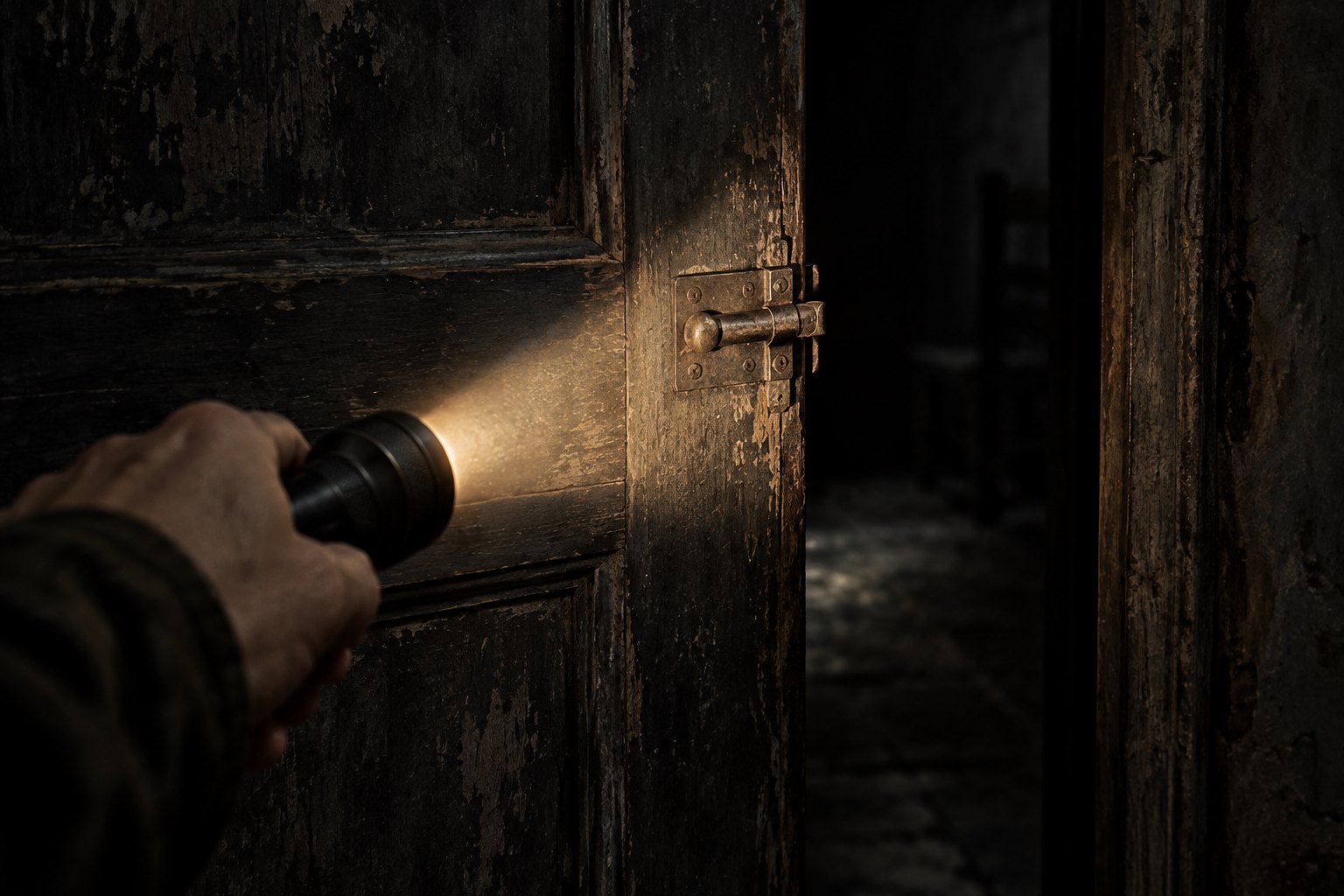
The most useful adaptation criticism explains how a film creates an equivalent emotional experience using different tools. Recognizable imagery can offer immediate satisfaction, but it cannot carry every dramatic burden. Viewers also need a reason to care about what happens between the recognizable moments.
That broader challenge appears in our examination of the choices involved in bringing Counting Miracles to the screen. Across very different genres, adaptation requires decisions about what an audience must feel and how cinema can produce that feeling.
Why the rhythm around the gore matters
For my taste, extreme horror works best when intensity has shape. A quiet stretch can teach us to inspect the frame. A sudden eruption can destroy our confidence in what we thought was safe. A pause afterward can make the consequences register. The relationship among those moments matters as much as their individual force.
Relentlessness can be effective too, particularly when exhaustion becomes part of the experience. But constant escalation carries a challenge: each new shock must do something beyond outsize the last one. It might expose a weakness, complicate an escape, or change our understanding of a threat. Otherwise, the film risks making increasingly elaborate violence feel routine.
This is why the gore praise is an intriguing starting point rather than a sufficient recommendation by itself. It signals a potentially strong match for viewers who enjoy visceral horror. Readers who chiefly want dread, emotional attachment, or sustained narrative tension still need criticism that addresses those qualities directly.
What to look for in a fuller review
A detailed assessment of Resident Evil should connect its conclusions to observable choices. Useful questions include:
- Character perspective: Do we understand what someone knows, fears, and needs in a dangerous moment?
- Consequences: Does surviving an encounter change the next decision, or does the story start over emotionally?
- Spatial clarity: Can we follow the danger well enough to anticipate it without having every surprise explained?
- Adaptation: Does the film create tension for newcomers while giving experienced fans something more substantial than recognition?
Specific answers would tell readers more than a superlative alone. They would also make disagreement useful: one viewer might value relentless sensation, while another needs a stronger emotional through line. Neither preference requires pretending that an early endorsement answers every question.
The deeper possibility: survival as a loss of control
The most compelling possibility raised by the adaptation praise is a film that understands survival as an unstable relationship with control. In that reading of horror, competence offers temporary reassurance. People can act intelligently and still confront something beyond their understanding. Fear grows in the distance between making a reasonable choice and knowing it will work.
That is an interpretive lens, not a conclusion about Cregger’s ending or a hidden meaning established by the reactions. But it explains why character vulnerability deserves a place beside the bloodshed in the conversation. The spectacle shows what can happen to a body; the drama makes us inhabit the uncertainty before it happens.
The early response gives Resident Evil an exciting proposition to fulfill. A lasting verdict will depend on whether its violence and adaptation choices deepen that uncertainty—and whether the people caught inside it remain as memorable as the horrors they face.
Original content by this site's editorial team. Published: September 15, 2026 at 21:05:09 PDT (Los Angeles time)