
Wicker gives Olivia Colman’s Fisherwoman an extraordinary answer to an ordinary need: someone who treats her with affection. Alexander Skarsgård plays the husband woven for her by Peter Dinklage’s Basketmaker. Their relationship disturbs a village that has grown comfortable treating her as a joke. The premise’s sharpest implication is that kindness can become scandalous when it reaches someone everyone else has decided should go without.
Written and directed by Eleanor Wilson and Alex Huston Fischer, the film adapts Ursula Wills-Jones’ short story The Wicker Husband. It combines an adult fairy-tale romance with a recognizable social conflict: one person’s happiness exposes what other people have accepted as inevitable.
Spoiler note: This critical reading discusses the established premise, early dialogue, and relationship conflicts documented in festival coverage and reviews. It does not assess the ending or claim a firsthand screening.
The Fisherwoman Wants a Partner, Not the Village’s Permission
Colman’s character lives on the outskirts of a seaside village, where her solitude and fish-associated smell make her a target of ridicule. Black Bear’s official synopsis establishes this exclusion as the starting point. Her neighbors have turned features of her everyday existence into supposed evidence that she does not deserve intimacy.
That distinction matters. Working with fish explains an odor; it cannot explain a person’s worth. The village collapses those categories because doing so makes cruelty feel like common sense. From the Fisherwoman’s perspective, the problem is therefore larger than finding a husband. She lives among people who believe they already know the limits of her future.
Her response is wonderfully practical: “I want you to make me a husband.” The line, reproduced in festival reviews, gives the fantasy a blunt transactional beginning. She identifies a need, approaches a craftsman, and asks for something the established social order refuses to imagine.
My reading is that the request expresses agency without pretending loneliness has disappeared. Wanting companionship does not invalidate independence. The Fisherwoman can resist her neighbors’ judgment and still want someone beside her. That combination gives the character more substance than either a helpless romantic or an invulnerable outsider would possess.
It also connects with the question of recognition explored in our character analysis of The Debut: being noticed becomes meaningful only when another person sees more than the role already assigned to you.
Alexander Skarsgård’s Husband Makes Care Visible
The Wicker Husband’s unusual body provides an immediate visual joke. His place in the story is more interesting. Sundance’s account describes a devoted, poetic partner whose arrival transforms the Fisherwoman’s life and unsettles the community around them.
Consider the trailer’s simple declaration: “I am here to marry you.” Coming from a woven figure, it announces the impossible. Addressed to a woman routinely dismissed by her neighbors, it also offers something emotionally straightforward: an intention that does not require her to argue for her own eligibility.
The domestic arrangement sharpens that idea. Published festival criticism describes the Fisherwoman continuing to earn their living while her husband looks after the home. Their partnership makes household care visible as a contribution. It also separates that contribution from the village’s assumptions about which gender should provide it.
The premise invites a useful distinction between an impressive romantic object and a good partner. Height, novelty, and physical appeal explain fascination. Attentiveness explains why the relationship threatens the neighbors. A spectacle can be dismissed as a curiosity; a satisfying marriage raises uncomfortable questions about everyone else’s.
There is nevertheless a tension worth keeping in view. A husband commissioned for a particular purpose risks becoming an accessory to another character’s fulfillment. The most revealing question for viewers is whether they understand him as someone capable of choosing affection. Mutual love needs more than an ideal set of services, however charmingly those services are delivered.
Peter Dinklage’s Basketmaker Changes What Is Possible
Dinklage’s Basketmaker occupies the point where an ordinary request becomes a fairy tale. He makes the husband, but his importance extends beyond introducing the magical element. He takes seriously a desire that the village treats as absurd.
Through that action, the story offers a compelling model of assistance. The Fisherwoman states what she wants; the Basketmaker responds with his skill. She remains the person initiating the change. His craft opens a possibility rather than replacing her decisions.
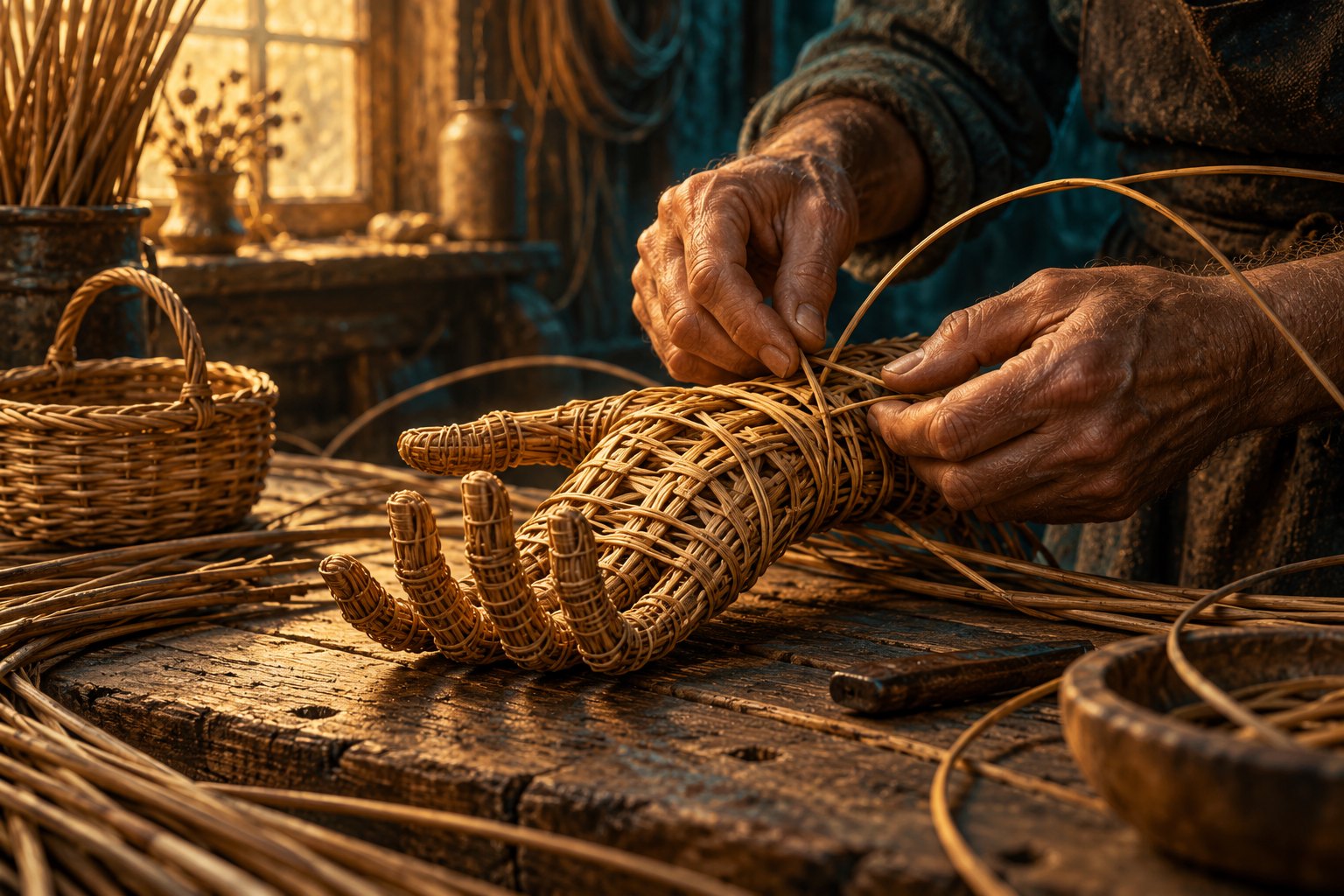
The material itself supports an interpretation about relationships. Wicker acquires strength through interdependence: individual strands become useful through their arrangement. That is a metaphor suggested by the premise, not a hidden meaning the filmmakers have confirmed. It nevertheless suits a romance in which ordinary acts of attention matter more than social credentials.
The Basketmaker’s intervention also shifts responsibility back toward the community. Once companionship becomes possible, the villagers cannot plausibly claim that the Fisherwoman’s isolation was simply her destiny. Their response reveals how invested they were in keeping it that way.
Why the Neighbors Experience Love as an Insult
Elizabeth Debicki’s Tailor’s Wife helps give the village’s resistance a human center. Festival reviews describe her defending its established marital hierarchy while other women begin questioning the imbalance within their homes. The conflict concerns status as much as desire.
For someone who has learned to prosper within restrictive rules, another woman’s unconventional happiness can feel like a personal accusation. If the Fisherwoman can find affection outside the approved arrangement, then the sacrifices made to secure social standing become harder to justify.
The men face a related problem. A helpful husband makes neglect harder to excuse. Resentment can then become a way to avoid self-examination: discredit the unusual marriage, and nobody has to reconsider their own behavior.
This is where the village setting earns its place in the story. Gossip carries private disappointment into public life. The couple cannot simply enjoy one another without becoming evidence in arguments happening in other households. Their happiness acquires meanings they never volunteered to represent.
Readers interested in how imagined worlds expose everyday power structures can also explore our analysis of conflict beneath Wildwood’s fairy-tale setting. In both discussions, the revealing question is who benefits from the rules everyone else is expected to accept.
The Deeper Question Is Who Gets to Define a Worthy Life
For me, the strongest interpretation of Wicker begins with the villagers’ confidence. They assume they can recognize a suitable wife, a proper husband, and an acceptable marriage on sight. A man made from woven material disrupts those judgments by fulfilling the emotional purpose that their familiar arrangements sometimes neglect.
The romance also challenges the Fisherwoman’s relationship with those judgments. Someone repeatedly told she is undesirable may struggle to trust happiness even after it arrives. Affection changes her circumstances; it cannot automatically erase the habits of doubt that exclusion creates.
That makes the story’s central question more demanding than whether an unusual couple deserves acceptance. It asks whether people can stop using other people’s deprivation to reassure themselves about their own lives. The Fisherwoman’s request is modest beneath its magical form. She wants a companion. The village’s inability to leave that wish alone reveals how much cruelty can hide inside an apparently ordinary idea of belonging.
Original content by this site's editorial team. Published: October 22, 2026 at 22:35:05 PDT (Los Angeles time)