
Wildwood brings an uncomfortable question into its enchanted forest: what happens when a child’s urgent need to save someone collides with a whole society’s struggle to survive? Its combination of woodland wonder and warfare gives that question substance. Talking animals promise the pleasures of a fairy tale, but Prue McKeel enters their world because her baby brother has been taken. For her, discovering magic begins with an emergency.
The most productive way to approach this story is through that difference in perspective. An audience can admire the forest; Prue needs to get through it. A viewer can enjoy its eccentric inhabitants; she needs to decide whom to trust. My reading is that this friction between enchantment and responsibility supplies the film’s most interesting thematic foundation.
Spoiler note: This analysis discusses the established premise, character motivations, and themes, without revealing the rescue’s outcome.
Prue enters the forest with a purpose
AFI’s synopsis establishes the essential situation: crows abduct Prue’s infant brother, prompting her to enter the Impassable Wilderness beyond Portland. Her classmate Curtis accompanies her, and their search draws them into a conflict threatening the forest. Peyton Elizabeth Lee voices Prue, with Jacob Tremblay as Curtis. [AFI’s film synopsis](https://fest.afi.com/2026/red-carpet-premieres-2026/wildwood/)
That starting point matters because Prue’s motivation is immediately understandable. She does not need a lecture about destiny to make the journey necessary. Someone vulnerable depends on her. Before the forest acquires political or symbolic significance, it is the place separating a sister from her brother.
There is a useful tension here between agency and obligation. Prue takes action, but the circumstances sharply limit her freedom. Turning back would mean abandoning the rescue. Moving forward means accepting a world whose rules she does not understand. Her courage can therefore be read as the willingness to act without the reassuring feeling of being prepared.
That distinction also keeps the adventure emotionally legible. An elaborate fantasy can introduce more places, factions, and mysteries than a viewer can immediately absorb. A missing family member provides a clear point of orientation. The question beneath each encounter remains simple: does this bring Prue closer to her brother, or place another obstacle between them?
Family bonds can give extraordinary survival stories this kind of clarity, a connection explored from a very different angle in our analysis of family and survival in Whalefall. The fantastic situation becomes meaningful through a relationship the protagonist cannot set aside.
Skepticism becomes a question of trust
Two brief lines capture Prue’s uneasy relationship with the fantastic: “I don't want any part of your fairy tale” and “I don't know whether this is terrifying or adorable.” Both appear in the Associated Press’s account of the film. [Associated Press review](https://apnews.com/article/d40b9525dd58371a11fc32ac2f645b90)
The first suggests resistance to being assigned a role. A fairy tale sounds attractive from outside, where its dangers can be anticipated and its ending imagined. Inside one, a person may become someone else’s instrument. Prue’s objection can be read as a refusal to let the apparent grandeur of an adventure erase what she actually wants.
The second line expresses a more complicated problem. A creature’s appealing appearance tells her very little about its intentions. Wonder and apprehension arrive together. The forest asks her to revise her understanding of what exists, but that does not automatically tell her whom to believe.
In my view, this is a stronger foundation for a coming-of-age story than simply equating maturity with renewed belief in magic. Belief alone is morally neutral. People can believe intensely in a destructive cause. The harder achievement is learning to remain open to unfamiliar possibilities while still questioning promises, motives, and demands.
Curtis makes loyalty part of the adventure
Curtis’s presence gives the rescue a second emotional perspective. AFI describes him as a loyal but hapless classmate. That combination is significant: loyalty does not depend on looking capable, and awkwardness does not make companionship worthless. His place beside Prue invites a distinction between the person who seems suited to adventure and the person who stays when adventure becomes frightening.
Through this lens, Curtis is more than an opportunity for comic relief. A companion changes the moral shape of a quest. Prue’s decisions affect someone who has entered danger alongside her, while his choices can support or complicate her own. Even before considering particular turning points, the partnership introduces reciprocal responsibility.
The critical question is how we measure his courage. Physical victory offers an easily recognizable signal, but friendship has other forms of bravery: admitting fear, accepting another person’s priorities, and helping without controlling. Those are useful standards for considering a character whose initial appeal rests on loyalty rather than assured competence.
War changes what woodland whimsy means
A forest populated by talking creatures can initially appear to offer distance from ordinary human problems. The threat of war removes that comfort. Its inhabitants have lives that extend beyond the visiting children’s needs, and the rescue enters a conflict larger than itself.
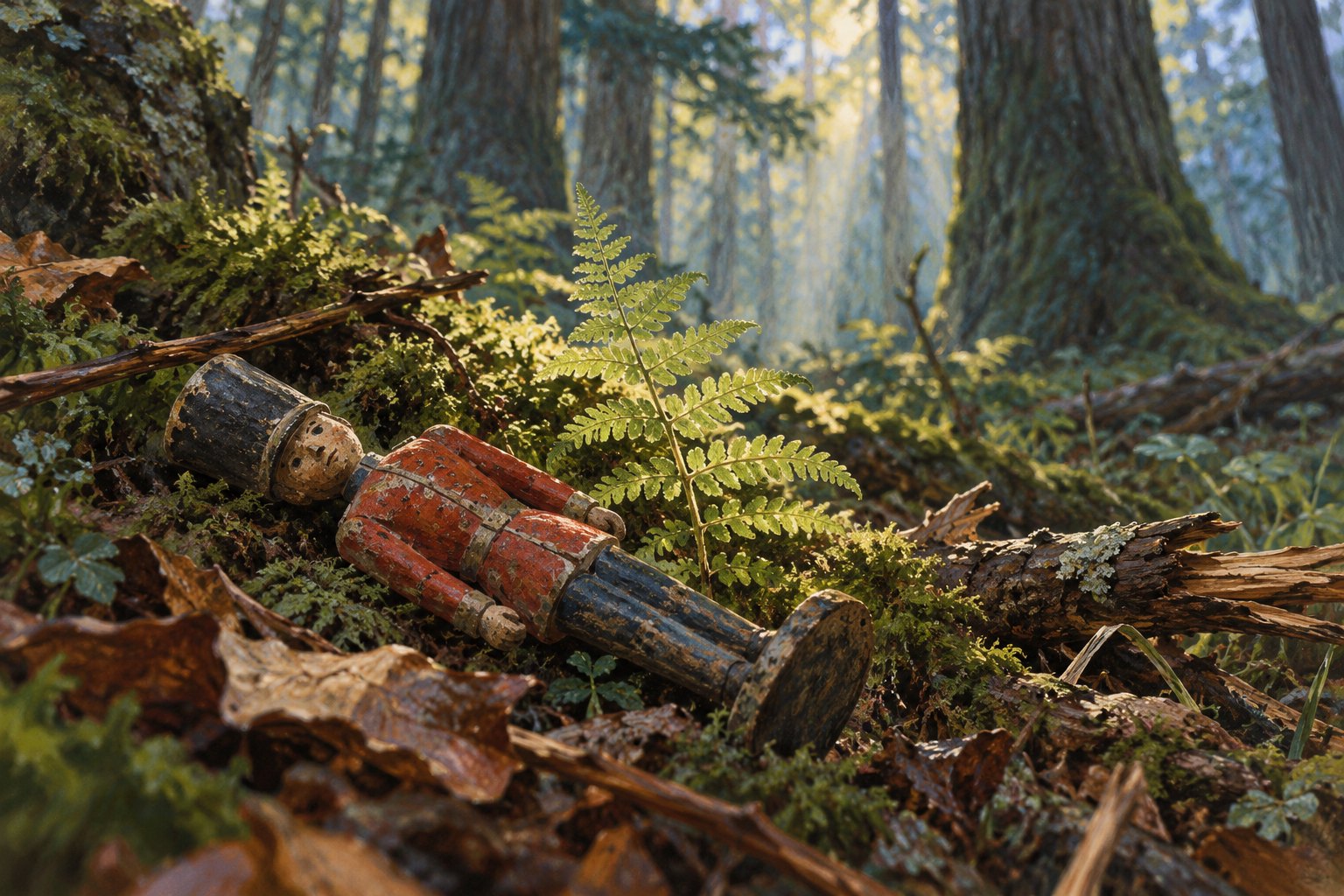
My interpretation is that whimsy makes this conflict potentially more disturbing. Charm encourages attachment. Once an audience accepts an unusual creature as someone with habits, fears, and a place in a community, threats against that creature acquire emotional weight. The imaginative detail is doing ethical work when it helps us recognize a life worth protecting.
There is also a risk in this combination. Warfare can become another attraction in a fantasy landscape, competing with strange animals and magical discoveries for attention. A meaningful distinction lies in whether conflict changes our understanding of the people involved. Spectacle establishes scale; consequences establish importance.
The premise’s movement from one endangered child to an endangered community creates a particular moral challenge for Prue. Her brother’s rescue remains urgent, but other lives cannot become disposable merely because they fall outside her family. The richer reading of the adventure asks how private love might expand into concern for strangers.
That relationship between an unusual fantasy premise and recognizable social behavior also informs our discussion of community pressure and unconventional love in Wicker. Imaginary worlds become revealing when their inhabitants have competing needs rather than simply decorative differences.
The deeper question is what wonder asks of us
For me, Wildwood is most compelling as a story about the responsibilities that follow discovery. Finding a hidden world does not just enlarge Prue’s imagination. It exposes her to lives, dangers, and obligations she could previously ignore because she did not know they existed.
That reading connects the rescue, the companionship, and the looming war. Prue begins with a specific person to protect. Curtis makes protection reciprocal. The forest makes it collective. These are distinct scales of responsibility, and their tension gives the story more to consider than a simple opposition between childhood wonder and adult disbelief.
The strongest interpretation of its enchanted wilderness therefore preserves both attraction and unease. Beauty can invite attention without guaranteeing safety. Loyalty can matter without making anyone fearless. Love can motivate urgent action while leaving difficult questions about its consequences. Seen through Prue’s predicament, wonder becomes the beginning of moral awareness: once another life becomes real to you, looking away is a choice.
Original content by this site's editorial team. Published: October 22, 2026 at 16:28:26 PDT (Los Angeles time)