The Hot Springs Documentary Film Festival deserves Arkansas’s support because a place for watching nonfiction films together has cultural value beyond any individual screening. At its best, that experience gives unfamiliar lives sustained attention, invites disagreement about how stories are told, and makes filmgoing part of a community’s intellectual life. That is the strongest case for treating the festival as an Arkansas treasure: the encounter it can create between a film, its subjects, and an audience willing to listen.
The Arkansas Democrat-Gazette has made a case for supporting the festival. Our view is that such support should combine enthusiasm with discernment. Celebrating a documentary institution means taking its films seriously enough to examine their choices. This is an editorial about that responsibility, rather than a review of a particular selection or a verdict on the current program.
What makes a documentary festival worth supporting?
A documentary asks viewers to enter a relationship with something presented as real. The person speaking existed before the camera arrived. The conflict may continue after the credits. An apparently satisfying ending can settle the film’s structure without settling anyone’s life. A festival devoted to this form offers an occasion to consider that difference with other people.
For Hot Springs, the compelling possibility is local participation in a conversation that can reach far beyond Arkansas. An audience should be able to encounter unfamiliar places without treating them as curiosities, and familiar places without assuming it already understands them. Regional film culture gains depth when both kinds of encounter are possible.
That is also a useful standard for evaluating the festival’s value. Does a screening leave viewers with more precise questions? Does it make room for someone whose experience resists a convenient summary? Does the discussion continue beyond whether the film was moving? These are meaningful artistic outcomes, even when they cannot be reduced to a publicity statistic.
Start with the person in front of the camera
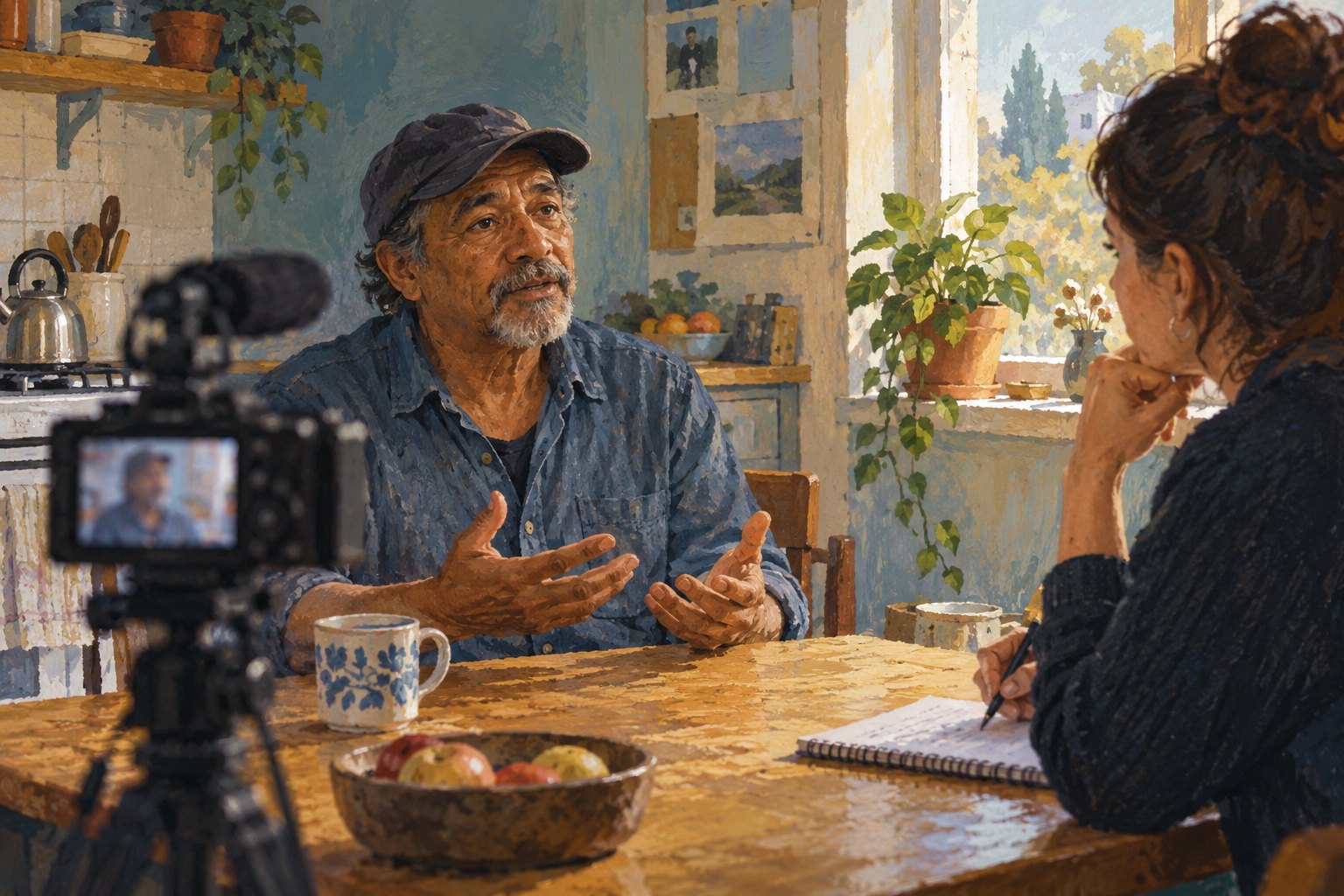
The most revealing way into many documentaries is through the people whose lives give the film its shape. Begin with what a participant wants, what limits their choices, and what they stand to lose. Then consider whether the filmmaking lets those needs remain complicated. A person can be sympathetic and mistaken, persuasive and evasive, generous in one situation and guarded in another.
Character analysis becomes ethically delicate here. In fiction, we can discuss a character as an authored construction. In nonfiction, the finished portrayal is still constructed, but the person exceeds it. An interview excerpt cannot contain an entire personality. A revealing gesture may support an interpretation without proving it.
For viewers approaching a Hot Springs screening, this distinction provides a practical critical tool: separate what the participant says from what the film encourages you to conclude. Notice whether their own explanation receives time and context. Consider whether another person gets to challenge it, and whether the challenge is supported by evidence.
Watch the choices that turn footage into an argument
Documentary criticism should examine form as closely as subject matter. A worthy cause does not automatically produce a strong film. Conversely, a film about an apparently modest subject can be extraordinary in its attention to behavior, setting, and time. The question is how the material becomes an experience—and what that experience allows us to understand.
Editing and the appearance of certainty
Watch how the film connects statements and reactions. A cut can suggest agreement, embarrassment, or contradiction. That relationship may be illuminating, but the sequence alone does not establish that two moments occurred together. When chronology matters to an argument, consider how clearly the film establishes it.
Also notice what changes your judgment. Is it new testimony, a document, an observed action, or simply a forceful arrangement of images? These can all contribute to storytelling, but they carry different kinds of evidentiary weight.
Music and emotional instruction
Listen for the moment a score begins telling you how to feel. Music can reveal emotional patterns or give a scene breathing room. It can also make an unresolved claim feel settled. A useful thought experiment is to imagine the sequence without its soundtrack and ask what remains persuasive.
Readers interested in that relationship can explore our commentary on how film music brings storytelling into focus. The same attentive listening belongs in documentary criticism, where emotion and evidence need careful distinction.
Why watching together can change the conversation
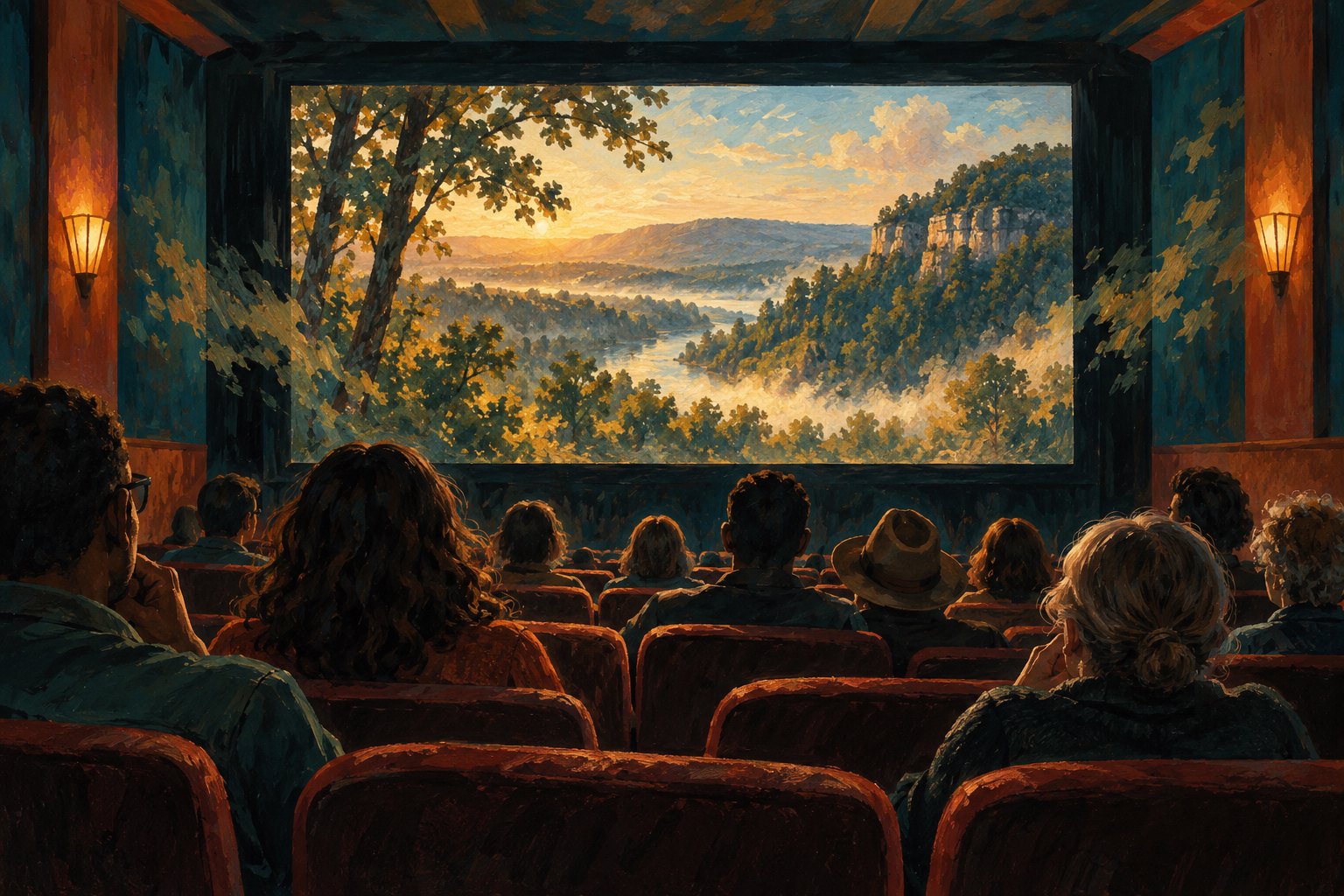
A shared screening gives viewers access to other responses: an unexpected laugh, a tense silence, disagreement afterward about the same scene. None of those reactions establishes the truth of a film’s argument. They can, however, reveal that a moment you considered straightforward contains assumptions another viewer does not share.
The arrangement of viewing matters, too. Watching several films can expose differences in how directors approach testimony, conflict, or memory. Our discussion of how viewing structure shapes the interpretation of separate stories considers a related question. At a documentary festival, viewers can bring that awareness to the connections they make across a program.
This is part of the argument for supporting Hot Springs: a festival can provide conditions for a richer encounter with cinema. Realizing that possibility requires curious audiences as well as thoughtful programming.
How to offer useful support
Support can begin with one carefully chosen screening. Before making plans, consult the festival’s current official information for dates, ticket terms, venue access, and any participation opportunities. Treat those practical details as things to confirm, especially if travel or accessibility arrangements are involved.
- Choose for curiosity. Look for a subject or filmmaking approach you want to understand, including something outside your usual interests.
- Give the film your attention. Leave room afterward to consider a scene before rushing to a verdict.
- Ask about a specific choice. If a discussion is offered, a question about editing, access, or an unresolved contradiction can open a useful exchange.
- Recommend precisely. Explain what makes a film worth seeing while protecting discoveries and distinguishing its claims from your conclusions.
- Match further support to verified options. If donations, memberships, or volunteer roles are available, review what they involve and choose what fits your circumstances.
A cultural treasure should invite scrutiny
Calling the Hot Springs Documentary Film Festival a treasure should express an expectation as well as affection. The institution is worth supporting because documentary cinema can expand whose experiences receive attention and deepen how audiences assess what they see. That purpose deserves active, demanding participation.
The deeper promise lies in the relationship between seeing and understanding. A camera can make someone visible without making their circumstances clear. A powerful story can produce sympathy without resolving a difficult question. A worthwhile festival experience gives viewers the time—and the company—to recognize those gaps. Supporting Hot Springs means helping sustain a place where looking closely can become a shared habit.
Original content by this site's editorial team. Published: October 13, 2026 at 01:52:34 PDT (Los Angeles time)