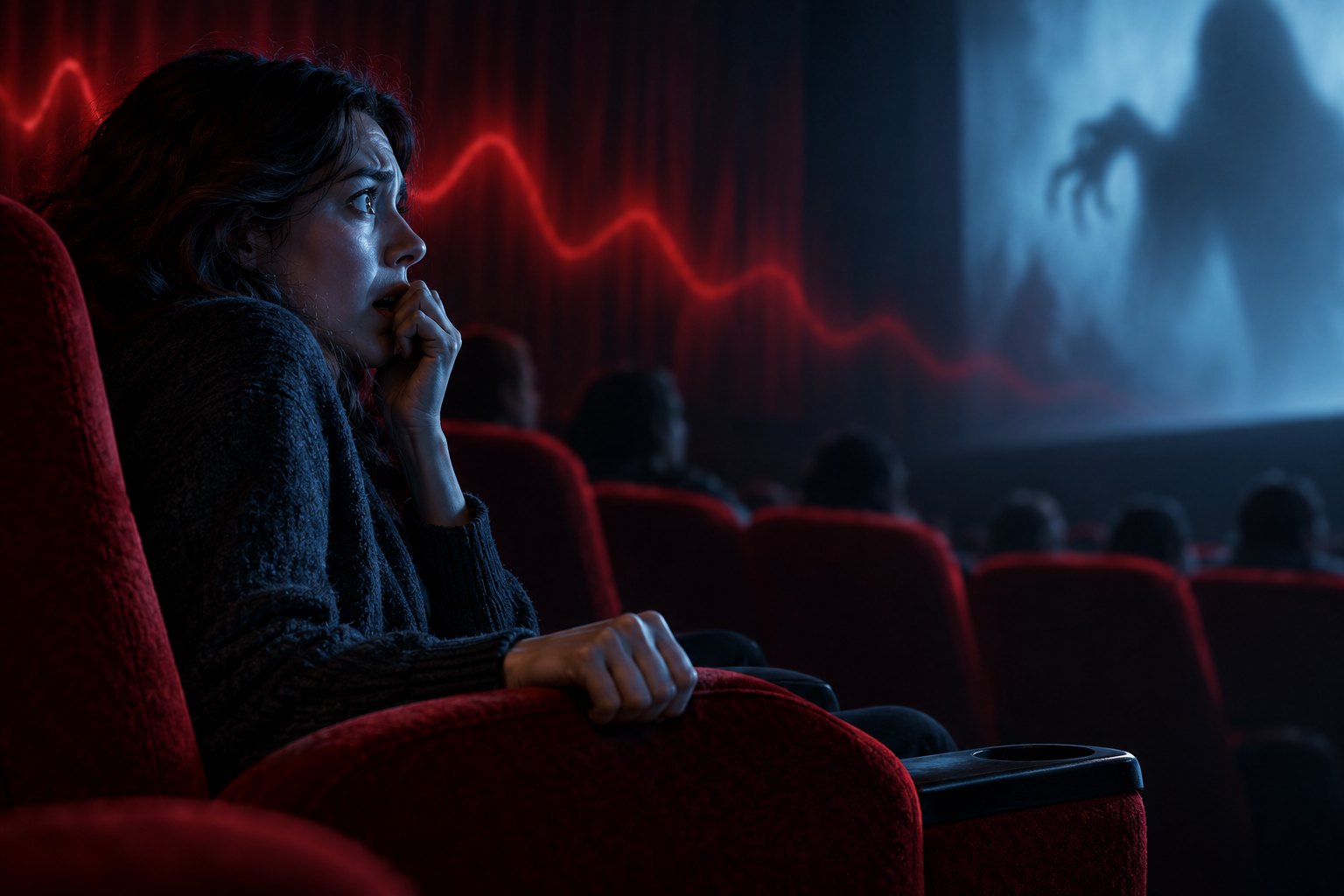
Sinister remains the Science of Scare project’s overall standout, but a different film supplies its newest record: Zach Cregger’s Resident Evil recorded a peak audience heart rate of 134 beats per minute in the project’s 2026 findings. Those results answer different questions. One concerns an overall response across a movie; the other identifies an especially intense moment. Neither automatically establishes which film will trouble you most after the screen goes dark. [Science of Scare findings](https://www.moneysupermarket.com/broadband/features/science-of-scare/)
That distinction makes Scott Derrickson’s Sinister worth examining beyond its reputation as an endurance test. Its most disturbing idea is a recognizable human failure: a father becomes so invested in making other people’s suffering meaningful to his career that he stops recognizing what his own family needs.
Spoiler warning: The character analysis below discusses the ending of Sinister. It does not reveal scenes from the 2026 Resident Evil.
What the heart-rate record actually tells us
The project uses heart-rate measurements and heart-rate variability to construct its Scare Score. Its published findings give Sinister a score of 96 out of 100, with an average heart rate of 86 BPM and a peak of 131 BPM. The higher peak associated with Resident Evil therefore should not be mistaken for the stronger overall result. These are findings within this particular viewing project, not a universal measurement of every audience’s fear. [Study results and methodology](https://www.moneysupermarket.com/broadband/features/science-of-scare/)
For film criticism, the useful question comes immediately afterward: what does a frightening moment do to the story? A shock can interrupt our attention, expose a danger we misunderstood, or make us anticipate another interruption. Its dramatic value depends on the character and situation surrounding it. A number records a response; criticism asks what gives that response meaning.
Ellison Oswalt treats a family home as research material
In Sinister, Ethan Hawke plays true-crime writer Ellison Oswalt, who moves his family into a house where an earlier family was murdered. He conceals that history from his wife, Tracy. The discovery of disturbing home movies draws him into an investigation involving multiple families and the supernatural figure Bughuul. [Film synopsis and credits](https://en.wikipedia.org/wiki/Sinister_(film))
The crucial character decision happens before the supernatural mystery takes over. Ellison has already treated his family’s consent as an obstacle he can work around. From his perspective, proximity to the crime promises access, authenticity, and a professional comeback. From Tracy’s perspective, a home should offer stability. Those purposes cannot comfortably occupy the same rooms.
My reading is that this conflict supplies the film’s strongest foundation. Ellison does not need to be indifferent to his children for his behavior to be dangerous. He can love them and still repeatedly decide that his work deserves the next hour, the next exception, the next withheld explanation. That combination is more unsettling than simple villainy because his excuses remain intelligible.
The relationship between domestic space and unequal knowledge also informs our analysis of the house and its hidden power dynamics in Verity. Here, the person making the home unsafe is also the person insisting the move will benefit everyone.
Tracy understands the stakes before Ellison does
Tracy’s essential challenge is compressed into five words: “Your kids are your legacy.” It answers Ellison’s investment in writing as the thing that will outlast him. Her argument gives the movie an alternative definition of success: responsibility toward people who are already present. The exchange is also discussed in scholarship on the film’s treatment of childhood and artistic ambition. [Character and dialogue analysis](https://www.researchgate.net/publication/383512132_Monstrous_Children_Gruesome_Artistry_and_Resisting_Maturation_in_the_Sinister_Films)
Seen through Tracy’s priorities, the mystery loses some of its seductive glamour. Solving a crime may matter, but it does not erase the obligation to tell your partner where she is living. Her objections expose the gap between Ellison’s self-image as a truth seeker and his willingness to manage the truth at home.
That is also where the film invites a fair criticism of its construction. Ellison’s decisions can feel painfully prolonged. The audience may recognize the need to leave before he does. Whether that becomes compelling frustration or merely frustrating plotting depends on how persuasive viewers find his attachment to professional redemption. For me, the character’s vanity gives the delay meaning, even when the mechanics strain patience.
The projector makes watching feel like participation
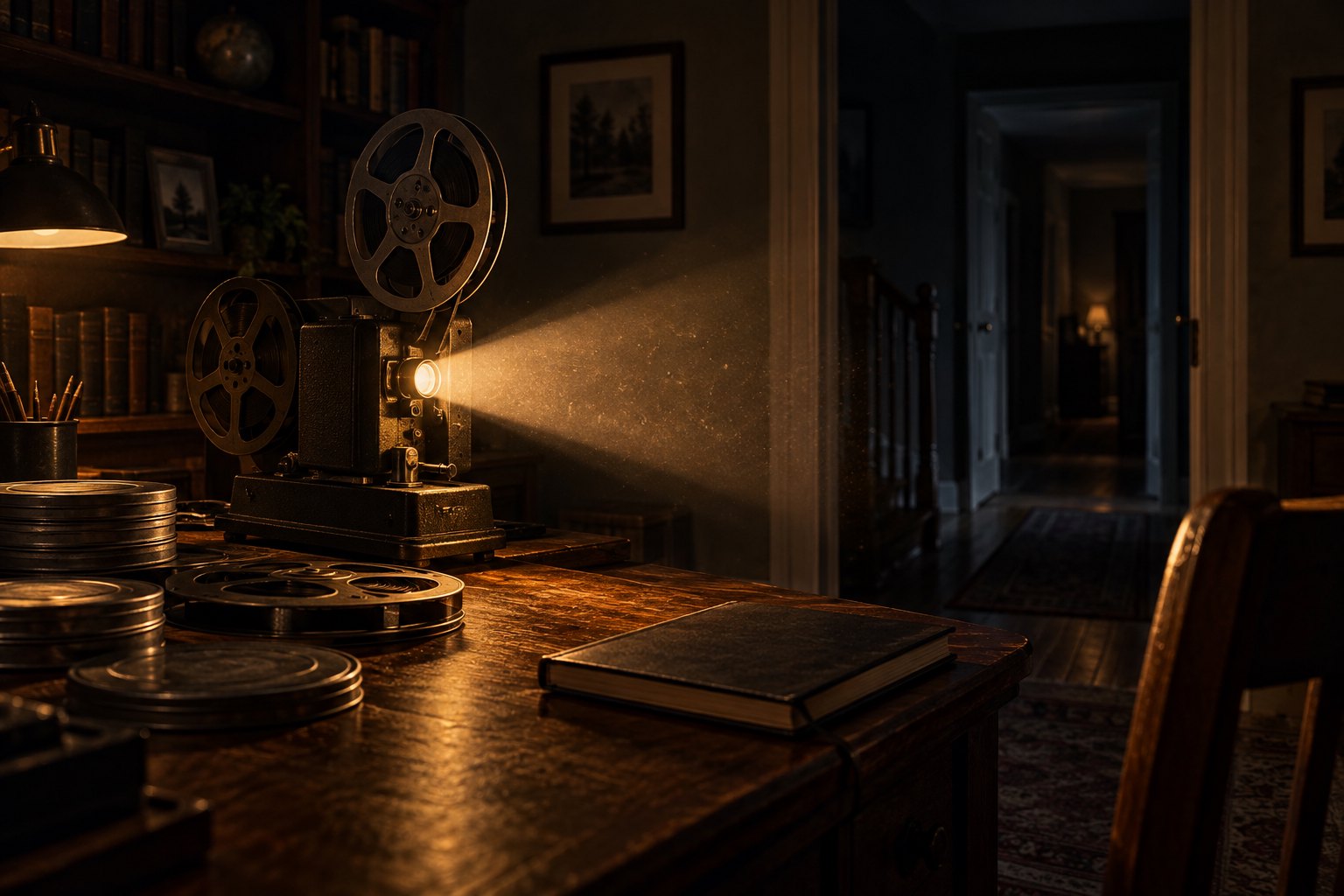
The home movies establish an uncomfortable relationship between investigation and spectatorship. Ellison watches because he wants answers. We follow the same invitation. Each discovery promises that looking more closely will turn horror into something understandable.
His question, “Why would you film it?”, identifies the moral disturbance inside that process. The recording is not incidental to the violence; somebody wanted an audience. Ellison initially approaches the material as evidence, but the act of viewing cannot remain emotionally neutral. The dialogue makes that tension explicit without needing an elaborate explanation. [Dialogue transcript](https://www.springfieldspringfield.co.uk/movie_script.php?movie=sinister)
This is the film’s most productive use of its central object. A projector ordinarily helps preserve a family’s memories. Here, the same familiar promise—look, remember, keep watching—becomes threatening. The horror emerges from a corrupted relationship to images, rather than from darkness alone.
For viewers interested in how ambition changes a character’s perception of danger, our character-focused discussion of Creature Fear explores another collision between creative desire and survival.
Ashley gives her father’s ambition its cruelest answer
The ending reveals Ashley as the instrument of her family’s destruction under Bughuul’s influence. Her promise—“I’ll make you famous again”—turns Ellison’s desired comeback into a final accusation. She records the violence, making her father part of the terrible material he believed he could control. [Ending dialogue](https://www.imdb.com/title/tt1922777/quotes?item=qt2377977)
My interpretation is that the line hurts because Ashley speaks in the language her father has made valuable. Recognition has become a family concern, something that is supposed to repair disappointment and justify upheaval. The supernatural ending takes that misplaced priority literally and horrifically.
This does not make Ashley morally responsible for Ellison’s choices, or turn the other family members into deserving victims. The tragedy depends on the opposite: they bear consequences they did not knowingly accept. Ellison’s ambition becomes dangerous because its costs are distributed among people with less control.
The fear that survives the measurement
The strongest reason to revisit Sinister is this connection between its shocks and its family drama. Its protagonist believes that understanding a story will give him authority over it. Gradually, the film reverses that relationship: his pursuit of the story gives it increasing authority over his household.
The 2026 heart-rate record offers an intriguing reason to discuss Resident Evil, but it cannot serve as a complete review of that film. Likewise, Sinister deserves more than a numerical endorsement. Its lasting horror lies in a question the measurements cannot settle: how much harm can someone excuse while insisting that one more success will make everything worthwhile?
Original content by this site's editorial team. Published: October 9, 2026 at 05:43:16 PDT (Los Angeles time)