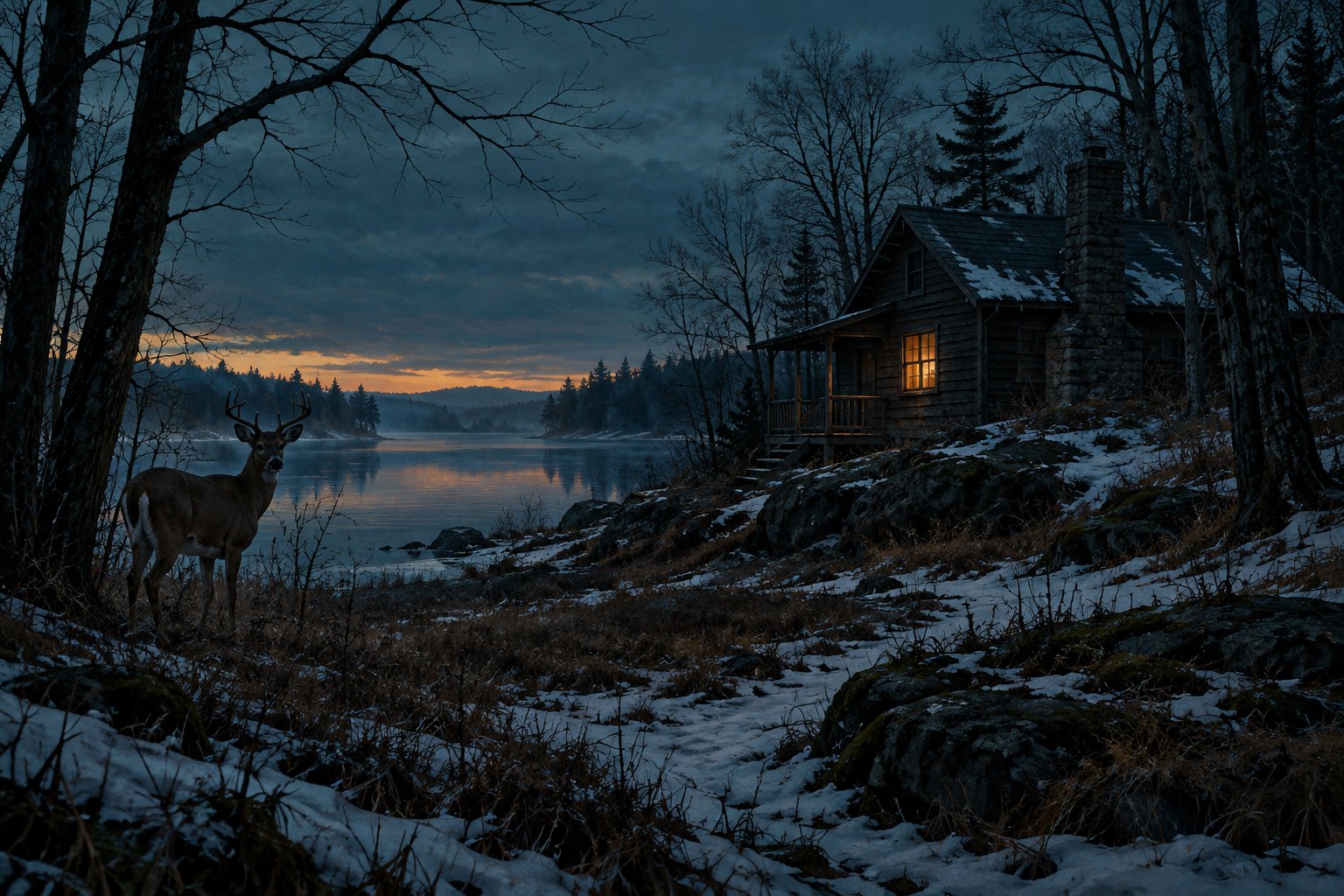
Creature Fear finds its nightmare in the distance between visiting Wisconsin lake country and needing to survive there. Written and directed by Manny Gumina, the horror film brings together a Chicago musician, a local singer seeking a different future, and a desperate man whose struggle to feed himself becomes something horrifying. Cabins, supper clubs, and deer hunting supply more than regional atmosphere: they become points of conflict between people who experience the same place very differently.
Wisconsin Public Radio’s reporting emphasizes that collision of regional cultures. The film’s official story materials give it a more intimate shape through Charlie, Miriam, and Paul. Its most compelling premise is that an escape for one person can be a trap for another.
Spoiler note: This analysis discusses the documented setup, character relationships, and opening violence. It does not reveal the ending. It is an interpretation of confirmed story details and filmmaker commentary, rather than a firsthand assessment of the finished film’s performances or pacing.
Three people, three different versions of Wisconsin
Charlie, played by Billy Chengary, heads to his parents’ lake house to record with Miriam, played by Natalie Gerene. For him, the trip offers distance from Chicago and the possibility of making something new. That starting position matters: he arrives with somewhere to stay and somewhere else to return to.
Miriam’s ambition has a different weight. She wants music to open a route beyond her hometown. Paul, played by Jarrod Langwinski, occupies a harsher position still. Unemployed and hungry, he hunts deer illegally to survive. The story places creative opportunity and immediate physical need in uncomfortable proximity.
My reading is that mobility provides the clearest way into these characters. Charlie can imagine a productive weekend. Miriam has reasons to invest much more in its outcome. Paul’s circumstances narrow his attention toward getting through the present. They may occupy the same roads and rooms, but they are working with very different ideas of what tomorrow could offer.
Charlie’s retreat is somebody else’s everyday life
The visiting musician is a useful viewpoint character because a retreat comes with assumptions. Quiet promises concentration. Distance promises renewal. A lakeside house suggests that ordinary obligations can temporarily be suspended. Those expectations are recognizable, which makes their collision with another person’s needs dramatically productive.
For viewers, the interesting question is how much Charlie understands about the place beyond its usefulness to him. Enjoying somewhere does not automatically mean knowing it. Nor does having good intentions guarantee that a visitor can read an old relationship or recognize a dangerous situation.
This is where the familiar cabin setting acquires an additional pressure. A door can separate a creative refuge from an interruption; it cannot settle the question of whose needs deserve attention. Our analysis of how inviting rooms become psychological traps in Verity explores a related connection between apparent comfort and uncertain control.
Miriam makes the conflict more than locals versus outsiders
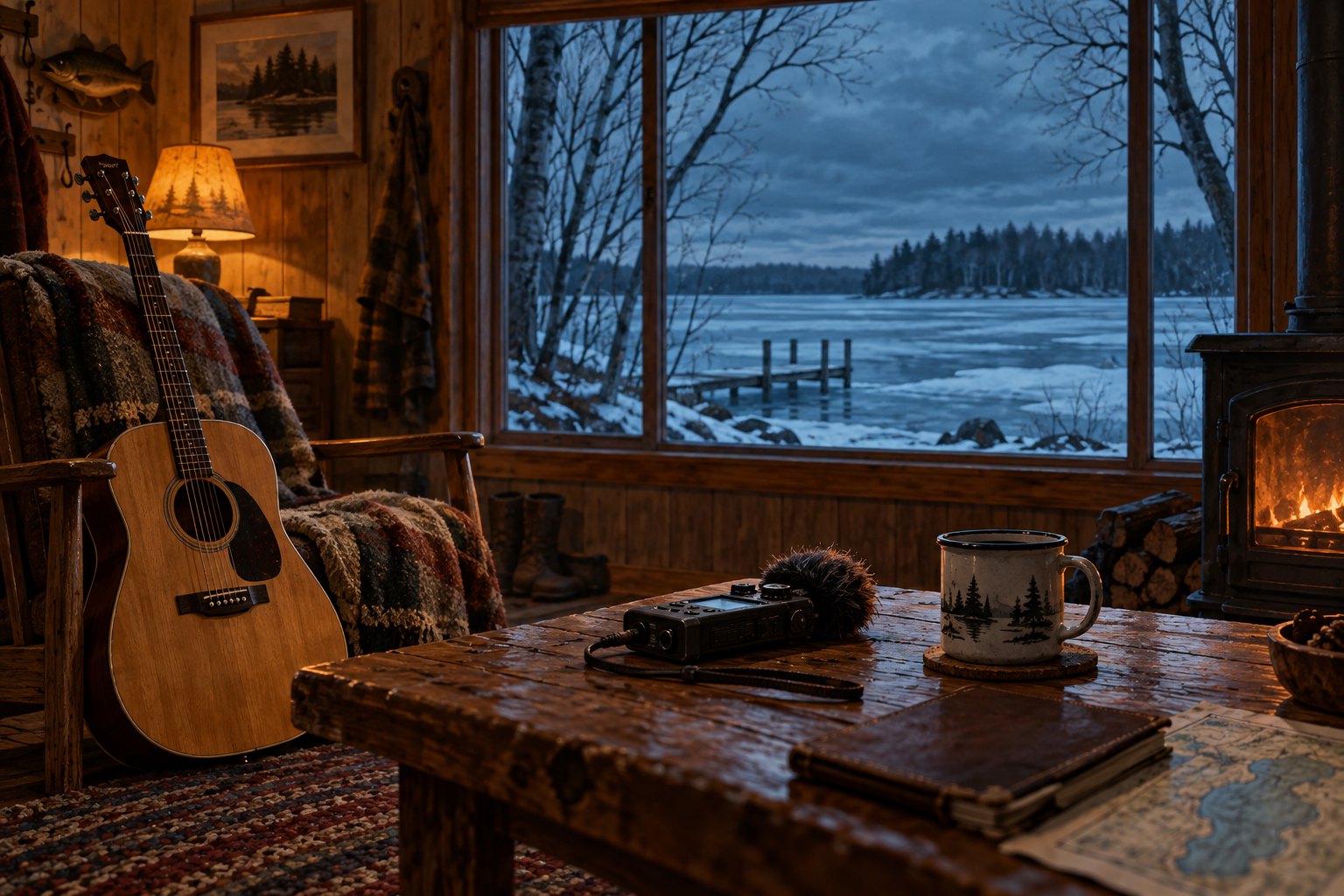
Miriam complicates an easy division between privileged visitors and resentful residents. She belongs to the community, yet wants something beyond it. Her collaboration with Charlie makes the outside world a potential source of possibility rather than simply intrusion.
The distinction is important. A local character need not defend her hometown to possess a meaningful relationship with it. Wanting to leave can coexist with attachment, responsibility, resentment, and grief. Reducing that desire to disloyalty would repeat the very habit of categorizing people that makes regional conflict so difficult to resolve.
The film’s production account also establishes that Paul is connected to Miriam’s painful family history. Consequently, his presence cannot mean the same thing to her that it means to Charlie. What a newcomer might treat as an immediate problem carries an accumulated history for someone else.
That difference makes Miriam the character whose perspective deserves especially close attention. When people possess unequal information, apparently reasonable behavior can look very different depending on where the viewer stands. Sympathy requires listening to what someone knows, as well as noticing what they want.
Paul turns the landscape into a survival problem
WPR describes an opening built around deer butchery and information about chronic wasting disease. Gumina has explained that the film imagines a frightening disease scenario; that fictional premise should not be mistaken for evidence of human transmission.
The production notes record Paul addressing the deer with the insult “Dumbass.” It is an ugly little detail: language directed at an animal that cannot answer. Read as characterization, it suggests a need to assert superiority even within an act of survival.
Paul’s hunger invites an explanation of his circumstances, but explanation is not absolution. That distinction is essential to any thoughtful reading of the story. A character can be denied opportunity and still inflict suffering for which other people are not responsible.
For me, the strongest critical question is whether desperation remains specific to Paul or becomes a shortcut for making rural poverty look monstrous. Horror gains complexity when it lets us recognize a person’s predicament without asking us to excuse his actions. The setting’s social tensions matter most when the characters retain that uncomfortable individuality.
The Wisconsin joke with a hostile edge
“Nothing good happens north of Madison,” a character says, according to WPR. The line condenses an entire region into a warning. Its sharpness comes from the certainty with which it dismisses places and people the speaker need not understand.
As an interpretive lens, that sentence is more revealing than a checklist of Wisconsin references. A regional stereotype does two things at once: it promises that the audience already knows what a place means, and it encourages viewers to stop looking closely. Horror can exploit that expectation, but it can also expose its limits.
The same applies to the supper club. A shared public space can bring people into contact without making them equals. Familiarity, hospitality, and recognition are not distributed identically. Who feels welcome, who feels tolerated, and who feels entitled to remain can shape tension before any overt threat appears.
These questions also connect with our commentary on judging horror by what its storytelling accomplishes. Social subject matter becomes meaningful through choices and consequences, not merely by appearing in a premise.
The deeper fear: who gets to leave?
The most persuasive interpretation of Creature Fear begins with unequal freedom. Charlie’s retreat, Miriam’s ambition, and Paul’s hunger represent distinct relationships with possibility. A landscape celebrated as an escape can conceal how difficult escape is for the people already living there.
That reading does not require treating Wisconsin itself as sinister. It asks us to notice how easily scenery replaces knowledge of other lives. A lake can be beautiful while the people around it face pressures that beauty does nothing to relieve.
The film’s central tension is therefore worth approaching through each character’s idea of necessity. What feels optional to one person may feel urgent to another. The disturbing moral question follows: when someone becomes convinced that a particular action is necessary, how much harm can that conviction allow? That is where this Wisconsin nightmare has the potential to linger beyond its regional references.
Original content by this site's editorial team. Published: October 9, 2026 at 01:30:16 PDT (Los Angeles time)