
Tokyo Film Festival has revealed its full 2026 lineup, according to The Hollywood Reporter. For movie lovers, the announcement opens the most interesting part of following a festival: deciding which films deserve attention before reviews and awards begin narrowing the conversation. Recognizable names offer an easy starting point. The greater opportunity is finding a story, performance, or filmmaking approach that was not already on your radar.
This is a spoiler-free critical guide to approaching the announcement, rather than a title-by-title lineup or a review of the selected films. The reveal alone cannot establish which entries succeed, how their characters develop, or what their endings mean. Those judgments require the movies themselves. What it can prompt is a more useful way of looking at the program—one that treats curiosity as seriously as anticipation.
What a full lineup can tell you—and what it cannot
A festival program is an invitation to investigate. It establishes a selection of work for audiences to consider, but selection and artistic achievement are separate questions. A film can belong in an interesting program while dividing viewers over its pacing, performances, or conclusions. That disagreement can be productive when reviewers explain what the filmmaking actually does.
For Tokyo’s 2026 announcement, the distinction matters because the word full can suggest more certainty than it delivers. A complete selection announcement does not, by itself, answer every practical question about screening access, subtitle options, ticket availability, or subsequent distribution. Anyone planning attendance should check those details individually before making commitments.
Likewise, festival inclusion does not establish a U.S. theatrical or streaming release. Readers following from home can track a film’s selection and its eventual availability as separate developments. That simple distinction keeps a promising discovery from becoming an assumed release date.
Read the dramatic situation before the prestige language
My preferred starting point for a festival synopsis is the central character’s predicament. Descriptions built around sweeping themes can sound impressive while revealing little about the experience of watching. Family, memory, identity, and social change are subjects. Drama emerges from the particular person who must live through them.
When exploring Tokyo’s selections, look for three things: what someone wants, what prevents them from getting it, and what acting on that desire might cost another person. These are reading questions, not claims about any particular entry. They help distinguish an intriguing situation from a synopsis that merely announces its importance.
A hypothetical story about someone returning home, for example, becomes more specific when the return threatens an arrangement that other people depend on. The interest lies in competing needs. Understanding the returning character should not automatically require accepting that everyone else exists to accommodate them.
That distinction also shapes our discussion of character agency and passive protagonists in Verity. Agency does not require constant action or a forceful personality. Silence, delay, compliance, and refusal can become consequential choices when a film establishes the pressures behind them.
Look for perspective, not just an appealing premise
Once a premise catches your attention, consider whose experience organizes it. A movie about a conflict may remain close to one participant, distribute attention across several people, or deliberately withhold access to someone’s thoughts. Those choices shape sympathy before dialogue explains anyone’s position.
For the eventual Tokyo film reviews, I would look for descriptions of that perspective in action. Does the camera remain with a person after others leave? Does a conversation allow both participants to occupy the frame? Does an edit interrupt an uncomfortable reaction? Concrete observations like these make criticism useful because they connect interpretation to evidence.
They also leave room for different kinds of storytelling. A withdrawn protagonist is not necessarily underwritten, and an expressive protagonist is not necessarily complex. The question is whether the film gives behavior a meaningful context. A quiet gesture can reveal a contradiction that a speech would flatten.
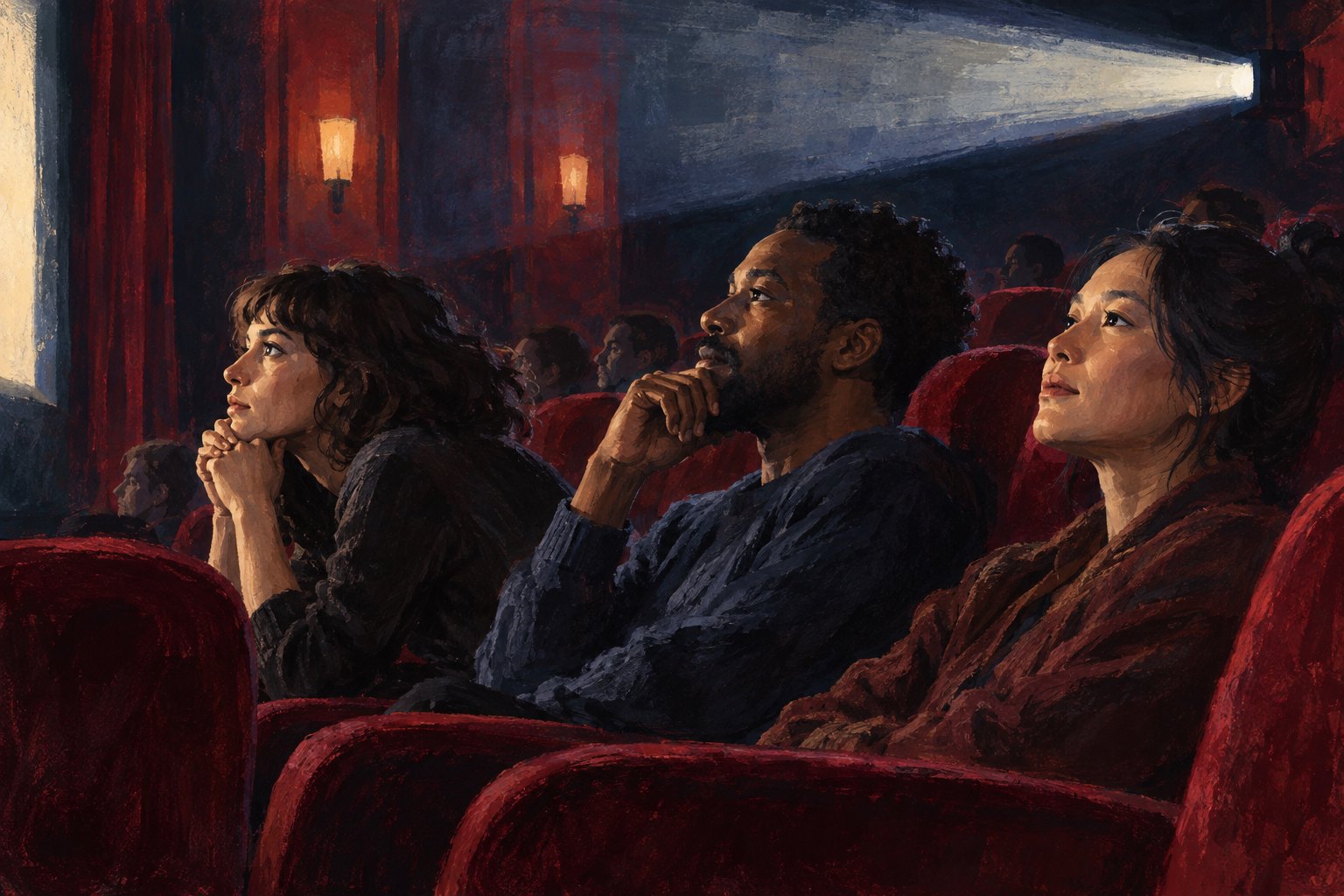
Give unfamiliar films a specific reason to interest you
Following famous filmmakers and performers is a reasonable way into Tokyo’s lineup. Familiarity provides a reference point: an earlier performance, a recurring concern, or a style you want to see develop. But reputation becomes less useful when it substitutes for describing the new work.
Try pairing each familiar attraction with an unfamiliar film that interests you for a different, identifiable reason. Perhaps its synopsis centers a difficult relationship. Perhaps its described setting places unusual constraints on the characters. Perhaps you want to encounter a storytelling tradition you know little about. The aim is deliberate exploration, not collecting unfamiliar titles as a badge of seriousness.
It helps to write one sentence about why each choice appeals to you. If that sentence contains only a celebrity’s name or a prestige label, read a little further. If it identifies an unresolved dramatic question, you have something substantial to carry into the screening—and something you can reassess afterward.
Read early reactions for evidence, not volume
When reactions to Tokyo’s selections arrive, adjectives will be easy to find. The more useful reviews will explain their judgments. Calling a performance restrained tells us little unless the critic describes how posture, timing, voice, or interaction produces that impression.
Three checks can help:
- Separate description from interpretation. An observation about a scene should be distinguishable from the meaning a reviewer assigns to it.
- Look for the source of disagreement. Two critics may notice the same long pauses but disagree about whether they create tension or dissipate it.
- Respect spoiler boundaries. A useful early review can discuss form and emotional stakes without revealing the outcome of a central conflict.
Memorable dialogue deserves the same care. A line becomes revealing through its speaker, listener, delivery, and consequences. Quoting it accurately is only the beginning; criticism should explain what the moment changes. Without verified dialogue and its context, an attractive quotation adds less than a precise account of a performance.
The real discovery happens after the screening
The deeper value of Tokyo’s 2026 lineup will emerge through encounters with individual films. A program may attract attention through names and premises, but a movie earns a place in memory through something more particular: a relationship that resists easy judgment, a performance that changes our first impression, or an image whose meaning develops over time.
Our commentary on slower image-making and closer attention considers a related habit: staying with an image long enough to notice how it works. That is a useful approach here, too. After a screening, recall one moment before reaching for a score. Consider what you understood then that you had not understood at the beginning.
My measure of a rewarding festival discovery is whether it changes the questions I bring to the next movie. Tokyo’s lineup reveal creates that possibility. The films must now supply the details, contradictions, and emotional consequences that an announcement cannot.
Original content by this site's editorial team. Published: October 1, 2026 at 08:25:38 PDT (Los Angeles time)