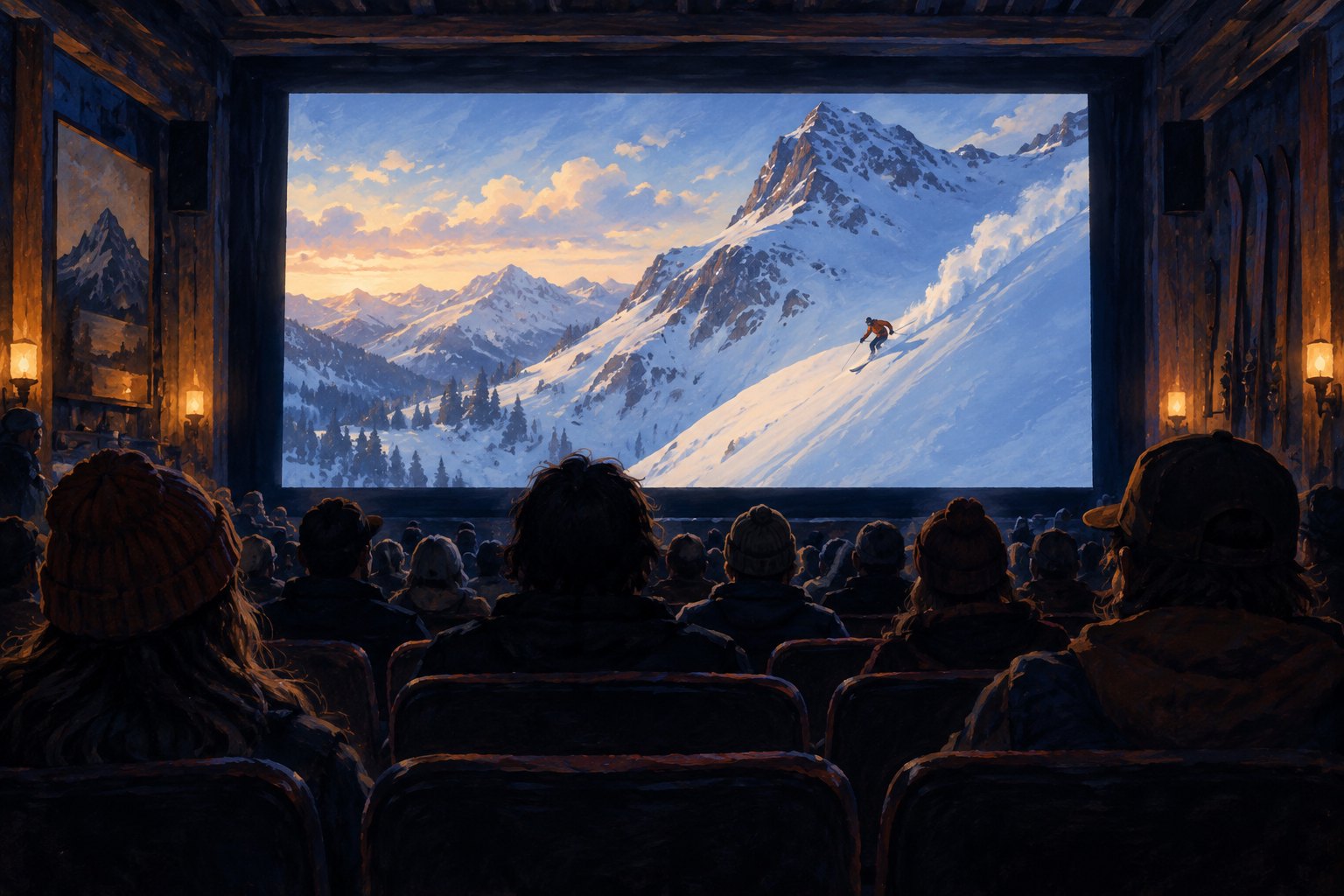
A Crested Butte ski film company is still taking its work on tour after three decades, according to The Colorado Sun. For moviegoers, the interesting part is the continuing commitment to bringing films into rooms where people watch together. A mountain descent can be compelling on its own. Put it on a large screen before an attentive audience, and the relationship between the athlete, the landscape, and the viewer changes.
The report’s central fact invites a discussion of what this kind of cinema offers. It does not, by itself, establish the quality of a particular film or explain the company’s business results. This is a spoiler-free critical commentary on the touring tradition and its storytelling possibilities; it is not a screening-based review of an identified new release.
What three decades on tour actually tells us
Longevity gives this Crested Butte story its immediate interest. Continuing to tour after three decades means the company’s history extends beyond a single release cycle. It also keeps the act of exhibition central to the conversation: these films are being presented as something worth gathering to see.
That distinction matters, but it has limits. A long history does not establish growing attendance, profitable screenings, or consistently excellent movies. Those conclusions require separate evidence. The fairer observation is that the company continues to use a format with a particular artistic possibility: connecting the spectacle on the screen with the energy of an audience occupying the same space.
Movie coverage can blur recognition and commercial performance. Our examination of the difference between star recognition and ticket demand considers a related distinction. Here, an established touring history supplies context, while the merits of each film and the response to each screening remain questions of their own.
Why a ski film can benefit from a theater
Scale is the clearest artistic argument for seeing mountain imagery projected. A wide shot can hold an athlete and an enormous slope within the same frame, letting the viewer register both movement and proportion. When the skier becomes a small figure against the terrain, the image can communicate vulnerability without dialogue.
Editing determines whether that scale becomes understandable. A sequence that establishes the route, follows the movement, and gives the landing room to register allows viewers to read an achievement. Rapid cuts may create excitement, but they can also obscure the geography that makes a descent impressive. Bigger images only help when the filmmaking gives the eye something coherent to follow.
Shared viewing adds another layer. A room’s anticipation can make a pause feel longer; laughter can bring out the humor in an awkward moment. These are possibilities of the format, not claims about any particular stop on the Crested Butte company’s tour. They explain why a screening can offer an experience that extends beyond access to the footage.
The athlete needs a perspective, not just a highlight
For my money, the most promising way to assess a ski film is to ask what it lets us understand about the people moving through its landscapes. Athletic skill commands attention quickly. Sustaining that attention requires some sense of what an attempt means to the person making it.
That does not require imposing a conventional fictional character arc on a real athlete. It requires attention to choices. What does someone notice before beginning? How do they describe a difficult passage? Does the film allow uncertainty to remain visible, or does its presentation make every outcome seem inevitable?
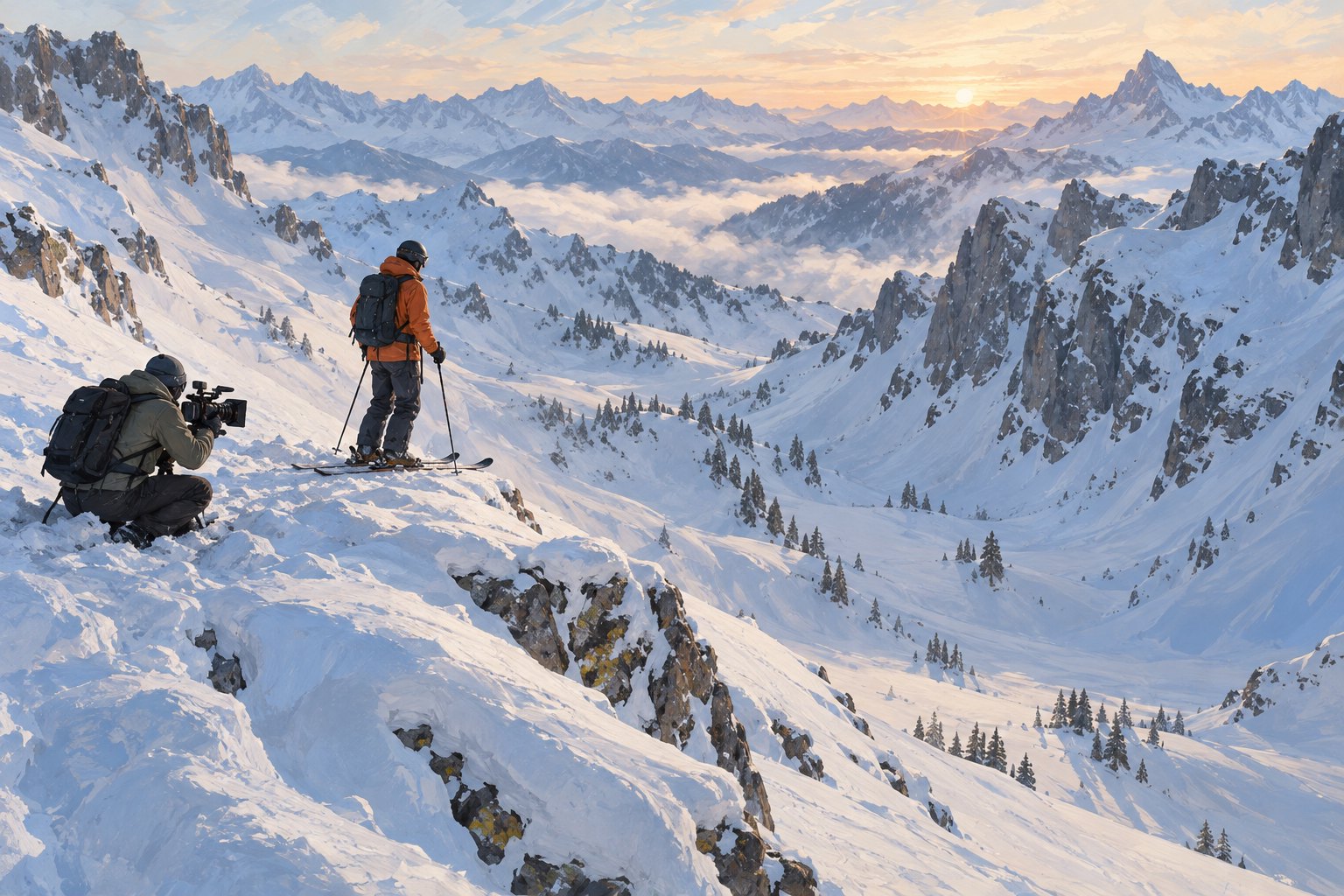
Consider the difference between showing a successful descent alone and showing the deliberation that precedes it. The first emphasizes execution. The second can reveal judgment. Neither approach is automatically superior, but they ask the audience to value different things. One invites admiration for a result; the other opens a window into a person’s decision.
The same care should apply to speech. An athlete’s own words can complicate an image that otherwise looks effortless. No verified dialogue from a specific film is established here, so there are no attributed movie quotations to reproduce. The critical point is that a memorable remark earns its place through what it reveals, rather than merely announcing how spectacular the next sequence will be.
A mountain should do more than decorate the frame
Crested Butte gives the company a geographic identity, but that does not establish where any particular film was shot. Keeping those ideas separate helps preserve a useful question: how does a ski movie make its locations matter to the people on screen?
A landscape becomes dramatically meaningful when it shapes action. Distance can create fatigue. Exposure can affect confidence. A route can demand patience or cooperation. Without that relationship, even striking scenery may function as an interchangeable backdrop. With it, viewers can understand why this person’s experience belongs in this place.
That connection also informs our discussion of how a real location can give screen action human weight. The settings and genres differ, but the editorial standard carries across: a location contributes most when it changes our understanding of the people within it.
What to watch for at a touring screening
The company’s long history offers a reason to pay attention. Once the lights go down, a more useful set of criteria takes over:
- Readable action: Can you understand the terrain and follow the athlete’s movement through it?
- Individual presence: Do the people emerge with distinct attitudes, decisions, and relationships?
- Variation in rhythm: Does the film make space for anticipation and reflection as well as speed?
- A meaningful ending: Does the final sequence deepen an idea established earlier, or simply raise the volume?
These questions work for experienced skiers and viewers who have never put on skis. Technical knowledge may deepen appreciation, but a film should still make its basic emotional stakes legible. Expertise becomes inviting when the filmmaking helps us see what deserves attention.
The deeper promise of returning
My reading of this three-decade touring story is that its strongest cultural meaning lies in return. A screening offers an occasion to revisit a shared interest, while a new film has the chance to change how that interest is understood. Familiarity can draw people into the room; fresh observation must justify their attention once they arrive.
That is also the artistic challenge for an enduring ski film company. Spectacle can establish a tradition, but repetition alone cannot renew it. The most rewarding possibility is a film that leaves viewers remembering a person’s judgment, a relationship, or a changed understanding of a mountain alongside the exhilarating descent. Continuing to tour keeps that encounter possible. Each movie still has to make it count.
Original content by this site's editorial team. Published: October 2, 2026 at 07:59:43 PDT (Los Angeles time)