The Mosquito Bowl is the war-and-football movie bringing two Wisconsin Badgers’ stories to the screen: Bob Bauman and Dave Schreiner, played by Bill Skarsgård and Tom Francis. Directed by Peter Berg, the film connects their college football lives with their service in the Marines during World War II. Its most compelling question is personal: what happens to a friendship when the future that once seemed within reach becomes uncertain?
Netflix lists an October 30, 2026, release in select theaters and a November 25 streaming debut. Adapted from Buzz Bissinger’s nonfiction book, the film also follows Brown’s John McLaughry, played by Nicholas Galitzine, and Purdue’s Tony Butkovich, played by Ray Nicholson.
Historical spoilers follow. This is a character-focused preview grounded in published reporting and the film’s announced premise, rather than a firsthand assessment of the completed movie. Performance judgments, specific dialogue, and the effectiveness of individual scenes remain open.
Bauman and Schreiner give the story a personal center
According to UW–Madison News, Bauman and Schreiner were best friends, had both been drafted by NFL teams, and served in the same Marine company. Both died in action in June 1945, weeks apart. Those facts establish an emotional foundation without needing an invented farewell speech or an imagined final conversation.
For a viewer, knowing that history changes the meaning of athletic promise. A professional football future represents more than potential fame. It suggests work, routine, teammates, and years of ordinary living. The loss is therefore larger than the disappearance of exceptional talent. These were people whose lives extended beyond what they could accomplish on a field.
That distinction should guide any eventual review. A film can make audiences admire a gifted athlete quickly; making them understand a person requires patience. The meaningful test will be whether Bauman and Schreiner emerge as distinct individuals, with a friendship that feels particular, before their historical fate acquires its full weight.
Two temperaments within one friendship
Netflix’s character descriptions present Bauman as exuberant and forceful, while Schreiner is described as measured and strategic. These are promotional character outlines, not proof of how the performances work. Nevertheless, they suggest an interesting dramatic possibility: two friends responding to pressure through different habits of mind.
Read through that contrast, courage need not have one recognizable expression. One man might meet uncertainty with outward energy; another might search for order. Neither disposition automatically reveals what someone feels underneath. The relationship becomes richer if the film allows confidence to coexist with fear and deliberation to coexist with urgency.
Our analysis of how performance gives a familiar story emotional weight explores a related principle: knowing a narrative’s destination does not eliminate its power. The decisive question is whether the people traveling toward that destination feel alive.
Why the return to Camp Randall matters
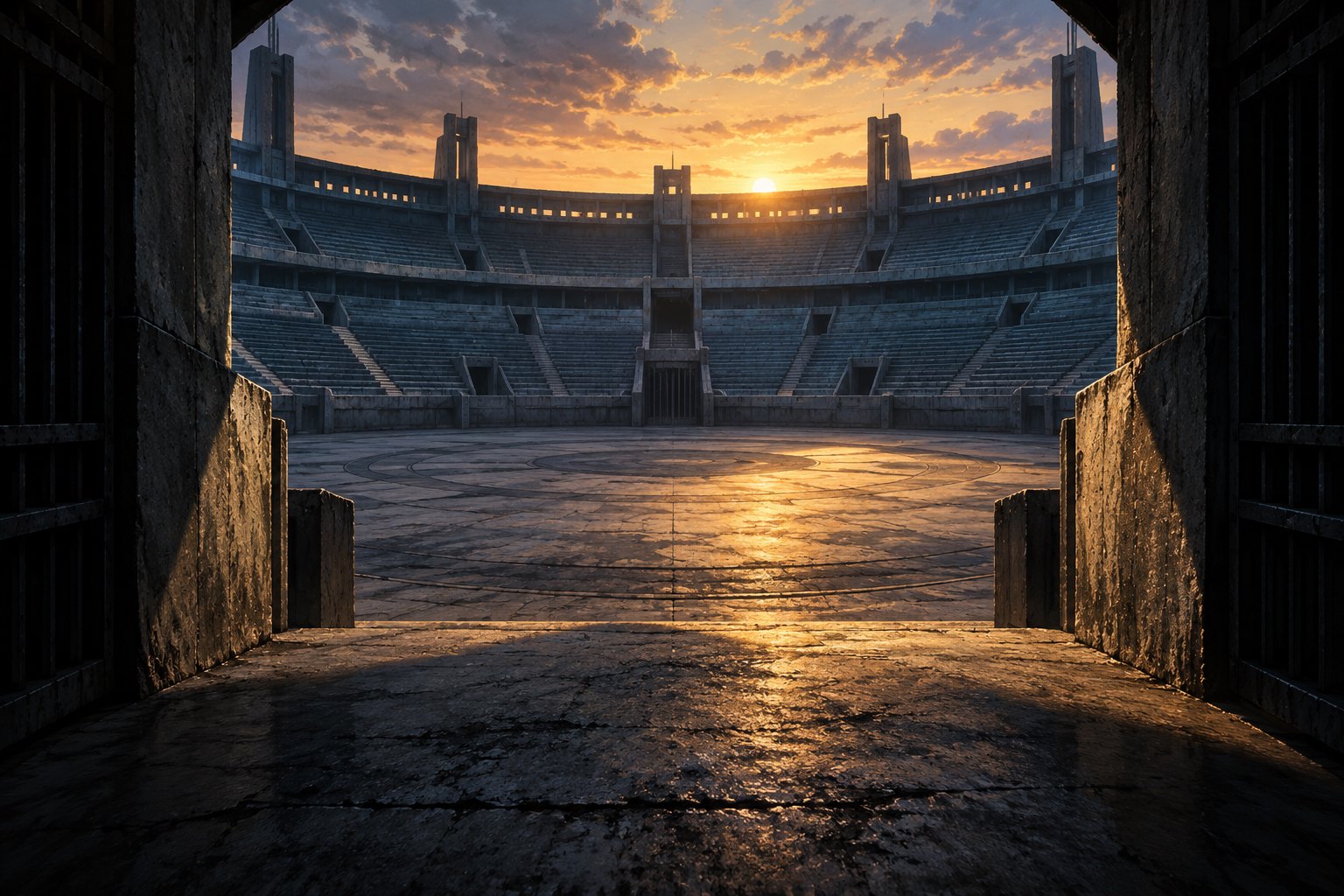
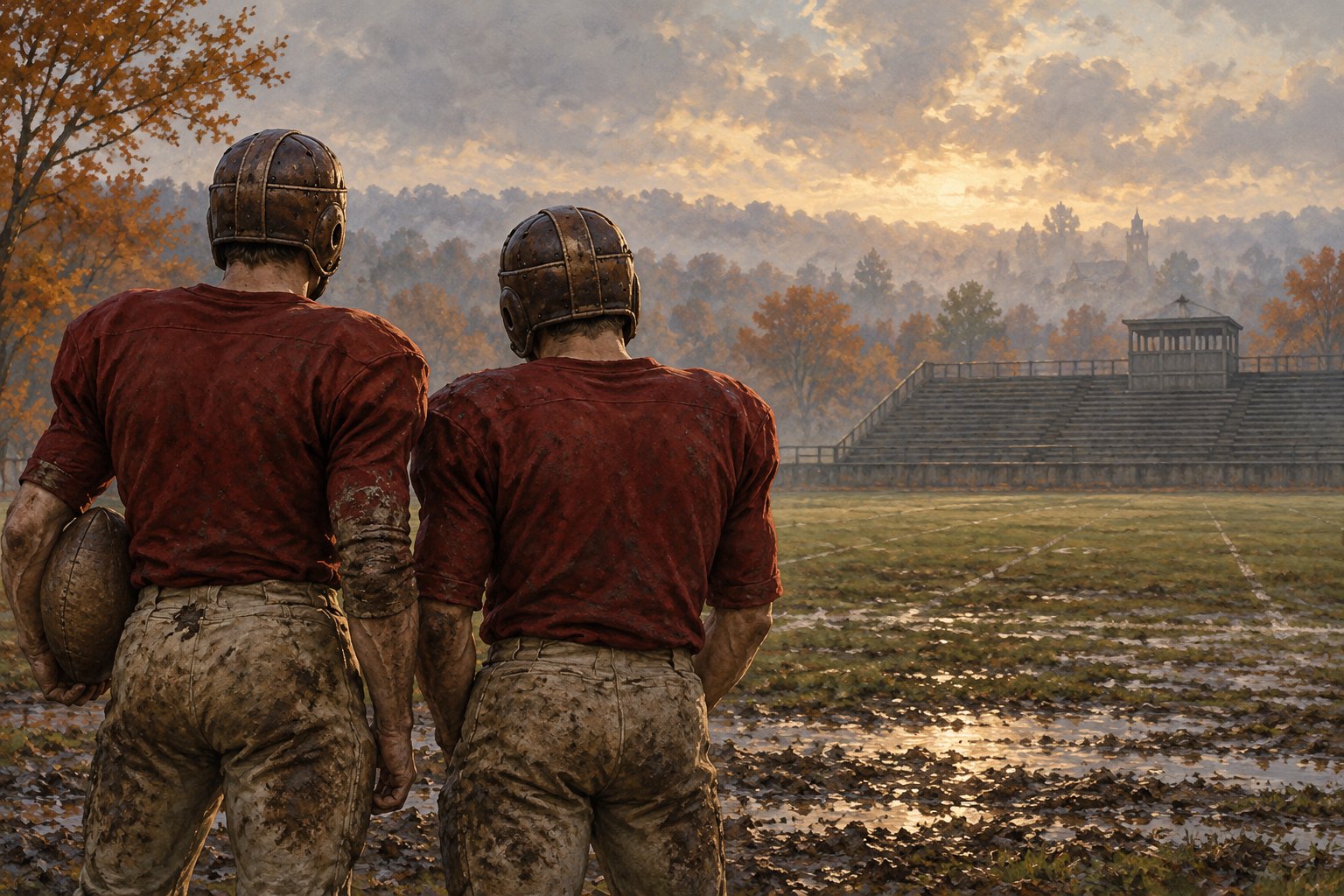
UW–Madison’s reporting describes a recreated 1940s Camp Randall, including period-style Wisconsin uniforms. It also explains that a stadium view drew on a historic overhead photograph and modern LIDAR scans. These are documented production details; they should not be mistaken for evidence that every depicted play or encounter happened exactly as shown.
The setting has a purpose beyond recognition for Wisconsin fans. A college stadium supplies a whole social world: spectators, teammates, rivalries, expectations, and the anticipation of another game. Establishing that world gives the subsequent military story something specific to leave behind.
My reading of the premise is that the campus material carries a substantial share of the film’s potential emotional force. If civilian life is treated merely as a brief introduction to combat, the audience may understand the men’s achievements without understanding their attachments. If it has room to breathe, the stadium can become a place the viewer remembers alongside them.
For viewers familiar with Camp Randall, recognition may deepen that response. For everyone else, the dramatic task remains the same: make this place matter through the characters who inhabit it.
A football game with a different meaning
The title refers to a football game played by Marines on Guadalcanal on Christmas Eve, 1944, before the invasion of Okinawa. That historical setting gives the competition a troubling double perspective. The participants have a game to play; later generations know the larger danger surrounding it.

The most useful interpretation of that game begins with its ordinary pleasures. Competition can occupy attention completely. Players recognize familiar movements, shared rules, and skills developed over years. Within a military existence shaped by unfamiliar threats, football offers something they know how to do.
That does not make the game trivial. Its temporary boundaries may be precisely what gives it value. A whistle can stop a play. A rule can define a foul. Athletic effort takes place inside an agreed structure, even when the contest becomes rough. War offers no comparable assurance that discipline, ability, or determination will produce a survivable outcome.
This is also why the football should not function simply as preparation for battle. Teamwork links the two experiences, but treating combat as a bigger championship would diminish the human stakes. The strongest possibility in this premise is that the sport preserves a connection to life outside war.
Watch the characters without giving them hindsight
Historical knowledge can turn every early smile into an omen. That response is understandable, especially with Bauman and Schreiner, but it can also flatten the people being remembered. They lived forward through events whose full meaning they could not know.
Our discussion of how hindsight changes the way we interpret football decisions offers a useful viewing habit here: distinguish what an observer knows afterward from what someone could understand in the moment. Applied to historical drama, that habit leaves room for uncertainty and ordinary human judgment.
A character-centered assessment should therefore look beyond whether these men appear heroic. Do they listen to one another? Can their relationships accommodate disagreement? Does the film give their civilian identities continuing importance after enlistment? Those questions will reveal more about its dramatic achievement than the scale of its battle scenes alone.
The deeper stakes: remembering lives beyond their endings
The premise of The Mosquito Bowl invites an interpretation of football as a form of continuity. A familiar game briefly reconnects young men with identities that military service has complicated: athlete, rival, teammate, friend. For Bauman and Schreiner, the Wisconsin connection makes that continuity especially tangible.
The emotional danger is to let the word hero replace everything else. Honor becomes more meaningful when it includes personality, pleasure, and unfinished plans. Their deaths deserve remembrance; their lives deserve attention.
That is the standard this story sets for its screen adaptation. The most lasting achievement would be to make viewers remember Bauman and Schreiner as friends with futures they could imagine, and to make a football game matter because, for a little while, it belongs to the life they still have.
Original content by this site's editorial team. Published: October 28, 2026 at 17:22:04 PDT (Los Angeles time)