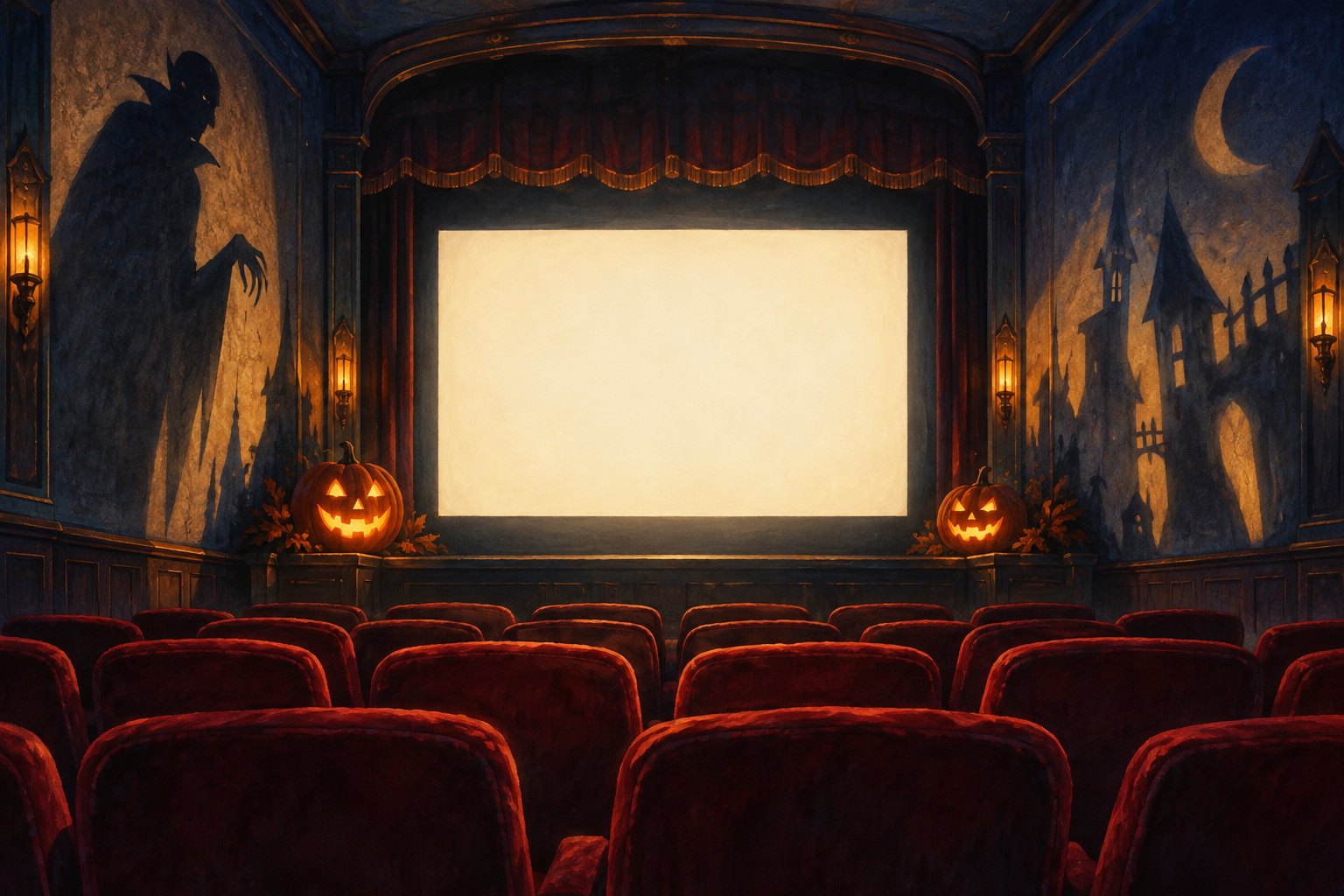
Nosferatu, Beetlejuice, and Halloweentown are among the choices for The Disco Biscuits’ Halloween Movie Night, according to Relix. They offer three distinctly different evenings: sustained unease, anarchic comedy, and the comforting discovery that being different might mean finding your people. Their shared Halloween appeal conceals a fascinating disagreement about whether the supernatural destroys a home or helps someone build one.
For this comparison, the films under discussion are F. W. Murnau’s 1922 Nosferatu, Tim Burton’s 1988 Beetlejuice, and the 1998 Disney Channel movie Halloweentown. My pick for the richest balance of character, comedy, and communal enjoyment is Beetlejuice. But viewers seeking an enveloping nightmare or a gentler seasonal ritual have compelling alternatives.
Spoiler warning: The analysis below discusses major character developments and endings in all three films. These are critical judgments about the movies, not a prediction of the event’s selection.
Nosferatu: Ellen Sees What Others Cannot Stop
The frightening thing about Murnau’s Nosferatu is how readily ordinary life makes room for its monster. Hutter travels to Count Orlok’s castle on property business. The journey begins with the recognizable optimism of someone expecting professional opportunity; the danger emerges as his confidence becomes increasingly inadequate to what he encounters.
Max Schreck’s Orlok provides almost none of the reassurance associated with a charming screen vampire. His rigid posture and elongated features make even stillness feel aggressive. Murnau does not need constant attacks. A figure occupying a doorway can be enough, because the image makes an ordinary architectural boundary seem useless.
Yet Ellen supplies the film’s most consequential perspective. While Hutter’s journey gives the narrative its initial movement, her recognition of the threat eventually determines its outcome. She deliberately keeps Orlok with her until sunrise, sacrificing herself to destroy him. The resolution makes her active, but it does not make her freedom uncomplicated: she can save others only by accepting a devastating personal cost.
That tension is what keeps the ending from feeling like a simple triumph. Read through Ellen, the story asks why recognizing danger and bearing its consequences fall to the same person. The community survives, but the person whose understanding matters most cannot share in its restored security.
As a Halloween choice, this is the most demanding of the three. Its power depends on watching movement, waiting through pauses, and allowing an image to remain disturbing after its immediate surprise has passed. The distinction between an ominous premise and sustained dramatic pressure also informs our examination of the storytelling challenge facing 99 Nights in the Forest. Here, dread has a destination: Ellen’s decision makes the atmosphere emotionally consequential.
Beetlejuice: Lydia Is the Reason the Chaos Matters
Beetlejuice initially invites us to side with Adam and Barbara Maitland, the recently deceased couple whose home acquires new living occupants. Their problem is absurd but immediately understandable. They have lost their lives, yet the indignity that occupies them is losing control of their house.
Burton turns that possessiveness into a comic trap. The Maitlands want to frighten the Deetz family away, but they are poorly suited to cruelty. Recruiting Beetlejuice escalates a domestic conflict into something predatory. Michael Keaton’s character is entertaining precisely because he refuses restraint; that same refusal makes him an appalling person to trust with anyone else’s problem.
Lydia changes the emotional terms. Her declaration, “I myself am strange and unusual,” explains more than her ability to perceive ghosts. It describes a teenager who already feels separated from the adults around her. The Maitlands’ invisibility and Lydia’s sense of being overlooked become parallel conditions: the dead cannot make themselves seen, while a living girl struggles to feel understood.
Winona Ryder gives that connection a seriousness the surrounding grotesquerie needs. Without Lydia, the film could remain an elaborate dispute over furniture and property. Through her, the house becomes a question of care. Who notices distress? Who listens? Who treats another person as more than an inconvenience or an opportunity?
The dinner-table possession sequence crystallizes the film’s comic intelligence. The Maitlands intend terror, but their targets find the experience exciting. The haunting fails because the ghosts misunderstand their audience. Spectacle cannot solve a conflict when the people involved disagree about what the spectacle means.
My reservation is that the film’s frantic inventions sometimes leave its emotional transitions feeling hurried. Nevertheless, its eventual accommodation between the living and dead is more satisfying than a clean victory for either household. Lydia does not need everyone to become like her. She needs relationships in which her difference does not disqualify her from affection.
Halloweentown: Marnie Finds a World That Makes Sense
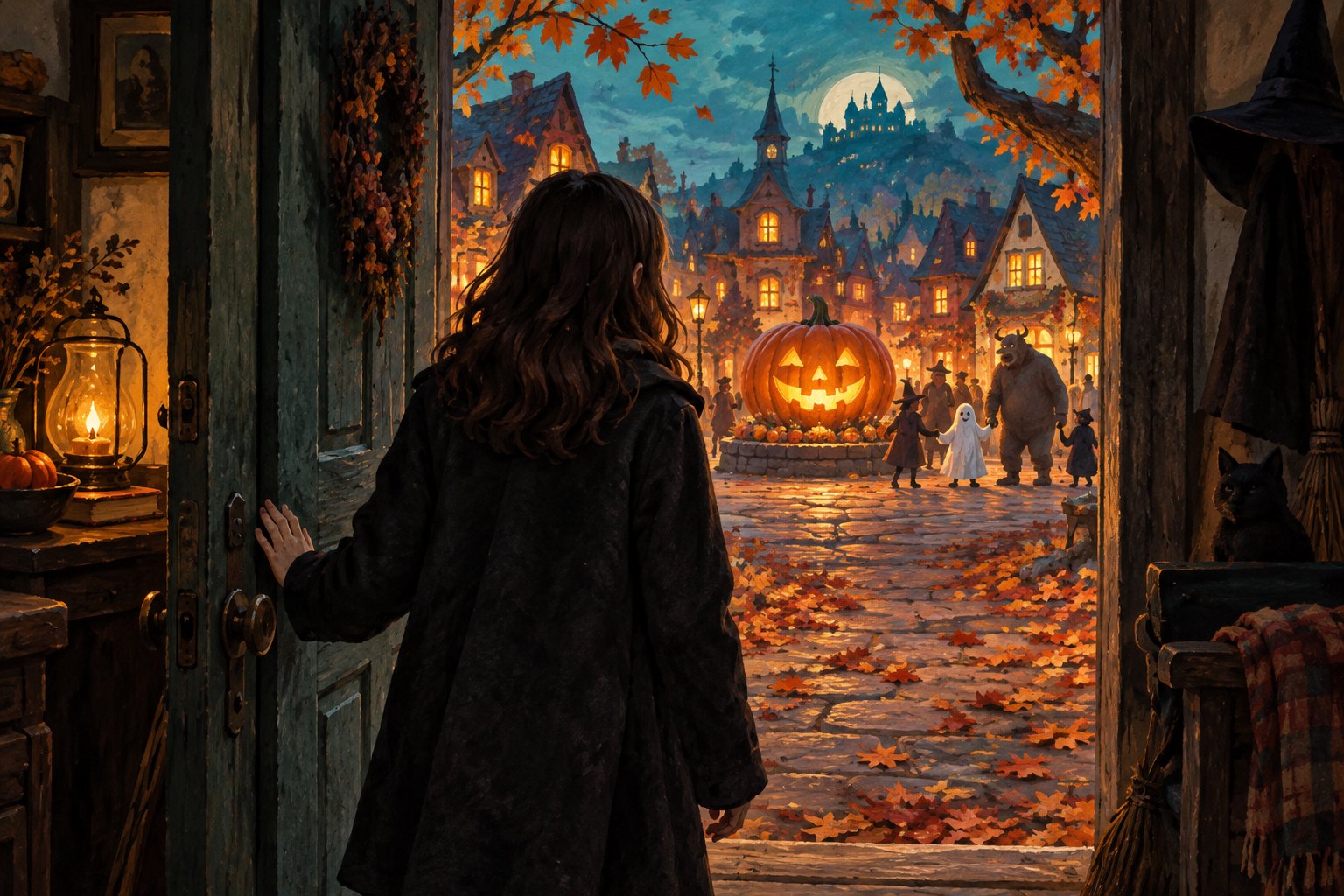
Where Lydia finds companionship across the boundary between life and death, Marnie discovers a hidden part of her family. Halloweentown turns her attraction to Halloween into something more substantial than a seasonal preference: the magical world offers an explanation for interests her mother has discouraged.
The strongest conflict is between three generations. Gwen wants her children to live ordinary mortal lives. Aggie wants Marnie to recognize and develop her powers. Marnie wants access to the knowledge necessary to decide who she might become. Each position has an emotional logic, even when the movie clearly favors discovery over restriction.
Aggie’s “Being normal is vastly overrated!” provides the film’s welcoming thesis. Debbie Reynolds makes the sentiment feel like permission from an adult who enjoys her own life. Kimberly J. Brown’s Marnie responds with curiosity and determination, giving the fantasy a center that does not depend entirely on its creatures or decorations.
The movie is less persuasive when it explains magical mechanics than when it lets family disagreement drive the action. Its broad villainy and straightforward obstacles leave little ambiguity. But that simplicity serves a particular pleasure: the strange world becomes navigable, and fear becomes something children can confront with help.
The family’s combined resistance to Kalabar matters more than a solitary demonstration of Marnie’s talent. Growing into her identity requires the adults to change, too. Gwen’s protective instincts must make room for knowledge, while Aggie’s encouragement becomes part of a shared responsibility.
The village setting supports that sense of belonging. Monsters inhabit a community rather than merely interrupting one. Readers interested in how surroundings contribute to a story can also explore our discussion of what a real location brings to the screen. A convincing place gives characters somewhere to belong before dialogue explains why belonging matters.
Which Film Makes the Strongest Halloween Choice?
- Choose Nosferatu for concentrated dread. Its unsettling images reward attention, and Ellen’s fate leaves an ache beyond the monster’s defeat.
- Choose Beetlejuice for comic energy with an emotional center. The visual surprises invite collective laughter, while Lydia gives the mayhem lasting purpose.
- Choose Halloweentown for warmth and discovery. Its greatest pleasure is entering a community where the supposedly frightening can feel familiar.
The Deeper Connection: Who Gets to Feel at Home?
These choices for The Disco Biscuits’ Halloween Movie Night are compelling together because each makes domestic security uncertain. Orlok brings destruction toward Ellen’s home. The Maitlands discover that death does not preserve ownership. Marnie learns that the household rules meant to protect her have also concealed part of her identity.
Their resolutions reveal very different values. Nosferatu restores safety through sacrifice. Beetlejuice finds it through coexistence. Halloweentown creates it through a family’s willingness to acknowledge what it has suppressed. That is why the choice involves more than how frightening the evening should be. It determines whether Halloween ends with mourning, negotiation, or the relief of finally being welcomed.
Original content by this site's editorial team. Published: September 17, 2026 at 14:17:30 PDT (Los Angeles time)