The Street Fighter movie popcorn bucket has an appealing proposition: movie merchandise is allowed to be ridiculous. Engadget’s description of the tie-in celebrates its goofiness, putting the pleasure of an outlandish concession item at the center of the conversation. For something whose basic job is to hold a snack, that is already a surprisingly ambitious assignment.
My view is that silliness can be a legitimate virtue here. A souvenir does not need to look sophisticated to make a night at the movies more enjoyable. But the bucket raises two separate questions: does the joke make an appealing object, and does that playful spirit tell us anything useful about the film?
This is spoiler-free commentary on the movie tie-in. It is not a hands-on product test or a review of the film; no judgment about its plot, performances, or dialogue is implied.
Why a goofy popcorn bucket can be a good idea
A conventional popcorn container disappears into the experience. You buy it, find your seat, and eventually discover that you have eaten most of its contents before the movie begins. A novelty version asks for attention of its own. It turns an ordinary purchase into a small performance of enthusiasm.
That performance need not be embarrassing. There is something welcoming about merchandise that gives adults permission to enjoy an impractical-looking object. Film culture has room for careful criticism and the uncomplicated pleasure of carrying something funny through a theater lobby. Those impulses can coexist in the same person.
For a Street Fighter tie-in, the most interesting possibility is that the humor feels affectionate. A good collectible lets an admirer share in the joke. A weaker one seems to assume that recognition alone is enough to justify a purchase. The difference lies in whether the object offers a playful idea beyond the name attached to it.
That is the standard I would apply to this bucket: does its absurdity remain enjoyable after the first surprise? A design that rewards a second look has a better chance of becoming a treasured souvenir than one whose entire appeal depends on an initial reaction.
Recognition is the beginning of character, not the end
The bucket also provides a useful way into thinking about adaptation. Merchandise has to communicate quickly. A film has time to complicate what its audience recognizes. Confusing those jobs is where an adaptation can become a succession of familiar images with too little happening beneath them.
Consider a fighter from the character’s own perspective. A distinctive appearance might tell the audience whom they are watching, but it does not explain what that person fears losing. A dramatic entrance might establish confidence, but it cannot establish whether that confidence is deserved. Those questions require behavior, relationships, and consequences.
In evaluating a Street Fighter film, I would look for fights that reveal choices. Does someone press an advantage, hesitate, underestimate an opponent, or change tactics after a setback? Such decisions can turn physical action into characterization. A recognizable pose becomes more meaningful when the scene gives us a reason to care about the person striking it.
Our discussion of the challenge of preserving Lollipop Chainsaw’s appeal in live action approaches a related question: what needs to survive the transition beyond the recognizable surface? The popcorn bucket makes that distinction especially clear because surface appeal is a perfectly reasonable part of its job.
Playfulness works best when somebody cares
A silly promotional object does not establish a movie’s tone. Still, the enthusiasm surrounding that description points toward a worthwhile critical principle: heightened material can benefit from filmmakers who enjoy its eccentricities.
There is a difference between inviting viewers into an extravagant world and repeatedly signaling that the world is too ridiculous to take seriously. The latter approach can leave the characters stranded. If every expression of ambition or loyalty becomes an opportunity for a joke, the audience has little reason to invest in either.
My preference is for spectacle that allows characters to mean what they say. A situation can be outrageous while a person’s frustration, pride, or disappointment remains understandable. The comedy then comes from the encounter between conviction and circumstance, rather than from treating conviction itself as foolish.
That is an expectation for the film, not a conclusion drawn from its merchandise. The bucket can invite a laugh immediately. The movie must build the context that makes laughter, tension, and emotional investment work together.
The practical test happens in a theater seat
Enjoying the idea of a collectible is different from enjoying its use. A popcorn bucket has to function in a cramped, dimly lit environment, potentially alongside a drink, a coat, and another person’s elbow. A striking promotional image cannot answer those practical questions.
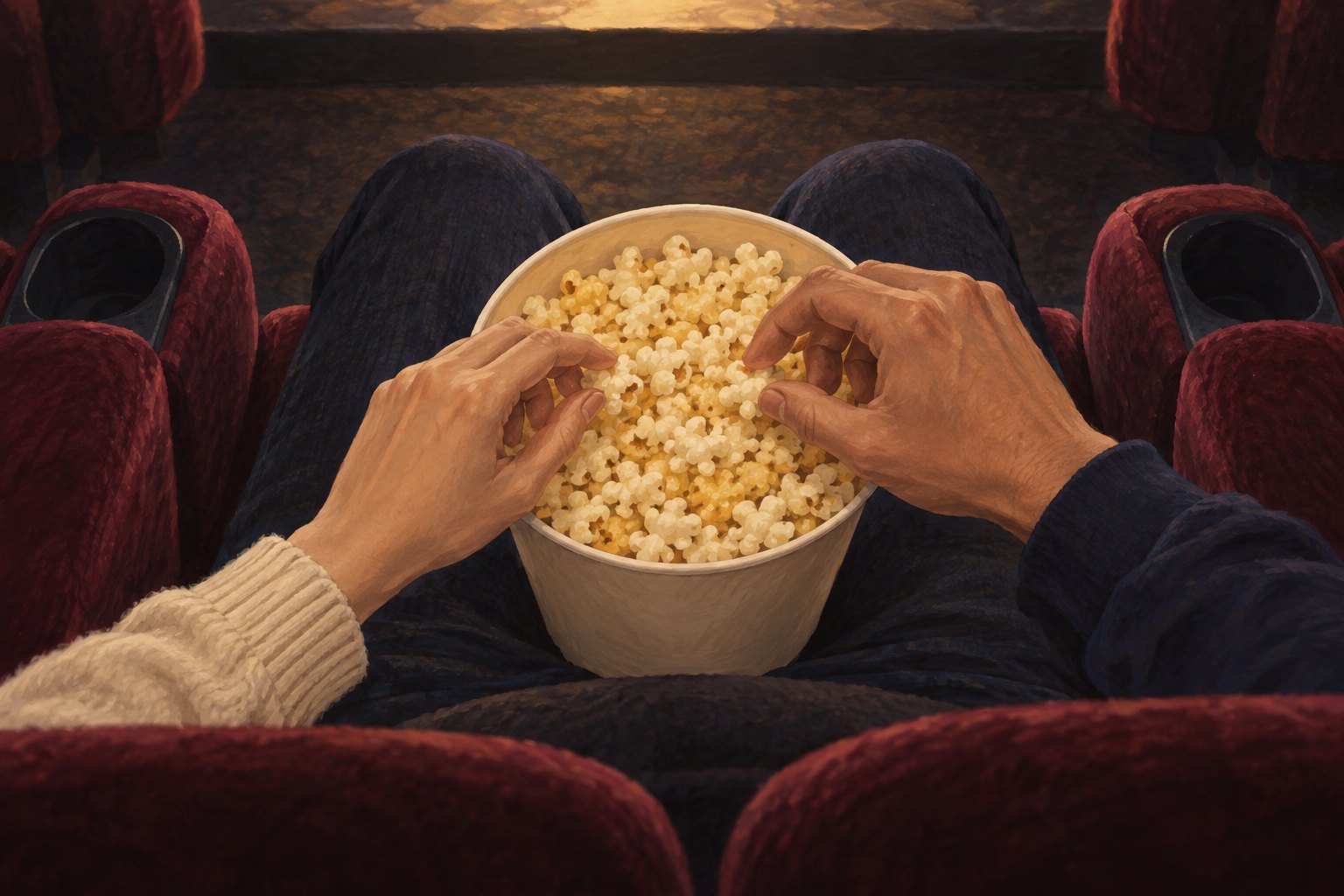
Before buying the Street Fighter bucket, these are the details worth checking in a theater’s official listing or at the concession counter:
- Total price: Establish what the purchase includes, especially whether popcorn is included or sold separately.
- Availability: Confirm participation and stock with the location you intend to visit.
- Comfort: Consider whether the container will be easy to hold and reach into throughout a screening.
- Care: Check cleaning instructions before assuming it can become an everyday snack bowl.
- Storage: Decide where it will live once the outing is over.
These are purchasing criteria, not confirmed specifications for this particular product. Without verified sales details or a hands-on examination, a firm recommendation about its value would be premature.
Let the souvenir earn its own place
A useful personal test is whether you would still want the bucket if the movie disappointed you. If the answer is yes, the object has an appeal independent of the film. If the answer is no, waiting until you have seen the movie may make the purchase more satisfying.
Neither answer makes someone a better fan. Some people collect objects for their design; others want reminders of experiences they loved. Trouble begins when a purchase is treated as proof of enthusiasm, or when owning the merchandise starts to feel like a reason to defend the film.
Our commentary on what makes a Resident Evil adaptation feel frightening offers a complementary way to think about expectations: look for the experience the movie creates. A souvenir can express anticipation, but it cannot settle the critical question.
What the bucket can mean after the credits
The deeper appeal of movie merchandise is its ability to attach a physical object to an otherwise fleeting evening. A bucket may eventually recall the friend who came along, the anticipation before the lights went down, or the joke that made the outing memorable. Its usefulness as a keepsake can outlast its usefulness as a container.
That gives the Street Fighter popcorn bucket a modest but worthwhile opportunity. It can make moviegoing feel playful before the screening even starts. My enthusiasm is for that possibility, with the film’s verdict still reserved for the film itself. The best outcome is a funny souvenir attached to an experience worth remembering.
Original content by this site's editorial team. Published: September 19, 2026 at 10:22:41 PDT (Los Angeles time)