Sony Pictures has acquired film rights to Brett Bean’s D’Orc, according to Deadline, which describes the comic-book series as a bestseller. For readers curious about a screen adaptation, that is the central development: the property has attracted a major studio’s interest. It is also where the firm conclusions should stop. A rights acquisition alone does not establish a finished movie, a release date, or an artistic direction.
The more interesting question is what Sony might do with that opportunity. A comic already tells its story through images, but turning those images into cinema requires more than movement and sound. My view is that the eventual adaptation should be judged by how effectively it gives viewers access to its characters—not simply by how many panels fans recognize.
This is spoiler-free adaptation commentary, not a review of a completed film. There is no basis here for evaluating performances, quoting movie dialogue, or describing scenes as though they have been filmed.
What the D’Orc rights deal actually establishes
The reported acquisition connects three essential elements: Sony Pictures, Brett Bean, and the film rights to D’Orc. The bestseller description conveys the comic’s commercial appeal, but it does not provide sales figures or tell us how many readers would buy movie tickets. Those are separate questions.
Likewise, the acquisition itself does not settle whether an adaptation would use animation, live action, or some combination of techniques. Nor does that fact alone establish casting, a director, a screenplay, a production schedule, or a release platform. Readers searching for those details should distinguish a specific announcement from an assumption attached to the studio’s name.
The distinction matters because rights news can sound closer to release news than it really is. Our examination of what Sony’s international rights agreements mean for viewers explores another situation in which the nature of a deal determines what audiences can reasonably conclude. Here, the useful takeaway is an adaptation opportunity, with its execution still an open question.
Character perspective should guide the adaptation
For a prospective D’Orc movie, I would start the critical conversation with perspective. Whose experience organizes a scene? What does that person understand, misread, or conceal? What changes because of a choice they make? These questions are more useful than asking whether every element of the comic can fit into a feature.
A character can dominate the frame without becoming the center of the storytelling. If the camera shows everything while giving us little sense of what events mean to the person experiencing them, an adaptation may reproduce appearances while losing emotional access. Spectacle is most involving when viewers understand what someone stands to gain or lose inside it.
That is an evaluative standard, not a claim about Bean’s plot. Applying it responsibly would require examining the actual screenplay and finished scenes. For now, it offers a concrete way to think about adaptation: preserve the relationship between a character’s decisions and their consequences, even when the medium requires changes in presentation.
For newcomers, this approach also provides an entry point. Prior knowledge should enrich a movie rather than supply the motivation the movie leaves out. A first-time viewer ought to understand why a choice matters without needing a reader beside them to explain it.
From comic panels to screen time
The move from a comic to a film changes who controls the pace. On a page, readers can linger over a face, scan backward, or hold a moment before turning the page. In a movie, shot duration, editing, performance, and sound shape that experience. A visually close reproduction can therefore produce a very different emotional effect.
Consider the general problem of a reaction shot. A drawn expression can remain available for as long as the reader wants to study it. On screen, holding that expression for an extra second might suggest hesitation, resentment, embarrassment, or disbelief. Cutting away immediately might erase the ambiguity. The adaptation must make an interpretive decision even when it appears to be copying the image.
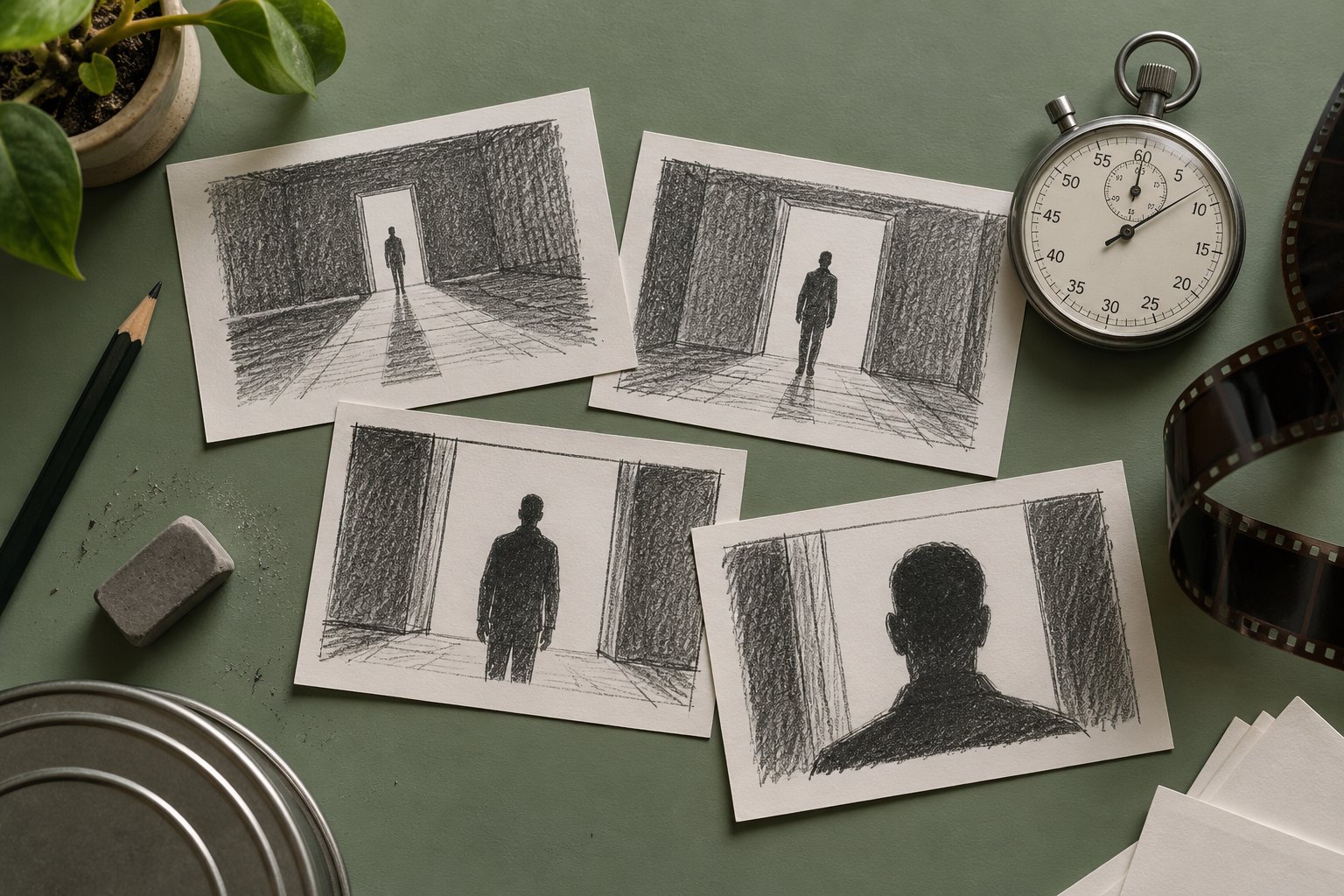
That is why I would look for deliberate pacing in any eventual D’Orc footage. Do scenes allow a response to register? Does a visual reveal arrive when the audience has enough information to appreciate it? Can the film communicate through framing and movement without explaining every image aloud? These choices would reveal more about the adaptation’s confidence than a collection of familiar compositions.
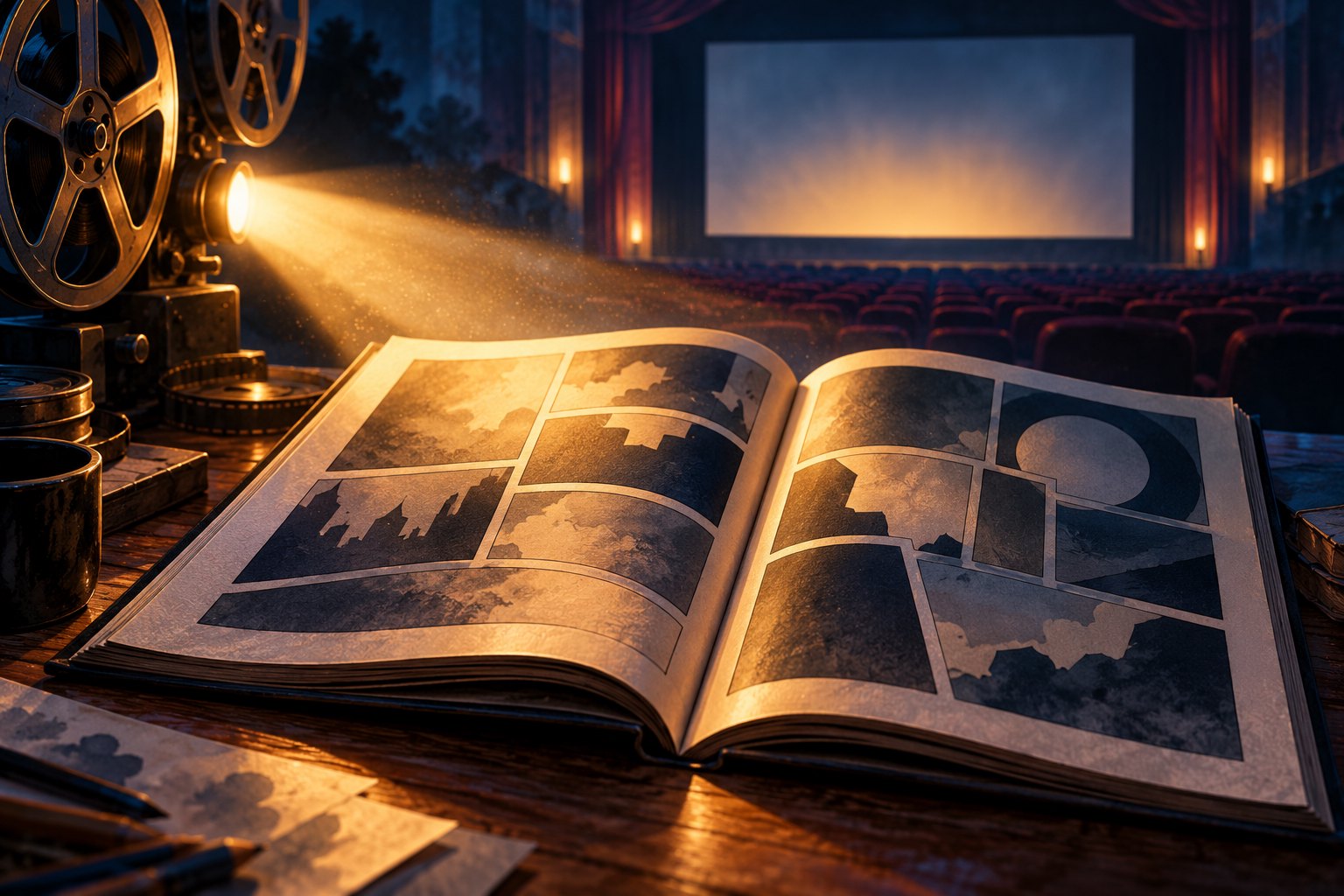
The illustration above represents those general filmmaking decisions; it does not depict production materials from the project.
Faithfulness needs a more useful definition
Discussions of adaptations often treat faithfulness as a checklist of retained details. That approach can identify omissions, but it cannot fully explain whether a film works. A scene might retain its setting and dialogue while changing its meaning through performance, emphasis, or placement.
For D’Orc, my preferred standard would be dramatic function. What does a moment reveal? How does it alter a relationship? Why does the next event follow? If an adaptation changes the surface of a sequence while preserving those connections, the result may remain persuasive. If it preserves the surface while weakening the connections, recognition alone will offer limited compensation.
None of this gives filmmakers an automatic defense for every alteration. Changes should earn their place through what they accomplish on screen. Combining material, shortening an exchange, or expanding a supporting presence can sharpen a story, but can also flatten it. The finished work must provide the evidence.
Writing will be central to that process. As our commentary on why the script matters in an intriguing film announcement argues, the promise of a project becomes meaningful through specific dramatic choices. An appealing acquisition cannot make those choices on its own.
What would make the next announcement meaningful?
Further news would be most useful if it clarified how the project intends to tell its story. A named filmmaker could offer a point of creative responsibility. A confirmed format could narrow the discussion of visual technique. A substantive account of the adaptation’s scope could explain what kind of viewing experience is being developed.
Even then, an attachment would establish involvement rather than guarantee quality. Early footage would deserve similarly careful attention. An effective preview might demonstrate tone and visual personality, while leaving character development and narrative structure impossible to assess. A full review would need the full film.
For readers, three questions can keep expectations grounded: What has actually been announced? What does the new information clarify? What remains an interpretation? Those questions leave plenty of room for enthusiasm while making it easier to recognize when publicity has supplied a mood instead of an answer.
The real opportunity for Sony’s D’Orc
The deeper promise of adapting D’Orc lies in giving an existing work another expressive form. A movie can use a voice, a silence, a cut, or a sustained look to create an experience unavailable on a printed page. The challenge is to make those additions serve the story’s identity.
My hope is that Sony’s acquisition leads to a film with the confidence to make those decisions thoughtfully. Brett Bean’s name and the comic’s reported success explain why the announcement attracts attention. What would justify that attention on screen is more demanding: characters whose choices matter, images with dramatic purpose, and a story that feels complete to the audience watching it. The rights deal opens that possibility. The filmmaking will have to fulfill it.
Original content by this site's editorial team. Published: October 19, 2026 at 15:19:06 PDT (Los Angeles time)