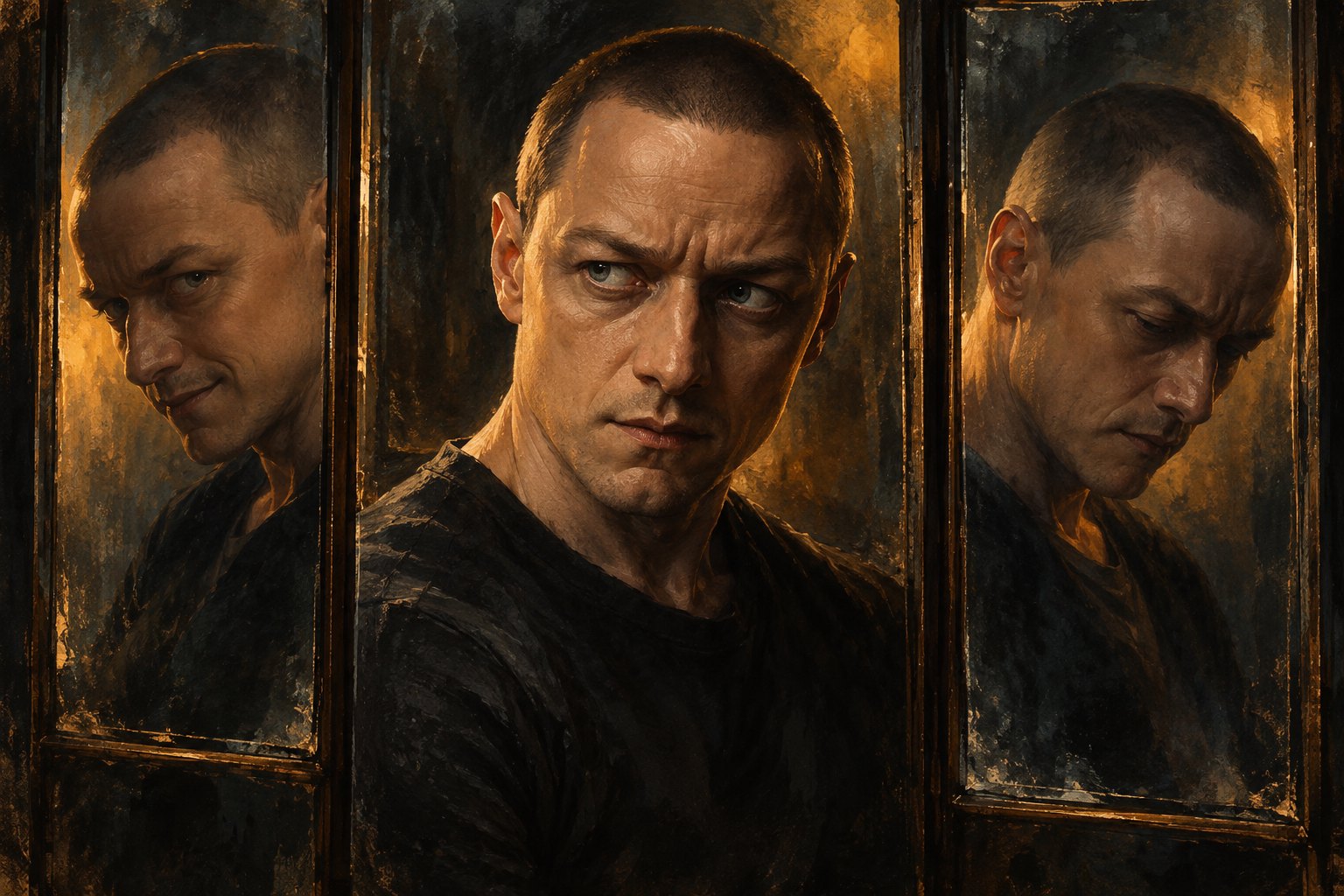
James McAvoy says Split is the only film that “really consistently pays me,” according to Variety. That is a statement about his experience of being paid, rather than a ranking of his performances. It nevertheless offers a compelling reason to revisit a thriller whose central attraction remains unusually concentrated: watching McAvoy change the meaning of a room without leaving it.
The remark does not establish his payment amounts or contract terms. Nor does it demonstrate that his other films have never paid him beyond an initial fee. The useful critical question is what Split gives audiences when they return. My answer is a remarkably controlled performance inside a suspense film whose emotional insight and troubling ideas are difficult to separate.
Spoiler warning: This review discusses the kidnappings, childhood abuse, deaths, ending, and connection to Unbreakable.
McAvoy makes every conversation a problem to solve
Written and directed by M. Night Shyamalan, Split follows three abducted teenagers—Casey, Claire, and Marcia—whose captor has competing identities. McAvoy’s assignment involves more than giving each identity a recognizable voice. He must establish different relationships to authority, embarrassment, intimacy, and control. Those distinctions determine what the captives can attempt.
Dennis makes order feel coercive. His precision implies rules that the girls have not been permitted to learn. Patricia supplies a different threat: composure that presents monstrous intentions as reasonable arrangements. Hedwig, who identifies as a nine-year-old, offers apparent accessibility without dependable safety. The change between them can suggest an opening, then close it before anyone moves.
For me, McAvoy is most effective when these distinctions remain small. A pause becomes proprietary. An expression asks for approval. A courteous sentence sounds like an instruction that cannot be refused. The audience begins studying him as Casey does, looking for useful information rather than simply admiring transformation.
This is also why the performance deserves examination independently of its financial afterlife. As our reassessment of Jesse Eisenberg’s Lex Luthor argues, the public story attached to an actor can become a shortcut around the actual work. McAvoy’s payment remark is an invitation to look again, not a verdict on what we should see.
Casey survives by watching, but watching has a cost
Anya Taylor-Joy’s Casey gives McAvoy’s performance its necessary resistance. Her watchfulness prevents the film from becoming only an exhibition of his range. While Claire and Marcia pursue more immediate forms of escape, Casey tries to understand the person controlling the door. Her relative stillness is active: she is collecting evidence.
Shyamalan gradually connects that vigilance to childhood abuse. The revelation changes how we interpret Casey’s behavior. What might initially look like withdrawal becomes a survival habit developed under circumstances she never chose. Taylor-Joy makes that distinction legible without turning every close-up into an explanation.
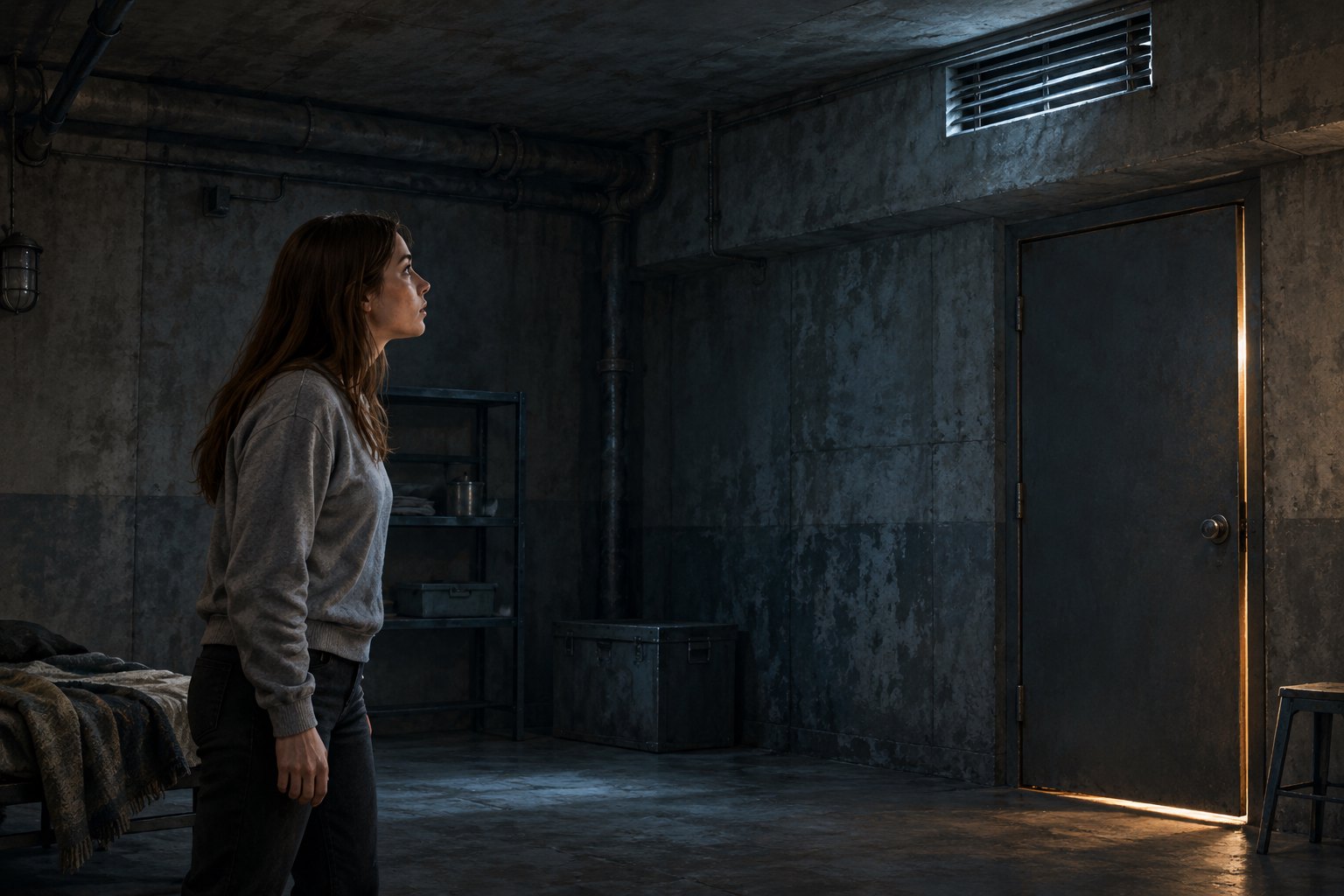
Her exchanges with Hedwig expose the limits of reading another person correctly. She recognizes his desire for attention, but recognizing a need does not guarantee influence over it. His eagerness can coexist with possessiveness. The sequence involving his supposed window is especially cruel: Casey hears a practical possibility where he means something entirely different.
The suspense therefore depends on interpretation. What does this person mean? What will offend him? Is cooperation buying time or reinforcing his authority? These are more unsettling questions than whether someone can outrun a pursuer, because the correct answer can change mid-conversation.
Claire and Marcia also deserve more consideration than the film ultimately gives them. Their attempts to act are understandable responses to imprisonment. Their deaths should not retroactively make their resistance foolish, or establish Casey’s suffering as a qualification for survival. The screenplay’s allocation of interior life makes that distinction harder to maintain than it should be.
Dr. Fletcher sees a person where the thriller sees a revelation
Betty Buckley’s Dr. Karen Fletcher introduces another form of attention. Her conversations with McAvoy require patient listening rather than escape planning. She notices discrepancies and tries to understand their significance. In these scenes, the film briefly gives observation a compassionate purpose.
That compassion matters because Dennis, Patricia, and Hedwig are not interchangeable participants in their alliance. They have different vulnerabilities and ways of justifying themselves. McAvoy gives those differences enough texture that Fletcher’s determination to reach them feels dramatically credible, even when the surrounding story is preparing a supernatural escalation.
Kevin’s brief return is the performance’s emotional center. Casey’s use of “Kevin Wendell Crumb” interrupts the struggle for control, and McAvoy suddenly appears bewildered by the situation around him. The effect comes from relinquishing certainty. After so much threatening command, vulnerability becomes startling.
Yet the film also uses Fletcher’s theories to bridge its clinical vocabulary and monster mythology. That is an uneasy construction. Split asks us to take the therapist’s concern seriously while making her explanations part of the machinery that prepares the Beast. Its emotional credibility and fantasy logic do not always sit comfortably together.
The Beast turns suffering into a hierarchy
“The broken are the more evolved” distills the Beast’s worldview. The line turns injury into a claim of superiority and divides people according to whether their suffering meets his requirements. It is memorable because it sounds like reassurance until its consequences become clear. The wording and surrounding exchanges appear in the [film’s dialogue transcript](https://www.springfieldspringfield.co.uk/movie_script.php?movie=split).
The ending makes that doctrine materially consequential: the Beast recognizes Casey’s scars and spares her. On one level, the moment allows someone accustomed to being overlooked to be seen. On another, it makes survival depend on a predator’s judgment that she has suffered enough.
My strongest reservation is that the film brings recognition so close to validation. Casey’s resourcefulness is admirable; the abuse that helped shape her vigilance is not a gift. A viewer can appreciate her survival while rejecting the Beast’s attempt to convert trauma into a moral ranking.
That distinction also protects Claire and Marcia from the villain’s logic. Their lives do not matter less because he classifies them as untouched. The most disturbing idea in Split is not simply that pain can produce rage. It is that someone can use pain to claim the right to decide whose humanity counts.
Our analysis of suffering and authority in The Devils explores a related concern: private wounds becoming a justification for power over other people. Here, that transformation happens within a thriller that sometimes seems more impressed by the resulting power than skeptical of its justification.
The final connection changes the genre, not the moral problem
The closing diner scene reveals Bruce Willis as David Dunn, connecting Split to Unbreakable. His identification of “Mr. Glass” turns an apparent reference into a shared-world revelation. The cameo and connection are documented in the [film’s cast and production history](https://en.wikipedia.org/wiki/Split_(2016_American_film)).
This is the essential Easter egg, and it does substantial interpretive work. The Beast’s impossible abilities acquire a different frame: what looked like a psychological thriller has also been introducing a figure within Shyamalan’s superhero mythology.
But that enlargement does not resolve Casey’s story. Her final reaction to the news that her uncle has arrived leaves an immediate human question hanging beneath the franchise reveal. Escape from one enclosure does not automatically establish safety outside it.
That is where Split remains most affecting for me. McAvoy supplies the spectacle, but Taylor-Joy gives us a reason to question what the spectacle means. His film may continue paying him; its strongest scenes continue rewarding attention. Its deeper lesson emerges when we resist the Beast’s account of himself: surviving suffering establishes neither superiority nor permission to harm. It establishes a person’s need for safety, recognition, and a future beyond what happened to them.
Original content by this site's editorial team. Published: October 19, 2026 at 14:39:20 PDT (Los Angeles time)