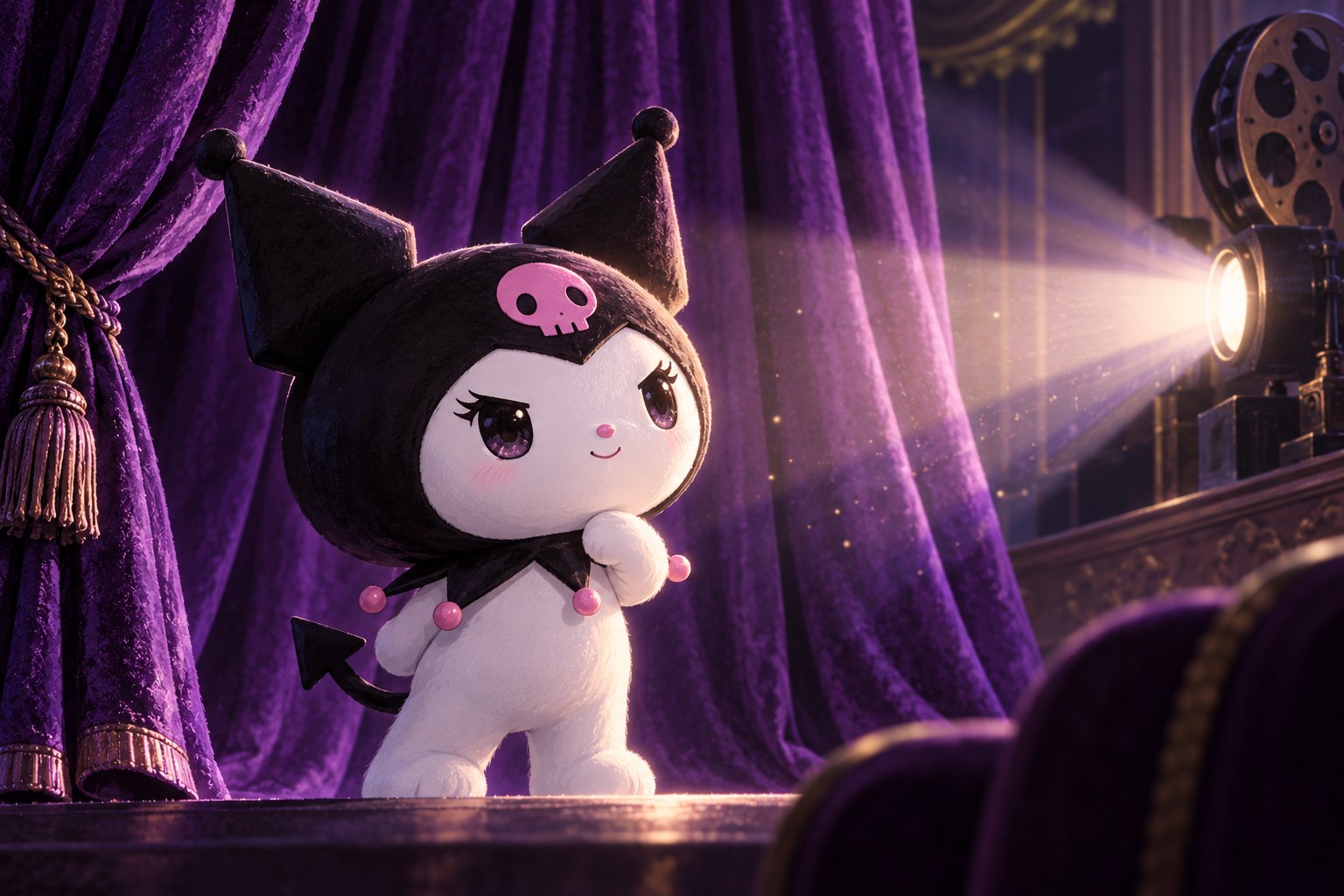
Kuromi is getting an anime movie slated for 2027, bringing the Sanrio mascot into the spotlight of a new film project. For readers looking for the essential news, that is the central announcement. For anyone interested in what might make the movie worth watching, a more demanding question follows: what will being the main attraction allow us to discover about her?
A recognizable character gives a movie an immediate point of connection. Recognition alone, however, cannot tell us whether its scenes will be funny, its relationships convincing, or its emotional turns earned. My interest in this project rests on the opportunity to give Kuromi a sustained point of view: a story shaped by what she wants, what she misunderstands, and what she decides to do.
This is a spoiler-free announcement analysis, not a review of the completed movie. The creative possibilities discussed below are critical expectations, not confirmed plot details.
What the 2027 Announcement Actually Establishes
The reported news is straightforward: Sanrio mascot Kuromi has an anime movie planned for 2027. That provides a release-year target and identifies the character at the center of the project. It does not, by itself, tell audiences how the finished movie will look, sound, or develop its story.
The distinction matters especially for viewers searching for a release date. A year is useful for following a project, but it is not a specific opening day or a guarantee of availability in every territory. Readers should look for a separate local release announcement before making viewing plans.
There is also no basis here for assigning a review score, quoting memorable movie dialogue, or interpreting an ending. Those judgments require the film itself. At this stage, the useful critical task is to identify what the premise of a Kuromi movie makes possible—and what the filmmakers would need to accomplish to make that possibility satisfying.
Kuromi Needs a Want That Can Drive the Story
The first question I would bring to the movie is simple: what does Kuromi want badly enough to make a consequential choice? A central character needs more than screen time. Her priorities should determine why one event leads to another.
That desire need not be enormous. An intimate objective can sustain a movie if pursuing it exposes conflicting needs. Wanting recognition, for example, can clash with wanting privacy; wanting independence can clash with needing help. These are illustrative storytelling possibilities, not predictions about Kuromi’s screenplay. Their value is that they make personality visible through behavior.
From the character’s perspective, the audience should understand why a particular problem matters even before agreeing with her response. If she makes a mistake, we should be able to trace it to a believable judgment. If she changes direction, something she experiences should make that change necessary.
This is one reason character-centered criticism looks beyond the size of an adventure. Our analysis of Seymour’s compromises and Audrey’s hopes in Little Shop of Horrors examines how personal desires give an extravagant premise emotional force. The relevant connection is the storytelling principle: spectacle becomes more involving when we understand what someone believes it will bring them.
Animation Can Reveal What a Familiar Face Conceals
One of animation’s pleasures is its ability to turn tiny physical decisions into character information. The timing of a blink, a held pose, or a glance after a confident entrance can complicate what a figure appears to be feeling. A character does not have to explain every contradiction aloud.
For a Kuromi movie, I would be especially interested in whether the animation allows an expression to develop rather than simply presenting a succession of attractive poses. A smile that arrives too quickly can suggest performance. A pause before responding can make uncertainty visible. Such choices give an audience something to interpret.
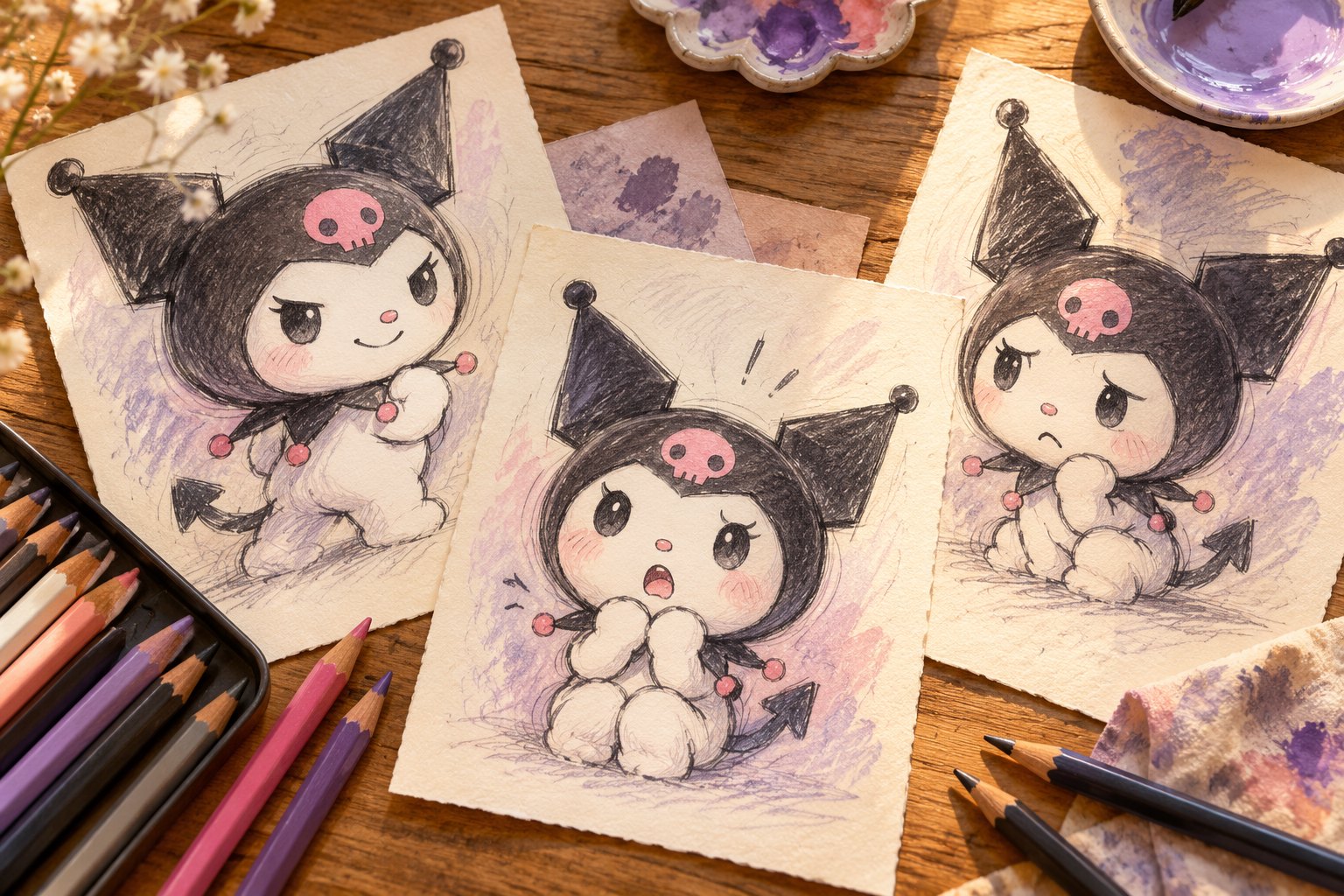
The accompanying illustration explores that expressive range conceptually; it does not represent the movie’s production process or visual style. The underlying critical question applies regardless of the animation technique: does movement help us understand Kuromi, or does it merely keep the frame busy?
Dialogue deserves the same attention. An entertaining line can establish attitude, but a memorable exchange also reveals how one character listens to another. Until actual movie dialogue is available, inventing a catchphrase would obscure the more interesting question of how her voice will function within a scene.
Supporting Characters Should Challenge Her Perspective
A movie centered on Kuromi would benefit from relationships that do more than confirm her importance. Supporting characters become dramatically useful when they have priorities of their own. Their resistance can force the lead to explain herself, reconsider an assumption, or choose between incompatible goals.
That does not require a grim conflict or an elaborate villain. A disagreement between sympathetic characters can be enough. What matters is that the other person has a position the audience can understand, so the scene cannot be resolved merely by declaring the protagonist correct.
My preference would be for a story willing to let its central character be mistaken without withdrawing its affection. That balance can produce comedy and emotional credibility at the same time. It also leaves room for a meaningful resolution: reconciliation becomes satisfying when someone has listened or acted differently.
There is a related interest in perspective in our look at the underestimated characters of Hunting Elephants. Although the projects are very different, the critical concern travels well: an engaging ensemble gives each person a reason to be present beyond serving the most recognizable face.
What to Watch for as More Material Arrives
Future promotional material will be most useful when it clarifies the film’s dramatic direction. A beautiful image can establish atmosphere, but a scene showing an objective, an obstacle, and a response tells us more about how the movie might work.
- A specific motivation: Look for a clear sense of what Kuromi is pursuing and why it matters to her.
- Consequences: Notice whether her actions appear to change the situation, rather than simply accompany it.
- Relationships with friction: Watch for other characters who can surprise her or complicate her understanding.
- Expressive timing: Pay attention to reactions and pauses as well as energetic movement.
- Precise release information: Distinguish the 2027 target from any later announcement about dates and viewing options in your region.
These are ways to assess emerging evidence, not a checklist that a trailer must fully satisfy. Marketing necessarily selects and rearranges material. A complete judgment will depend on how the finished film connects its moments.
The Bigger Opportunity: Recognition Becoming Understanding
The deeper promise of Kuromi’s movie is a shift in the audience’s relationship with its central figure. Recognizing a character happens instantly. Understanding one takes time: we watch decisions accumulate, notice contradictions, and revise our first impressions.
That is the standard I would bring to this project. A satisfying Kuromi film could leave viewers with a more particular sense of how she sees the world, supported by actions they remember rather than a message announced at the end. Its emotional meaning would emerge from the experience of following her.
The 2027 plan gives fans a project to anticipate. The eventual movie will earn its place through the details of that experience: an unexpectedly revealing reaction, a choice with a cost, a relationship that feels different by the final scene. Those are the discoveries that can turn affection for a mascot into affection for a movie.
Original content by this site's editorial team. Published: October 30, 2026 at 21:48:30 PDT (Los Angeles time)