Resident Evil has repeatedly changed what survival looks like. For Alice, it became an extraordinary capacity to fight back. For Bryan, the medical courier at the center of the 2026 film, survival begins with a more embarrassing discovery: knowing how danger works in entertainment does not prepare you to handle it. That difference provides the most useful way into Zach Cregger’s reboot and the film franchise surrounding it.
Spoiler notice: This article discusses the new film’s setup and several encounters, along with earlier films’ premises. The assessment focuses on documented story details and their implications rather than claiming a firsthand evaluation of every performance or sequence.
A new protagonist changes the scale of the nightmare
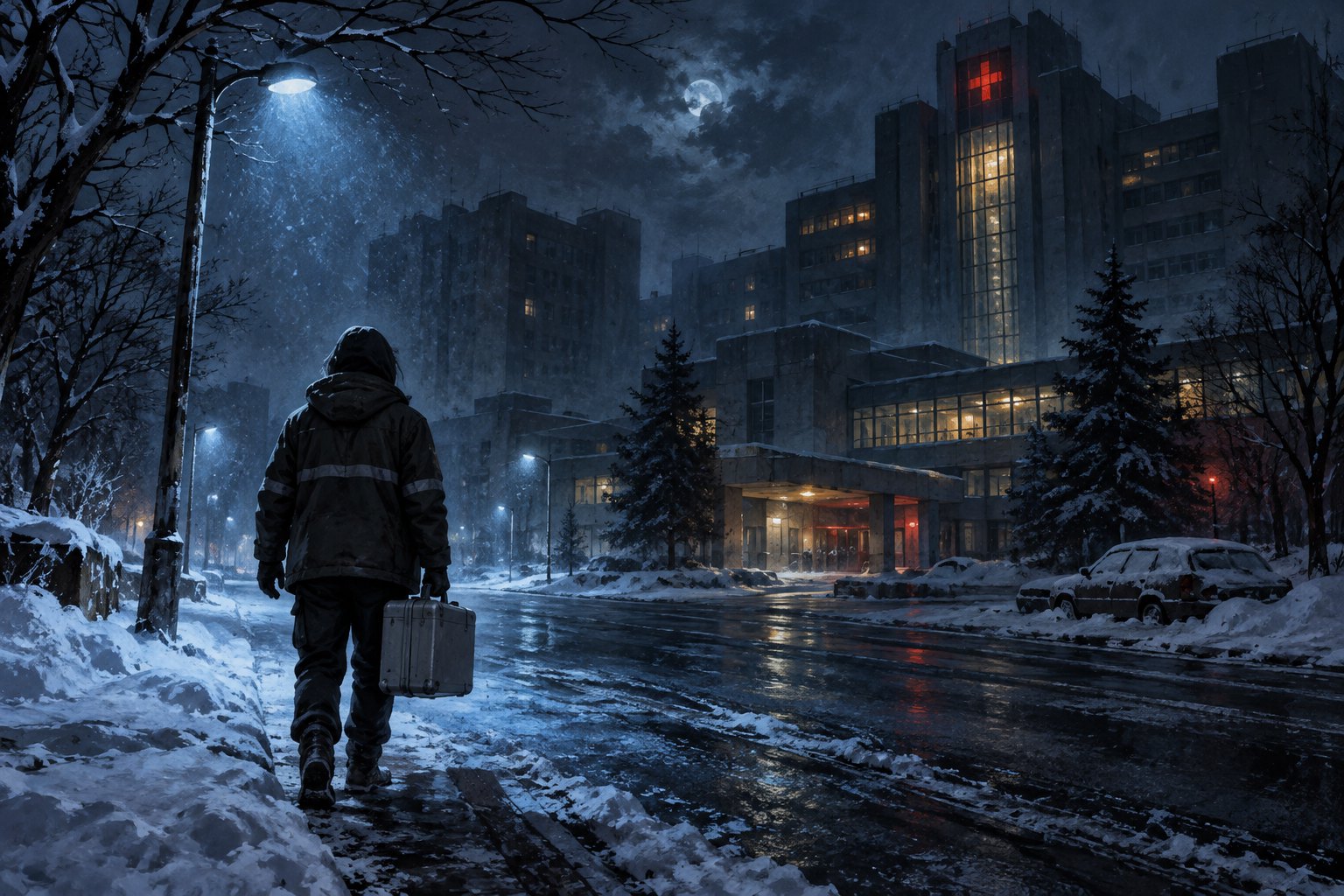
Directed by Cregger and written by Cregger and Shay Hatten, Resident Evil stars Austin Abrams as Bryan. Sony identifies the film as an original story about a medical courier caught in a night of escalating danger, with a theatrical release date of September 18, 2026. That premise places an ordinary occupation, rather than an established franchise hero, at the center of the action. [Sony’s official film synopsis](https://www.sonypictures.com/movies/residentevil8)
The choice matters because a courier’s job depends on a functioning world. Roads connect destinations. A delivery has a recipient. Institutions provide instructions that somebody can reasonably follow. Put that worker inside Resident Evil, and the familiar relationship between effort and outcome becomes unreliable. Completing the assignment and staying alive are suddenly different problems.
My reading is that Bryan’s occupation offers a stronger dramatic starting point than a lengthy explanation of the outbreak would. His task is understandable before the surrounding world is. The audience can grasp what he is trying to accomplish while sharing his uncertainty about almost everything else.
Bryan’s mistakes give the horror a human perspective
The documented opening places Bryan on an icy road during a snowstorm, speaking with his pregnant girlfriend. His journey eventually takes him toward scientists in a Raccoon City hospital. Those details connect his predicament to both an immediate responsibility and a life beyond the delivery. [James Berardinelli’s account of the story](https://www.reelviews.net/reelviews/resident-evil-2026)
There is a useful tension here between accountability and helplessness. Bryan makes mistakes, but a mistake does not make him deserving of what follows. Horror becomes emotionally thin when it treats every bad decision as permission to enjoy a character’s punishment. A more interesting response is to recognize the lapse and still want the person to survive.
His girlfriend also supplies a modest but important measure of the stakes. A character does not need to be humanity’s final hope to have something irreplaceable to lose. The possibility of an ordinary future can make a desperate present meaningful without requiring another explanation of the franchise’s mythology.
That emphasis connects with our discussion of why character should come first in a returning franchise: familiarity can get an audience through the door, but a specific human predicament gives it a reason to stay.
Two lines expose the gap between playing and surviving
“I only use guns in video games,” Bryan says while struggling with a weapon. His follow-up is even more revealing: “It’s confusing in real life!” The Associated Press records the exchange as a moment of comedy within the violence. [The Associated Press review](https://apnews.com/article/82a73a5e863c0b726fcbf001038323a0)
The first line admits a borrowed confidence; the second punctures it. Bryan knows the image of competence without possessing the skill. Read that way, the joke does more than acknowledge the franchise’s origins. It gives panic an intelligible cause: familiarity has failed him.
The distinction matters for adaptation. A viewer can recognize a weapon immediately while the character still struggles to operate it. That distance creates room for both amusement and anxiety. The audience’s knowledge does not have to become the protagonist’s knowledge, and the protagonist does not have to become instantly capable just because the story has reached an action sequence.
When helping someone becomes dangerous
One reported encounter has Bryan trying to help an infected woman after she lands on his vehicle. The situation makes his delayed understanding significant: he initially responds to apparent injury with care. It is a small but revealing character choice. [Time Out’s description of the encounter](https://www.timeout.com/movies/resident-evil-review-2026)
From Bryan’s perspective, abandoning someone in distress would require a justification. From a horror audience’s perspective, approaching that person looks disastrous. The scene therefore puts ordinary decency and genre awareness in conflict.
My interpretation is that this conflict contains more emotional possibility than simple incompetence. If surviving requires Bryan to distrust every appeal for help, survival itself threatens to change him. The interesting question becomes what he can preserve of his instincts while learning that those instincts may expose him to danger.
Comedy can sharpen that contradiction, but it also carries a risk. When confusion becomes a recurring punch line, a frightened person can start to resemble a mechanism for producing jokes. Whether a viewer embraces this approach will depend partly on how much humor they want accompanying their dread.
From Alice’s endurance to a city abandoned by Umbrella
The earlier films organized their expanding catastrophe around Alice, played by Milla Jovovich. The series moved through Resident Evil, Apocalypse, Extinction, Afterlife, Retribution, and The Final Chapter. Its later premises made her increasingly central to humanity’s resistance, culminating in a return to the Hive. [Sony’s collection overview](https://www.sonypictures.com/movies/residentevilultimatecollection)
That trajectory offers a different emotional bargain. Alice gives the audience a person whose continued resistance can match the scale of the catastrophe. Bryan’s premise asks what happens when the catastrophe remains enormous and the person confronting it remains small.
Neither approach automatically produces better horror. Extraordinary capability can be compelling when a character’s choices still cost something. Vulnerability can become repetitive when it produces only another escape. The meaningful comparison concerns agency: what can this particular person decide, and what does that decision reveal?
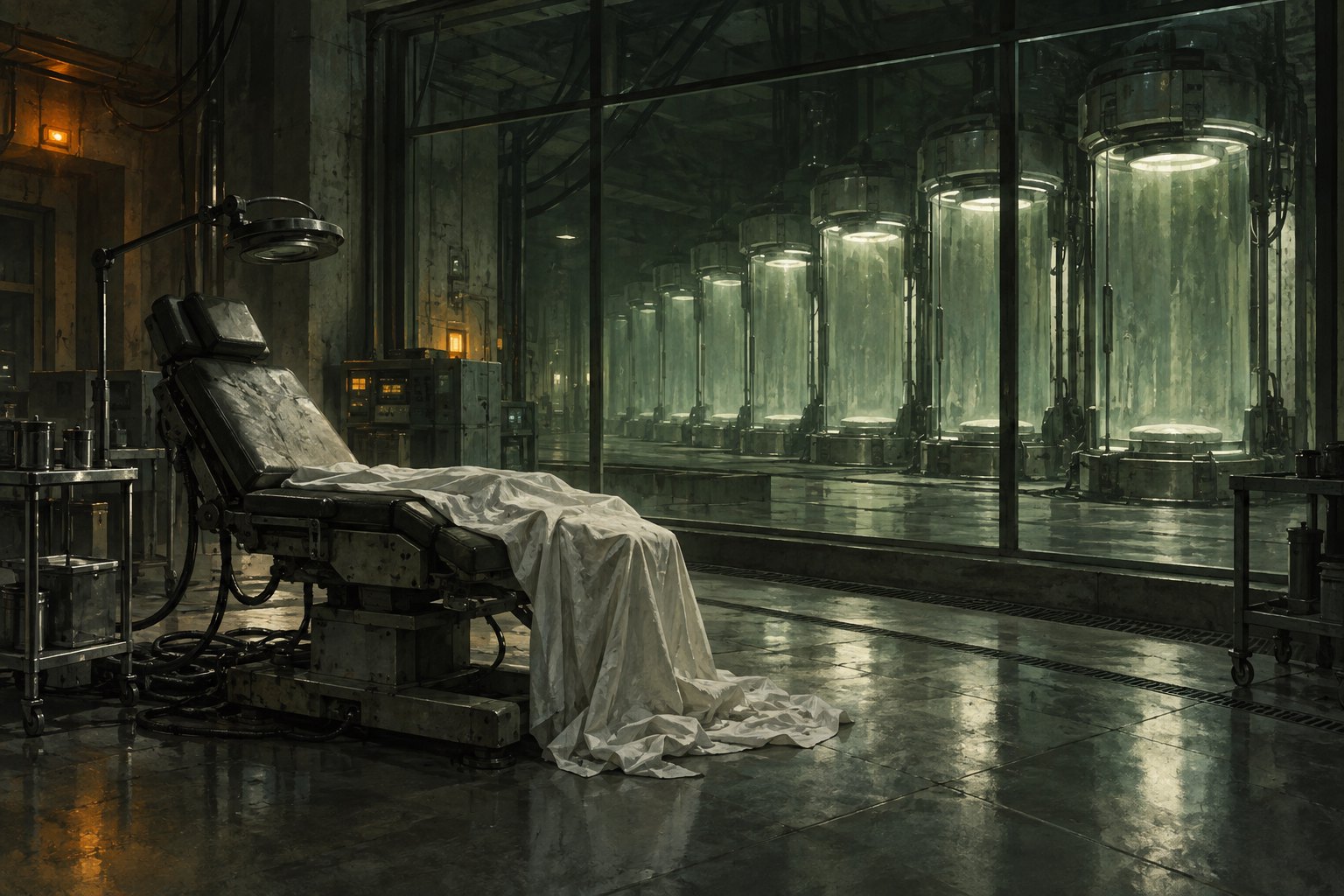
Johannes Roberts’s 2021 film, Welcome to Raccoon City, supplied another emphasis. Its official premise describes a town diminished by Umbrella’s departure, with survivors trying to uncover the company’s secrets while enduring the outbreak. Corporate abandonment precedes the immediate emergency. [The official Welcome to Raccoon City synopsis](https://www.sonypictures.com/movies/residentevilwelcometoraccooncity)
That setting invites an interpretation of the franchise’s evil as something built into everyday dependence. A company can organize a community’s working life and still regard that community as expendable. The monsters make the consequences visible, but the betrayal begins earlier.
What this return to vulnerability means
The strongest idea in Bryan’s predicament is that survival need not prove someone was secretly exceptional. An ordinary person’s confusion, imperfect judgment, and desire to help can remain central to the story. His life matters before he demonstrates any usefulness in a fight.
That is also why spectacle alone cannot settle the film’s value. As our commentary on horror spectacle and human stakes argues, intensity becomes meaningful through the people experiencing it.
Seen across these films, Resident Evil repeatedly returns to a struggle over who gets treated as disposable. Alice answers through resistance on an extraordinary scale. Bryan’s predicament suggests a quieter answer: being frightened, fallible, and unprepared does not diminish a person’s claim to a future. That is the reboot’s most compelling avenue for interpretation—and a substantial reason to examine the franchise beyond its inventory of monsters.
Original content by this site's editorial team. Published: September 27, 2026 at 03:50:05 PDT (Los Angeles time)