
Jon Watts will direct Lucasfilm’s next Star Wars movie, according to The Hollywood Reporter. That is a directing story before it is a verdict on the film: an intriguing creative appointment whose value will ultimately depend on the people, conflicts, and choices that reach the screen.
The most useful question is what Watts could bring to the experience of entering this galaxy. My view is that a compelling Star Wars adventure needs a clear emotional perspective before it needs an elaborate mythology. We should understand what its central character wants, what that person misunderstands, and why an encounter with someone else changes the journey.
This is commentary on the reported appointment, not a review of the prospective film. Spoilers follow for Star Wars: A New Hope. No cast, release date, story outline, or returning character is assumed here.
What the Jon Watts Report Establishes
The report identifies Watts as the filmmaker to direct the next movie for Lucasfilm. That information does not, by itself, tell viewers what kind of protagonist the film will follow or how it will relate dramatically to earlier adventures. Reading a complete creative direction into a director’s name would turn expectation into supposed fact.
It also leaves an essential distinction intact: being interested in a filmmaker’s appointment is different from judging the work. A finished movie must earn its suspense, humor, and emotion scene by scene. Familiar branding cannot do that work for it, and neither can a promising credit.
For readers deciding whether to get excited, cautious curiosity seems appropriate. The announcement gives us someone whose creative choices will matter. It does not yet give us those choices.
Why a Character’s Perspective Matters More Than a Larger Map
Watts’ existing connection to this universe provides relevant context. He and Christopher Ford created Skeleton Crew, whose premise follows four children trying to find their way home after becoming lost in the galaxy. In their official interview about the series, they discussed developing a distinct perspective within the established setting.
That premise contains an effective dramatic reversal. An audience may dream of visiting the Star Wars galaxy, while characters stranded inside it may desperately want to leave. A spectacular location can therefore carry two meanings at once: a pleasure for the viewer and a problem for the person navigating it.
That is a useful creative principle for a feature, although it should not be mistaken for evidence that Watts’ reported movie will follow children or repeat the series. The broader opportunity is to let a character’s needs determine how the world feels. Wonder becomes more interesting when somebody has something personal to lose.
A New Hope Makes Adventure Personal Before It Makes It Monumental
A New Hope offers a revealing standard. Luke Skywalker’s longing is legible before the galaxy’s political machinery becomes fully familiar. His gaze toward Tatooine’s horizon makes distance emotional: somewhere beyond his immediate life, he imagines a version of himself who matters.
From Luke’s perspective, adventure initially promises escape. The strength of the film is that escape develops into responsibility. Leaving home does not simply deliver freedom; it places him among people whose survival demands something from him. His growing importance comes with obligations that his earlier restlessness could barely anticipate.
That progression is why the film’s scale works. The movement from a young man looking outward to a pilot approaching the Death Star is enormous, but the emotional thread remains accessible. Luke wants to believe he can contribute. The climax forces him to act on that belief when failure has consequences far beyond himself.
For Watts, the relevant lesson would be structural rather than cosmetic. A new protagonist does not need Luke’s background, clothes, or circumstances. The character needs an equally understandable relationship between an ordinary desire and an extraordinary decision.
Trust Turns the Final Battle Into Character Drama
“Use the Force, Luke” is memorable because it arrives as an instruction with an emotional history. Obi-Wan’s guidance asks Luke to trust something he cannot reduce to the equipment in front of him. The moment makes an inward decision visible within an outwardly mechanical action sequence.
Luke’s success also depends on Han Solo returning to intervene. That return gives the climax another character movement: someone whose independence has defined his behavior chooses to help. The battle becomes satisfying because separate personal journeys meet at the instant when each is needed.
Read this way, the ending is about more than discovering individual ability. Luke must accept guidance, and Han must accept attachment. Heroism emerges through their relationship. Our discussion of vulnerability and the courage to need someone in Heart of the Beast considers a related critical question: when does accepting help become the decisive act of strength?
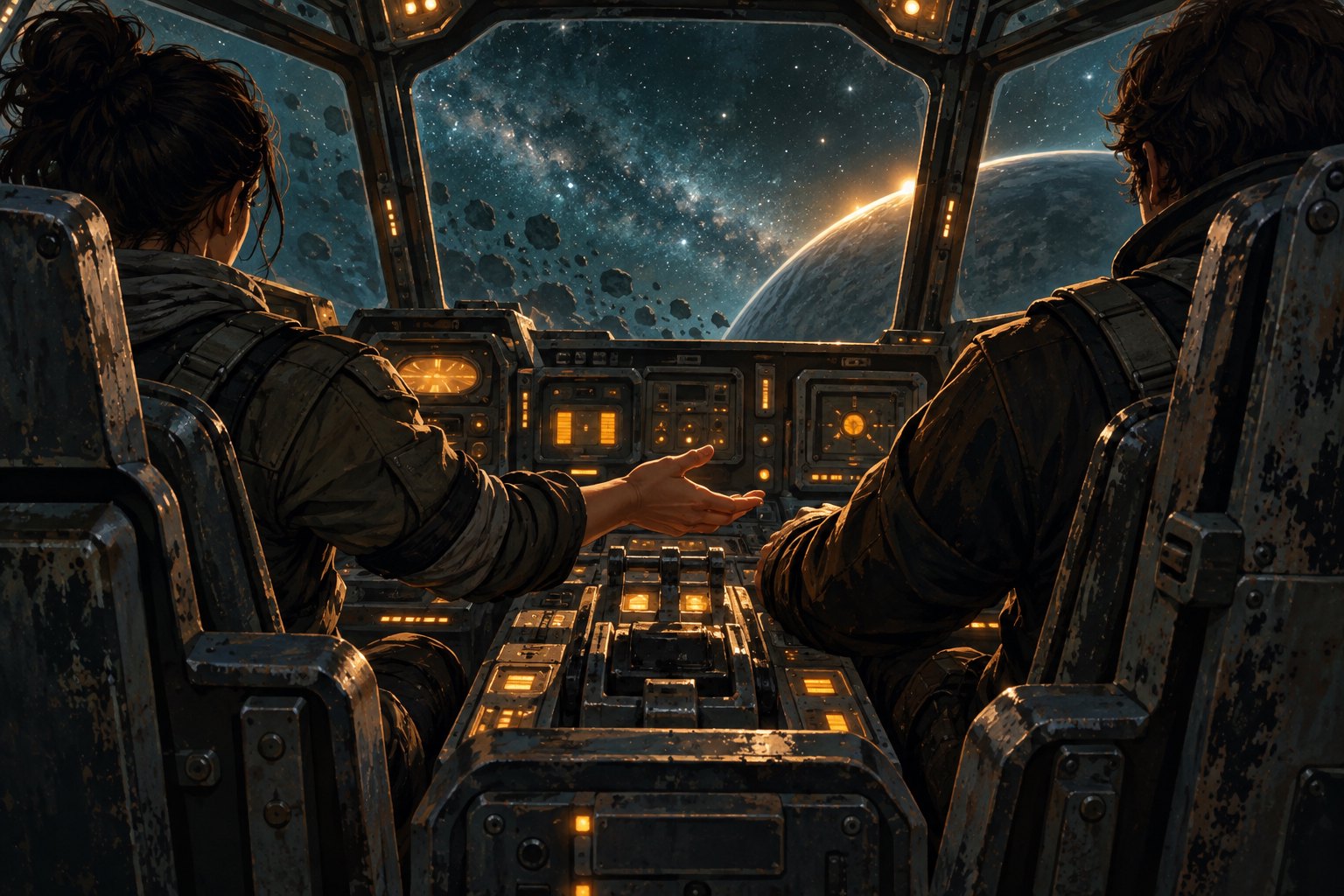
This is the kind of dramatic integration worth hoping for from Watts. A chase can reveal whose judgment a character trusts. A rescue can expose a commitment previously denied. An action scene carries greater weight when completing it changes a relationship.
Humor Should Reveal the Person Under Pressure
Another useful measure is what the humor accomplishes. Adventure benefits from relief, but jokes become more valuable when they distinguish personalities. A boast can reveal insecurity. An awkward response can show someone struggling to perform competence. A moment of irritation can make an unlikely partnership feel lived in.
For a prospective Star Wars film, the danger would be treating every emotional pause as an opening for a punch line. If embarrassment, fear, and grief are immediately brushed aside, characters become difficult to believe even when their dialogue is entertaining.
My preference would be for humor that leaves consequences intact. People can be funny while frightened; they can also need a moment in which fear is allowed to register. That distinction informs our analysis of vulnerability and imperfect competence in Resident Evil. An audience’s affection often grows from watching someone struggle, provided the struggle remains meaningful.
The Deeper Test: What Will Adventure Ask Someone to Give Up?
The most interesting promise of the Watts report is the possibility of another emotionally accessible entrance into Star Wars. Accessibility does not require shallow characterization. It requires that viewers can recognize the desire beneath the spectacle and follow how events complicate it.
A New Hope endures, in my reading, because adventure changes the meaning of freedom. Luke’s wish to move beyond his circumstances becomes a willingness to serve others. Han’s ability to walk away becomes meaningful precisely when he chooses to return. Both discover that agency includes deciding whom to stand beside.
That is the standard I would bring to Watts’ movie: whether its characters finish with a different understanding of what they owe one another. The galaxy can supply the distances, dangers, and dazzling possibilities. The film will need to supply the reasons someone crosses them.
Original content by this site's editorial team. Published: September 26, 2026 at 20:25:30 PDT (Los Angeles time)