
Patrick Stewart’s best performances make certainty interesting—and its collapse even more compelling. Our five picks are Jean-Luc Picard in Star Trek: The Next Generation, Charles Xavier in Logan, Darcy in Green Room, Ebenezer Scrooge in A Christmas Carol, and Picard’s darker cinematic turn in Star Trek: First Contact. Together, they demonstrate how much Stewart can communicate through the distance between a commanding voice and an unsettled face.
This is a subjective selection based on emotional complexity and the specificity of his character work. Picard earns two places because television’s patient exploration of his humanity and the film’s confrontation with his anger offer distinctly different acting challenges.
Spoiler warning: The discussion reveals major developments in “The Inner Light,” Logan, First Contact, and A Christmas Carol, and discusses the premise and threat of Green Room.
1. Jean-Luc Picard in The Next Generation: A life beyond command
For the clearest demonstration of Stewart’s television range, start with “The Inner Light.” An alien probe causes Picard to experience decades as Kamin, a man living on a dying planet. He acquires a family, grows old, and eventually returns to the Enterprise carrying memories of a lifetime that his crewmates never shared. The episode’s premise and surviving flute are documented in [the official Star Trek retrospective](https://www.startrek.com/news/trek-class-preserving-our-inner-light).
The performance depends on allowing Picard’s resistance to soften without making him seem foolish for resisting. His determination to recover his former life gradually gives way to attachment. Stewart makes that transition feel like time passing through a person, rather than a plot requiring him to change his mind.
From Kamin’s perspective, domestic life cannot remain a temporary distraction while the real adventure waits elsewhere. His family becomes the adventure: something demanding, irreplaceable, and impossible to protect completely. Stewart’s attentiveness gives those relationships weight even within the episode’s compressed years.
The ending is especially powerful because returning to the ship does not restore emotional normality. The flute gives Picard something he can hold when the people he remembers are gone. Stewart allows an accomplished commander to look privately bereaved. The episode earns its enormous premise through the smallness of that response.
2. Charles Xavier in Logan: The mentor who needs care
In Logan, Charles Xavier’s declining health reverses his relationship with his former student. Logan must care for the man who once guided him, while Xavier’s seizures make his immense psychic abilities dangerous. Their journey with Laura briefly brings them into the hospitality of the Munson family. These events are established in [the film’s plot account](https://en.wikipedia.org/wiki/Logan_(film)).
Stewart resists making Charles a convenient source of wisdom. He can be impatient, funny, demanding, and vulnerable within the same exchange. That friction matters: needing help does not erase a personality, and providing help does not make Logan endlessly patient.
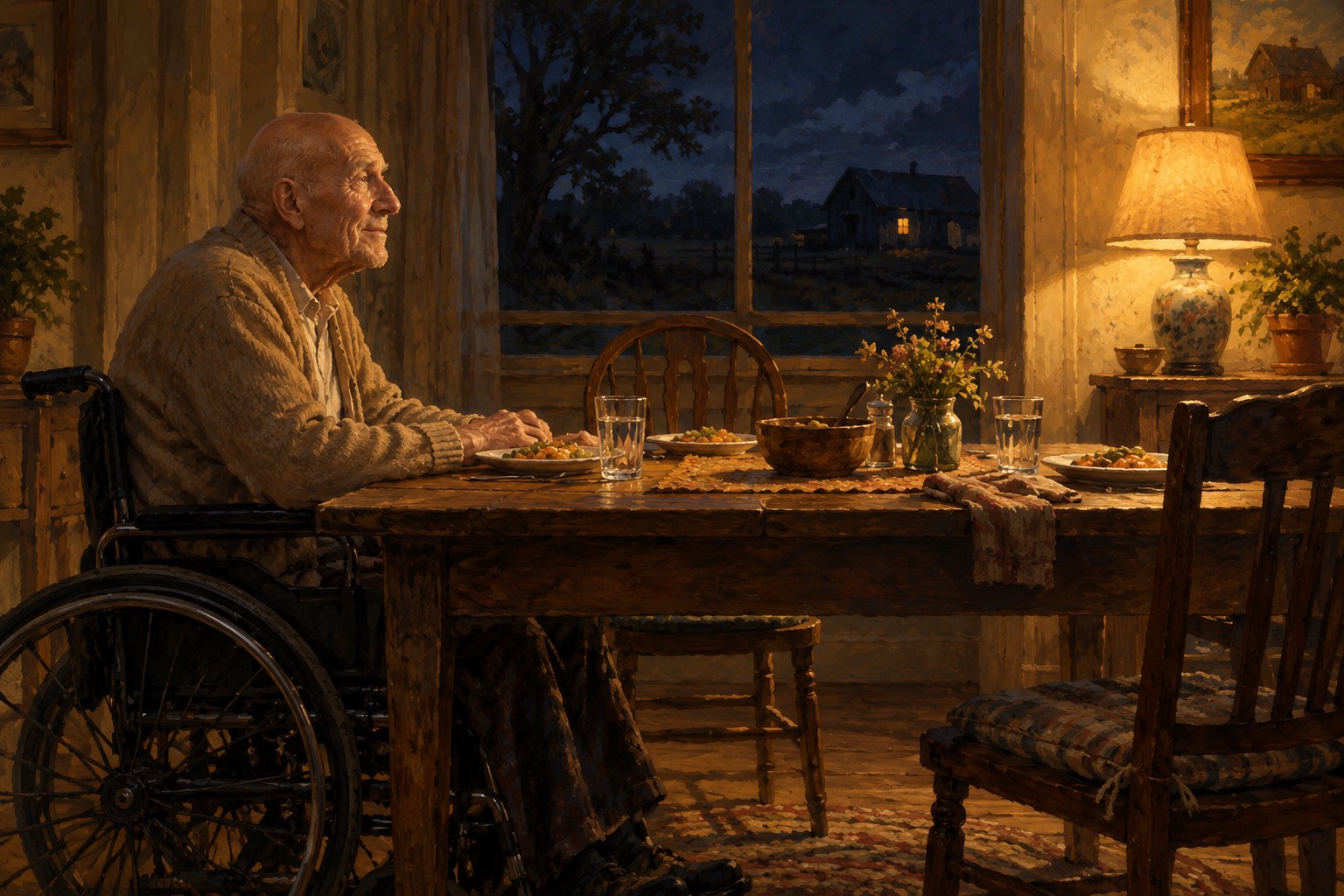
At the farmhouse, Charles responds to the possibility of ordinary companionship. A meal becomes an alternative to hiding and running. Stewart lets us see how intensely Charles wants this temporary arrangement to become a family, even as Logan regards attachment as another route to catastrophe.
Later, Charles’s pleasure gives way to remembered guilt. “And I don’t deserve it, do I?” is devastating because it turns gratitude into self-accusation. The line accompanies his recollection of Westchester, whose full catastrophe the film leaves largely offscreen. [Observer’s discussion of the scene](https://observer.com/2017/03/logan-ending-review-hugh-jackman-patrick-stewart/) records that emotional reversal.
This is my choice for Stewart’s most moving film performance. He makes Charles’s need for affection inseparable from his fear that he has forfeited it. The tragedy reaches beyond superhero mythology into the painful uncertainty of caring for someone whose mind can no longer reliably protect them.
3. Darcy in Green Room: Calm as a weapon
Jeremy Saulnier’s Green Room traps a punk band backstage after its members witness a crime. Stewart plays Darcy, the club owner directing the threat surrounding them. [A24’s film synopsis](https://a24films.com/films/green-room) establishes that central confrontation.
The inspired choice is Stewart’s restraint. Darcy does not need to advertise his danger through constant shouting. His measured delivery suggests someone accustomed to having instructions carried out. What might sound reassuring in another Stewart role becomes frightening because reassurance is serving a predatory purpose.
From Darcy’s perspective, the people trapped inside represent a problem to contain. Stewart makes that reduction chillingly legible. He listens for useful information rather than reasons to show mercy; composure becomes evidence of his moral emptiness.
The performance also changes how we experience the room. Every attempt to negotiate must contend with a voice that sounds controlled enough to be reasonable. The band’s need to believe in an exit becomes something Darcy can exploit. As in our analysis of domestic space and fear in Poltergeist, the setting becomes terrifying through the loss of assumed safety. Here, Stewart supplies the human intelligence maintaining that trap.
4. Ebenezer Scrooge in A Christmas Carol: Learning how to receive joy
The 1999 television adaptation casts Stewart as Scrooge opposite Richard E. Grant’s Bob Cratchit. Its ending takes Scrooge through reconciliation, generosity, and renewed participation in other people’s lives, including giving Bob a raise. Those developments are detailed in [the adaptation’s plot and cast record](https://en.wikipedia.org/wiki/A_Christmas_Carol_(1999_film)).
Stewart’s Scrooge is compelling because his severity feels practiced. He has organized himself around refusing other people’s claims on him. His authority allows him to mistake emotional withdrawal for good judgment.
The ghostly visits gradually deprive him of that protective interpretation. Memories reveal what his habits have cost; the possible future makes avoidance impossible. Stewart’s challenge is to preserve continuity between the man who rejects others and the man who finally seeks them out.
His awkward eruption of laughter captures that difficulty. Joy arrives as something his body scarcely remembers how to accommodate. The moment is broad, but its ungainliness has a persuasive emotional logic: transformation need not look graceful.
Crucially, the ending requires action. Scrooge’s changed feelings become meaningful through changed treatment of other people. Stewart makes the performance’s warmth feel earned because we have already experienced how much effort this man puts into being cold.
5. Jean-Luc Picard in First Contact: When conviction becomes revenge
Star Trek: First Contact gives Stewart a dangerous variation on Picard’s familiar resolve. Confronting the Borg reawakens the trauma of his assimilation. Lily challenges his refusal to abandon the Enterprise, exposing the personal vengeance inside his strategic arguments. [The official Star Trek discussion](https://www.startrek.com/news/start-star-trek-with-first-contact) examines their confrontation and its explicit comparison to Captain Ahab.
“The line must be drawn here” initially has the shape of an inspirational declaration. Stewart’s intensity makes it increasingly difficult to hear as one. The force that usually steadies his crew now threatens to carry them into his private war.
Lily matters because she refuses to treat his status as proof that he is right. Stewart gives her resistance room to register. His performance becomes most revealing when Picard must absorb an interpretation of himself that he finds humiliating.
The scene illustrates the value of character and collaboration in screen storytelling: an actor’s strongest moment can depend on making another character’s challenge genuinely consequential. Picard’s eventual willingness to reconsider restores something more important than tactical control—his capacity to listen.
What connects these five performances?
Stewart repeatedly plays men whose identities depend on being able to direct events. His most rewarding work examines what happens when that ability fails, becomes dangerous, or conceals a moral weakness.
Kamin cannot save his world. Charles cannot guarantee safety. Scrooge must stop treating independence as an excuse for indifference. Picard must recognize when command is serving anger. Darcy supplies the bleak counterexample: composure without compassion.
Watch Stewart’s reactions as closely as his speeches. The voice establishes authority quickly; the pauses, embarrassment, pleasure, and grief reveal whether that authority deserves our trust. Across these five performances, that question keeps a familiar screen presence surprising.
Original content by this site's editorial team. Published: October 30, 2026 at 02:50:58 PDT (Los Angeles time)