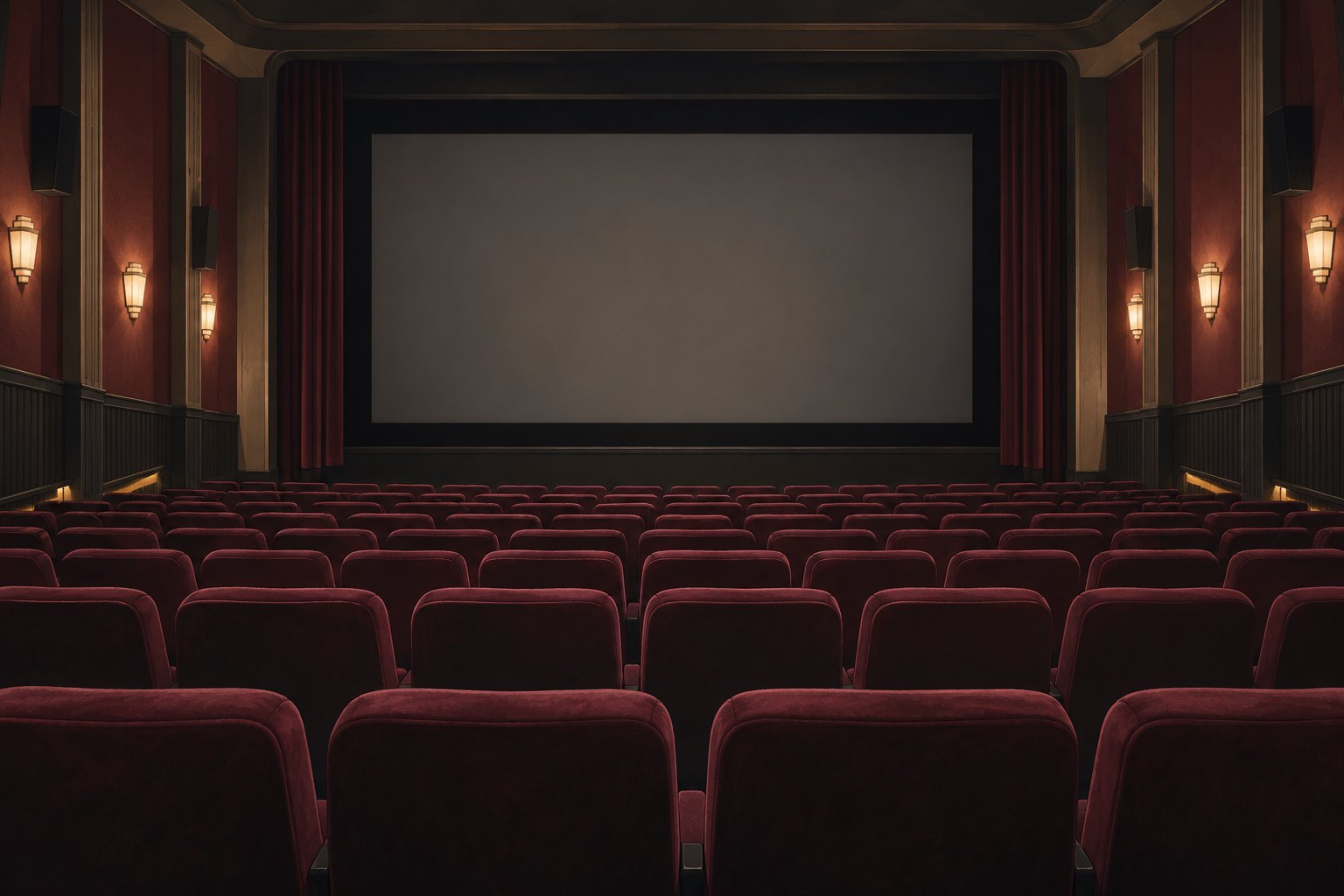
A Virginia woman has been indicted in connection with the alleged killing of a newborn inside a movie theater toilet roughly three decades ago, according to News 12 Long Island. The reported development brings renewed attention to an old death, but it should not be read as a finding of guilt or a complete explanation of what happened.
The theater location makes this story especially striking for people who think of cinemas as familiar places of recreation. It also creates a particular responsibility for film commentary: the habits that help us interpret a thriller can mislead us when applied to an actual criminal allegation. A compelling setting cannot establish motive, and a long interval cannot supply a missing explanation.
Content note: This article discusses a newborn’s death without graphic description. It is commentary on reporting and screen storytelling, rather than a review of a movie about the case.
What the reported development establishes
The central reported facts are limited: a woman associated with Virginia has been indicted; the allegation concerns a newborn’s death inside a movie theater toilet; and the incident dates back approximately three decades. Those points establish the subject and broad timespan of the report. They do not, by themselves, establish the accused woman’s actions, intentions, or responsibility.
Precision matters even in the shortest description. Calling someone a Virginia woman does not establish that the incident occurred in Virginia. Likewise, describing a case as decades old tells readers about elapsed time without explaining why an accusation emerged when it did. Geographic shorthand and historical distance can easily become assumptions if readers move too quickly through a headline.
The same caution applies to the word indicted. Readers should preserve the distinction between an accusation and an established conclusion whenever discussing the case. Replacing that distinction with a definitive description of the accused as the killer changes the meaning of the report.
Why the movie theater setting draws attention
A cinema is designed around shared attention. People enter a public building, settle into the same room, and turn toward a screen. A report of a newborn’s death elsewhere within such a building creates a painful contrast with that ordinary purpose. The location is memorable because it interrupts an expectation of leisure.
That response is understandable, but it remains a response. It provides no evidence about who knew what, whether anyone could have intervened, or how the events unfolded. Imagining an audience absorbed in a particular movie, an employee overlooking a warning, or someone moving unnoticed through a lobby would add scenes that the limited reported facts do not establish.
Film criticism regularly examines how familiar spaces acquire emotional meaning. Our discussion of the ordinary home and its unsettling power in Poltergeist considers that process in fiction. Here, the useful connection is narrower: recognizing the emotional associations of a place helps explain our reaction to a headline. It cannot explain the underlying death.
Three decades invite questions, not a ready-made ending
The long interval is another powerful element. In a crime film, a transition from the distant past to the present often signals that something concealed is about to become clear. Viewers are encouraged to connect an early scene with a later revelation and to expect the film to resolve the relationship between them.
A real case has no obligation to follow that structure. The passage of time alone cannot tell readers what investigators previously knew, what information survived, or what changed. Those are specific questions requiring specific reporting. A familiar cold-case storyline cannot answer them on behalf of the record.
For that reason, language promising closure can outrun what an indictment actually establishes. A new development may be significant without resolving every factual question or providing emotional resolution for anyone affected. Responsible coverage should allow those possibilities to remain separate.

Real people cannot be analyzed like fictional characters
Character analysis is one of film criticism’s most useful tools. A performance, a line of dialogue, or a repeated action can support an interpretation of what a fictional person wants. Even then, a persuasive reading must account for what the movie actually shows rather than inventing a more convenient version of it.
Applying that method to the accused woman here would require information the basic report does not provide. Speculation about fear, shame, calculation, mental health, or personal history would create an interior life and then treat it as an explanation. Neither an accusation nor a disturbing location supports that leap.
The newborn also deserves attention beyond the function a victim might serve in a mystery. A death should not become merely the opening incident that makes an investigation interesting. Keeping the loss central means avoiding lurid repetition and declining to turn the circumstances into a suspenseful reveal.
This is a question of storytelling judgment as much as factual accuracy. Our commentary on what film education should teach about character and creative choices considers how choices shape a viewer’s understanding. Coverage of a real death demands equally deliberate decisions about emphasis, omission, and perspective.
How to read further coverage critically
Readers following this case can use a few concrete questions to distinguish useful reporting from narrative embellishment:
- Who is making the claim? Notice whether a statement is attributed to an investigator, a prosecutor, a defense representative, a witness, or a court finding.
- What has actually changed? Look for a clearly identified development rather than assuming that a newly circulating story contains new evidence.
- Which details are documented? Separate reported observations from a writer’s reconstruction of actions, conversations, or emotions.
- Does the wording preserve uncertainty? An accusation should remain identifiable as an accusation throughout the story, including its headline and captions.
Images deserve the same scrutiny. An atmospheric theater interior can illustrate a subject without showing the actual location. A picture of folders cannot establish anything about the evidence. Captions should make that difference visible so that an illustration does not acquire the authority of a documentary photograph.
The responsibility behind the story
My editorial judgment is that restraint makes coverage of this case more useful. Repeating the most disturbing detail adds little after readers understand the allegation. Assigning motives supplies apparent clarity at the expense of accuracy. Treating an indictment as the final revelation borrows satisfaction from a story whose outcome has not been established here.
The deeper issue for a film audience is how strongly storytelling conventions can organize our expectations. A memorable location, a vulnerable victim, and a long passage of time may feel like the components of a completed narrative. They remain separate facts and circumstances until evidence establishes their relationships. The reported indictment deserves attention with that distinction intact, and the newborn’s death deserves care that extends beyond the force of its headline.
Original content by this site's editorial team. Published: October 30, 2026 at 03:27:27 PDT (Los Angeles time)