The Packers’ Week 8 long-snapping discussion begins with an easily overlooked question: what happened before the kicker’s foot reached the ball? Following the ball toward the uprights tells us the outcome. Evaluating the snap requires watching the exchange that made the attempt possible, including any adjustment the holder had to make along the way.
That is the useful focus of a film-room examination of long snapping on kicks. Here, film means football footage. A responsible reading follows the visible action rather than supplying imagined conversations, emotions, or a dramatic culprit. This article offers a framework for reviewing that Week 8 topic; it does not assign grades to individual attempts or claim a particular player caused a mistake.
Start With the Exchange, Then Consider the Result
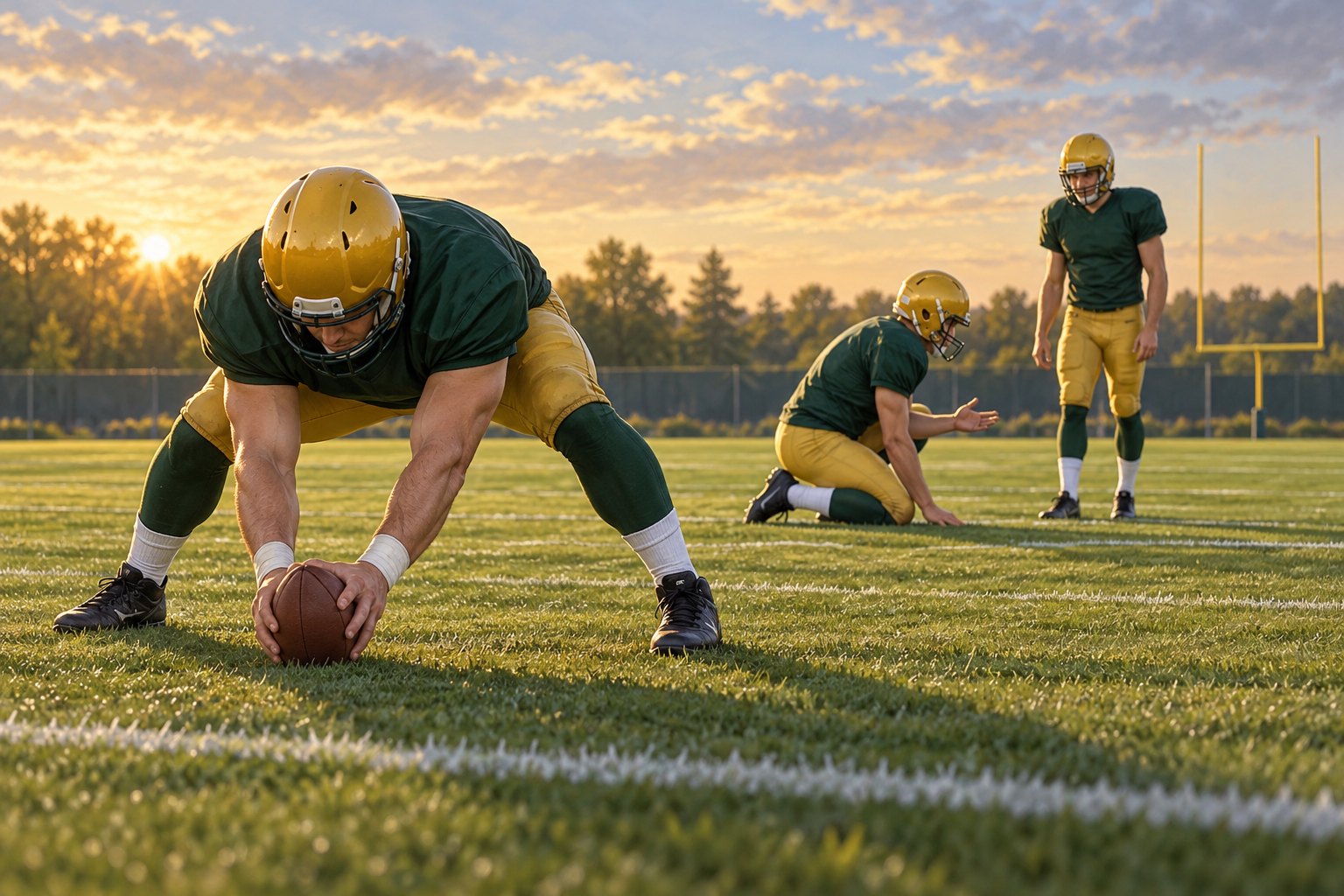
A placekick brings several separate jobs into one brief sequence. The snapper delivers the ball backward. The holder receives it and establishes the placement. The kicker approaches and strikes it while the protection unit works against the rush. Each job affects the next, but the final result does not reveal how well every participant performed.
For viewers examining the Packers’ operation, the first distinction is between outcome and execution. A made kick can include an awkward reception that the holder handles successfully. A missed kick can follow a manageable snap and a stable placement. Those are general possibilities, not descriptions of particular Week 8 plays.
My preferred viewing order is to assess the exchange before returning to the result. Otherwise, knowing that a kick missed can turn every preceding movement into apparent evidence of failure. The same bias works in reverse: a successful attempt can make a demanding recovery disappear from the viewer’s judgment.
The Snapper’s Job: Give the Holder a Repeatable Reception
Begin by locating the holder before the ball moves. Watch the hands, torso, and intended placement area. Then follow the delivery into that space. Does the holder receive the ball without substantially changing position, or have to reach, rise, or fold forward? The movement required to receive the snap is more informative than the ball’s location in an isolated frame.
There is an important distinction between a catchable delivery and an easy one. A holder may secure a ball that requires extra movement, but that movement can leave more work before placement. Conversely, a small adjustment should not automatically be labeled an error. Repeated attempts provide context for what appears routine within the operation.
Rotation deserves attention only when the picture supports it. If the ball is too small or blurred to track its laces, a confident verdict about their position is unwarranted. An obscured detail should remain unresolved. Precision in criticism sometimes means describing less.
The Holder’s Job: Make the Transition Look Ordinary
The holder is the most revealing player to watch on a second viewing. The ball must move from reception to a usable position on the turf while the kicker’s approach develops. Hands, balance, and body position all belong to that transition.
Watch the full movement rather than stopping at the catch. A difficult reception might be followed by a controlled placement. A reception that looks straightforward might still be followed by visible difficulty settling the ball. These observations describe different parts of the sequence and should stay separate in the analysis.

The key interpretive question is whether an adjustment carries forward into the kick. If the holder reaches for the snap, does the ball subsequently arrive at a stable placement? Does the kicker visibly alter the approach? A correction can be real without proving that it changed the result.
This is also where credit can become uneven. A holder who makes a difficult exchange look ordinary may receive less attention than the player who completes the kick. Close viewing should recover that contribution without exaggerating it into a story the footage cannot establish.
The Kicker’s Finish Needs Its Own Examination
After assessing the reception and placement, widen attention to the kicker. Follow the approach, plant, and contact as a continuous action. The purpose is to see whether the earlier exchange appears to affect the finish, not to diagnose an entire kicking technique from a single replay.
Keep the rush in view, too. A tight crop of the holder and ball may show the exchange clearly while concealing pressure elsewhere. A wider angle may reveal that pressure while making the hands impossible to evaluate. Different views answer different questions; neither deserves automatic priority.
A useful note might read, “The holder reaches upward before placing the ball.” That is an observation. “The reach disrupted the kicker” is a causal interpretation requiring additional evidence. The gap between those statements is where much careless blame enters a film-room discussion.
A Practical Viewing Routine for the Week 8 Kicks
- Watch once at normal speed. Establish the rhythm of the entire play before examining individual movements.
- Follow only the snap and reception. Note the holder’s starting position and any visible adjustment.
- Follow reception through placement. Look for control, repositioning, and the transition onto the turf.
- Watch the kicker and protection. Check whether the wider action adds context absent from the close view.
- Replay at normal speed. Decide whether a movement that appeared dramatic in slow motion also appears disruptive in real time.
- Record uncertainty explicitly. Separate what is visible, what is inferred, and what the camera cannot show.
If comparing several attempts, use the same questions for each. Do not scrutinize every detail of a miss while treating a make as self-explanatory. Consistency gives the review value beyond a collection of memorable moments.
What Close Viewing Adds to the Packers Discussion
There is a meaningful connection between this kind of sports viewing and screen criticism: framing governs what an audience can judge. Our discussion of visual clarity in Witch on the Holy Night’s big-screen presentation approaches that issue through cinema. In football footage, the practical question is whether the image actually contains the detail needed to support a conclusion.
Attention also tends to follow the most recognizable role. The same interest in judging someone by the demands of a role runs through our examination of character and performance in the Batman casting conversation. For the kicking unit, that means giving the snapper and holder their own evaluation instead of allowing the kicker’s result to define everyone’s work.
The deeper value of examining the Packers’ Week 8 long snapping is a fairer account of shared responsibility. Look for the first visible difficulty, trace what follows, and recognize a successful correction when the footage supports it. The most useful verdict explains the exchange clearly enough that another viewer can assess the same evidence.
Original content by this site's editorial team. Published: October 31, 2026 at 14:43:50 PDT (Los Angeles time)