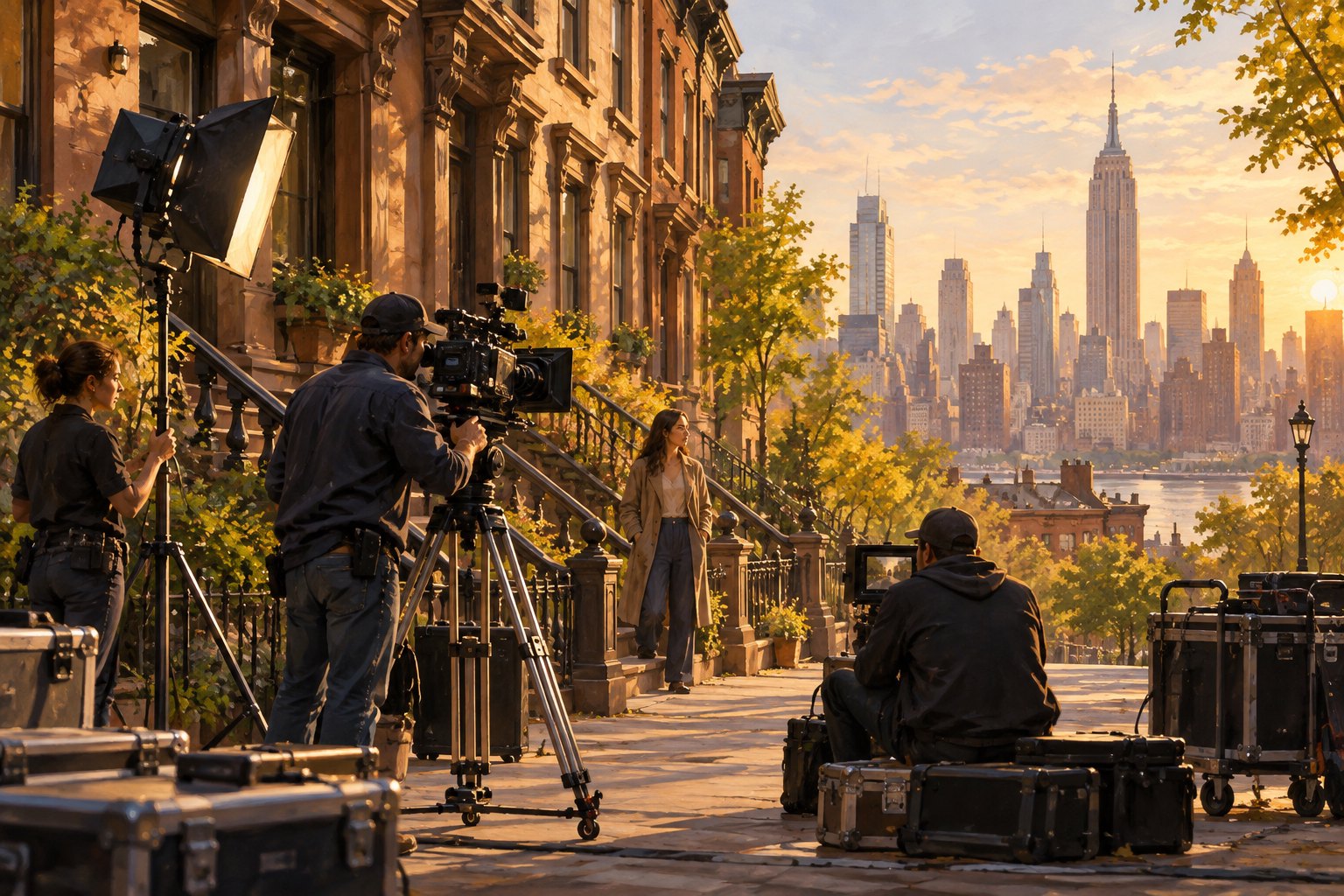
New York City’s film and television production business is getting busier—and space is becoming part of the story. Deadline reports a surge in production permits and spending, alongside soundstages reaching capacity. For audiences, that combination offers a reason to pay attention: the infrastructure behind movies can influence which stories reach the screen and how filmmakers tell them.
The reported growth is encouraging as a sign of activity. Its creative significance needs a more careful reading. A crowded studio calendar does not tell us whether the resulting films will be adventurous, emotionally convincing, or distinctly New York. It tells us that productions need somewhere to work. What they accomplish there is the question film criticism eventually gets to answer.
What the Production Boom Actually Tells Us
Three signals sit at the center of this story: permits, spending, and soundstage capacity. Each describes a different aspect of production. Reading them separately helps prevent a broad industry headline from becoming a promise it cannot support.
- Permits concern production activity. A rise does not translate directly into the same increase in individual movies, because projects can require multiple permissions across locations and schedules.
- Spending concerns money moving through production. Its growth alone cannot establish how many projects are being made, how resources are distributed, or whether budgets are stretching further.
- Stage capacity concerns access to working space. A busy facility can signal demand while creating scheduling challenges for productions seeking suitable space.
The broad report does not establish a citywide occupancy percentage, a project-by-project breakdown, or the duration of the surge. Those distinctions matter. A brief concentration of bookings and a sustained expansion of production would have different implications for workers, facilities, and future investment.
My reading is cautiously optimistic: more activity creates possibilities, but judging the health of a filmmaking community requires asking who can participate and whether the work lasts. Neither question can be settled by a crowded calendar alone.
Why Soundstage Space Matters to a Performance
Soundstages can seem remote from the pleasures of watching a movie. Viewers remember a face, a silence, or an argument that changes a relationship. Yet the physical conditions surrounding those moments help determine how they can be filmed.
A constructed interior can give filmmakers control over lighting, camera placement, and repeated action. A removable wall can open an angle unavailable in a real apartment. A set that remains standing can support scenes filmed on different days while preserving the details that make a character’s home feel continuous.
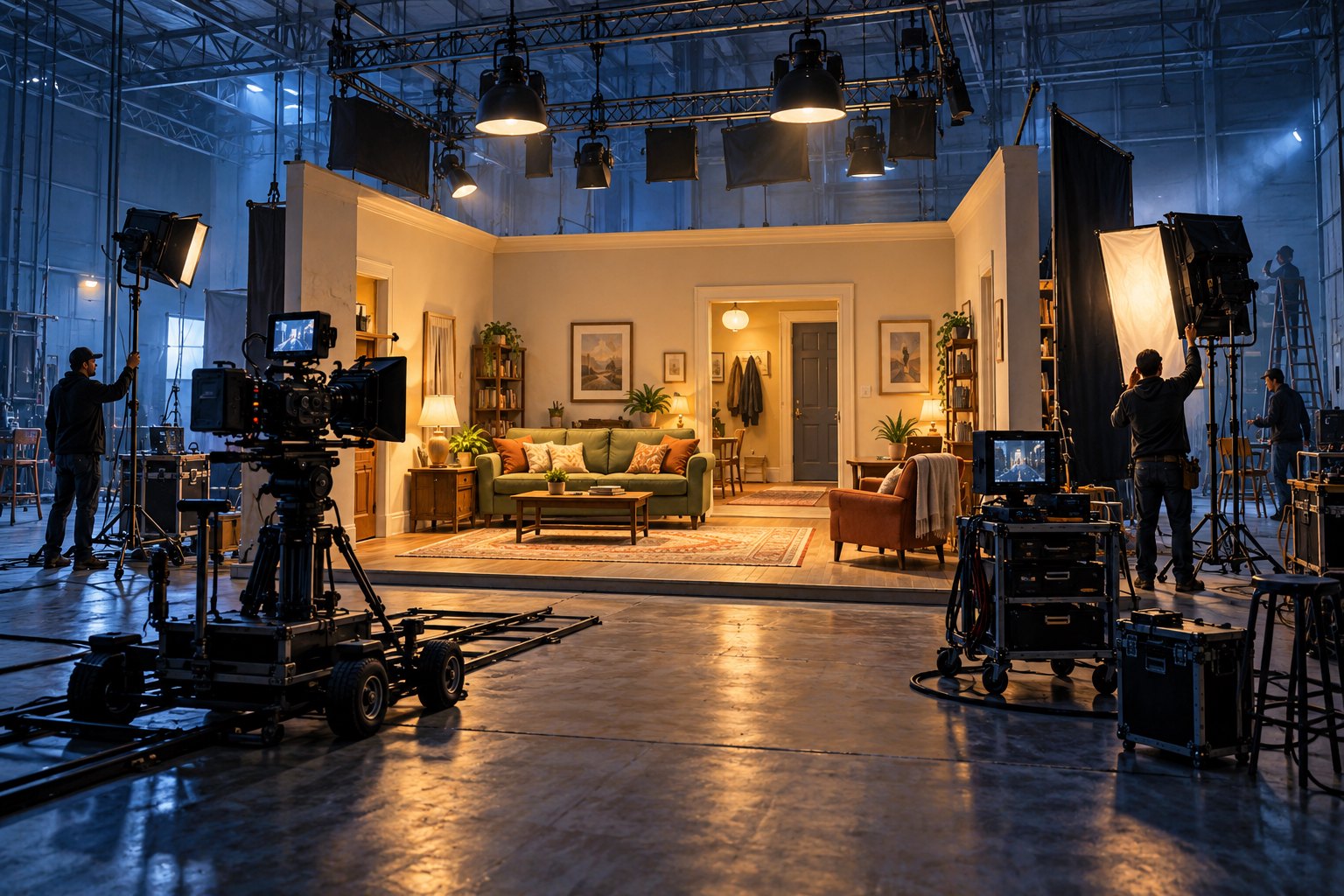
Consider a hypothetical scene in which two siblings argue across a kitchen table. Keeping both actors in one sustained frame might emphasize their shared history. Cutting between isolated close-ups might make their estrangement feel absolute. Those are artistic choices, but sufficient room for the camera, lighting, and actors helps make the choices available.
This is where an infrastructure story becomes relevant to character-focused film analysis. Space supports options. It does not determine whether a director chooses well, and a smaller location can inspire excellent work. Still, when suitable stages become difficult to secure, the potential consequences extend beyond inconvenience: filmmakers may need to reconsider schedules, sets, or approaches to a scene.
Those are possible effects of constrained capacity, not confirmed outcomes for specific productions in the current report.
The City Outside the Studio Still Matters
New York’s appeal on screen also lies in spaces a production cannot completely control. A narrow sidewalk, a building entrance, or the distance between two people on a crowded block can shape the emotional meaning of a scene. Location becomes especially expressive when it changes what a character can do.
A person who feels powerful in an office may seem exposed on the street. Someone with no privacy at home may find a temporary refuge in public. These are general storytelling possibilities, but they explain why the relationship between studio interiors and location exteriors deserves attention. Together, they can give a character a believable world.
My critical preference is for films in which geography has consequences. An attractive skyline establishes a setting; the way a character navigates that setting reveals experience. Does the neighborhood feel familiar to them? Can they afford to remain there? Who gets to move comfortably through the frame?
Filming in a living community also requires negotiation. Our commentary on a Central New York village sharing its streets with a film production considers that relationship on a different scale. The relevant connection is that a location has everyday users whose needs continue during a shoot.
Who Gets Access When Studios Are Busy?
Full stages invite a practical question: what happens to the next project looking for space? Availability involves more than an empty room. A production needs a facility that fits its dates, physical requirements, and budget. Space that works for one project may be unsuitable for another.
It would be premature to claim that New York’s current boom is displacing independent filmmakers or driving a particular increase in costs. Those claims require evidence. The useful question is whether increased demand leaves viable options for productions with less money or less flexible schedules.
For audiences, access matters because different budgets and creative backgrounds can produce different kinds of stories. A healthy production environment should be judged partly by its ability to accommodate that variety. High activity and broad opportunity can coexist, but one does not automatically demonstrate the other.
The importance of practical access also connects with evaluating film education through the work students can actually make. Equipment, working space, and time to develop a scene become meaningful when filmmakers can use them to turn intention into finished work.
What Moviegoers Should Watch for Next
The most useful follow-up coverage would clarify the period being compared, the kinds of productions driving spending, and how widely the demand for stages is distributed. Evidence of sustained work would tell us more than an isolated busy stretch. Information about access across different production sizes would help explain who benefits.
For viewers following new movie releases, production growth also needs to be separated from release timing. Activity now does not establish when a particular film will arrive, where it will be available, or whether it will secure distribution. Those answers belong to individual projects and confirmed announcements.
When the finished work does arrive, the critical test becomes concrete. Look at how rooms reveal relationships, how streets affect behavior, and whether a setting feels inhabited. Production resources matter most when they disappear into a convincing dramatic experience.
A Boom’s Deeper Creative Test
New York’s reported production surge raises an appealing possibility: more opportunities to build the worlds that movies need. It also makes access to those opportunities worth examining closely.
For me, the strongest measure of success will be the range and specificity of the resulting stories. A city can host a great deal of filming while appearing on screen in familiar ways. The more exciting prospect is work that notices different lives, gives characters distinct relationships to place, and makes an ordinary room feel emotionally irreplaceable. Busy stages provide the working space. The films must give that space meaning.
Original content by this site's editorial team. Published: October 29, 2026 at 17:20:27 PDT (Los Angeles time)