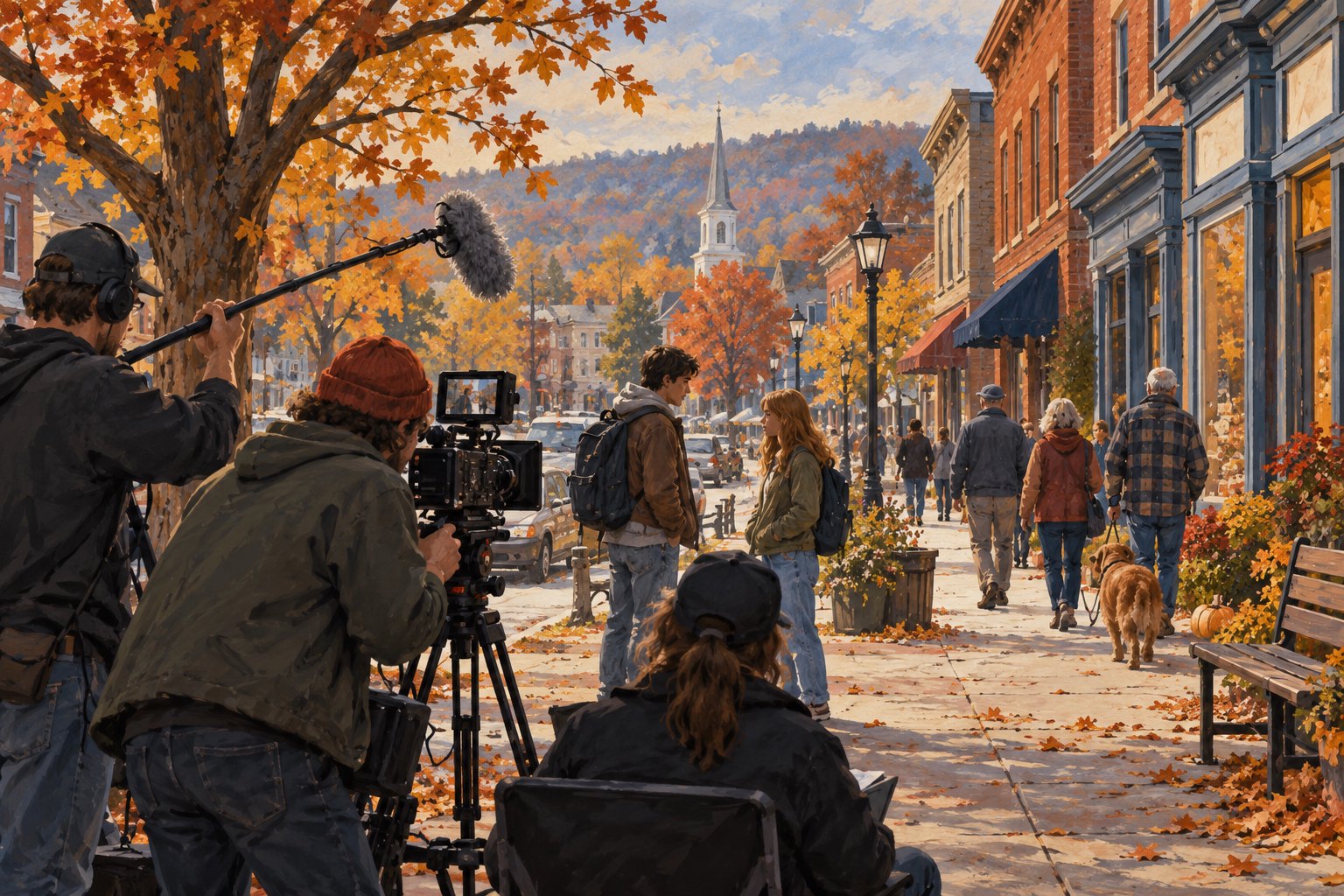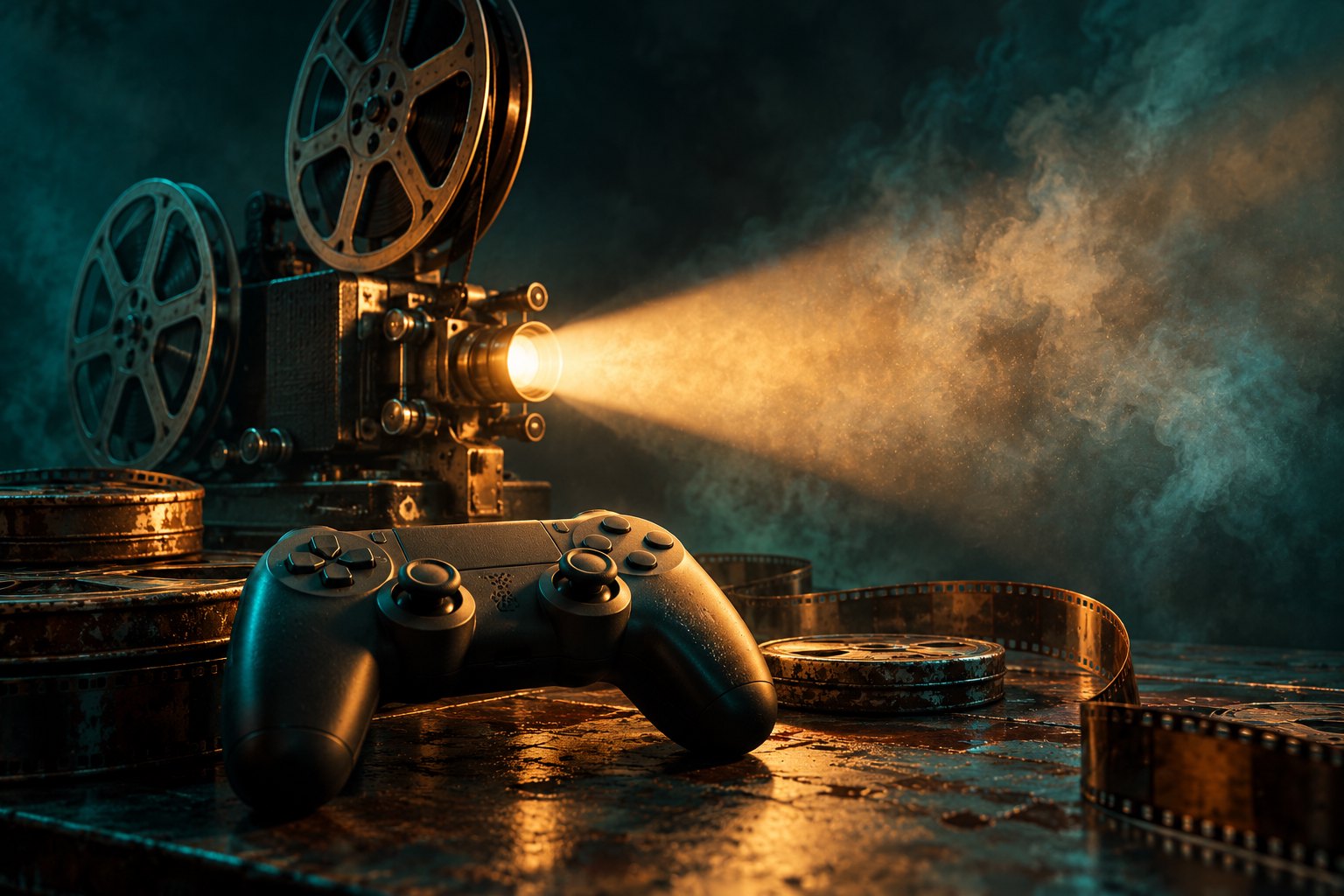
A Mouthwashing video game adaptation is in the works involving Scott Derrickson and Karyn Kusama, according to an exclusive report from The Hollywood Reporter. That is the central development for readers wondering whether the title is moving toward the screen. The more interesting creative question is what that move will ask of the audience: how can a film replace the involvement of playing with the experience of watching?
The announcement invites anticipation, but it does not offer a finished performance, an edited sequence, or a completed film to evaluate. What follows is spoiler-free adaptation commentary, with a specific argument: the most consequential decisions will concern character perspective. Familiar imagery can establish recognition. Deciding whose experience organizes a scene will determine its dramatic force.
What the Mouthwashing announcement establishes
The reported development connects Mouthwashing, Derrickson, and Kusama. That basic news should remain distinct from assumptions about how the adaptation will look or which parts of the game it will emphasize. Their names alone cannot establish the screenplay's structure, the balance of character viewpoints, or the eventual performances.
There is also an important distinction between a project being in development and a movie being ready for audiences. This article does not establish a release date, cast list, or production schedule. Those details require their own confirmation; they cannot be inferred from the existence of an adaptation.
For readers, the useful takeaway is straightforward: there is a screen project to follow, while judgments about its execution remain ahead. Our discussion of the Difficult People reunion and an unproduced screenplay considers a related distinction between a promising creative event and the finished work audiences may eventually see.
The central challenge: replacing player involvement
Games and films can present the same event while producing different relationships to it. In an interactive sequence, the time spent looking, moving, or hesitating can belong partly to the player. A movie assigns that duration through performance and editing. Even a seemingly faithful recreation therefore changes the audience's position.
For Mouthwashing, I would judge the adaptation by how deliberately it handles that change. A scene should have a cinematic reason to last as long as it does. Holding a shot can create scrutiny; cutting away can deny an answer. Either choice can be effective, but merely reproducing the time required to complete an interaction would not automatically preserve its effect.
Consider a hypothetical adaptation problem, rather than a reported scene: a player studies an object before continuing. On film, a close-up of that object might make it seem unusually important. Leaving it in the background might preserve uncertainty but make it easier to miss. The filmmakers must decide what the audience needs to notice and what noticing should feel like.
That is where adaptation becomes interpretation. Transferring an object or action is only the beginning. Its placement, duration, and relationship to a character's reaction give it meaning on screen.
Character perspective is more than a camera angle
A character-focused approach does not require a movie to photograph everything through one person's eyes. Perspective also lives in who gets a reaction shot, whose silence receives attention, and whose explanation goes unchallenged. A film can remain physically close to someone while encouraging the audience to question that person's understanding.
This offers a practical standard for the eventual Mouthwashing film: do the characters retain an existence beyond what the central viewpoint needs from them? Supporting characters become thin when they appear only to supply information, provoke a reaction, or explain someone else's behavior. A glance held for an extra beat can suggest that another person has understood the situation differently.
The distinction matters because proximity can easily be mistaken for endorsement. Spending time with a character gives viewers access to that character's experience; it does not oblige the film to accept every explanation the character offers. Editing can preserve that distance without resorting to a speech telling the audience what to think.
These are proposed criteria for the adaptation, not claims about its screenplay. Until its scenes can be assessed, the question remains open: whose interpretation will the film invite us to inhabit, and when will it ask us to reconsider?
Memorable dialogue needs dramatic context
Recognizable lines often become a test of fidelity for adaptations. Yet a quotation can survive word for word while losing its dramatic purpose. The speaker's expression, the listener's response, and the moment at which the line arrives can alter whether it sounds sincere, defensive, threatening, or absurd.
For that reason, this preview does not attribute dialogue to an unseen movie. The meaningful test will be whether its words arise from relationships and circumstances. A line included chiefly to reward recognition can interrupt a scene instead of deepening it.
I would rather hear dialogue whose force becomes clear through a performance than have every important sentence announced with a pause and an emphatic close-up. An adaptation can trust viewers to remember language without instructing them to admire it. That restraint also gives actors room to communicate something the words themselves conceal.
What to watch for when footage arrives
When official footage becomes available, several concrete questions will be more useful than asking whether every image matches expectations:
- Does the scene establish a relationship? Look for what characters want from one another, beyond the information their dialogue delivers.
- Does the editing control knowledge carefully? Notice whether a cut reveals something, conceals something, or simply accelerates the sequence.
- Can an unfamiliar viewer follow the immediate stakes? Mystery can remain intact while basic actions and reactions stay intelligible.
- Does the sound create a sense of space? Listen for whether off-screen activity changes how the visible image is understood.
A trailer will still be a selective presentation. It can suggest an approach without proving that the full film sustains it. The same caution informs our commentary on Mama Bear and the expectations surrounding horror: anticipation becomes more useful when it leads to specific questions about the work.
The deeper test: what does fidelity preserve?
The Mouthwashing announcement raises a larger question about adaptation: should fidelity be measured by what remains visible or by the relationship a story builds with its audience? My preference is the latter. Visual recognition has value, but it cannot carry character development or determine how a viewer understands an action.
A persuasive adaptation would make its choices legible through the film itself. Returning players could recognize what has been transformed, while newcomers could experience a complete dramatic argument without needing supplementary explanations. That balance requires confidence in scenes, actors, and the audience's attention.
Derrickson and Kusama's involvement makes this a project worth following. Its eventual achievement will depend on something an announcement cannot demonstrate: whether the screen version makes looking, listening, and reconsidering feel as consequential as participating.
Original content by this site's editorial team. Published: October 29, 2026 at 16:13:08 PDT (Los Angeles time)