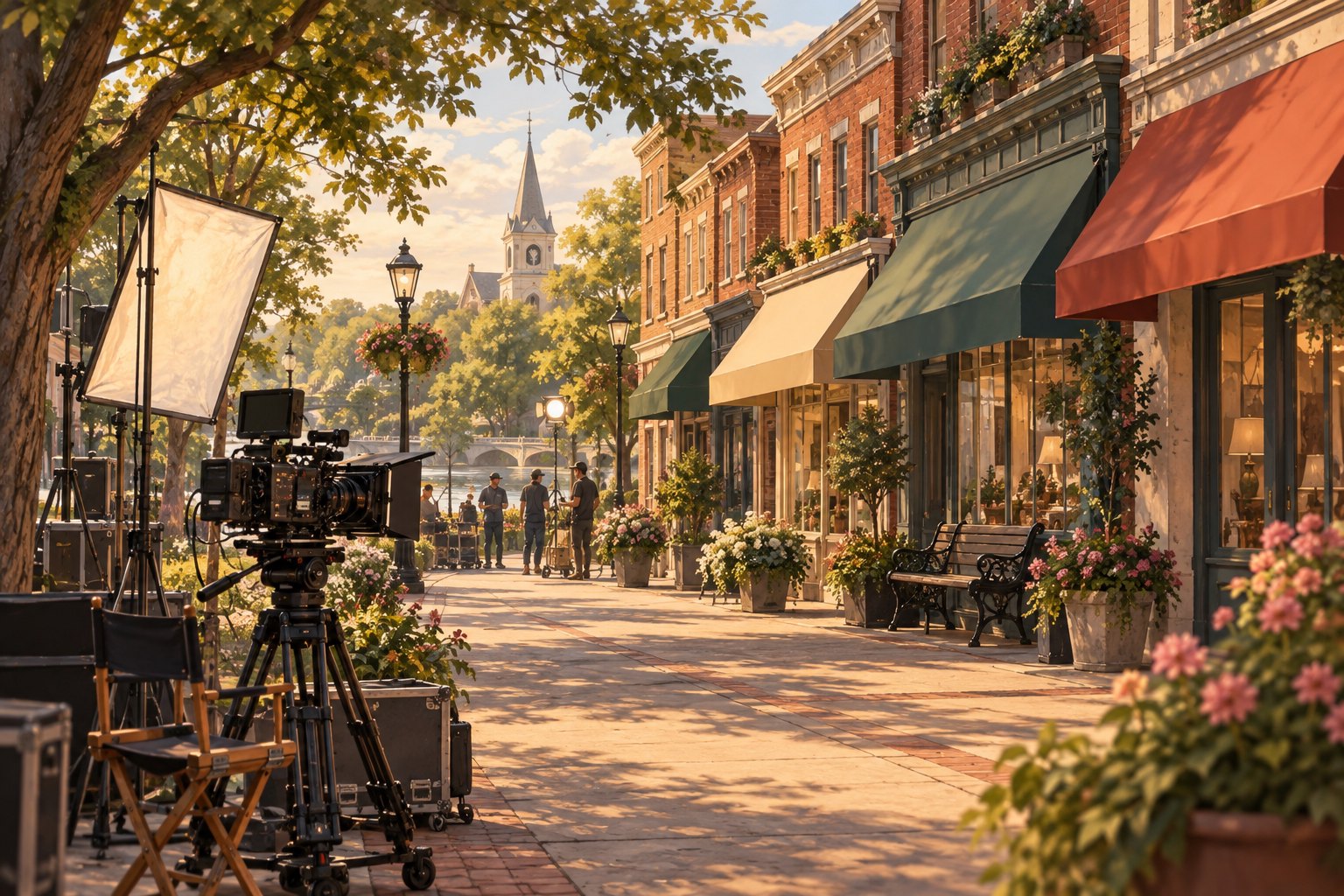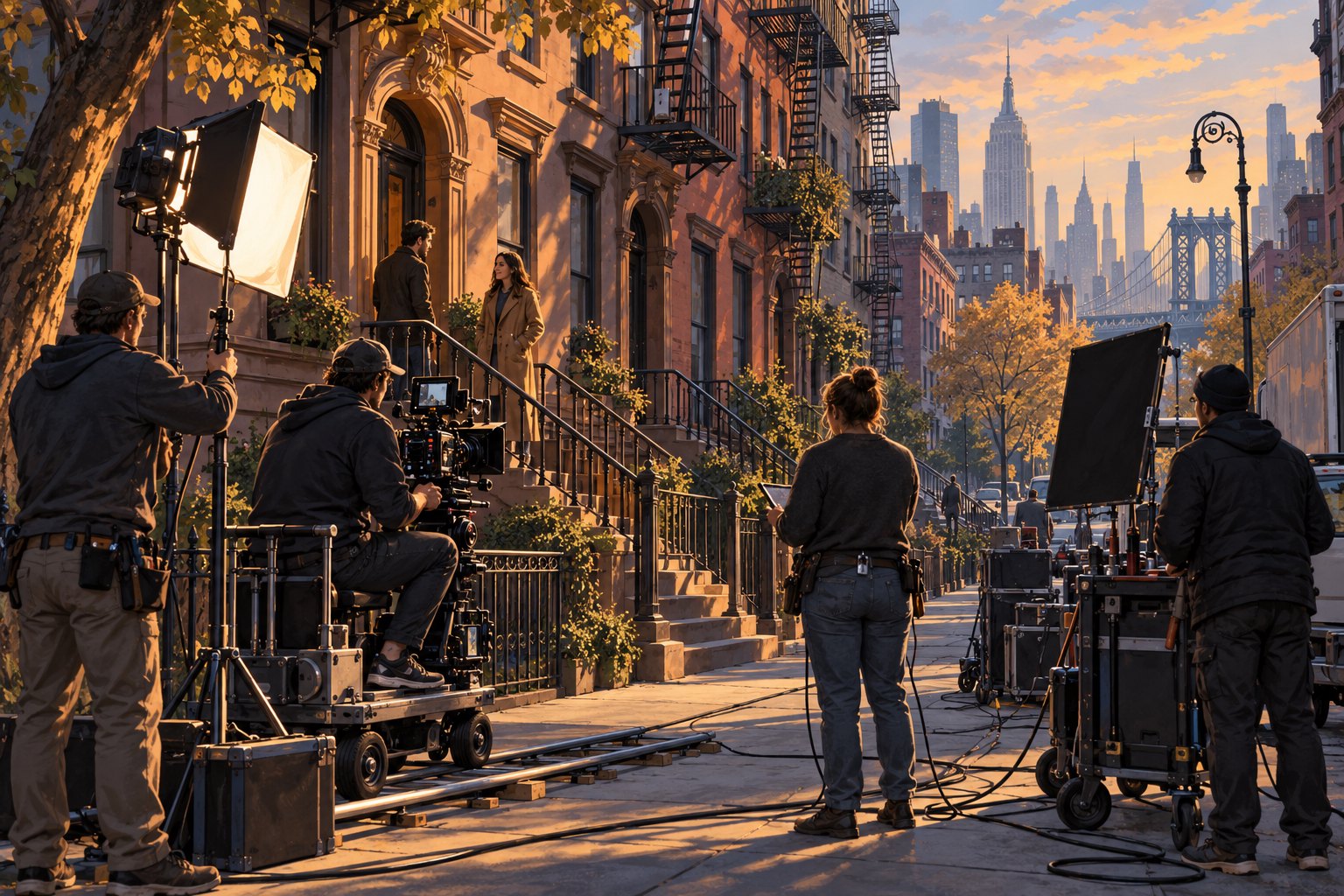
New York’s film and television business is attracting renewed attention for its production boom. For viewers, the interesting question is what that activity makes possible: stories in which streets, apartments, workplaces, and public spaces influence how people behave. A busy production center offers opportunities for that kind of filmmaking. Whether those opportunities become memorable movies and television is a separate creative test.
Variety’s coverage describes a booming New York film and TV sector. That establishes the subject of the industry conversation; it does not establish the quality of the work being made. The analysis here concerns the connection between production and storytelling, rather than a verdict on an individual release. My view is that the most valuable outcome would be a wider range of New York lives on screen, told with enough attention that the setting becomes inseparable from the characters.
Why a production boom matters beyond the skyline
A location decision has two sides. Producers need somewhere they can organize a shoot, assemble the necessary resources, and complete the work. Directors need environments that serve the story. Those priorities meet in practical choices: whether an interior accommodates a particular camera movement, whether a street supports the scene’s action, and whether the schedule allows time to develop a performance.
That is why explaining a boom requires more than admiring the city’s appearance. The useful questions concern production costs, access to facilities, crew availability, and the predictability of working arrangements. These are factors to investigate when judging any production center, rather than an independently established account of what caused New York’s current growth.
From a viewer’s perspective, their importance is indirect but substantial. A workable production environment can give filmmakers room to solve creative problems. It cannot make those solutions interesting by itself. The audience eventually encounters a scene, not the administrative circumstances that enabled it.
Let the city change what a character can do
Calling New York a character has become an easy compliment. A more demanding standard is to ask whether the city changes anyone’s choices. Can someone afford privacy? Can they leave an uncomfortable encounter? Does getting across town require effort that the story acknowledges? When those questions matter, geography becomes part of the drama.
Consider a hypothetical reconciliation scene. On a quiet suburban driveway, two people might have room to avoid each other. On a crowded sidewalk, their attempt at intimacy competes with other people’s movement. In a narrow apartment entrance, one person may physically block the other’s exit without intending to. Each setting creates a different emotional arrangement before anyone speaks.
The character’s perspective should determine how that space is filmed. Someone arriving with ambition might scan a street for possibility. Someone exhausted by work might notice only the distance remaining. The same block can support both experiences, but framing, sound, and performance must distinguish them. Recognizable architecture alone cannot do that work.
This is also the creative question behind our discussion of how a filming location can serve a romantic story. A place earns its screen time when it affects the relationship, the rhythm of an encounter, or the possibilities available to the people living there.
The soundstage belongs in the conversation
Street filming supplies the most immediately recognizable image of a city’s screen business. Interiors deserve equal attention. An apartment, office, or restaurant can carry much of a story’s emotional information, especially when characters return to it repeatedly.
A constructed set gives filmmakers control over where the camera goes and how a room is lit. Its expressive value depends on what that control reveals. A table might force uneasy relatives into close proximity. A doorway might let a character listen without joining a conversation. A room crowded with possessions can suggest attachment, limited space, or an inability to let something go.
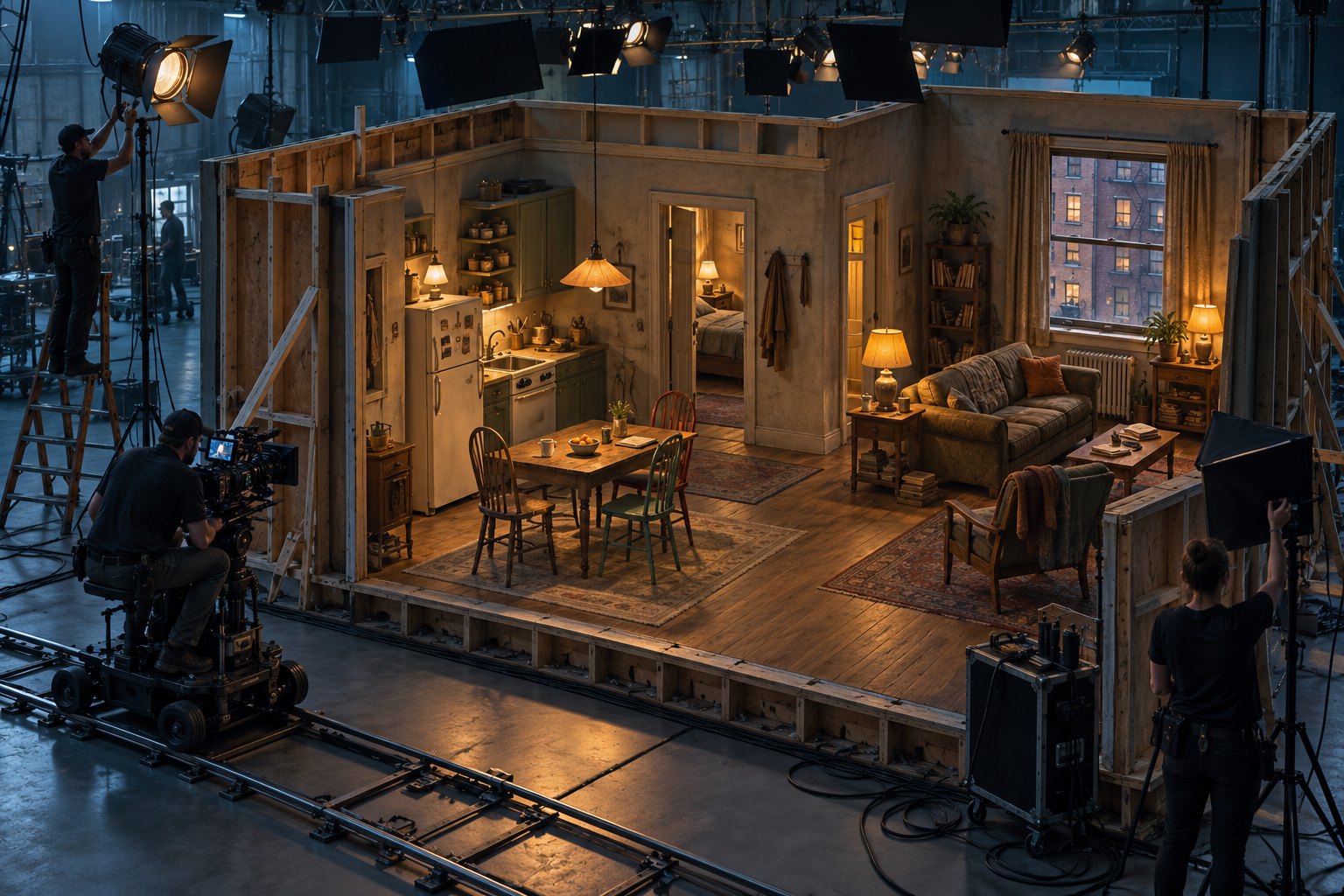
For my money, a persuasive screen apartment needs a sense of use. The furniture should seem connected to someone’s habits. Objects should have relationships to the people who reach for them. Wear, clutter, and order all become meaningful when they suggest a life continuing outside the scene.
Television can deepen that effect through repetition. Once viewers understand a room, a changed seating arrangement or an unexpectedly empty corner can register without explanation. Production design then becomes part of the storytelling’s memory. The room helps us recognize that a relationship has changed.
A city on screen needs more than attractive surfaces
One creative risk of filming in a familiar place is relying on recognition. A skyline supplies scale. A handsome facade supplies atmosphere. Neither automatically tells us whose experience the story considers important.
A useful critical question is who gets to occupy the frame comfortably. Who is working while other characters enjoy themselves? Who has time to linger? Who has to keep moving? These choices can communicate status and belonging without turning the dialogue into a lecture about either.
Sound offers another route into perspective. Traffic might interrupt a confession, make a private exchange feel exposed, or recede as a character becomes absorbed in someone else. The strongest choice depends on the scene. Persistent urban noise is no more inherently truthful than silence; what matters is whether the treatment helps us inhabit the character’s experience.
That is the standard I would apply to work emerging from New York’s production momentum: specificity of attention. Does the filmmaking notice how people share space, negotiate inconvenience, and protect small areas of independence?
Residents are part of the production story
There is also a relationship outside the frame. A street used for filming remains a place where people live, work, receive deliveries, and travel. An industry’s enthusiasm for a location does not settle every question about how it should be used.
Our coverage of residents and businesses navigating a filming dispute offers a related lens for thinking about that relationship. The broader editorial principle is straightforward: a production center should be assessed through the experiences of the people who accommodate filming as well as those who organize it.
For New York, sustained success would ideally mean working arrangements that people can understand and rely on. That is a criterion for evaluating growth, not a claim that every current production meets it. The distinction matters because a favorable industry headline cannot describe every neighborhood’s experience.
What to watch for in the finished work
Viewers do not need production expertise to judge whether a story uses New York well. A few questions can sharpen the experience:
- Does place affect action? Notice whether distance, crowding, or access changes what a character can accomplish.
- Do interiors reveal habits? Look for rooms that explain how someone lives, beyond signaling wealth or taste.
- Does the camera follow a perspective? Ask whether the city feels different depending on whose experience anchors the scene.
- Do recurring spaces develop meaning? Watch whether familiar locations acquire emotional weight as relationships evolve.
The deeper promise of New York’s film and TV boom is the possibility of making its contradictions tangible: proximity without intimacy, freedom constrained by expense, and private hopes unfolding in public. Those tensions offer rich material. The lasting achievement will come when filmmakers turn the resources of a busy production city into characters whose lives feel particular, consequential, and worth following.
Original content by this site's editorial team. Published: October 3, 2026 at 23:24:33 PDT (Los Angeles time)