
Long Day’s Journey Into Night, featuring Jessica Lange and Ed Harris, has landed a distribution deal with Quiver, according to Variety. The announcement brings fresh attention to a drama whose power rests on an uncomfortable recognition: knowing exactly how someone has suffered does not necessarily make living with them easier.
For audiences drawn to intimate, actor-centered movies, the attraction is clear. Eugene O’Neill’s Tyrone family offers no easy division between innocent victims and destructive relatives. Affection and resentment occupy the same conversation, sometimes the same sentence. A parent’s explanation becomes a child’s accusation; an apology opens the door to another grievance.
This is an analysis of the original drama behind the film, not a screening review of the Lange–Harris adaptation. The distribution announcement establishes the deal; it does not establish the film’s artistic success. The discussion below contains major spoilers for O’Neill’s play, including its ending. Quoted dialogue comes from the play and is not presented as verified dialogue from the new film.
What the Quiver deal means for viewers
A distribution agreement is a practical development for a movie, but it is not a complete viewing guide. The reported deal alone does not settle when a particular audience can buy a ticket or find the film on a streaming service. Those details require a specific release announcement.
The useful distinction is between access and achievement. Quiver’s involvement is news about the film’s route to audiences. Whether the adaptation captures O’Neill’s shifting emotional allegiances is a separate question. As with what a studio agreement means for Noah Baumbach’s next movie, business support creates possibilities without answering the artistic questions.
One day, four incompatible versions of home
O’Neill’s play follows James and Mary Tyrone and their sons, Jamie and Edmund, through a day in their summer home in 1912. Mary has returned from treatment for morphine addiction. Edmund’s illness becomes another source of fear, while familiar arguments gather force.
The compressed timespan makes the family’s habits unusually visible. Nobody needs to invent a new insult. Everyone already knows where to press. Yet the repetition has a dramatic purpose: each return to an old grievance tests whether someone might finally respond differently.
My reading is that the house functions as four competing ideas of safety. One person wants reassurance, another financial security, another freedom from judgment, another evidence that he matters. The tragedy grows because each request arrives in a form the others experience as an attack.
Mary: being watched is not the same as being understood
Mary’s return to morphine is central to the day’s unfolding crisis. Her family watches for signs of relapse, while she retreats toward memories of her younger self and the possibilities she once imagined.
From her perspective, concern can feel indistinguishable from surveillance. A glance becomes a verdict. Even an affectionate question can carry the unspoken demand that she prove she is well. Her plea in the play—“Please don’t—talk about things you don’t understand!”—captures the distance between being closely observed and feeling known.
That does not make every accusation she delivers fair. It makes her defensiveness legible. The strongest interpretation of Mary would allow both truths to remain present: she experiences real suffering, and her attempts to escape it inflict suffering on others.
For a screen adaptation, the interesting challenge is the gap between speech and attention. Mary may be physically available to her family while emotionally moving beyond its reach. A camera could make that separation devastating through a listener’s face or an unanswered look. Whether this film does so requires watching the finished work.
James: when providing becomes a defense
James’s arguments over money extend into the question of Edmund’s care. Later, he acknowledges the artistic cost of repeatedly playing a profitable theatrical role.
Those elements suggest a man who has learned to justify himself through what he can secure. Financial caution gives him a vocabulary of responsibility. His family hears something colder: an insistence on calculating costs when they need him to recognize pain.
The compelling contradiction is that his defense can be sincere and inadequate. A provider may have worked hard, made sacrifices, and still failed to offer the kind of security another person needed. O’Neill allows James’s regrets to complicate our judgment without requiring us to dismiss the complaints against him.
That complexity matters more than a grand speech. An adaptation needs room for the awkward aftermath of self-disclosure, when someone has explained himself and still has to face the person he hurt.
Jamie and Edmund: love with an ugly underside
Jamie’s drunken admission that he both loves and resents Edmund is among the play’s most painful disclosures. Brotherly attachment does not protect him from envy.
I find Jamie disturbing because he recognizes his own capacity for harm. His honesty offers Edmund a warning, but confession also risks becoming an excuse: if he has admitted what he might do, has he quietly transferred the burden of prevention to his brother?
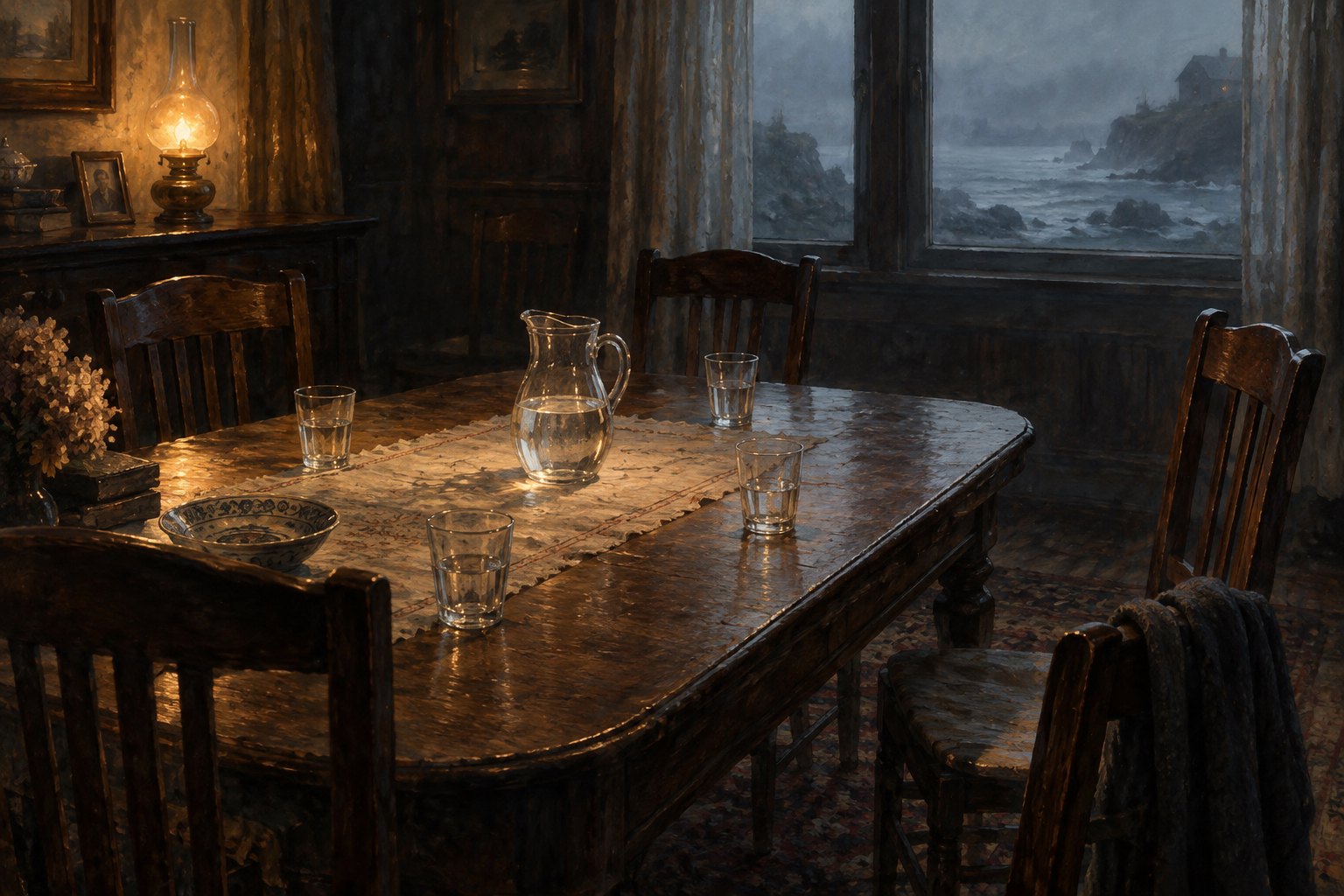
Edmund, meanwhile, seeks distance through language and imagination. “The fog was where I wanted to be,” he says in the play. The appeal is understandable. Fog interrupts the family’s relentless visibility; it offers a world in which he might briefly stop being someone else’s worry, disappointment, or rival.
His sensitivity does not place him outside the family pattern. He, too, wants relief from reality. The difference lies partly in the form that relief takes. Reading the brothers together makes the story richer than a contest between one promising son and one failed son.
What the film needs from its ensemble
Lange and Harris give the announcement its immediate visibility, but the drama depends on relationships across the entire family. Our discussion of why an ensemble matters beyond its leading name applies especially well here: a character becomes fully revealing through the responses they provoke.
For viewers, the most useful thing to watch will be the transitions. Does tenderness briefly survive an argument? Does an apology alter the room? Can a silence feel like an attempt at restraint before it becomes punishment? These are more revealing measures than the volume or length of any confrontation.
The ending: understanding without repair
The play closes with Mary carrying her wedding dress and speaking from a past increasingly inaccessible to the men watching her. The family remains together in space while losing its shared present.
My interpretation is that the ending denies the comforting promise that confession automatically heals. These people have exposed their wounds and explained their behavior. They have not thereby learned how to stop hurting one another.
That is what makes the Quiver announcement worth attention beyond the names attached. Long Day’s Journey Into Night offers material capable of turning a family argument into a searching examination of responsibility. Its deepest question is what people owe one another after their excuses have become understandable—and still have not become enough.
Original content by this site's editorial team. Published: September 17, 2026 at 14:54:49 PDT (Los Angeles time)