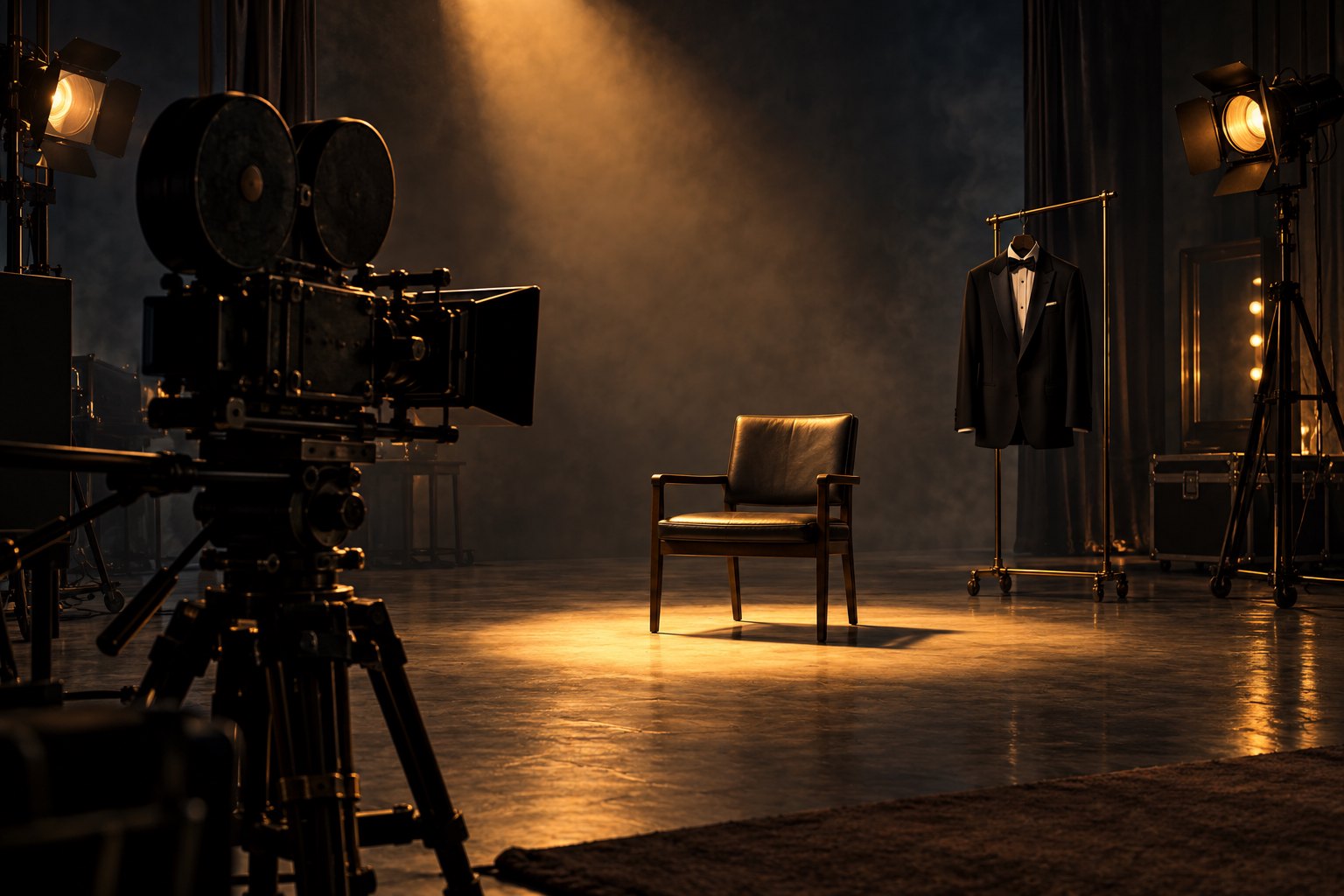
James Bond’s next casting decision is moving toward a test in front of the camera. The Hollywood Reporter reports that screen tests are scheduled for the weekend, with finalists emerging for the next 007 movie. That establishes a reported step in the casting process; it does not establish who has won the role.
For audiences wondering what comes next, the interesting question extends beyond which actor looks right in formalwear. A successful Bond must make intelligence, charm, aggression, and restraint feel like parts of the same person. My view is that the decisive quality should be the ability to change tactics while keeping us interested in what the character is thinking.
This is spoiler-free casting commentary and character analysis, not a review of the forthcoming film or an account of private audition footage.
What the screen-test report establishes
The essential news is narrow: weekend screen tests are reported, and the search has reached a stage involving finalists. A screen test is an evaluation, not a casting announcement. The existence of a shortlist also cannot tell us how closely the candidates match one another, what material they will perform, or which qualities will determine the decision.
No winner is established by that report. Nor does the premise provide a basis for describing the next film’s plot, judging its performances, or promising when audiences will see it. A reported casting milestone is meaningful without being made to carry those additional claims.
That distinction matters because casting discussion can turn an actor’s public image into an imaginary finished movie. We explored a related problem in our commentary on what casting news can tell viewers about an adaptation. A name can suggest possibilities. The relationships and choices that make a performance work still have to be built.
Bond’s first challenge is making observation dramatic
Seen from Bond’s perspective, entering a room should involve more than attracting attention. He needs to assess who holds power, who wants something, and what someone may be concealing. An actor can communicate that process through a glance that arrives a fraction late, a pause before answering, or a smile that never quite reaches the eyes.
This is where screen presence becomes more useful than simple handsomeness. A polished appearance supplies an immediate impression. Attention supplies behavior. I would rather watch a Bond whose expression changes because he has noticed something than one who maintains the same impressive pose throughout a conversation.
The familiar introduction, “Bond. James Bond,” offers a compact acting problem. It can sound welcoming, challenging, amused, or deliberately uninformative. Its effectiveness depends on whom he is addressing and what he wants from them. Delivering it as a recognizable catchphrase is easy to imagine; making it serve a particular encounter is the more interesting task.
That is a critical standard, not a claim about the material being used in these tests. Whatever scenes the candidates perform, the underlying question is whether thought becomes visible without being laboriously explained.
Charm works best when the other person can resist it
Bond’s confidence becomes dramatically useful when someone else complicates it. If every person in a scene exists to admire him, the performance has little room to develop. A perceptive partner, skeptical superior, or composed adversary gives the actor something to respond to.
From the other character’s perspective, Bond might be an asset, an inconvenience, a threat, or someone whose charm is transparently tactical. A convincing lead should allow those interpretations to register. The scene gains energy when we can understand why another person refuses to accept Bond’s preferred version of himself.

For that reason, I would place considerable value on listening. Does the actor receive a surprising answer, or merely wait to deliver the next line? Can amusement turn into caution without an obvious announcement? Can he surrender control of a moment while remaining compelling?
The same attention to reaction informs our discussion of why watching faces matters when evaluating screen chemistry. Chemistry is a relationship created between performers. It cannot be reliably inferred from two attractive portraits placed side by side.
Physical confidence needs a thought behind it
Bond also needs a credible relationship with danger. That does not mean every movement should advertise toughness. Constant tension can make a character appear less capable, as though he must keep reminding everyone that he is dangerous.
A more persuasive approach, to my taste, is physical economy. Stillness can suggest confidence when it feels chosen. A sudden movement becomes more forceful when the actor has not spent the preceding scene signaling that it is coming. The contrast gives action dramatic shape.
Equally important is the aftermath. An actor’s breathing, posture, and attention can suggest whether a confrontation has cost the character something. This need not turn every encounter into a declaration of trauma. Small consequences can preserve the sense that a human being occupies the expensive clothes.
These are proposed criteria for judging a future performance, not descriptions of planned stunts or audition requirements. The report alone does not reveal how the screen tests will assess physicality.
Humor should reveal Bond’s temperament
Humor is another useful test of character. A dry remark can be a pleasure in itself, but its timing can also reveal whether Bond is deflecting discomfort, provoking an opponent, or restoring his sense of control.
My preference would be for an actor who can make wit feel responsive. The joke should arise from what has just happened and whom he is addressing. If it sounds detached from the encounter, the character briefly disappears behind a performer demonstrating that he knows how a Bond line should sound.
There is room for elegance and absurdity here. The important choice is how the actor connects them. A light touch need not erase danger, just as seriousness need not eliminate pleasure. The strongest interpretation would make those changes in tone feel like the habits of one recognizable mind.
The deeper casting question: what does the polish conceal?
At its most interesting, Bond’s composure invites two simultaneous responses. We enjoy the apparent ease, and we wonder what maintaining it requires. That tension gives the character more dramatic potential than either invulnerability or exposed anguish alone.
The next actor does not need to explain every feeling. He needs to make concealment readable: to let us sense a decision to withhold, recover, or redirect. From Bond’s perspective, control may be a professional necessity. From the audience’s perspective, the effort behind that control is often where identification begins.
The reported weekend tests matter because they bring the search closer to an actual performance. Until a casting decision is announced and footage is available, verdicts remain premature. The standard worth carrying forward is nevertheless clear: the next 007 should make us curious about what happens between the famous introduction and the next move. The tuxedo establishes the silhouette. The actor has to establish the person.
Original content by this site's editorial team. Published: October 22, 2026 at 15:15:21 PDT (Los Angeles time)