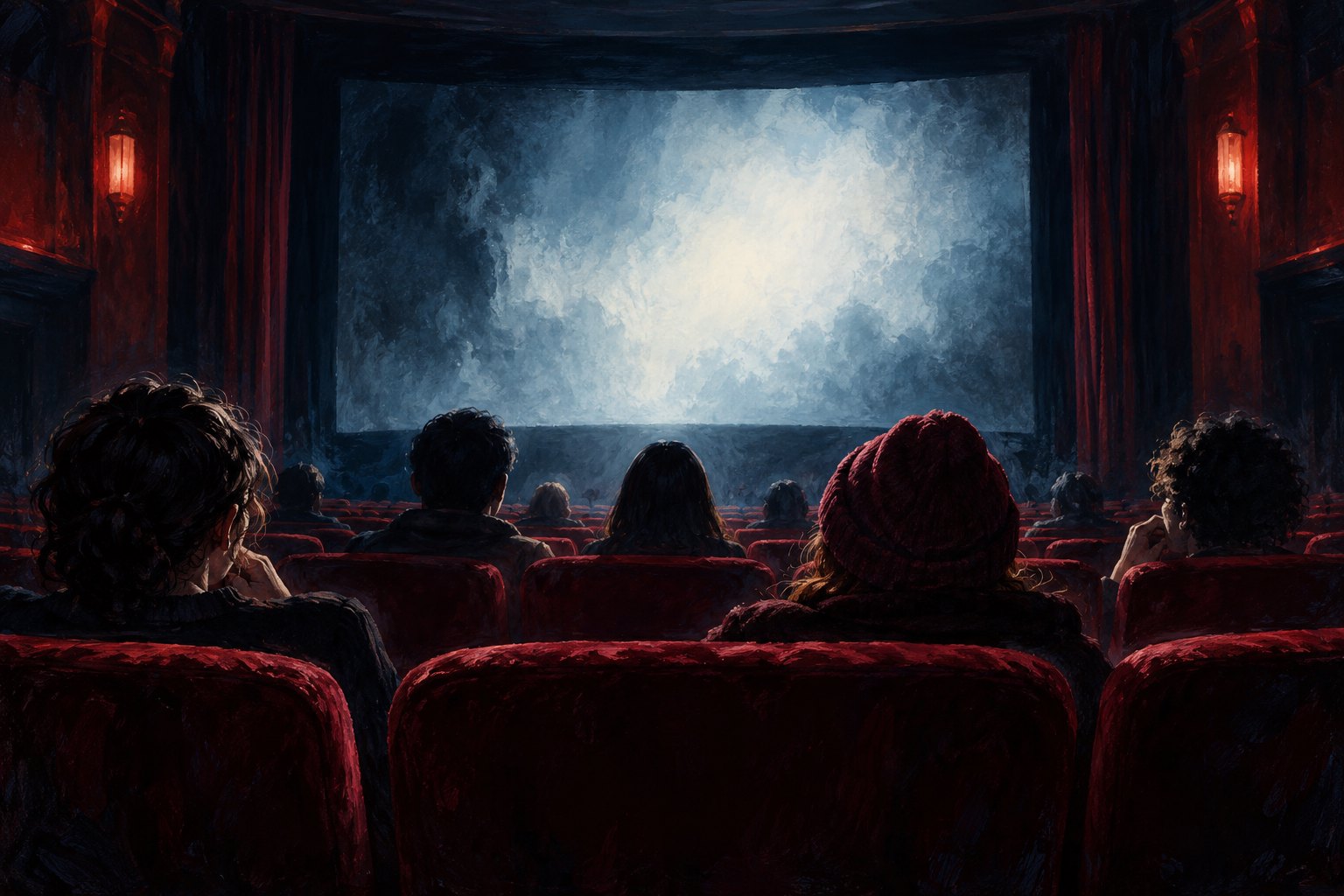
Horror movie enthusiasts deserve a more interesting question than how much fright they can handle. What do they notice while everyone else is watching for the next shock? The Irvington Voice’s feature titled Horror Movie Enthusiasts of Irvington — Meggie Li puts a name beside that enthusiasm. It offers an occasion to consider what thoughtful attention to scary movies can involve: understanding a vulnerable character, recognizing how suspense is constructed, and explaining why a disturbing moment stays with us.
The title alone does not establish Li’s favorite films, personal experiences, or opinions. Those remain hers to express. The discussion here is independent, spoiler-free genre commentary about the issue that title raises: how to treat horror fandom as a meaningful engagement with movies.
Start with the person experiencing the danger
My strongest preference in horror is for fear that belongs to a particular character. A threatening room becomes more interesting when entering it could answer a question, protect someone, or expose a painful mistake. Without that motivation, the person approaching the door risks becoming little more than a delivery system for the next scare.
A useful way to examine a frightening sequence is to separate what the audience knows from what the character knows. Viewers might have seen a threat enter the building. The protagonist may have heard only a familiar noise. Judging the ensuing decision requires remembering that difference. Information supplied by editing does not automatically belong to everyone inside the story.
This distinction makes the familiar complaint about foolish horror characters more precise. Sometimes a screenplay does force someone into danger through implausible behavior. Sometimes viewers mistake their privileged position for superior judgment. The critical task is to identify which is happening, using the scene rather than a general rule about what sensible people would do.
The same attention to character informs our discussion of how emotional characterization shapes the debate around Klara and the Sun. Across genres, a compelling premise becomes more persuasive when a character’s choices make its consequences tangible.
A startle and a sustained threat do different work
A sudden sound can produce a powerful immediate reaction. Suspense asks the audience to live with the possibility of something happening. Neither technique deserves automatic praise or dismissal. What matters is how the film prepares the moment and what changes after it.
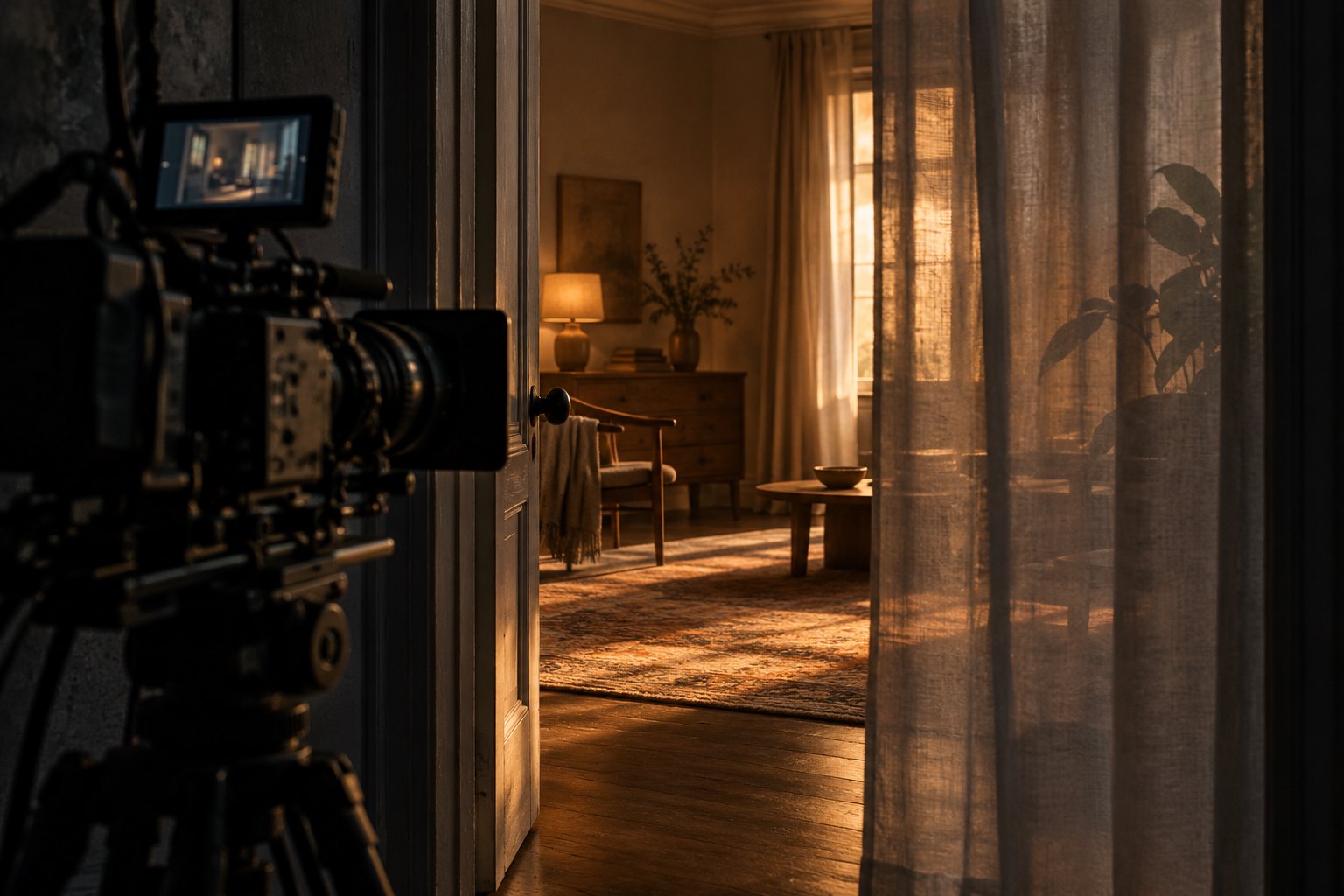
Consider a hypothetical hallway sequence. A static shot leaves a doorway visible behind the protagonist. Footsteps stop before their source enters the frame. The character continues talking, unaware of the silence. The tension comes from competing demands on our attention: we listen to the conversation while inspecting the empty space.
Now imagine the scene ending with a loud noise and an ordinary household object falling. That release might be playful, exhausting, or dramatically useful. Its value depends on placement. Does it make the protagonist dismiss a later warning? Does it establish something about the building? Or does the film simply reset and repeat the same trick?
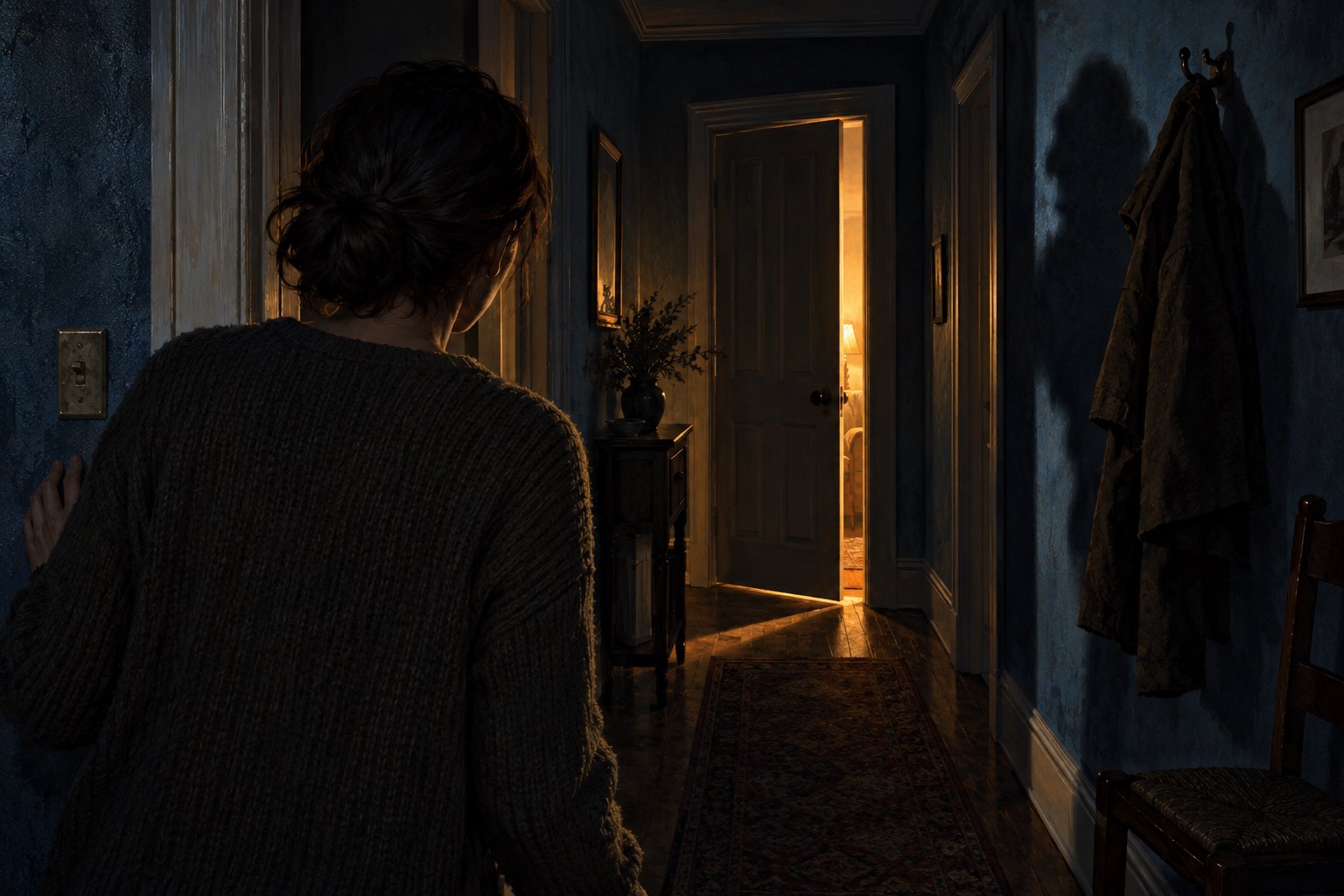
For a horror enthusiast, explaining that construction can be more revealing than reporting whether it caused a jump. A useful review connects a visible or audible choice to its effect: the camera withheld an exit, the sound suggested movement outside the frame, or a pause made an otherwise ordinary gesture feel uncertain.
Take different reactions seriously
Local attention to horror enthusiasts, as in the Irvington feature’s title, also invites a question about audiences. Two people can watch the same sequence and disagree without either failing to understand the movie. One may find uncertainty absorbing; another may find the same delay repetitive. Their disagreement becomes useful when they identify the moment where anticipation turned into impatience.
Viewing conditions belong in that conversation. Watching alone allows a different kind of concentration from watching with friends who exchange nervous jokes. A group’s laughter can interrupt a tense scene, but it can also become part of the evening’s pleasure. A critic should distinguish a judgment about the film from a description of the screening experience.
That distinction connects with our commentary on what an audience’s experience brings to a film screening. Viewers contribute knowledge and expectations to interpretation. Attending to those differences makes criticism more specific.
For a conversation among horror fans, I would begin with the scene each person remembered most clearly. Then I would ask what they were watching within it. Someone may have tracked the background while someone else watched an actor’s face. That comparison can reveal how the film directed attention—and where its design left room for discovery.
Make enthusiasm more specific than a score
A useful horror discussion can follow four questions. They work whether the film is unsettling, funny, disappointing, or some combination of all three:
- What does the central character want before the threat arrives? Identify the desire that gives later choices meaning.
- What makes the danger believable within this story? Look for established rules, credible reactions, and consequences.
- Which filmmaking choice produces the strongest response? Describe a shot, performance, sound, or cut rather than relying only on adjectives.
- What changes because of the frightening experience? Consider relationships, self-understanding, and the cost of survival.
These questions also leave room for criticism. A beautifully staged threat can belong to a thin story. An uneven film can contain an extraordinary performance. Enthusiasm becomes more convincing when it can acknowledge both. Loving the genre need not mean defending every example of it.
What remains after the fear passes
The deeper interpretive question is what fear makes visible. Does danger expose a relationship built on mistrust? Does the desire to protect someone become controlling? Does survival require a character to revise an assumption about another person? Such readings earn their place when choices and consequences support them.
Symbolism needs the same discipline. An unusual prop is not automatically an Easter egg, and a recurring image does not automatically unlock a secret explanation. First establish what appears, when it returns, and whether its meaning changes. Interpretation is most rewarding when another viewer can follow the evidence and still reach a different conclusion.
The Irvington title’s pairing of a person’s name with a genre enthusiasm is a useful reminder that audiences deserve individual attention. It cannot tell us what Meggie Li thinks without her words. It can prompt us to ask better questions of horror enthusiasts: which character mattered, which moment changed their understanding, and what they carried away after the screen went dark.
Original content by this site's editorial team. Published: October 25, 2026 at 19:09:56 PDT (Los Angeles time)