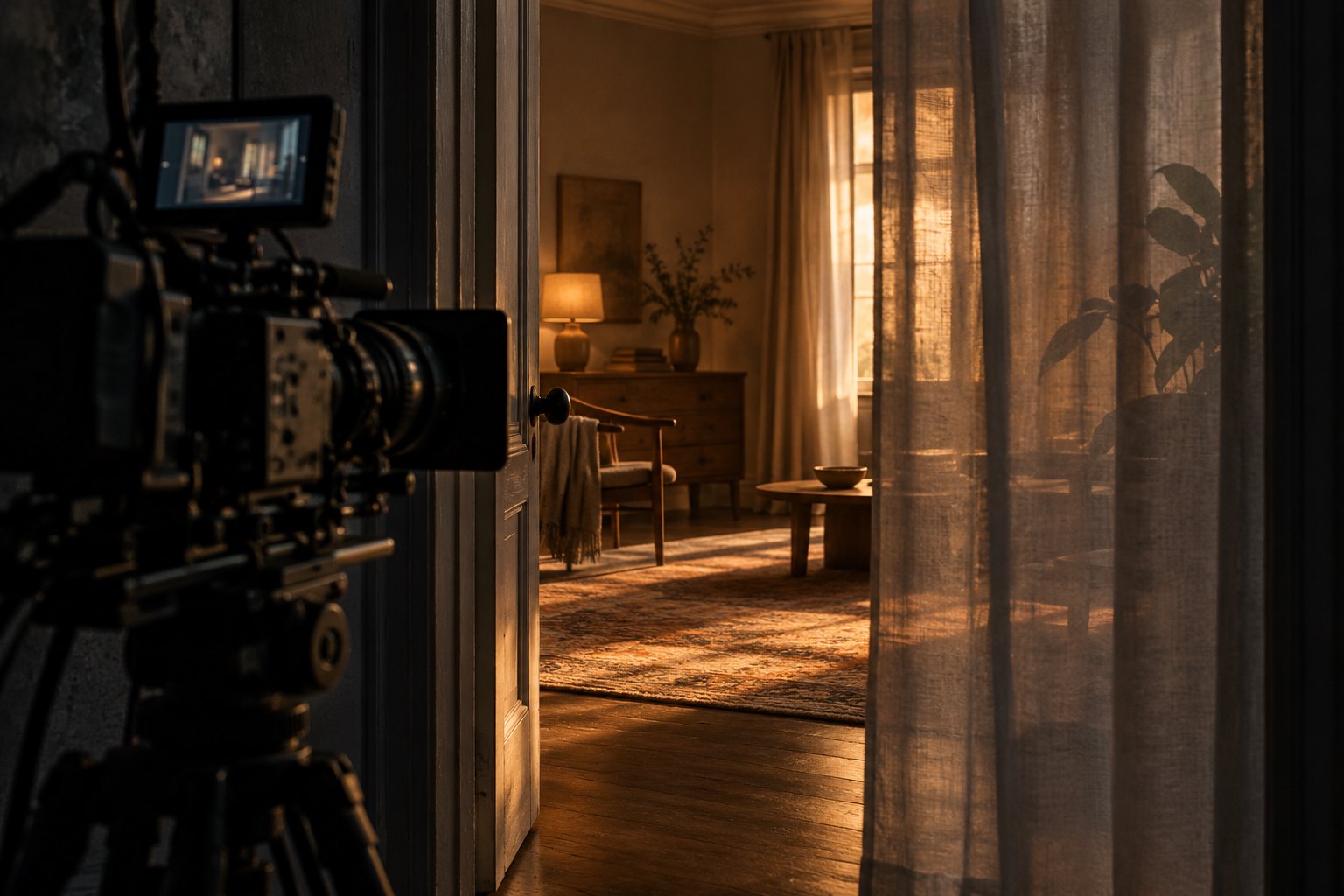
The Other You, an award-winning independent film featuring actors from the Washington-area theater community, begins streaming October 27, 2026. Its central temptation is immediately recognizable: what if a doorway inside your home led to a version of your life where everyone finally gave you room to breathe?
Beth Hylton plays Annie, a writer, wife, and mother whose discovery of an alternate household turns domestic frustration into fantasy. For viewers looking for a smaller new release built around an adult woman’s ambitions, the premise offers a distinctive reason to investigate.
This is a character-focused preview, not a review based on a full screening. The discussion includes the publicly announced setup, but no ending spoilers. Assessments below concern that setup’s dramatic possibilities; they do not claim to establish how successfully the finished film realizes them.
When and where The Other You starts streaming
DC Theater Arts reports an October 27 launch in the United States and United Kingdom, naming Amazon, Google Play, YouTube Movies & TV, Fandango at Home, and participating cable video-on-demand providers. The film’s official announcement also lists October 27 and says its streaming links will become available on release day.
A streaming release does not necessarily mean inclusion with an existing subscription. Check the individual listing for rental or purchase options, regional availability, and price before planning a viewing. The announcement alone does not establish those terms for every service.
The film comes to home audiences after festival recognition, including awards from the DC Independent Film Festival, Chesapeake Film Festival, and Alexandria Film Festival. Those honors provide context for its arrival. Whether its humor and emotional complications connect with a particular viewer remains a separate question.
Annie’s fantasy begins with ordinary needs
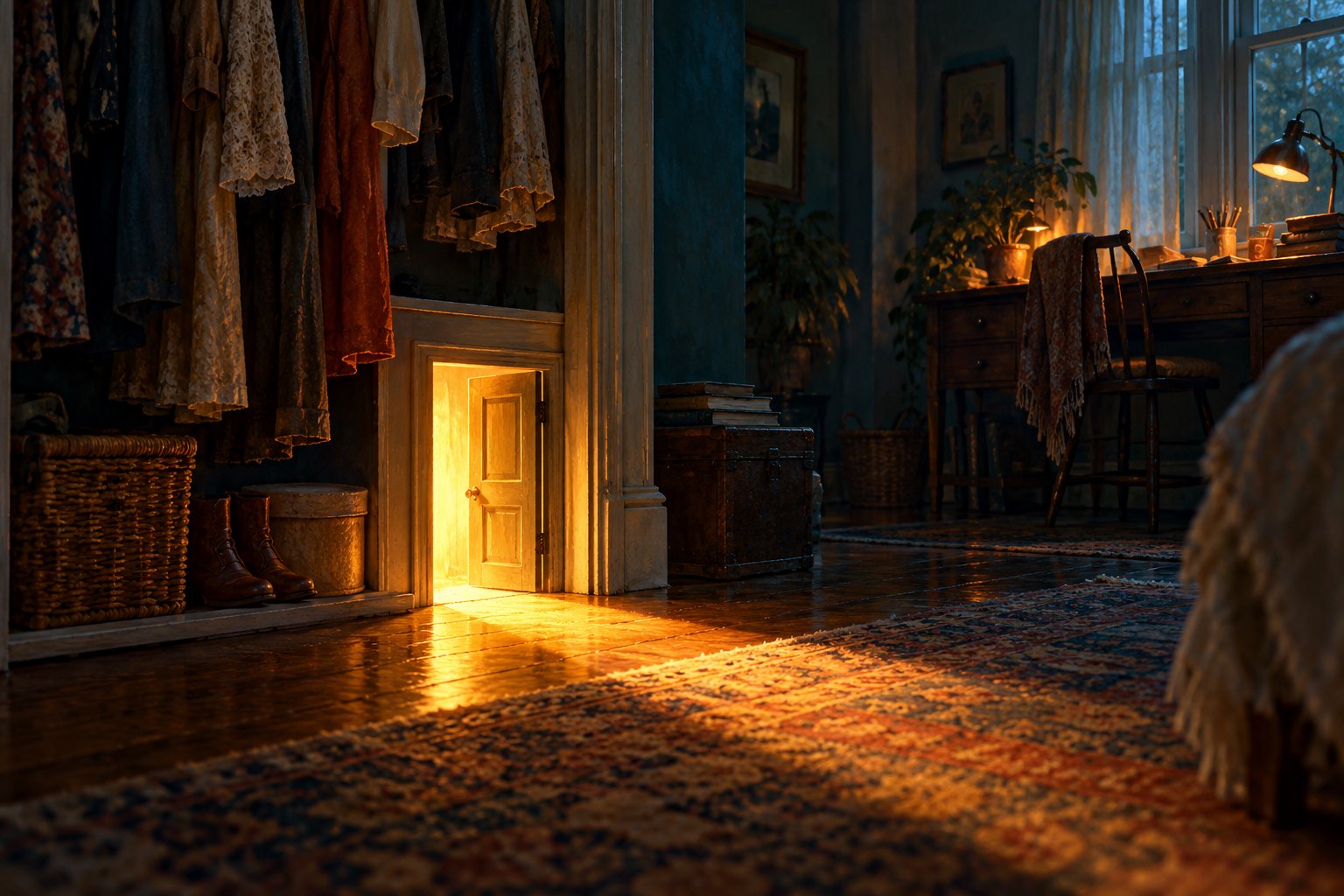
The official synopsis introduces Annie as someone exhausted by attending to everyone else’s needs. A tiny door in her closet leads to an apparently improved life: a more accommodating husband, helpful children, and a writing mentor next door. Eventually, that household’s imperfections emerge, and an alternate Annie challenges her place within it.
The most interesting detail is the scale of the wish. Annie’s imagined improvement keeps family life in the picture. The attraction lies in changing its conditions so that creative work can coexist with it. Read this way, the premise treats ambition as something embedded in everyday relationships, where another person’s request can consume the time someone had reserved for herself.
That distinction gives the fantasy emotional specificity. Having a place to write means little if sitting down there remains negotiable. A supportive household would change more than Annie’s schedule: it could change whether she feels entitled to take her own work seriously.
My reading of the setup is that its strongest tension lies between affection and resentment. Those feelings can occupy the same relationship. A character can love her family while questioning a routine that makes her available to everyone at the expense of her own aspirations.

Why the writing mentor matters
The mentor next door makes Annie’s alternative world more revealing than a simple escape from chores. Help at home would free time. A mentor might offer recognition: someone who regards her as a writer with work worth discussing.
Those are related but different desires. One concerns the practical conditions of making something; the other concerns being taken seriously before the finished work exists. Their combination suggests that Annie’s dissatisfaction reaches beyond a crowded calendar.
For a viewer, this offers a useful question to carry into the film: what does Annie actually want from this person? Encouragement, instruction, approval, and access would each create a different relationship. The synopsis establishes the mentor’s presence, but it leaves those distinctions open.
Character writing becomes richer when an occupation shapes how someone seeks validation and makes choices. Our discussion of how a character’s background can become meaningful drama explores a related problem. Here, the opportunity is to make writing an active need in Annie’s life, with consequences beyond describing her profession.
The alternate Annie complicates the invitation
The presence of another Annie is the premise’s most provocative turn. Until that point, the alternate household can be understood as a private wish made tangible. Another self introduces a competing claim: the life Annie wants may already belong to someone.
From the arriving Annie’s perspective, the doorway promises relief. From her counterpart’s possible perspective, that arrival could look like an intrusion. This is an interpretation of the announced conflict, not a description of an unverified scene, but it illustrates why the double matters. The apparent solution acquires another person’s interests.
It also raises a question about identity. If Annie imagines that improved circumstances will make her more fulfilled, meeting another version of herself gives that belief a human shape. The fantasy can now test both the surrounding household and her expectations of the person she might become.
The dramatic challenge is preserving both women’s complexity. A double who functions only as an obstacle would narrow the conflict. A counterpart with intelligible desires could make Annie’s longing more uncomfortable without making it less understandable.
A regional ensemble behind a personal story
Directed by Shoshana Rosenbaum and written by Julie Gold, The Other You was filmed entirely in Alexandria, Virginia, according to DC Theater Arts. Its cast and crew were drawn primarily from the District of Columbia, Maryland, and Virginia region.
Hylton is a company member of Baltimore’s Everyman Theatre. The official cast credits also identify Kris Arnold as Jack, Staci Dickerson as Mimi, Dennis Courtis as Wyatt, and Vivienne Belle Sievers as Scarlet. The production’s regional connections make the streaming release an opportunity for audiences beyond the area to encounter its performers.
Rosenbaum’s account of developing the project emphasizes the practicality of a house that could be dressed in two ways and actors playing different versions of their characters. That production approach makes performance and domestic space especially relevant things to watch. Small changes in behavior or surroundings can potentially carry the contrast between lives without requiring an expansive fantasy landscape.
Festival recognition offers an introduction to work like this, while a home release gives viewers a different opportunity to consider it. Our guide to making festival viewing more deliberate shares that emphasis on giving an individual film sustained attention.
The deeper question behind the doorway
The most compelling interpretation suggested by The Other You is that the desire for another life can contain a request for changes within the existing one. Annie’s fantasy retains recognizable relationships while improving the space they allow her. That makes the doorway an intriguing image for the distance between having ambitions and feeling permitted to pursue them.
A fuller critical judgment will depend on the film’s actual choices: how it distributes sympathy, what agency it gives Annie, and whether the resolution respects the needs that make escape attractive. No verified dialogue or ending is available here to support claims about those outcomes.
For now, the October 27 release offers a concrete invitation to examine a promising question: when someone imagines a better version of herself, how much of what she wants is personal transformation, and how much is simply a fairer share of time, attention, and possibility?
Original content by this site's editorial team. Published: October 25, 2026 at 18:00:47 PDT (Los Angeles time)