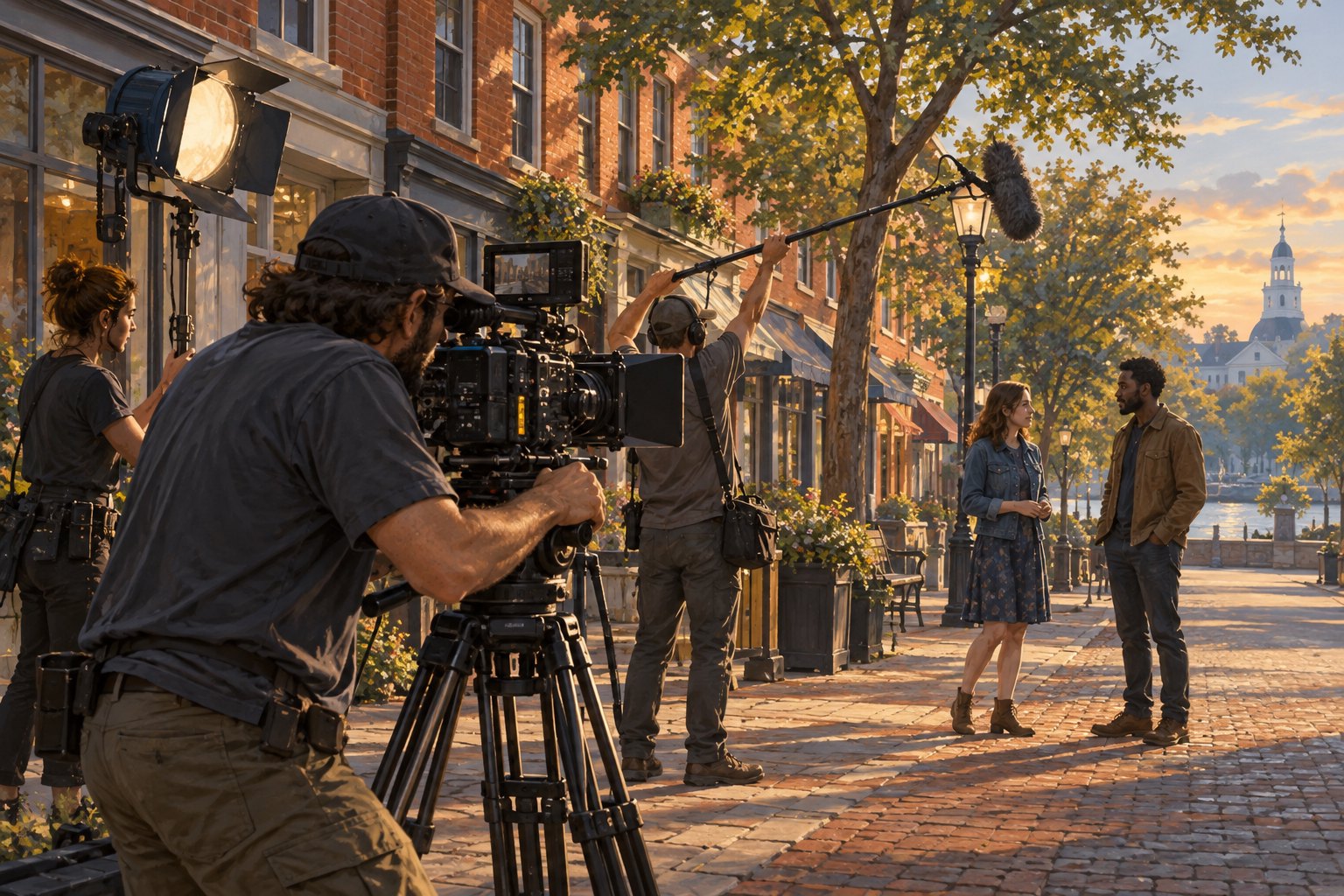
Delaware’s new film tax credit has an appealing ambition: bring more productions into the state, generate jobs, and strengthen its creative economy. WHYY reports those goals as the driving idea behind the initiative. For movie lovers, the prospect suggests more activity behind the scenes. For people hoping to make a living there, the more consequential question is whether that activity can become dependable work.
A production arriving in town is visible. A sustainable filmmaking community is harder to recognize at first. It takes shape through repeat hires, experienced crews, reliable suppliers, and filmmakers who can develop their next project without leaving home. My view is that Delaware’s effort deserves to be judged primarily by those less glamorous outcomes.
The distinction matters from the outset: attracting productions, creating jobs, and growing a creative economy are stated aims, not demonstrated results. This is an assessment of what those ambitions could mean for filmmaking, rather than a verdict that the incentive has already delivered them.
Getting a Production to Arrive Is Only the First Test
The practical appeal of a production incentive is straightforward. It gives filmmakers a financial reason to consider a location. But choosing where to shoot also involves people, equipment, schedules, and the demands of the screenplay. A budget advantage becomes more useful when a producer can assemble the resources needed to finish the work.
Consider a hypothetical independent drama with several interior locations and a tight schedule. Its producer would need more than an attractive street or an affordable building. Reliable sound recording, lighting, transportation, and location coordination could determine whether the production completes its scenes on time. The incentive might help open the conversation; the working conditions would help determine the experience.
That is why a returning production would be an especially useful signal. A first visit can reflect curiosity or a favorable financial calculation. A return could also suggest that the crew found people and services worth hiring again. Neither would establish success by itself, but the second tells a richer story about whether a filmmaking base is developing.
Whose Jobs Count, and for How Long?
The word jobs needs careful handling in any discussion of film production. A day of background acting, a short equipment rental assignment, and several months of technical employment represent different kinds of opportunity. Each can matter to the person receiving the paycheck, but they should not be treated as interchangeable evidence of a lasting industry.
For Delaware residents, the most useful questions would concern duration, compensation, responsibility, and the possibility of another assignment. Does someone gain experience that leads to a more skilled role? Can a crew member build relationships across multiple productions? Does a local business receive enough repeat work to justify investing in equipment or staff?
Those questions also shift attention toward workers whose contributions rarely appear in publicity photographs. Camera assistants, costume workers, sound teams, drivers, and production coordinators help make performances possible. An actor’s emotional close-up depends on many people doing their jobs well before the camera records it.
Our discussion of what a producer’s involvement means for a developing film addresses a related distinction: an announcement establishes a possibility, while the work that follows gives that possibility substance. Delaware’s employment ambitions warrant the same patient scrutiny.
Training Matters When It Leads to Paid Work
If the goal is a stronger local workforce, access to practical experience deserves attention alongside production activity. An aspiring crew member needs opportunities to learn equipment, understand set procedures, and work under experienced supervision. Just as crucially, that learning needs a credible route into paid assignments.

A useful model to evaluate would connect supervised experience with progressively greater responsibility. Someone might begin by assisting with equipment preparation, then develop the competence and professional relationships needed for another role. This is an example of what meaningful workforce development could look like, not a description of a confirmed Delaware training program.
The important outcome would be progression. Counting participants in a workshop would reveal participation; following their subsequent paid work would reveal more about opportunity. A creative economy becomes more credible when newcomers can see how to enter it and experienced workers can see reasons to remain.
Local Filmmakers Need a Place in the Picture
There is also an artistic question beneath the economic one: could increased production activity expand what Delaware filmmakers are able to make?
Hosting a visiting project and supporting a locally developed story can both be worthwhile, but they are different achievements. One brings work into a place. The other may help people from that place shape its representation. A state can appear on screen without its residents having much influence over the story being told.
From a film criticism perspective, that distinction is significant. Location becomes expressive when it affects character behavior: where someone can find privacy, how far they must travel for work, or which familiar spaces make them feel welcome. A setting acquires dramatic meaning through lived relationships, not simply through attractive establishing shots.
No tax incentive can guarantee perceptive writing or memorable performances. Still, if a stronger production community made experienced collaborators more accessible to local directors, the potential artistic benefit would extend beyond the number of shooting days. The relevant question would be whether more people gained a realistic chance to tell a story with care.
Statewide Benefits Should Be Visible Beyond the Camera
The ambition to strengthen the creative economy statewide invites another test: how widely would opportunity be distributed? A useful assessment would examine where work occurred, which businesses participated, and whether benefits reached beyond a small circle of established production contacts.
Residents also have a stake in how filming fits into everyday life. Clear communication, sensible access arrangements, and respectful use of shared spaces would help make a production a welcome neighbor. Community goodwill deserves attention even when it is harder to summarize than a spending total.
Our commentary on a Humboldt Park church’s return to cinema considers a parallel issue: movie culture becomes more meaningful when a community has a role beyond providing a setting or buying a ticket. In Delaware, that could mean looking for connections among production workers, local storytellers, audiences, and places where finished work can be seen.
The Most Meaningful Result Would Be Continuity
As Delaware’s initiative develops, I would look for a small set of concrete indicators: repeat paid employment for residents, returning business for local suppliers, advancement into skilled roles, and opportunities for locally developed projects. Public cost belongs in that assessment too; production activity alone would not establish whether the wider bargain was worthwhile.
The deeper promise of the tax credit is the possibility of continuity. One production ends, but a worker carries experience into the next. Equipment remains available. A professional relationship becomes a collaboration. A filmmaker discovers that a story once considered impractical can now be attempted close to home.
That is the outcome worth watching. Delaware’s new incentive offers a reason for productions to consider the state. Its lasting value would emerge when the people who live there have more reasons—and more practical means—to keep making movies.
Original content by this site's editorial team. Published: October 1, 2026 at 04:08:16 PDT (Los Angeles time)