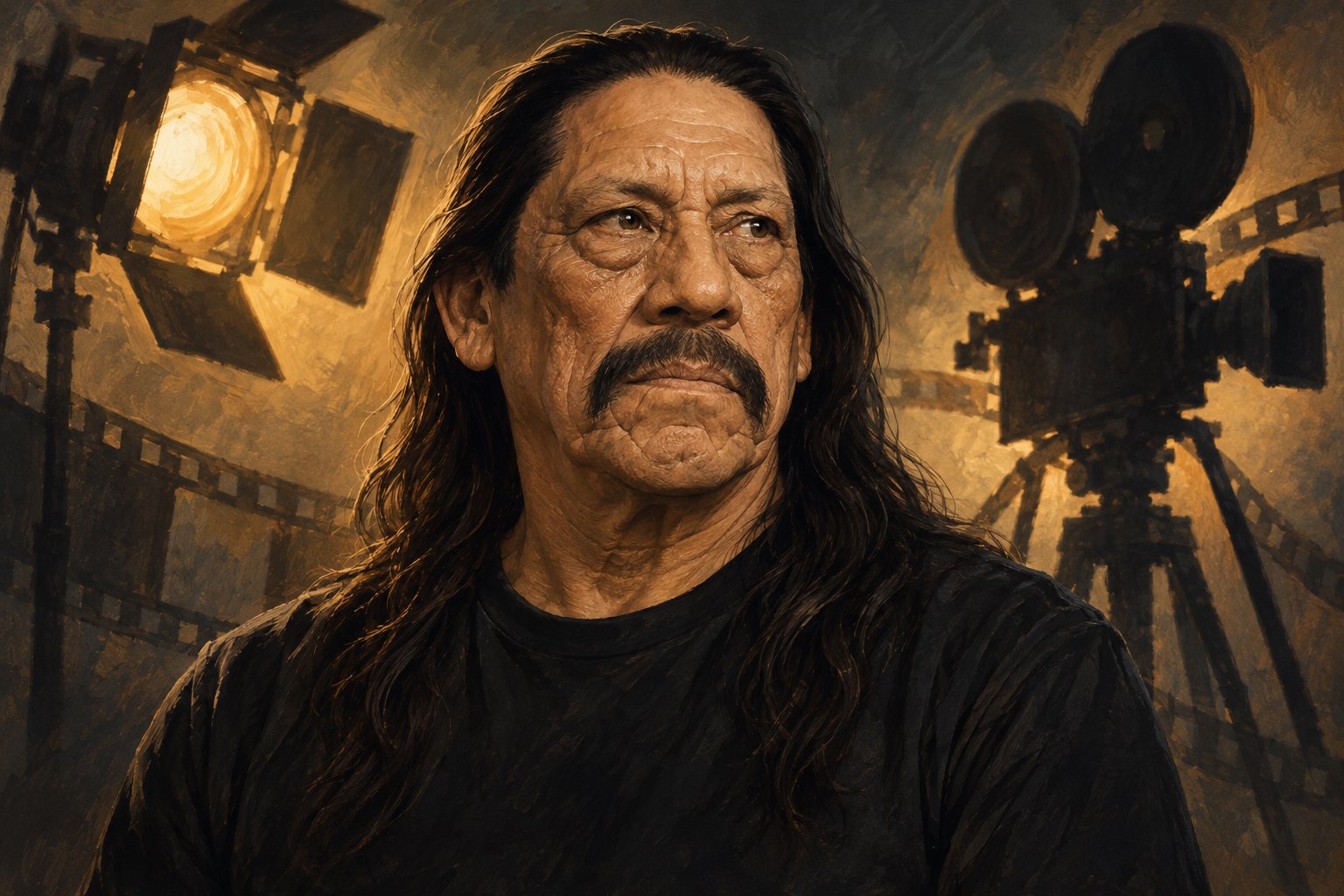
Danny Trejo says he is “not pro-ICE” after being cast in a movie from Ben Shapiro’s company, according to NBC News. His statement addresses a specific question about his personal position. It also brings a less easily resolved issue into focus: when a recognizable actor joins a politically associated production, how should that production present his involvement to audiences?
The useful next question concerns publicity. An actor’s name can attract attention, reassure potential viewers, and give a project cultural credibility before anyone assesses a performance. Trejo’s statement makes that process worth examining closely. There is a meaningful difference between advertising someone’s participation and allowing that participation to imply agreement with a political position.
This is commentary on the casting news and its implications for movie publicity, not a review of the finished film. No judgment about its scenes, dialogue, or ending follows from the casting announcement alone.
What Trejo’s statement actually answers
The phrase “not pro-ICE” is direct, but its scope matters. It communicates Trejo’s stated position toward ICE. It does not, by itself, explain the circumstances of his casting, establish what discussions preceded his involvement, or describe the movie’s treatment of its subject. Those are separate reporting questions.
That distinction protects the reader from two shortcuts. One would treat his participation as sufficient proof of his politics. The other would treat his personal statement as sufficient proof that the production deserves no scrutiny. Neither delivers much understanding of the film or the decisions surrounding it.
Our earlier discussion of what Trejo’s casting does and does not establish examined the boundary between an actor’s beliefs and a screen role. The additional issue here is who controls the public meaning of that association. An actor can explain his position while a production’s publicity continues to create its own impressions.
A cast credit can carry more than professional information
Movie advertising compresses a collaborative enterprise into a handful of recognizable signals: a face, a title, a mood, a promise. A familiar performer helps audiences decide whether a project seems interesting or trustworthy. That is part of the commercial value of casting, even when no explicit endorsement appears.
The problem arises when audiences are encouraged to fill in a political conclusion that the actor has not expressed. A cast announcement accurately establishes employment. It cannot independently establish approval of every message associated with the company making the film.
This does not mean viewers are unreasonable to notice who is financing or promoting entertainment. Those associations can affect their willingness to buy a ticket. It means publicity should be judged by the impression it creates as well as the literal accuracy of its individual claims.
In Trejo’s case, the appropriate question is conditional and concrete: if promotional materials invoke his public standing to suggest support for a political agenda, what evidence supports that suggestion? His statement would be relevant to assessing it. There is no need to speculate about private motives to ask whether an advertised implication is fair.
What responsible promotion would make clear
My view is that a production facing this kind of controversy should make its artistic proposition easier to understand. Audiences deserve enough information to distinguish the story being offered from the political argument taking place around its cast.
Three standards would help:
- Describe the role precisely. Explain the character’s place in the story without presenting the performer’s participation as a personal political declaration.
- Keep quotations in context. A remark about acting, a character, or a scene should not be repackaged as praise for a company’s broader positions.
- Let the film’s argument be examined. If the production advances a political perspective, its publicity should not rely on a recognizable face to answer substantive questions about that perspective.
These are standards for evaluating publicity, not claims that a particular campaign has violated them. Their value is practical: they give readers something observable to assess instead of asking them to guess what everyone involved privately believes.

The character’s agency will matter more than the casting pitch
When the movie itself can be evaluated, a character-focused review should begin with agency. What does Trejo’s character want? Which decisions can he make? Do those decisions change the outcome, or does the screenplay chiefly use him to validate somebody else?
Those questions are particularly useful when publicity stresses the importance of a performer’s presence. A character can receive flattering dialogue and sympathetic close-ups while having little influence over the story. Conversely, an uncomfortable or contradictory character can possess substantial dramatic independence. Positive representation and meaningful characterization are related concerns, but they are not interchangeable.
A review should also follow consequences. Whose fear receives time and attention? Whose mistakes require an explanation? Which losses continue to matter after the immediate suspense ends? The distribution of attention can reveal a film’s priorities more clearly than a speech announcing its moral position.
None of those observations can responsibly be assigned to this movie from a casting headline. They identify the evidence a serious review would need. The same attention to how a recognizable person shapes expectations informs our discussion of public persona and cinematic framing in Inside Musk.
Audiences can make a choice without inventing a verdict
Viewers do not owe a production their money or attention. Someone may decide that a company’s associations are enough to pass on its film. That is a legitimate purchasing decision, and it does not require an accompanying claim that the acting is weak or the screenplay dishonest.
The distinction also works in the other direction. Interest in Trejo’s performance need not amount to approval of everything surrounding the production. A viewer can watch critically, identify persuasive filmmaking, and still object to the assumptions guiding the story.
Specific language makes both positions stronger. Saying that a production’s associations affect your interest describes your decision. Saying that a particular scene manipulates sympathy requires evidence from that scene. Confusing those categories makes disagreement louder while leaving the movie less understood.
The deeper issue is control over an actor’s public meaning
Trejo’s statement highlights a tension built into star casting: a production hires a performer, but it also benefits from the associations audiences bring to that person. Those associations have commercial value, yet they cannot fairly be treated as unrestricted political endorsements.
The strongest response is greater precision from everyone involved. Trejo’s stated position should be represented accurately. Publicity should be accountable for the meanings it encourages. And criticism should examine how the finished film organizes sympathy, responsibility, and consequence. A recognizable actor can bring an audience through the door; the movie must earn its argument once they are inside.
Original content by this site's editorial team. Published: October 15, 2026 at 19:41:15 PDT (Los Angeles time)