Brookfield Zoo Chicago is taking a central role in Christmas at the Zoo, a holiday romance scheduled to premiere on Tubi on November 10, 2026. Riverside-Brookfield Landmark reports that the movie was both filmed and set at the zoo. Brittany Underwood plays Alicia, an entrepreneur pursuing funding for a Humboldt penguin habitat, while Matt Cohen plays Shane, an animal care specialist who becomes her romantic interest. Those details establish an appealing possibility: a Christmas love story in which caring for something together gives two people a reason to care about each other. [Riverside-Brookfield Landmark’s report](https://www.rblandmark.com/2026/09/30/christmas-movie-brookfield-zoo-chicago/).
Preview note: This article examines the announced premise and production information. It contains setup details, but offers no screening-based verdict, ending spoilers, or unverified dialogue.
Alicia’s Work Should Matter as Much as Her Romance
Alicia’s assignment gives her something more concrete than a vague need to rediscover Christmas. Funding a habitat is an objective with consequences outside her personal life. That matters because a romantic protagonist becomes more interesting when viewers can understand what she wants before the love interest enters the equation.
From Alicia’s perspective, the strongest potential conflict is one between different responsibilities. Professional success, a developing relationship, and an obligation to the project could become difficult to reconcile. The announced premise does not establish how that tension unfolds, but it gives the film a useful starting point: affection can complicate judgment without making ambition itself a character flaw.
My critical preference is for a romance that respects her competence. If the story asks Alicia to grow, that growth should involve a more thoughtful use of her abilities. Treating her professional identity as something she must discard would make the character smaller just as the relationship is supposed to expand her world.
Watch, therefore, for whether her decisions retain practical weight. Does she contribute ideas? Can she explain what a workable agreement requires? Does the relationship change how she listens without erasing what she knows? Those are more revealing measures of character development than how quickly she starts enjoying the scenery.
Shane Needs a Point of View Beyond Being Kind
Shane’s animal care role offers an immediately sympathetic introduction. Yet kindness, however appealing, is a starting quality rather than a complete personality. A convincing romantic lead needs priorities that can come into contact with another person’s priorities.
Viewed through his side of the premise, the habitat project could give that sympathy substance. The essential dramatic question is how his expertise influences decisions. A character who understands an animal’s needs should have something meaningful to contribute when other people discuss resources, expectations, or success.
That does not require turning the movie into a procedural about zoo management. A brief, specific disagreement can establish a professional perspective more effectively than a speech about caring. The important distinction is whether Shane’s work shapes his behavior or simply supplies reassuring background information.
For the romance to feel reciprocal, he should also have something to learn from Alicia. Admiration becomes more persuasive when both characters recognize a skill they lack. Their occupations offer the possibility of complementary abilities; the finished film will need to make that connection visible through choices and interaction.
Why the Penguin Habitat Is the Most Promising Story Element
The habitat gives the relationship an external purpose. It creates a reason for the leads to remain engaged with the same problem, and it provides a useful test of their compatibility: can they accomplish something together when wanting a good outcome is only the beginning?
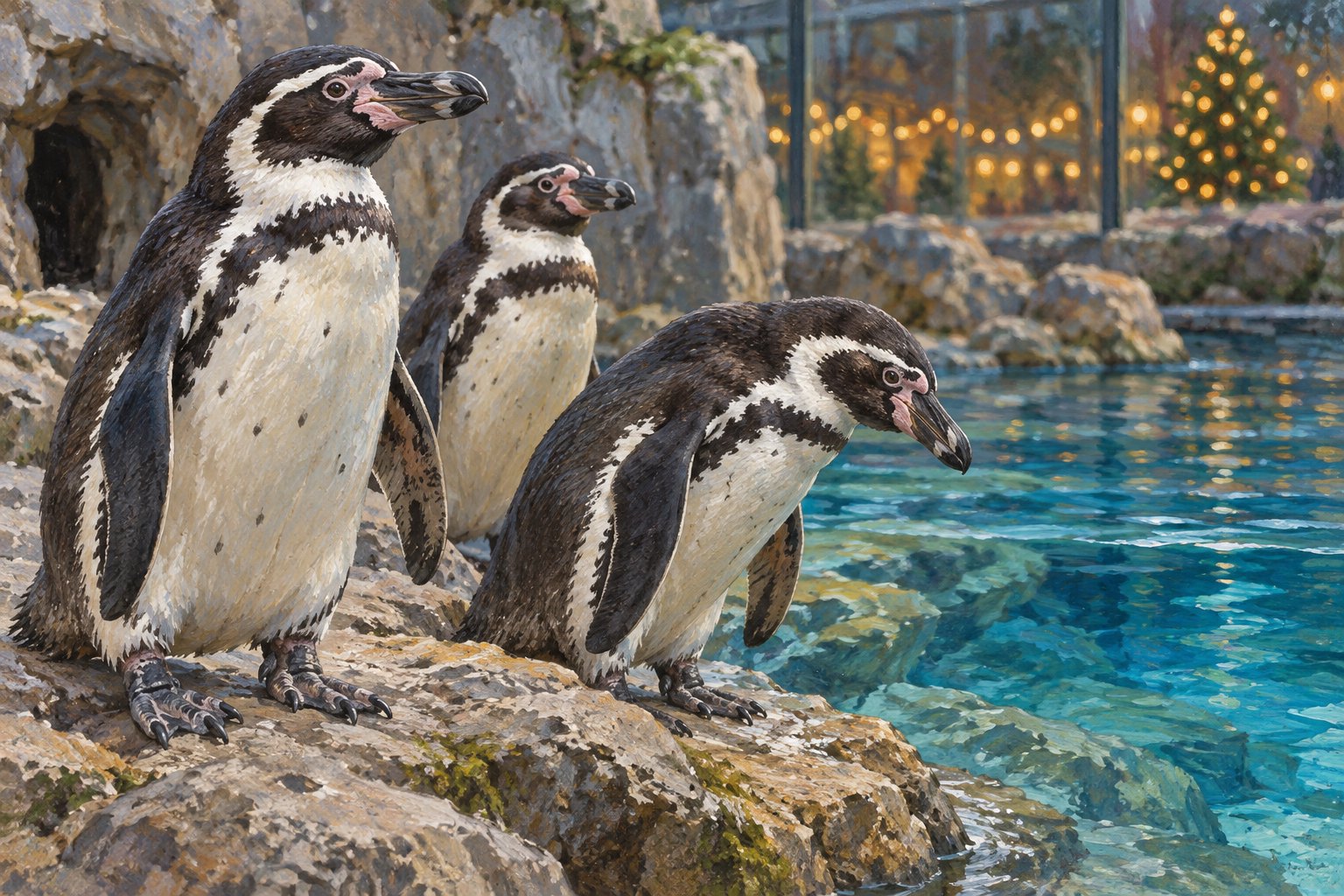
There is a potentially satisfying connection between romance and stewardship here. Both become convincing through sustained attention. A person can declare affection in a moment; maintaining a relationship involves returning to its needs. A conservation-centered story has an opportunity to give that familiar romantic idea a tangible expression.
The artistic risk is that the animals become shortcuts to emotion. An appealing penguin image can make a scene pleasant without telling us anything about Alicia or Shane. Stronger storytelling would connect the audience’s affection for the animals to an understanding of what the characters are trying to achieve.
That is the standard I would bring to the film: does the project still matter whenever the romance becomes complicated? If the answer is yes, the story can support emotional stakes beyond whether its leads end up together.
Brookfield’s Identity Can Give the Romance Texture
A recognizable location invites two kinds of attention. Local viewers may search for familiar spaces, while other viewers encounter the setting through the characters. The filmmaking challenge is to make both experiences rewarding without pausing the story for a sightseeing tour.
The same broader question informs our discussion of how a working location can give movie characters a stronger sense of reality. A place contributes most when its purpose affects what people do there. In this romance, the zoo’s function offers an opportunity to connect atmosphere with responsibility.
Holiday imagery can help, provided it changes the emotional register of an encounter. A busy public setting might make a quiet exchange feel private; a work environment might reveal a side of someone that a formal date would conceal. These are possibilities of the setting, not descriptions of verified scenes.
As our commentary on turning recognizable filming locations into meaningful story spaces explores, identification is only the first pleasure a location can provide. The deeper pleasure comes when the audience understands why a particular interaction belongs there.
The Deeper Promise: Love Expressed Through Useful Work
What interests me most about Christmas at the Zoo is the possibility of a romance organized around usefulness. Alicia and Shane have a premise that allows attraction to develop through observation: seeing how someone approaches a problem, treats another living creature, or responds when an easy answer proves inadequate.
That could give the Christmas setting thematic purpose. Generosity becomes more interesting when it involves attention, effort, and the willingness to accommodate another perspective. The most satisfying version of this story would let its romantic resolution grow from those habits.
None of that establishes whether the finished film succeeds. Chemistry, dialogue, pacing, and the handling of the habitat storyline still require assessment through the movie itself. But the premise offers a clear reason to be curious: its lovers have something worthwhile to build beyond their relationship.
A Real-World Cameo to Watch For
For viewers interested in local connections, the zoo’s production announcement identifies a cameo by its president and CEO, Dr. Mike Adkesson, and says staff and community participants appear as extras. These are announced appearances rather than hidden references uncovered through a screening. The same announcement confirms that the film mentions the Punta San Juan Program, a real conservation partnership. [Brookfield Zoo Chicago’s production announcement](https://brookfieldzoo.org/press-releases/new-holiday-movie-filmed-at-brookfield-zoo-chicago).
Those connections may reward attentive viewers, but the central test remains human: whether Alicia and Shane become more understandable to each other through the work that brings them together. That is where this zoo-set Christmas romance has its best chance to leave something behind after the lights fade.
Original content by this site's editorial team. Published: October 2, 2026 at 07:24:45 PDT (Los Angeles time)