Sir Isaac Julien’s Young Soul Rebels is coming to Quarry Amphitheater, bringing a story of Black British friendship, queer desire, and musical independence to a communal screen. UC Santa Cruz’s event calendar lists the presentation for October 21, 2026, at 7 p.m. at Upper Quarry Amphitheater. The occasion invites a fresh look at a film whose most compelling question is personal: what happens when two friends share a sound but begin imagining different futures?
Released in 1991 and set in London during the Queen’s Silver Jubilee celebrations in 1977, Julien’s narrative feature debut combines a murder investigation with romance and the everyday business of making yourself heard. My view is that its friendships are more persuasive than its thriller machinery. Its lasting achievement lies in treating pleasure, ambition, and vulnerability as inseparable parts of political life.
Spoiler warning: This review discusses the murder investigation, the central relationships, and the ending. The film includes racist and homophobic abuse, violence, and sexual situations.
Chris and Caz: One Station, Two Futures
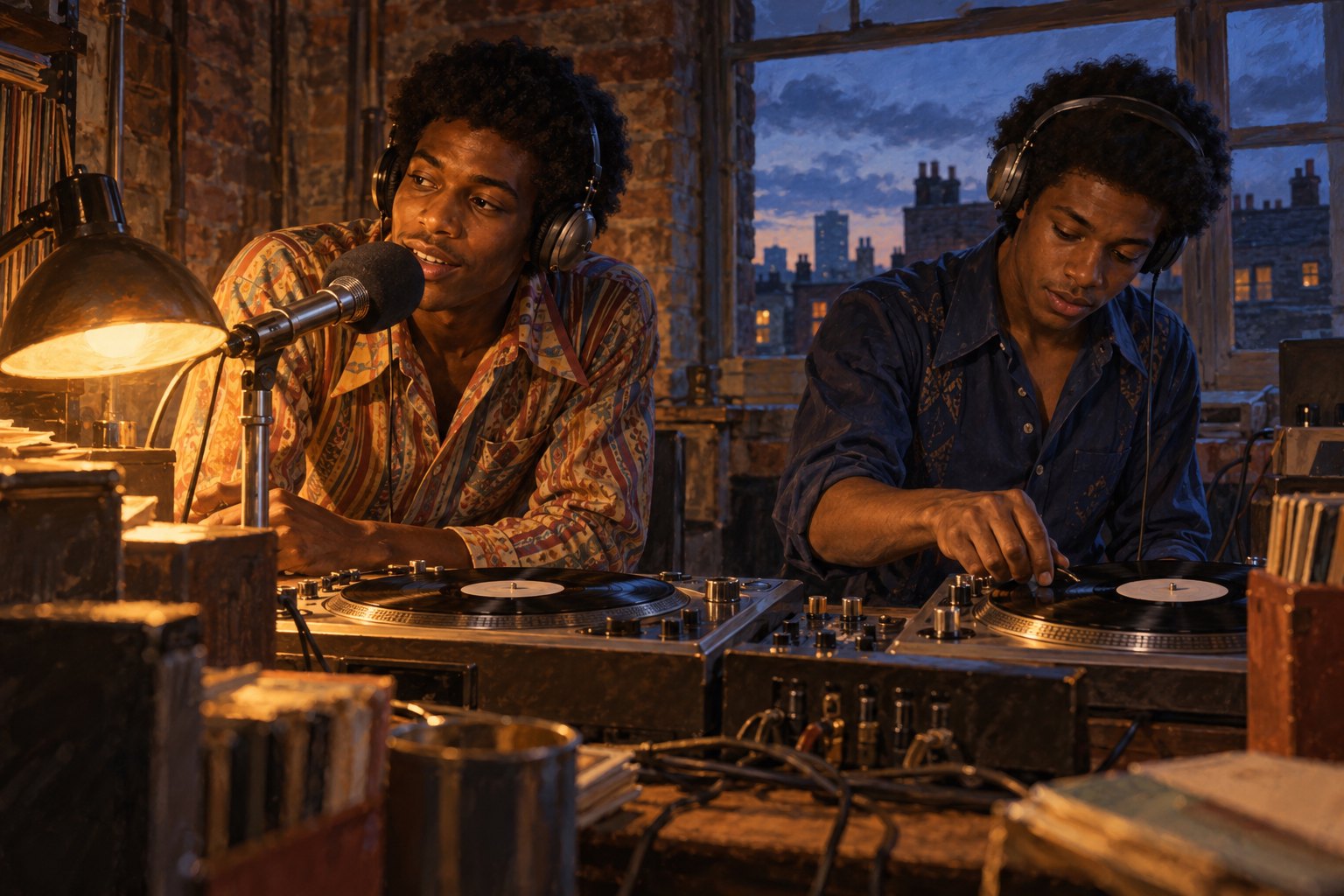
Chris, played by Valentine Nonyela, and Caz, played by Mo Sesay, operate the pirate radio station Soul Patrol. Their equipment may be modest, but their presentation has confidence and personality. Broadcasting gives them a public identity they control: they choose the records, set the mood, and speak directly to listeners.
Their sign-off, “And may the funk be with you,” captures that pleasure. It is a joke, a blessing, and a small declaration that their musical world deserves its own language. Before the film tests their partnership, it establishes why being partners feels good.
Chris wants the opportunities that commercial radio might offer. From his perspective, reaching more listeners need not mean abandoning the music. His ambition has a practical basis: enthusiasm alone does not provide an income, and talent is frustrating when the people with resources barely acknowledge it.
Caz sees a different danger. What Chris considers advancement can look like surrendering control over something they built together. Their disagreement works because neither position is automatically foolish. Independence can become isolation; access can come with conditions. The film asks who gets to decide which compromises are acceptable when a dream belongs to two people.
TJ’s Death Makes Their Differences Urgent
The murder of their friend TJ, a Black gay man killed while cruising in a park, breaks into this musical world. For Caz, who is gay, grief carries an immediate recognition of danger. The victim is someone he knew, and the circumstances touch his own life.
Chris does not experience the loss in precisely the same way. His continuing interest in his career can appear painfully inattentive beside Caz’s distress. Yet the film also allows a less comfortable interpretation: people do not stop wanting a future because someone close to them has lost theirs. The difficulty is recognizing when forward motion becomes a refusal to listen.
This is where the friendship acquires its emotional weight. Chris and Caz know one another’s habits and tastes, but familiarity does not guarantee understanding. Each expects the other to recognize what matters without having to explain it. Their shared vocabulary becomes a source of frustration when it conceals different fears.
When the police treat Chris as a murder suspect, he confronts another form of being misread. The confidence he can project behind a microphone offers little protection in an interrogation. His public voice and his institutional power are very different things.
Romance Expands the Film’s Social World
Caz’s relationship with Billibud, the white punk played by Jason Durr, brings desire across the boundaries separating the film’s youth cultures. Their attraction complicates any easy division between soul and punk, Black and white, insiders and outsiders. Musical affiliation can suggest a worldview, but it cannot tell us everything about a person.
The relationship matters because Caz is allowed to want intimacy as well as safety. He is not confined to grieving, explaining prejudice, or supporting Chris. Giving him a romantic life makes the film’s politics more specific: belonging includes the freedom to be attracted, distracted, affectionate, and occasionally unavailable.
Chris’s involvement with Tracy, played by Sophie Okonedo, connects his romantic hopes with the professional world of Metro Radio. That overlap gives his ambition an emotional charge. He is drawn toward a life that seems to offer recognition on several fronts at once.
Neither romance simply replaces the central friendship. Instead, both expose its unspoken expectations. When Chris and Caz accuse each other of disloyalty, the argument concerns more than scheduling or work. They are struggling with the discovery that being essential to someone does not mean being the whole of that person’s life.
Why the Music Is More Than Period Decoration
The soundtrack includes music by Parliament-Funkadelic, the O’Jays, and War, among others. Those records establish a cultural world, but their dramatic function goes beyond making 1977 sound appealing. Selecting and broadcasting music is the work through which Chris and Caz recognize their own value.
That distinction matters in a film surrounded by Jubilee imagery. National celebration offers an official picture of collective identity; Soul Patrol offers a smaller, self-organized gathering. The station’s listeners belong because they tune in. Its authority comes from taste, connection, and the ability to move people.
As in our discussion of why music films need more than nostalgia, familiar sounds become dramatically useful when they reveal relationships. Here, a record is something to discover, argue about, share, protect, and play for somebody else. The music has a social life.
A Thriller Whose Strongest Stakes Are Emotional
The murder plot supplies danger and momentum, with a recording connecting the world of sound to the search for truth. Yet I find the film less convincing as a tightly controlled mystery than as an account of people trying to live together. Its movement between romance, social observation, and violent suspense can feel abrupt.
That unevenness becomes especially noticeable around the climactic outdoor concert and fire. The immediate physical danger demands resolution, while the relationship conflicts have developed through hesitation, resentment, and missed conversations. The thriller can bring events to a head faster than the friendships can plausibly heal.
Still, the genre mixture produces a meaningful connection. A film about young people claiming the airwaves makes recorded sound consequential beyond entertainment. Listening becomes a responsibility. The characters’ difficulties repeatedly arise when other people decide who they are before hearing them.
The Ending Finds Hope in Repair
The most revealing aftermath is the friends’ collective effort to clean and test records rescued from the concert. After the violence, Julien returns to ordinary handling: passing objects between people, checking what still plays, and recovering something worth keeping.
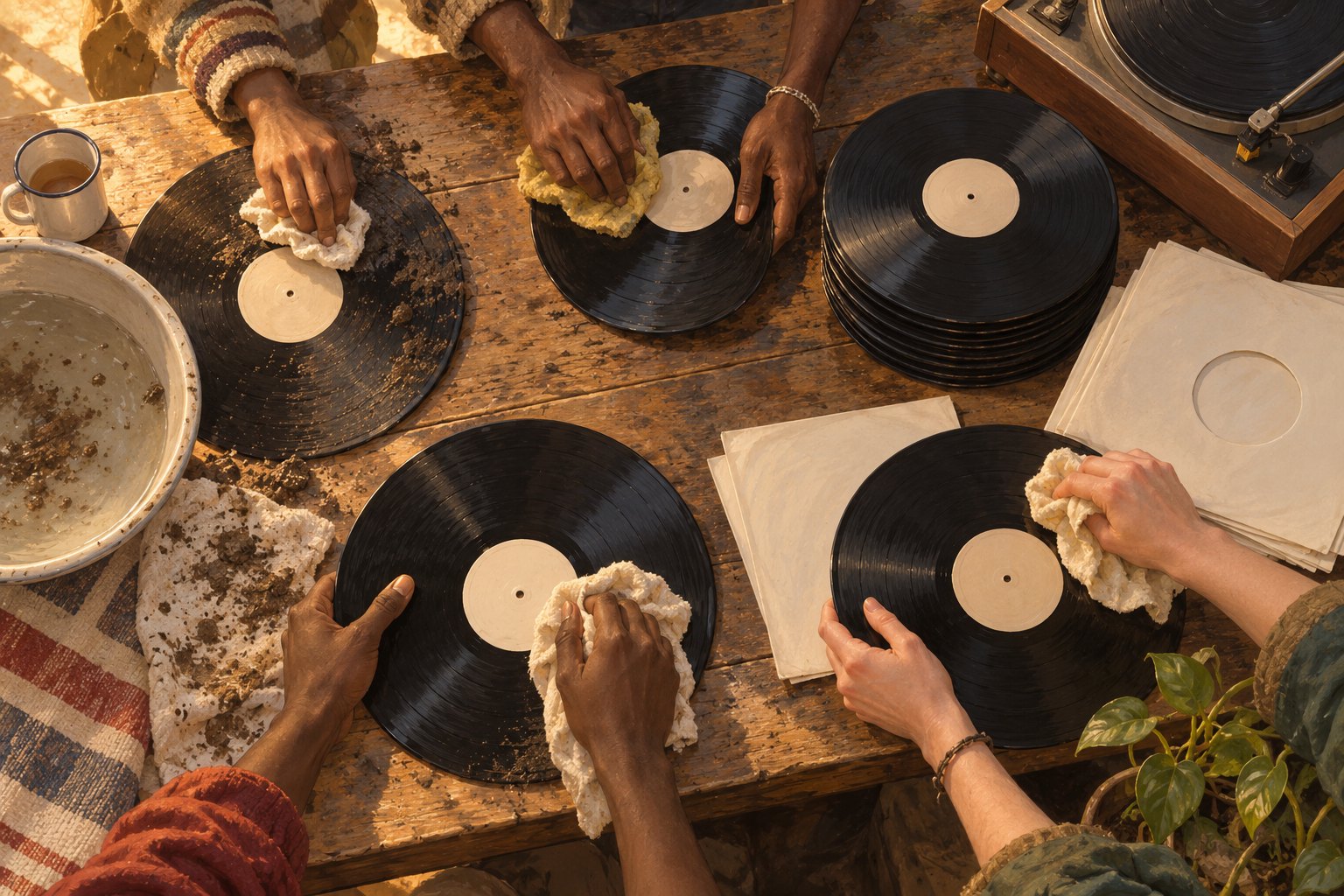
Caz’s “Yeah, let’s start over” is modest enough to feel earned. Starting again does not erase the murder or remove the forces threatening them. It describes a decision to resume a relationship and a shared practice after both have been damaged.
The deeper implication is that culture survives through care. The records matter because people continue to handle them, listen to them, and make room for one another around them. The ending turns solidarity into work that can actually be performed.
That makes the Quarry presentation particularly welcome. As our argument for giving film screenings a lasting critical record suggests, exhibition matters most when it renews attention to what a film is doing. Young Soul Rebels deserves that attention for its insistence that a livable world requires more than surviving hostility. Its characters also need music, friendship, desire, and the chance to dance together afterward.
Original content by this site's editorial team. Published: October 13, 2026 at 14:55:22 PDT (Los Angeles time)