
You Can See Everything does not become the greatest film ever simply because its reviews invite that conversation. Its more compelling claim on our attention is the uncomfortable relationship between being allowed to look and knowing what we are looking at. Nathan Fielder and Lance Oppenheim’s documentary turns Elizabeth Holmes’s invitation into a contest over credibility, sympathy, and the authority to explain another person.
The Guardian has raised the greatest-film question. Our answer is that acclaim cannot settle it; the film’s methods deserve closer examination. [The Guardian’s discussion](https://www.theguardian.com/film/2026/oct/19/you-can-see-everything-elizabeth-holmes-nathan-fielder-lance-oppenheim).
Spoiler warning: This analysis discusses the opening situation, selected exchanges, and the involvement of Amanda Seyfried. It draws on verified public descriptions and reported scenes rather than claiming firsthand access to a screening.
A domestic invitation with enormous stakes
The premise begins 34 days before Holmes is due to enter prison. She invites a skeptical filmmaking team to document her life, and the project develops into a much longer investigation. A24 identifies Fielder and Oppenheim as the directors and lists the American theatrical release as October 16, 2026. [A24’s film information](https://a24films.com/films/you-can-see-everything).
The opening arrangement places Holmes and her partner, Billy Evans, in a domestic setting where they can present their account of her innocence. Film at Lincoln Center describes Fielder moving into their home and identifies their relationship as central to the documentary. [Film at Lincoln Center’s synopsis](https://www.filmlinc.org/nyff2026/films/you-can-see-everything/).
That setting matters. A home invites a different kind of attention from a courtroom. We notice how people care for one another, how they speak when tired, and how they occupy familiar rooms. Such observations can complicate a public image. They cannot, on their own, overturn evidence about professional conduct.
My reading of this arrangement is that intimacy becomes the film’s central pressure point. The viewer must make room for a person’s ordinary humanity while resisting the temptation to treat familiarity as proof. Someone can be emotionally recognizable and still unreliable about consequential events.
Elizabeth Holmes: asking to be believed
One revealing exchange appears in the film’s promotional footage: Holmes asks Fielder, “Why would I deceive you?” She also insists, “I’m always being real.” These brief assurances place sincerity at the center of the encounter. [ScreenCrush’s account of the teaser](https://screencrush.com/nathan-fielder-elizabeth-holmes/).
Consider what the first question asks of its listener. Instead of supplying evidence for a particular claim, it asks Fielder to imagine a motive for dishonesty. If he cannot immediately produce one, trust can start to feel like the reasonable response. But an unanswered question about motive does not establish accuracy.
“I’m always being real” introduces a different difficulty. A person may experience an explanation as sincere while leaving crucial information out. The useful distinction is between self-belief and reliability: conviction tells us something about the speaker’s presentation, but the statement still needs examination.
Holmes’s perspective therefore offers more than a simple puzzle about whether she looks truthful. The sharper question is what she wants recognition to accomplish. Being understood as a complicated person is a legitimate human wish. Being accepted as the final authority on one’s own conduct is a much larger demand.
Nathan Fielder: skepticism needs scrutiny, too
Fielder’s position carries its own temptation. A skeptical interviewer can become the audience’s trusted representative before that trust has been earned. We recognize the suspicious look or the uncomfortable pause and feel that someone is asking the questions we would ask.
Yet skepticism is a method, not a guarantee. A filmmaker chooses which exchange to pursue, which silence to retain, and where to end a sequence. Those choices can expose contradictions; they can also encourage us to read uncertainty as guilt. The ethical test is whether the questioning leaves room for evidence that complicates the filmmaker’s preferred interpretation.
This is the broader issue explored in our commentary on cameras, public image, and the limits of observation. Recording an encounter creates something we can inspect. Understanding it requires judgments about context, selection, and perspective.
For this documentary, the strongest critical approach is to keep two questions active together: does Holmes’s explanation withstand scrutiny, and does Fielder’s framing? Allowing only one question would make the film much easier—and much less interesting.
Billy Evans and the power of speaking for someone
Evans’s role extends beyond providing domestic background. Common Sense Media describes a presentation that initially emphasizes his supportive partnership and then complicates that impression. Its review also stresses how the documentary makes viewers reconsider whom they trust. [Common Sense Media’s review](https://www.commonsensemedia.org/movie-reviews/you-can-see-everything).
That shift makes representation an important subject in itself. When someone explains a partner’s intentions, affection and authority can become difficult to separate. Knowing a person closely may provide valuable context, but it does not make every interpretation on that person’s behalf correct.
A useful way to follow Evans is to distinguish observable conduct from inferred motivation. Notice who answers, whose explanation is accepted, and whether someone’s absence increases another person’s control over the account. Those questions offer firmer ground than immediately assigning a hero or villain role.
When an actress enters the documentary
Amanda Seyfried’s participation makes the problem of representation explicit. According to ScreenCrush, she returns to her portrayal of Holmes from The Dropout in reconstructions of encounters that could not be filmed, while also appearing as herself. The same account traces the title to Holmes’s message: “You can totally see everything.” [ScreenCrush’s scene analysis](https://screencrush.com/you-can-see-everything-explained/).
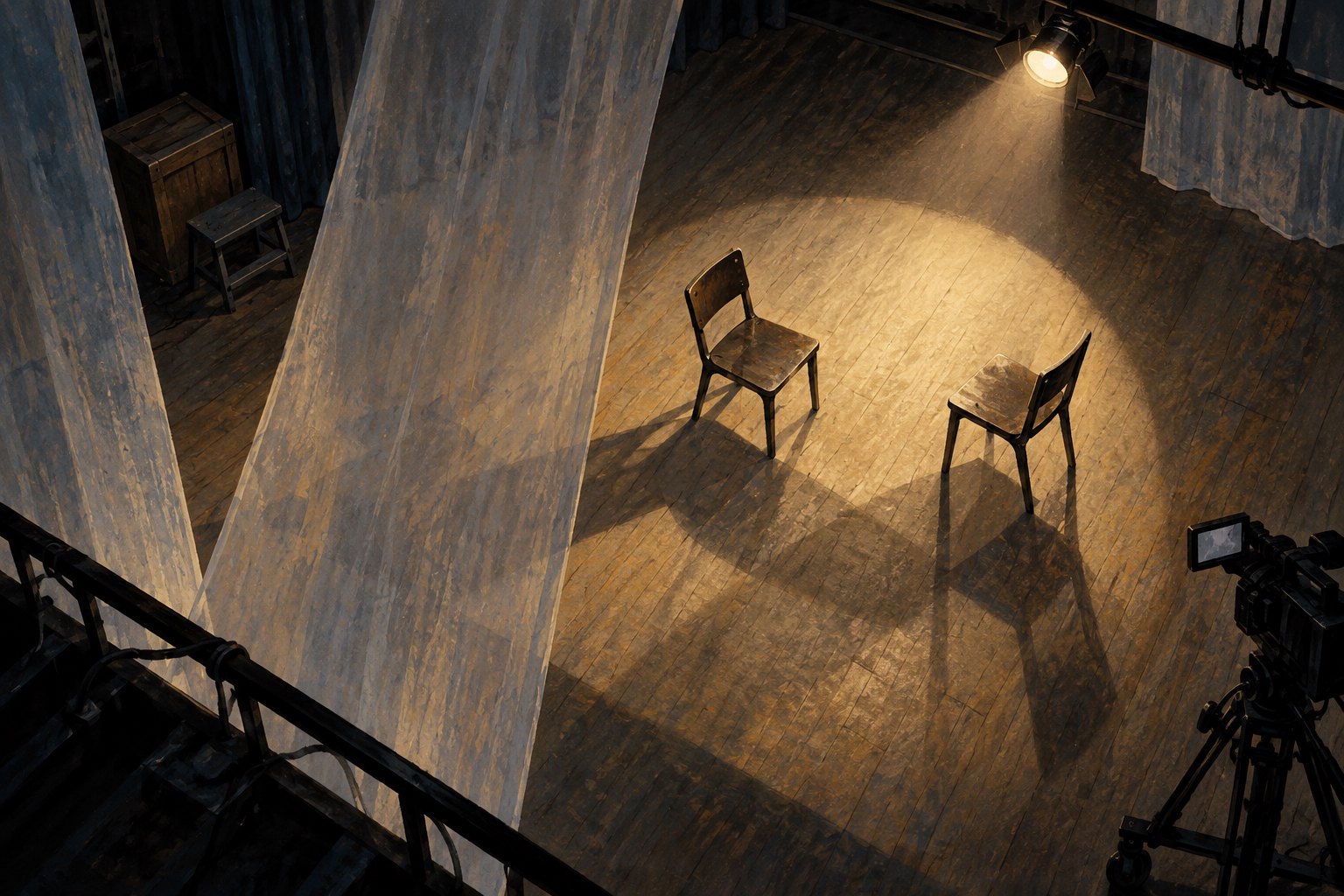
A reconstruction creates a peculiar bargain. It makes an inaccessible encounter visible while requiring the viewer to remember that the visible version has been performed. An expressive face can feel more persuasive than an account on paper, even when the performance adds no independent evidence.
The crucial viewing question is therefore what each reconstructed passage claims to establish. Is it illustrating remembered dialogue, exploring a possible interpretation, or revealing the filmmakers’ uncertainty? These are different functions, and confusing them gives dramatic conviction more authority than it deserves.
What would make it a great film?
The greatest-film debate becomes useful only when it leads to specific criteria. Does the documentary deepen our understanding of its subjects? Does its formal invention reveal something that a straightforward interview could not? Does it expose the filmmaker’s limitations as rigorously as the subject’s evasions?
There is also a harder test: whether the fascination with an enigmatic central figure leaves sufficient room for accountability. Uncertainty about personality should not become uncertainty about every established fact. Complexity is valuable when it sharpens distinctions, less so when it makes all judgments seem equally impossible.
Our character analysis of The Devils approaches a related question from fictional drama: who gains power when another person’s experience becomes a public narrative?
My interpretation of You Can See Everything is that its most substantial subject is the desire to finish understanding someone. Holmes wants her account accepted; the filmmaker seeks an explanation; viewers want a conclusion they can carry away. The title offers apparent completeness, but looking remains an activity shaped by position, permission, and choice. A lasting film need not let us see everything. It should make us more responsible about what we claim to know.
Original content by this site's editorial team. Published: October 19, 2026 at 10:31:46 PDT (Los Angeles time)