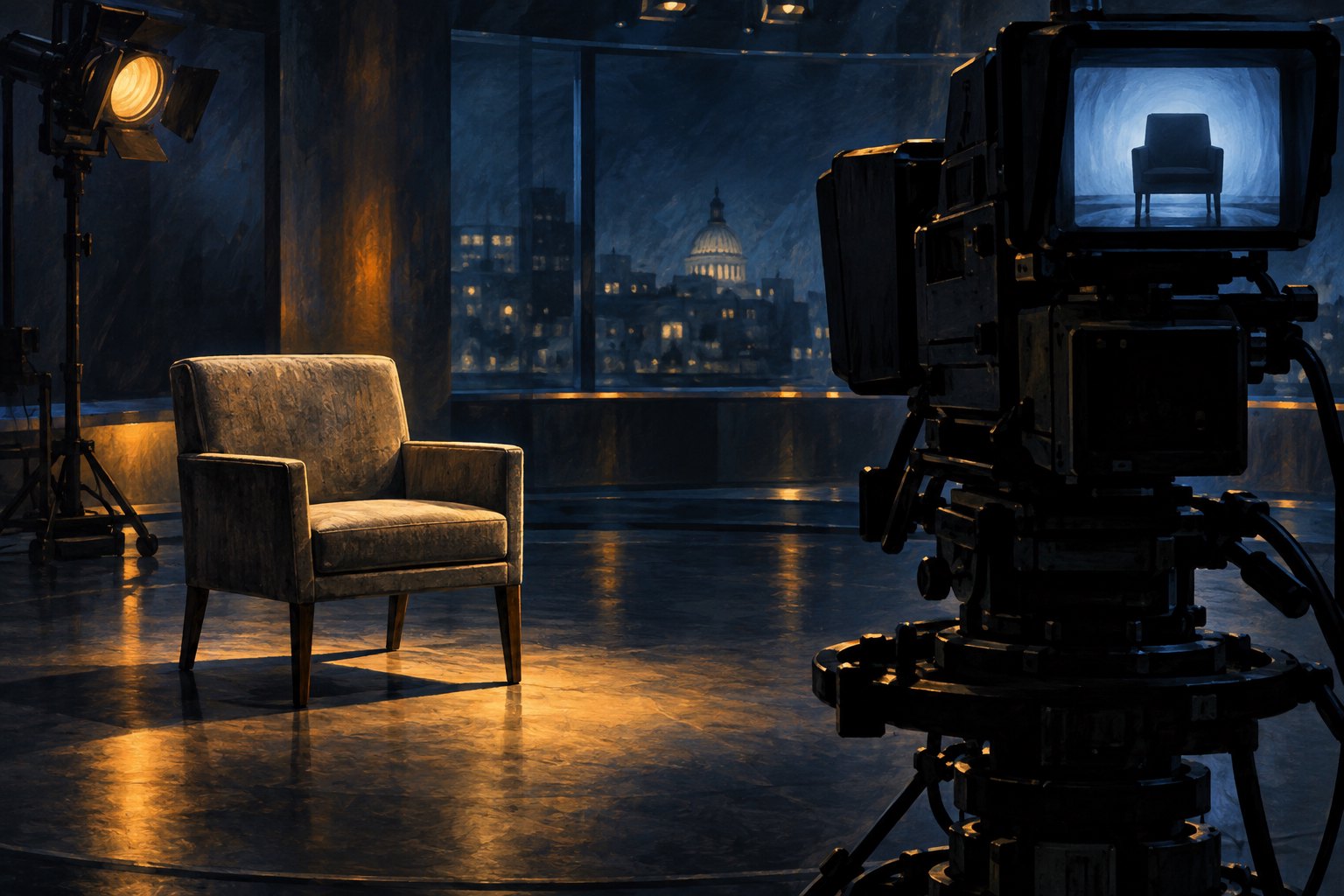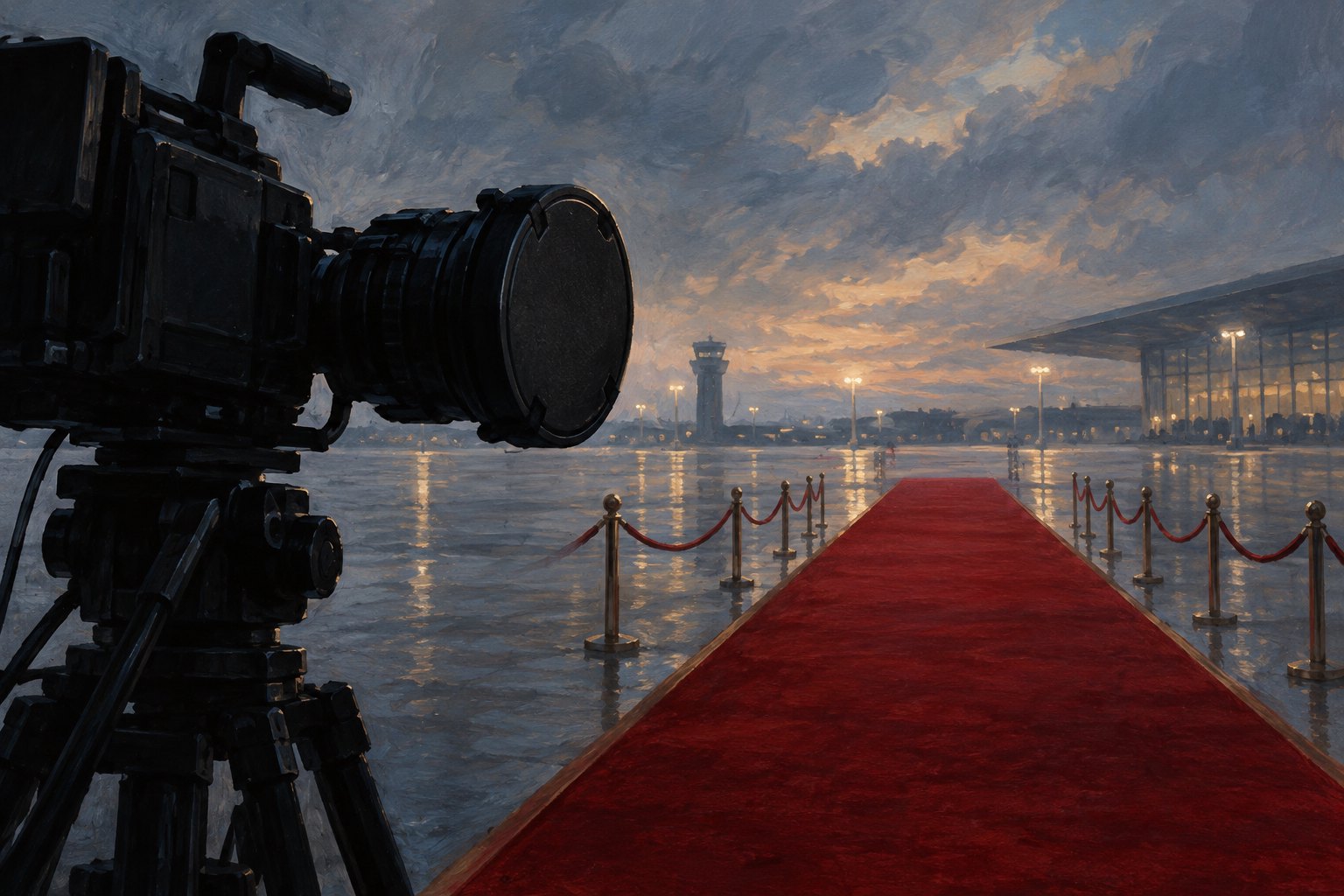
Major television networks declined to film Xi’s arrival, according to The New York Times. The immediate distinction matters: declining to record an arrival does not, by itself, establish that networks refused to report on it, suppressed footage, or coordinated a political protest. It describes a decision about making images. Any larger conclusion requires evidence about who decided, what they declined, and why.
For viewers interested in film and television, that narrow fact opens a substantial question. An entrance can become a powerful piece of storytelling before anyone speaks. A camera establishes who deserves attention; an edit determines how long that attention lasts. The reported decision involving Xi invites scrutiny of that process, while leaving the networks’ motives unresolved.
What the reported decision does—and does not—tell us
The central reported fact is that major TV networks declined to film the arrival. That statement alone does not identify the networks, establish the circumstances of their decisions, or explain what coverage ultimately reached audiences. It also does not demonstrate that every possible source of moving images was absent.
Those distinctions prevent a dramatic interpretation from outrunning the reporting. A network’s decision about assigning a camera is separate from its decisions about using footage recorded by someone else, discussing an event in a studio, or covering its consequences afterward. These are different editorial acts, with different effects on what viewers can learn.
Calling the decision a boycott would introduce an intention that the basic report does not establish. Calling it censorship would likewise require evidence about restriction or suppression beyond a refusal to film. Even celebrating it as editorial independence would be premature without understanding the circumstances. The useful starting point is precise language, followed by questions that additional reporting could answer.
Why an arrival carries so much visual weight
In dramatic storytelling, an entrance often tells us how to read a character. A wide shot can emphasize the space awaiting them. A close-up can concentrate attention on their expression. Holding a shot can make a walk feel consequential; cutting away can deny it that emphasis. These choices need no dialogue to influence an audience.
The same visual vocabulary can operate in nonfiction footage, although real people must not be treated as fictional characters whose motives are available to the viewer. A person’s position within a frame is observable. Their private intention generally is not. That boundary is particularly important when interpreting a political figure’s appearance.
Consider a hypothetical arrival sequence: an empty approach, a person entering the frame, and a cut to those waiting. The sequence creates anticipation and then resolves it. Its coherence can make the event feel significant, even before a report explains its substantive importance. This is an example of how editing works, not a description of footage from Xi’s arrival.
My critical concern is the ease with which visual prominence becomes an argument for importance. A compelling entrance may deserve documentation, but its elegance cannot tell us what the event accomplished. Coverage becomes more informative when it connects the image to an explanation rather than allowing the image to carry the entire story.
Recording, selecting, and broadcasting are separate choices
It helps to think of television coverage as a sequence of decisions. First, someone records material. Next, an editor selects what belongs in a report. Finally, a program presents those selections alongside narration, interviews, captions, or discussion. A decision at one stage does not automatically reveal what happened at the others.
Recording an event can preserve material without committing a broadcaster to extensive airtime. Conversely, airing an image does not necessarily mean endorsing its subject. Context, duration, and accompanying reporting can transform how a shot functions. The same image might illustrate a ceremonial appearance, support a factual timeline, or become the object of critical analysis.

Applied to the report about Xi, these distinctions keep the inquiry concrete. Did the decision affect the availability of independently recorded images? Did it change what audiences saw? What explanation, if any, did the networks give? These questions would help assess the consequences. The reported refusal alone cannot answer them.
A related issue runs through our discussion of camera control in Lance Oppenheim’s screen work: appearing before a lens and controlling the resulting account are different forms of influence. Here, the additional question is what happens when a broadcaster declines to create that account at the recording stage.
Whose perspective does the picture serve?
A useful way to examine political footage is to separate the interests of the person filmed, the journalist recording, and the audience watching. These interests can overlap, but viewers should not assume they do. Nor should they assign a specific ambition to Xi or a particular newsroom without supporting evidence.
From a subject’s perspective, an entrance offers visibility. From a journalist’s perspective, it offers observable material that may or may not justify the resources required to obtain it. From a viewer’s perspective, the essential question is what the image adds to understanding. A shot can be visually impressive and informationally thin.
This is where character-focused film analysis needs adjustment for real events. In a movie, later scenes may confirm what an earlier glance meant. In news footage, a glance may remain ambiguous indefinitely. Reading confidence, hostility, embarrassment, or triumph into a brief appearance can turn an interpretation into an unsupported claim about a person.
Our examination of Chris Hansen’s objections to Primetime approaches a related boundary between a persuasive screen account and evidence about reality. The connection is methodological: the strength of an impression does not settle whether its implied explanation is true.
How to evaluate the coverage that follows
Viewers can apply three practical checks to any subsequent report about this decision:
- Identify the action precisely. Does the report concern declining to record, declining to broadcast, or limiting access? Those claims should not be used interchangeably.
- Look for attributed explanations. A stated newsroom reason, a documented instruction, and an observer’s interpretation carry different evidentiary weight.
- Examine the consequence. Establish what material was available and what audiences actually received before concluding that the decision changed public understanding.
These checks also protect against overreading absence. An image that was never recorded cannot show what would have happened outside its hypothetical frame. Missing footage creates a limit on observation; it does not supply its own explanation.
The deeper issue: attention needs an editorial purpose
My view is that the strongest coverage of a political arrival makes its purpose legible. It shows viewers what the appearance establishes, provides relevant context, and avoids asking ceremony to stand in for substance. Choosing whether to record is part of that responsibility, but the choice cannot be judged well in isolation.
The report about Xi’s arrival therefore leaves a productive tension rather than a ready-made verdict. Cameras can preserve evidence and magnify spectacle, sometimes in the same shot. Declining to film may change either function, depending on the circumstances. The critical task is to determine which consequences actually followed—and to resist filling an empty frame with a story the evidence has not earned.
Original content by this site's editorial team. Published: September 25, 2026 at 22:34:47 PDT (Los Angeles time)