Wildwood finds an unsettling possibility in Portland’s crows, bridges, and coyotes: the place you call home might contain a world you have never understood. OregonLive’s coverage highlights those local elements, and they offer a useful way into the film’s central adventure. A recognizable city becomes the threshold of a fairy tale, with familiar wildlife acquiring consequences that a young protagonist cannot ignore.
Scope and spoilers: This is character-focused commentary on publicly described footage and the film’s Portland imagery, rather than a review of the complete feature. It discusses the initiating abduction and one later conversation, without revealing the ending.
Prue’s adventure begins with a failure of familiarity
The footage presented at Annecy establishes a sharp reversal. Prue takes her baby brother, Mac, outside despite their father’s warning. An outing becomes a rescue story when crows carry him away. For Prue, the familiar environment suddenly stops behaving as expected; her freedom to move through the city meets a danger she cannot dismiss or negotiate away.
That setup gives the landscape an emotional function. Before the abduction, being outside means independence. Afterward, it means exposure. The same girl who acts on her own judgment must confront the limits of that judgment. Her task is concrete: find her brother. The fantasy matters because someone she loves has disappeared into it.
My reading is that this makes Portland more valuable than an interchangeable opening location. The closer the strange world sits to ordinary life, the more personal the disruption becomes. Prue does not need to travel to another planet to discover that her knowledge is incomplete. She needs to look again at the place she already occupies.
Crows turn background movement into a threat
A crow can sit at the edge of an image without demanding much attention. A group of crows moving with purpose changes the balance immediately. In Wildwood’s premise, birds cease to be scenery and become agents of the story. That transformation is especially effective because it does not require an unfamiliar creature.
From Prue’s perspective, the disturbing element is the loss of control. A child can follow a sidewalk or choose a route through a neighborhood. Flying animals operate beyond those boundaries. Once Mac is carried away, the ordinary ways of navigating space no longer seem adequate to the problem.
This is where the film’s regional imagery offers a strong foundation for fantasy. The birds connect the recognizable city with the unknown forest. They make the transition feel invasive: danger has entered daily life before Prue has knowingly entered an adventure. The rescue begins as an obligation, giving the spectacle a human reason to exist.
Bridges make the border between worlds tangible
The bridges highlighted in the Portland coverage invite a different kind of interpretation. A bridge makes separation and connection visible at the same time. It tells us that two places belong to a shared landscape while acknowledging an obstacle between them.
That is a useful visual idea for a story about entering unfamiliar territory near home. A crossing can measure a character’s willingness to proceed. It can also preserve the possibility of return: the ordinary world remains close enough to remember, even when reaching it no longer seems simple.
This is an interpretation of the setting’s dramatic potential, not a claim about a specific bridge sequence. The distinction matters. Recognizing a landmark is one pleasure; understanding what its placement does to a character’s experience is another. For viewers, the more rewarding question is whether the geography makes Prue’s decisions clearer, harder, or more emotionally charged.
Coyotes complicate the idea of a comforting wilderness
The presence of coyotes adds another tension to the Portland imagery. Visually, a coyote does not offer the immediate reassurance of a household pet. Its alert posture and watchful distance can make a wooded setting feel inhabited on terms that do not belong to the human visitor.
That distinction matters to a character-centered reading of Wildwood. Prue enters the unknown with an urgent personal objective. The creatures associated with that world need not share her priorities. A fantasy becomes richer when its inhabitants suggest lives and interests beyond helping the protagonist reach the next scene.
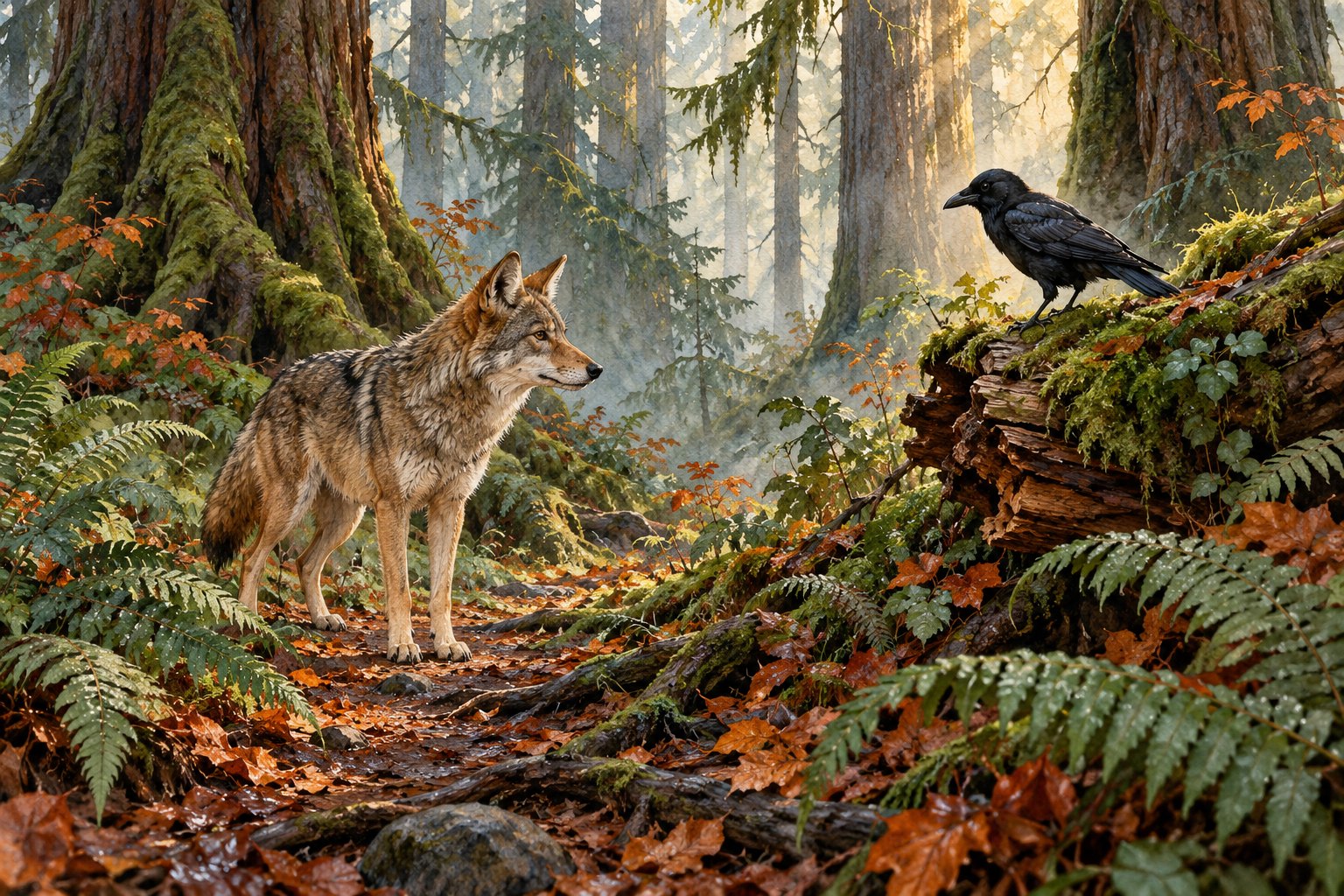
The illustration above explores that uneasy coexistence; it does not depict a verified scene from the film. The critical question is how the movie gives its animals individuality. Species can establish an initial impression, but characterization requires behavior, choices, and relationships. An intimidating silhouette is a beginning, not a complete personality.
A joke about trees exposes Prue’s defenses
One publicly described exchange provides a particularly revealing glimpse of Prue’s attitude. Traveling with the eagle known as the General, she learns about inhabitants associated with a significant tree. “They talk to a tree?” she asks. Her subsequent response is a single dismissive word: “Hippies.” The dialogue and the opening abduction are documented in [TheWrap’s account of the Annecy footage](https://www.thewrap.com/creative-content/movies/wildwood-first-footage-annecy-travis-knight-laika/).
The joke interests me because Prue reaches for a familiar social label while encountering something extraordinary. Naming the unfamiliar gives her a momentary position of superiority. She can sound worldly even when the world has already demonstrated how much she does not know.
That creates a promising character tension. Skepticism can protect a young person from manipulation, but reflexive dismissal can prevent understanding. The question is when confidence becomes a barrier to listening. A convincing arc would let Prue retain her intelligence while learning that intelligence includes revising an assumption.
This relationship between visual invention and emotional perspective also underlies our commentary on how animation can express a character’s experience in Tangles. An unusual image earns its place when it changes what we understand about the person encountering it.
The deeper possibility: learning to see home differently
The strongest interpretation available from these elements is that Wildwood treats growing up as a change in attention. Crows, bridges, and coyotes become ways of questioning the assumption that familiarity equals understanding. Prue’s rescue mission gives that question urgency, while her sarcasm reveals how readily a person can defend an incomplete picture of the world.
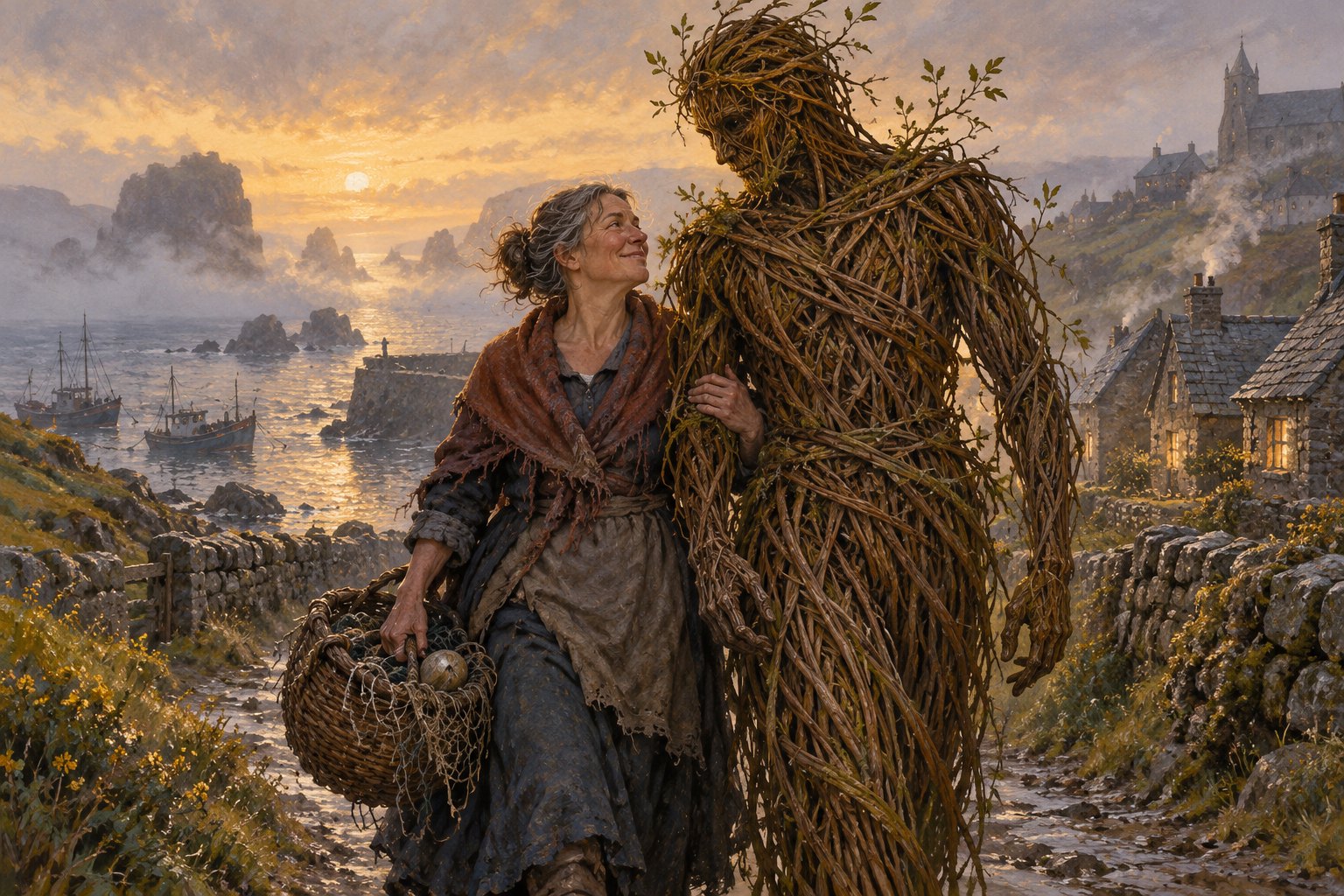
There is a related tension in our character analysis of Wicker’s fairy-tale community: fantasy can expose the limits of what people consider normal. Here, the productive question concerns whose understanding of a place gets to define it.
A complete-film verdict would require assessing how these ideas develop across the story, including its pacing and resolution. What the documented material supports is a compelling foundation: a heroine with an immediate responsibility, a landscape that challenges her confidence, and humor that reveals her resistance to wonder. Portland’s contribution is the intimacy of that challenge. The unfamiliar is already close to home.
Original content by this site's editorial team. Published: October 23, 2026 at 00:18:28 PDT (Los Angeles time)