
Wildwood began its theatrical run with a modest opening: Box Office Mojo’s early weekend listing estimated $11.6 million from 2,942 theaters for October 23–25, placing Laika’s Portland-set fantasy third domestically. That is an initial estimate, not a settled final tally. Other opening reports differ, making the broad conclusion more dependable than any single precise figure: the film attracted a substantial first audience without delivering a runaway debut.
The more interesting question is what happens after that first encounter. A forest adventure built around a missing brother, a determined sister, and an unfamiliar society has to turn curiosity into attachment. Its commercial future depends partly on whether people recommend the experience through its characters, rather than simply admire the work required to make it.
Story note: The discussion below includes the publicly described premise and brief dialogue, but avoids the ending. Character interpretations are critical readings of those established details, rather than claims about unverified scenes.
What the opening-weekend figures actually tell us
Using the $11.6 million estimate and its accompanying theater count produces an average of approximately $3,942 per location. That measures receipts across the release; it does not reveal how many seats were filled at an individual screening. Ticket prices, auditorium sizes, and the number of daily performances all affect the relationship between revenue and attendance.
The distinction matters because a wide opening gives a film access to audiences without guaranteeing strong demand everywhere. A national total cannot tell us whether Portland screenings performed especially well, whether suburban theaters lagged, or whether particular showtimes sold out. The film’s local identity makes those questions tempting, but answering them requires local evidence.
Nor does an opening gross establish profitability. Cinemas retain part of ticket revenue, and production spending is only one component of a release’s costs. Marketing, distribution arrangements, overseas performance, and later revenue all matter. Calling Wildwood a financial success or failure on the basis of this weekend alone would compress an unfinished business story into an overly confident verdict.
My assessment is narrower: this is an opening that leaves considerable work for the rest of the run. The useful next evidence will be audience retention, weekday business, and continued access to screens. A film that holds its audience can develop a different trajectory from one whose initial interest quickly evaporates.
Prue gives the fantasy a clear emotional purpose
Fathom Entertainment’s official synopsis establishes the central action: crows abduct Prue McKeel’s baby brother, and she enters the Impassable Wilderness beyond Portland to rescue him. Peyton Elizabeth Lee voices Prue; Jacob Tremblay voices her classmate Curtis. Travis Knight directs, with a screenplay by Chris Butler.
That rescue premise is the story’s most immediately accessible feature. Prue has a concrete need before the audience has to understand the forest’s inhabitants or political divisions. A viewer does not need a glossary to understand why she keeps moving.
Through Prue’s perspective, discovery carries an uncomfortable cost. Every unfamiliar creature or institution might offer help, but attention paid to the extraordinary world also means time spent away from her brother. The dramatic opportunity lies in that tension: wonder is not automatically welcome when someone you love is missing.
Her skeptical attitude sharpens the premise. The Associated Press’s review quotes her saying, “I'm not buying it. I don't want any part of your fairy tale.” Read alongside the rescue setup, that resistance gives the fantasy an emotional obstacle as well as a physical one. Prue cannot simply reject an unfamiliar world when understanding it may be necessary to bring her brother home.
That is a useful way to approach her character without reducing her journey to a generic lesson about believing in magic. The more demanding idea is learning to act responsibly before certainty arrives. She has an urgent obligation and incomplete knowledge—a combination that can make a fantastical heroine recognizable.
Curtis makes courage a shared problem
The official synopsis describes Curtis as a loyal companion whose awkwardness accompanies him into the wilderness. His presence creates a second relationship around the rescue. Prue’s obligation begins within her family; Curtis’s involvement raises the question of what someone owes a friend when helping becomes dangerous.
My reading of that pairing is that it offers a valuable corrective to the solitary-hero model. Determination supplies direction, but companionship can provide perspective. A protagonist who knows what she wants may still need another person to notice what she overlooks.
For audiences deciding whether to see Wildwood, this relationship is potentially a more useful point of interest than the size of its fantasy world. The strongest recommendation for an adventure is often that viewers want to spend time with its travelers. Spectacle can bring people into the theater; concern for a character gives them something specific to discuss afterward.
Handmade spectacle still needs dramatic focus
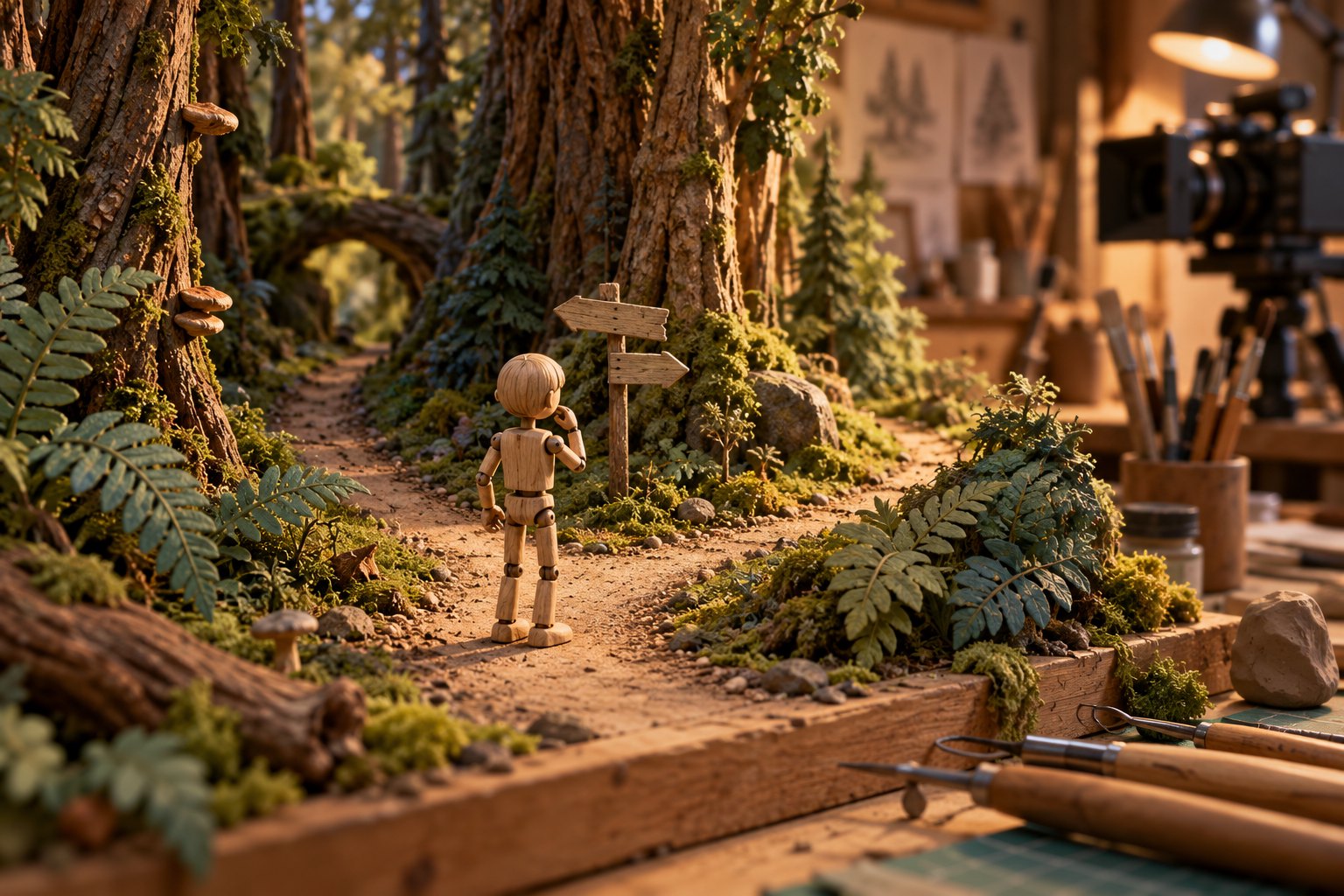
Stop-motion invites attention to physical detail: a figure occupies space, light meets a textured surface, and movement emerges through carefully arranged changes. That material presence can make an invented environment feel unusually tangible.
Yet craftsmanship and dramatic effectiveness remain separate judgments. An elaborate environment earns its narrative place when it changes a decision, complicates a relationship, or makes an obstacle understandable. Admiration for construction cannot, by itself, establish that a story sustains emotional momentum.
The distinction also helps explain why opening-weekend receipts are an incomplete assessment of artistic value. Revenue measures purchasing behavior. It cannot tell us whether an individual gesture communicates fear, whether a pause deepens affection, or whether a setting changes how we understand a character. Our discussion of how movie imagery reshapes audience expectations explores a related problem: the visual invitation and the story experienced afterward are connected, but each deserves scrutiny.
Portland gives the threshold meaning
The Portland setting does more than identify a hometown audience. Placing an enchanted wilderness beside a recognizable city makes the boundary between ordinary life and danger feel close. Prue is not starting from a remote kingdom whose rules are already strange; the adventure interrupts a world associated with everyday routines.
That proximity is the setting’s strongest interpretive possibility. A familiar place becomes the edge of something its inhabitants do not fully understand. The effect resembles the broader question considered in our analysis of how San Francisco shapes character and belonging in A Man on the Inside: locations become meaningful when they influence a person’s relationship with the world.
Local recognition can add pleasure, but it should not be mistaken for proof of local box-office strength. Portland’s importance to the film and Portland’s contribution to its receipts are different claims.
The deeper question behind the adventure
The most productive interpretation of Wildwood begins with the collision between personal responsibility and a larger community. Prue enters the forest for one person. The official premise places that rescue inside a conflict affecting the forest itself. That structure asks whether protecting someone close to us can remain separate from caring about the world around them.
Another brief line quoted in the Associated Press review—“There's magic in you”—offers an optimistic counterpoint to Prue’s skepticism. Its interesting implication is less about possessing exceptional powers than recognizing possibilities that resistance has kept out of view.
The opening weekend cannot resolve how successfully the film realizes those ideas, nor can it determine its eventual audience. It establishes a starting point. The stronger reason to keep discussing Wildwood is the human question inside its elaborate forest: how far responsibility extends once a private rescue becomes entangled with other lives.
Original content by this site's editorial team. Published: October 26, 2026 at 22:00:25 PDT (Los Angeles time)