
Wicker makes an outrageous romantic proposition: a woman whom her community mocks commissions a husband from a basketmaker. Beneath that fantastical arrangement lies a much less fantastical grievance. Other people have decided what kind of love she can expect, and she refuses to accept their judgment. That is the most compelling way into the film’s pairing of sexual appetite and tenderness: wanting pleasure and wanting to be cherished belong to the same emotional life.
The Hollywood Reporter’s description of the film as both exceptionally lustful and tender captures that provocative combination. Its headline also includes the phrase “It Was Unpitchable.” Without the interview’s full context, that phrase should not become an invented account of financing struggles or studio rejection. The premise itself, however, offers plenty to examine.
Spoiler note: This character-focused analysis discusses the premise and central social conflict established in festival descriptions. It does not assess the ending or claim a firsthand screening review.
The Fisherwoman Wants More Than Permission to Marry
Directed by Eleanor Wilson and Alex Huston Fischer, Wicker stars Olivia Colman as the fisherwoman, Peter Dinklage as the basketmaker, and Alexander Skarsgård as the husband he creates. The Mill Valley Film Festival describes a medieval setting in which coupled townspeople ridicule the unmarried woman before her extraordinary new relationship unsettles the village. [Mill Valley Film Festival’s film description](https://app.mvff.com/film/wicker)
Her decision matters because she initiates the change. She does not simply wait for someone to recognize a beauty or goodness that everyone else has overlooked. She makes a request and pursues an alternative. Read through her perspective, the magical commission becomes an act of practical defiance: if the available social arrangements leave no room for her happiness, she will try another arrangement.
That does not make her independent of other people’s opinions. Wanting a husband can express personal longing and a response to humiliation at the same time. Those motives need not cancel each other out. A woman can resent the pressure to marry while sincerely wanting companionship, touch, and a shared home.
The interesting critical question is therefore not whether she has transcended every conventional desire. It is whether she gets to define those desires herself. Treating marriage as something she must reject to prove her strength would impose another requirement on a character already burdened by other people’s expectations.
A Useful Woman Is Not Necessarily a Valued Woman
The Melbourne International Film Festival’s synopsis adds a revealing detail: the fisherwoman supplies food to townspeople who barely tolerate her. It also identifies the adaptation’s basis in a short story by Ursula Wills-Jones. That contrast between material usefulness and social rejection sharpens the premise considerably. [Melbourne International Film Festival’s synopsis and credits](https://miff.com.au/program/film/wicker)
From the fisherwoman’s position, the village’s judgment carries an obvious hypocrisy. Her labor belongs within the community; her person apparently does not. People can accept what she provides while denying her the warmth and recognition they extend to one another.
My reading is that this makes her romantic wish more substantial than a wish for social promotion. Being needed is different from being wanted. Work can secure a place in an economic exchange without securing affection, dignity, or belonging. A partner offers the possibility of a relationship in which she matters beyond what she supplies.
That distinction also helps explain why an abrasive protagonist need not be softened into universal likability. Her entitlement to affection should not depend on becoming endlessly pleasant. The richer interpretation allows frustration, appetite, and vulnerability to coexist.
The Handmade Husband Raises a Question About Personhood
Skarsgård’s character introduces the film’s central conceptual complication. A husband made to order begins as the answer to somebody else’s request. Romance, however, depends on recognizing another being as more than an answer to your needs.
This is a tension in the premise, rather than a claim about an unverified scene. If the fisherwoman deserves freedom from the village’s definitions, her partner deserves freedom from being defined exclusively by his usefulness to her. The same ethical standard should travel in both directions.
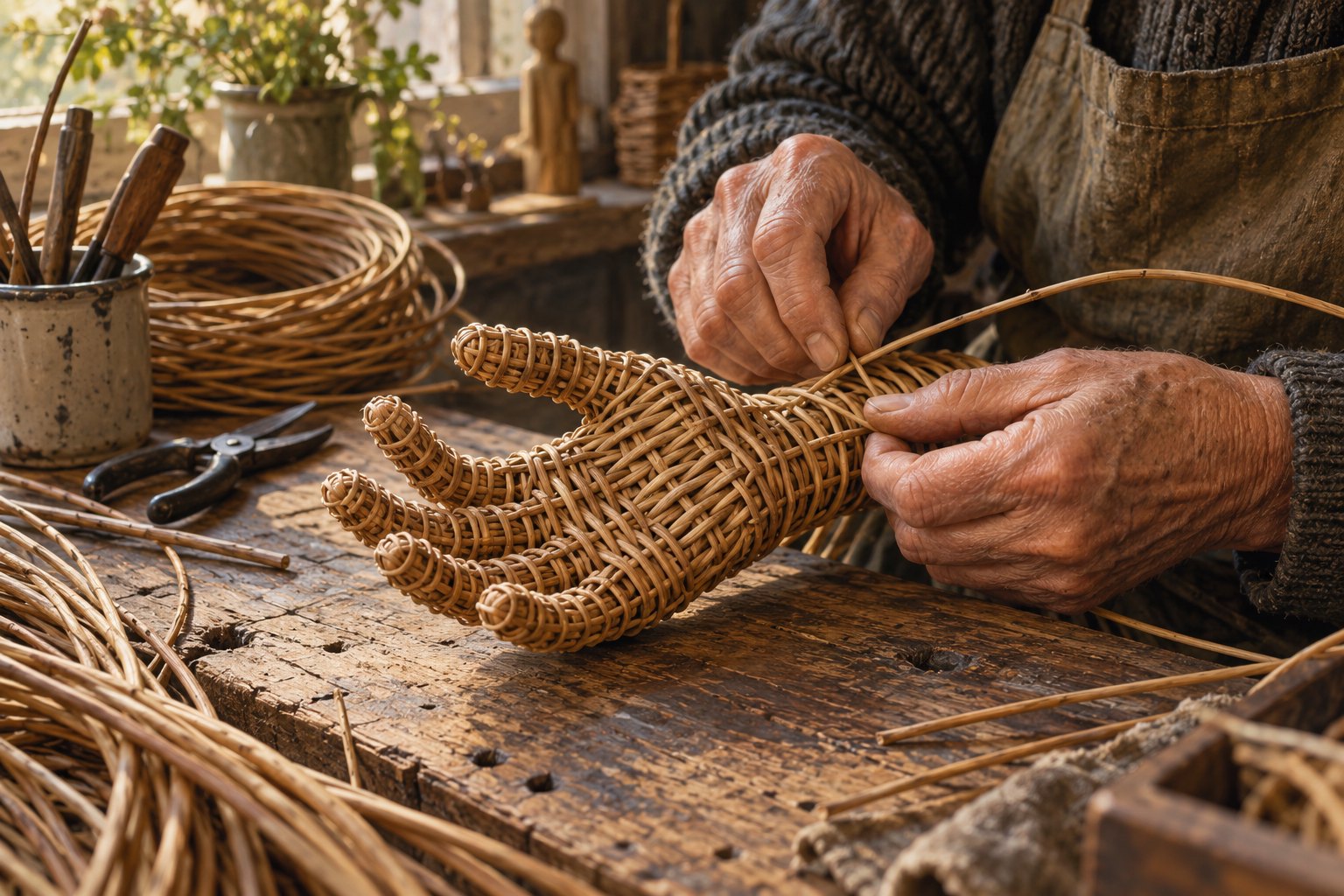
The material metaphor is unusually productive. Weaving suggests patience, interdependence, and a structure sustained by many connections. It also makes the husband’s constructed nature visible. Human partners arrive with less visible constructions: habits, inherited expectations, and ideas about what a spouse should provide.
Seen that way, the fantasy can turn an apparently alien body into a means of examining ordinary relationships. The question becomes how someone behaves toward another person, rather than whether his appearance meets the community’s definition of normal. Our discussion of character beneath extraordinary screen bodies approaches a related issue from a different genre.
Why the Village Cannot Leave Their Happiness Alone
The Sitges Film Festival’s synopsis explicitly describes the new lover as provoking jealousy and disorder among the townspeople. That establishes an important shift: the fisherwoman’s relationship becomes a public problem despite beginning as a private wish. [Sitges Film Festival’s synopsis](https://sitgesfilmfestival.com/en/film/2026/wicker)
Jealousy offers a persuasive explanation for that escalation. Someone previously dismissed now possesses something others might want. Her happiness challenges the assumption that their social standing reflects superior judgment or greater deservingness.
From the villagers’ perspective, accepting the couple would require accepting that their earlier verdict was wrong. Resentment supplies an easier response. It allows discomfort to be directed outward rather than turned into an examination of their own relationships.
This is where the fable’s sexual dimension acquires a sharper purpose. Desire is difficult to control through social approval alone. A community may decide who is respectable, but attraction does not necessarily obey its decisions. The fisherwoman’s pleasure therefore has implications beyond the bedroom: it exposes the limits of her neighbors’ authority.
Sexual Comedy and Tenderness Can Strengthen Each Other
The most useful response to the film’s provocative reputation is to resist treating tenderness as an apology for eroticism. A character need not become less sexual to become emotionally credible. Likewise, sexual fulfillment need not erase insecurity or the wish for reassurance.
As an interpretive framework, this makes Wicker especially interesting. Its premise permits physical desire to belong to a woman whom others have written out of romantic possibility. Reducing that desire to a joke would repeat the village’s contempt. Taking it seriously opens room for both comedy and sympathy.
That coexistence recalls the broader issue explored in our analysis of desire and emotional release in Black Swan: a film’s emotional meaning cannot be reduced to whether its subject sounds comforting or respectable.
The Deeper Question Is Who Gets to Define Love
The strongest interpretation of Wicker begins with a redistribution of authority. The village assumes it can determine the fisherwoman’s worth. Her commission challenges that power, while the existence of her handmade partner raises a further obligation: she must recognize worth beyond the terms of her own wish.
That is why the combination of bawdiness and gentleness deserves attention. Pleasure can express resistance to shame; tenderness can prevent that resistance from becoming another form of possession. The film’s remarkable premise brings those ideas into the same relationship.
A woven husband is the immediate attraction. The more enduring question is whether people can allow one another happiness without demanding that it validate their own choices. That question gives this improbable romance a thoroughly recognizable human center.
Original content by this site's editorial team. Published: October 14, 2026 at 17:39:40 PDT (Los Angeles time)