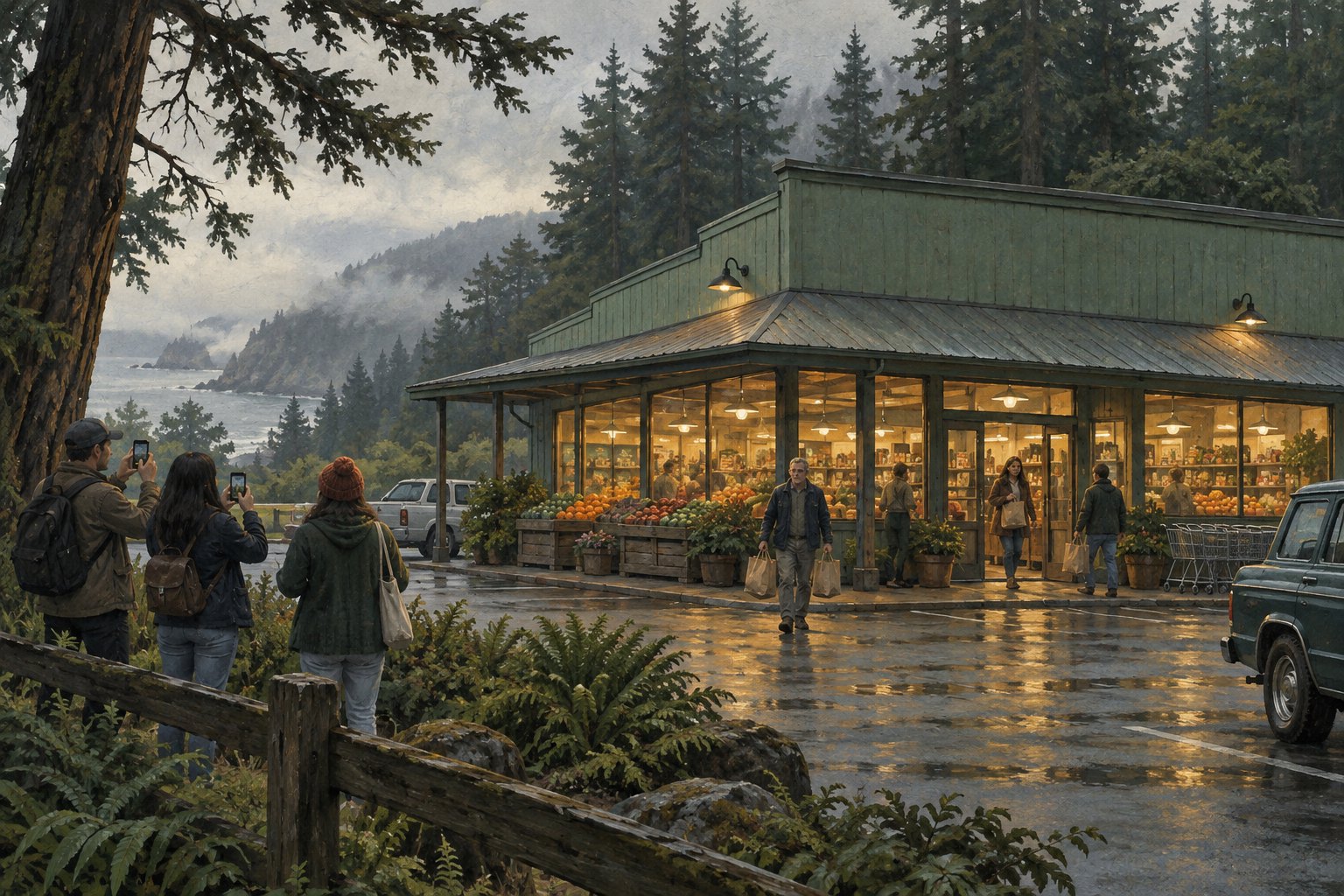
Murphy’s Markets in Cutten, in Northern California’s Humboldt County, has become a destination for fans of One Battle After Another. The attraction is the grocery store where Leonardo DiCaprio’s Bob Ferguson makes a desperate phone call while searching for his daughter. There is one practical catch: the payphone was a movie prop and is no longer there, according to [SFGATE’s reporting from the store](https://www.sfgate.com/sf-culture/article/one-battle-grocery-store-22405273.php).
That interest makes artistic sense. A grocery store offers none of the automatic grandeur of a palace, battlefield, or futuristic city. Its familiarity is precisely what gives this sequence its force. Bob’s emergency unfolds in a place where other people ordinarily pick up dinner. The setting makes his panic feel exposed, inconvenient, and painfully human.
Spoiler warning: This review discusses the film’s premise, grocery-store sequence, and character dynamics. It leaves the final resolution undisclosed.
A father whose past offers no easy rescue
Written and directed by Paul Thomas Anderson, One Battle After Another follows a former revolutionary living off-grid with his daughter, Willa, played by Chase Infiniti. The return of an old enemy and Willa’s disappearance send Bob scrambling to find her. That father-daughter predicament anchors the political action described in the [film’s official synopsis](https://www.onebattleafteranothermovie.com/).
My reading of Bob is that his greatest vulnerability is the distance between having a history and being ready for the present. He has lived through danger. He knows that powerful people can hurt his family. Neither fact guarantees that he can think clearly when the threat arrives.
That distinction makes him a compelling action protagonist. Experience usually functions as a promise in rescue thrillers: the apparently ordinary parent possesses extraordinary reserves of competence. Anderson makes experience less dependable. Bob brings old attachments, habits, and assumptions into an emergency that requires immediate attention.
DiCaprio’s character works because love does not automatically organize him. His concern for Willa is emotionally legible even when his behavior is frustrating. The comedy can expose his inadequacy without invalidating his devotion. We want him to succeed while recognizing why success cannot simply be taken for granted.
Why the grocery-store phone call lands
The call turns on a wonderfully small obstacle: Bob cannot remember the password needed to reconnect with his revolutionary network. Elsewhere in the phone exchanges, the question “What time is it?” becomes part of that authentication ritual. Brian Hassett’s [scene-by-scene account](https://brianhassett.com/2026/02/one-battle-after-another-scene-by-scene-breakdown-time-coded-quotes-deets/) distinguishes the grocery call from the later conversation that develops the joke further.
That separation matters. The store supplies the initial collision between urgent need and obstructed access. Bob wants a human response to a human emergency. The system wants the correct answer. Both positions have an internal logic: a clandestine network needs protection, and a frightened father needs help. The scene becomes funny because those logics cannot comfortably coexist.
From Bob’s perspective, every additional demand is intolerable. From the other end of the line, his panic cannot establish his identity. The audience occupies the miserable space between them. We understand why verification exists, yet we feel the cruelty of making a desperate person perform competence before anyone will listen.
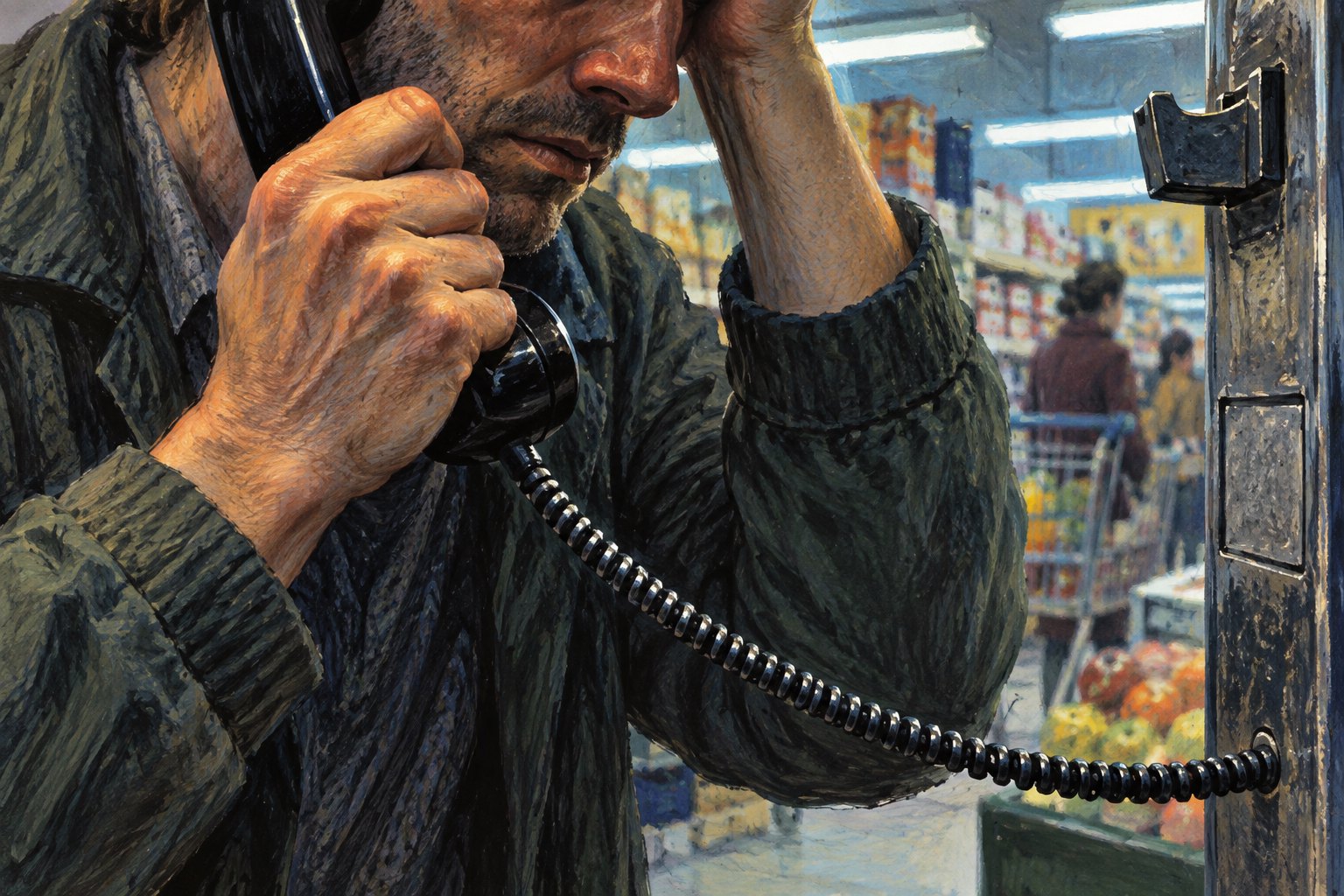
The physical telephone strengthens the predicament. Bob cannot disappear into a private screen. A receiver, cord, and public location give his frustration a visible shape. He has somewhere he needs to go, but first he must remain in place and talk. That interruption creates tension through delay.
For me, this is the sequence’s sharpest achievement: it makes helplessness active. Bob is trying, arguing, remembering, and failing. The scene keeps moving emotionally even while the task remains unfinished. An ordinary transaction becomes an ordeal because of what the person performing it stands to lose.
Willa changes what Bob’s panic means
Reading the film entirely through Bob would reproduce his own blind spot. Willa has a life and a perspective beyond his fear for her. The official premise specifically presents her as self-reliant, a crucial qualification in a story built around a parent’s search.
For a father, protection can feel inseparable from control. For a daughter, the same protective habits can make growing up feel like negotiating someone else’s emergency. That tension gives the rescue story more substance than a simple division between a capable adult and a helpless child.
Infiniti’s character also changes the meaning of Bob’s failures. The relevant question becomes whether his love leaves room for the person Willa is becoming. Parental devotion can be sincere and still operate through an outdated understanding of a child.
That concern connects with our discussion of how inherited histories shape the next generation in Star Wars. Here, however, legacy presses into domestic life. The younger person must live with consequences that older people helped create, whether or not those consequences arrive with an explanation.
Calm becomes a form of competence
Benicio Del Toro’s Sergio offers a useful counterweight to Bob. His calming “Ocean waves” and later encouragement, “Courage, Bob,” belong to their interactions beyond the grocery store, as recorded in the same scene account. The phrases are brief, but they suggest a different way of meeting danger: regulate the immediate response, then act.
In my view, this contrast is more revealing than another demonstration of Bob’s disarray would be. Panic treats every difficulty as equally urgent. Calm allows someone to notice which problem needs solving first. Sergio’s presence makes composure feel practical rather than ornamental.
The emotional movement resembles the question explored in our analysis of damaged confidence and responsibility in Endgame: how does someone keep helping when an earlier version of the self no longer supplies a reliable model? Bob’s vulnerability gives that question an unusually unruly comic expression.
What visitors can appreciate without finding the prop
The attraction of the store need not depend on recovering an exact screen image. A filming location can help viewers notice scale, ordinariness, and the relationship between a character and a public space. Those qualities are easy to overlook when attention is fixed on whether a desperate call will succeed.
Anyone visiting should approach it as a working grocery store: keep entrances and aisles clear, ask before filming people, and respect staff directions. A recognizable setting remains part of other people’s daily lives.
The deeper meaning of an ordinary place
The grocery sequence offers a compact expression of the film’s emotional argument. Bob’s past matters, but it cannot answer the phone for him. His love matters, but it cannot restore a forgotten password. His urgency matters, but other people must still understand and respond to it.
That is why I find the scene more affecting than a straightforward display of heroic efficiency. It allows devotion and failure to occupy the same body. Bob’s need for help becomes part of his humanity, rather than an interruption of his heroism.
The store’s appeal, then, is more than recognition. It marks a place where an expansive political thriller becomes intimate enough to resemble everyday frustration—and where everyday frustration carries the unbearable weight of a missing child.
Original content by this site's editorial team. Published: September 27, 2026 at 11:55:43 PDT (Los Angeles time)