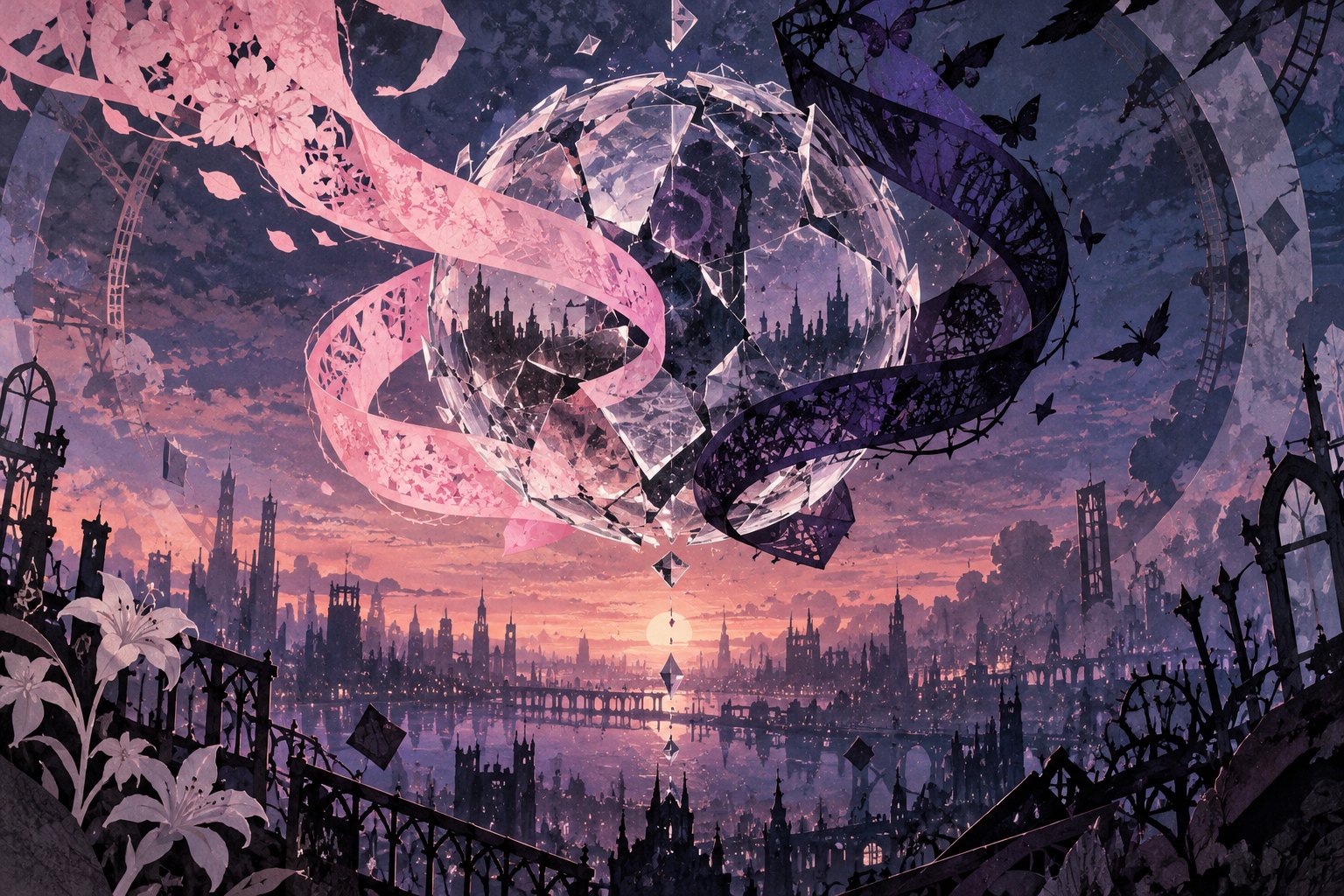
Puella Magi Madoka Magica the Movie Walpurgisnacht: Rising has a compelling dramatic inheritance: two girls whose ideas of salvation cannot comfortably coexist. Before asking how its supernatural conflict will escalate, the more revealing question is what Madoka and Homura will be allowed to choose—and whether either can accept an answer that hurts.
This is a critical preview, not a review of the completed film. Major spoilers follow for the original series and Rebellion. No unverified scenes, dialogue, ending details, or Easter eggs from the new movie are treated as fact.
What is confirmed about Walpurgisnacht: Rising?
Aniplex of America and Fathom Entertainment have announced a January 16–19, 2027, theatrical engagement, with subtitled and English-dubbed presentations. Their announcement also identifies Beginnings, Eternal, and Rebellion as the precursor movie trilogy. These are release details, not evidence of the sequel’s quality. [Fathom Entertainment’s release announcement](https://www.fathomentertainment.com/news/puella-magi-madoka-magica-the-movie-walpurgisnacht-rising-premiering-exclusively-in-theatres-from-fathom-entertainment-january-16-19/)
For viewers approaching the film, the useful preparation is understanding its emotional starting point. A list of supernatural rules can explain what a character is capable of doing. It cannot explain why a seemingly happy outcome might feel unbearable to someone else.
The inheritance from Rebellion
The official character profiles establish the central imbalance. Madoka wished to save magical girls and became the Law of the Cycle. At the end of Rebellion, Homura separated Madoka’s human existence from that greater role and rewrote the world. Madoka now lives as a schoolgirl, while Homura inhabits the altered world as a demon. [Official character profiles](https://madokamagicausa.com/chara/)
My reading is that this makes happiness an unstable measure of justice. Madoka’s ordinary life can be understood as a precious restoration. It can also represent the removal of a purpose she chose. Homura’s intervention leaves those interpretations facing each other, without an easy way to declare one emotionally meaningless.
That is the conflict the sequel inherits. Calling Homura simply selfish would flatten the protective impulse behind her action. Calling the outcome simply merciful would avoid the question of Madoka’s authority over her own existence. Both perspectives deserve pressure.
Madoka’s perspective: listen to the person being saved
One brief line from the original series provides a valuable point of reference. In the official episode twelve synopsis, Madoka declares, “I found my wish.” This is dialogue associated with the television story, not a quotation from Walpurgisnacht: Rising. Its significance lies in the possessive: the wish belongs to her. [Official episode twelve synopsis](https://madokamagicausa.com/tv/story/12.html)
For a character-focused reading, that wording matters more than any abstract argument about whether self-sacrifice is admirable. A decision acquires dramatic weight when the audience can recognize the person making it. Take away that ownership, and even an apparently generous rescue can become troubling.
The critical question for the new film is therefore how much room Madoka receives to express a preference. Does a conversation let her finish a thought? Does the framing encourage us to attend to her response, or only to someone else’s concern for her? These are viewing questions, not claims about scenes already seen.
A persuasive continuation would make her recognizable as someone with competing attachments. Wanting an ordinary life and caring about people beyond that life need not cancel each other out. Drama becomes richer when a character can want incompatible things without being reduced to indecision.
Homura’s perspective: understanding is not absolution
When assessing a fiercely protective character, sympathy and agreement should remain separate. We can understand the fear behind a decision while questioning the right to make it. That distinction is essential to the kind of drama this sequel has the opportunity to pursue.
A useful test is whether the storytelling allows another person’s objection to retain its force. If every objection merely demonstrates that outsiders do not understand the protector’s suffering, the argument closes too quickly. If suffering becomes irrelevant, the character loses emotional depth. The difficult territory lies between those shortcuts.
This is also why a more elaborate explanation of motivation would not, by itself, settle the moral conflict. As our discussion of understanding a destructive character without excusing the damage argues, comprehension is the beginning of criticism. What matters next is what that understanding asks us to accept.
For Homura, my standard would be whether the film can preserve tenderness while making control visible. A work can remain deeply sympathetic to a character without arranging every other perspective around her defense.
What to watch beyond the plot explanations
A continuation with this premise needs more than answers to questions about how its world operates. Pay attention to who controls a scene’s rhythm. Who interrupts? Who waits? Who gets the last reaction shot? Those choices can establish a relationship’s balance before any speech explains it.
Visual beauty also deserves scrutiny. An inviting setting can communicate comfort, but a repeated composition or an unusually rigid arrangement can suggest limits. Neither effect should be assumed in advance. The important task while watching is to connect an image to a character’s experience instead of treating every striking object as a hidden code.
That approach follows the same principle explored in our commentary on why a spectacular fictional world needs a human point of view: design becomes dramatically meaningful when someone has something to gain or lose inside it.
How to prepare without turning the movie into homework
Follow the central story through the original television series or its two-part film retelling, then watch Rebellion. The distinction matters: Beginnings and Eternal retell the television story, while Rebellion moves beyond it.
During a rewatch, keep three questions in mind: What does each girl want? What does she believe the other wants? Where do those answers diverge? Remembering those differences will be more useful than memorizing every piece of terminology.
There is no responsible reason to attach a score to the new film here, reproduce unverified dialogue, or announce hidden references as discoveries. Those judgments require the actual work.
The deeper question: can love leave room for refusal?
The most productive lens for Walpurgisnacht: Rising is the distinction between creating safety and recognizing another person’s freedom. Safety concerns the conditions of a life. Freedom includes having a say in what that life is for.
Neither value automatically resolves the other. A choice can be sincere and still devastating to someone who loves the person making it. Protection can be tender and still impose a cost on its recipient. A strong continuation would let those tensions remain emotionally specific.
That is what makes the prospect of this film interesting beyond another confrontation or revelation. Its deepest potential lies in whether its characters can recognize each other as people whose wishes may remain different. For Madoka and Homura, being together and being understood may prove to be very different kinds of happiness.
Original content by this site's editorial team. Published: October 9, 2026 at 21:55:16 PDT (Los Angeles time)