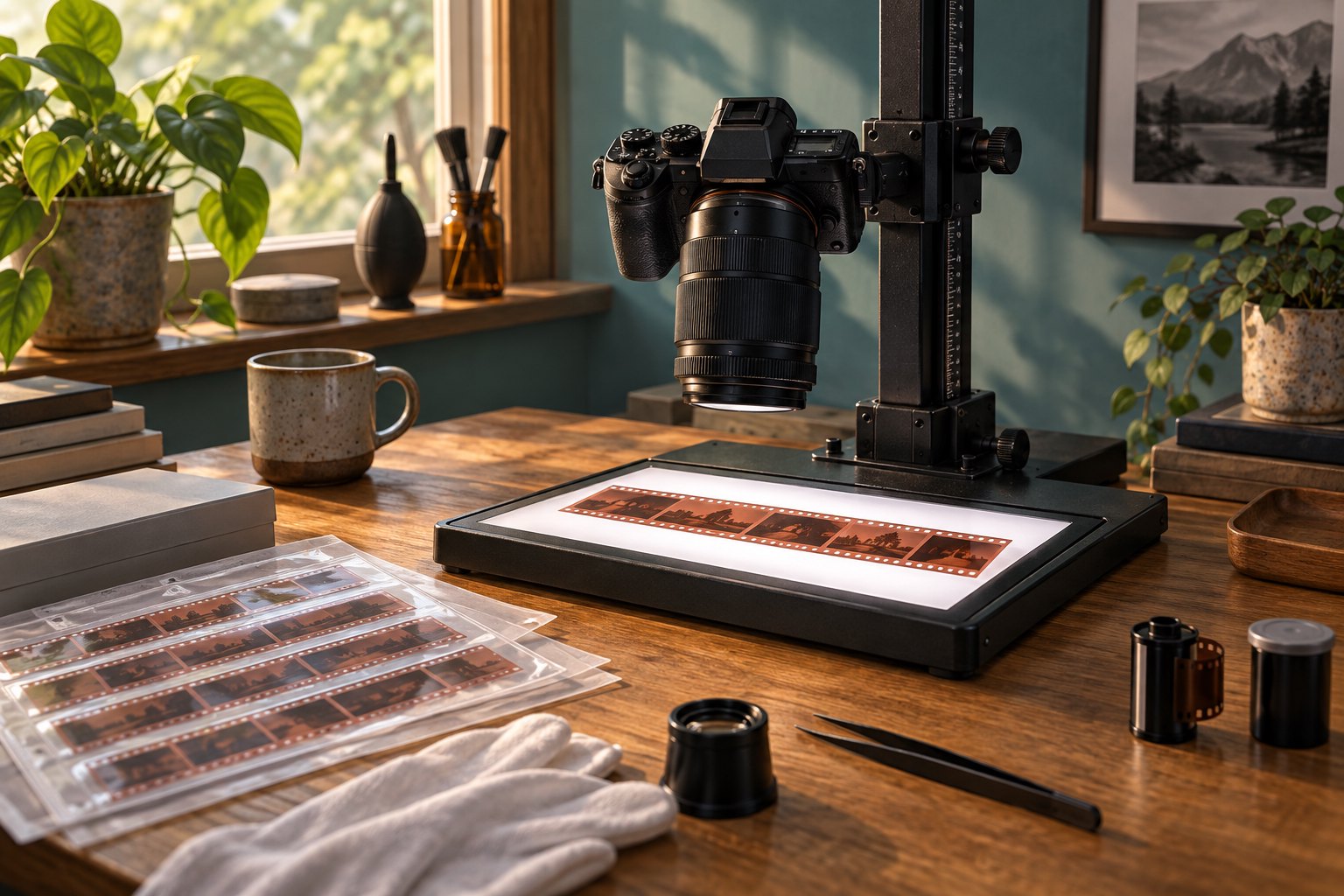
The VALOI Easy35 v2 raises a practical question for anyone with photographic negatives waiting in sleeves: what would make scanning them at home worthwhile? The answer depends on repeatable image quality, manageable handling, and the effort required to turn a capture into a finished photograph. A striking example image addresses only part of that question.
Fstoppers has published a review of the Easy35 v2 focused on home film scanning. This article offers an editorial framework for assessing that subject, rather than a hands-on performance verdict. It does not assign the device a score or claim measured improvements over its predecessor. Those conclusions require product-specific testing.
For readers accustomed to movie reviews, the connection is the image itself: how a physical record becomes something we can view, interpret, and share. Here, film means photographic material. Inventing a plot or borrowing movie dialogue would obscure the real story—the decisions involved in bringing an existing image back into view.
What an Easy35 v2 Review Needs to Demonstrate
A useful review should establish the complete setup behind its results. In camera-based film digitization, the camera, lens, illumination, film positioning, exposure, and processing all contribute to the final picture. An accessory cannot reasonably receive all the credit for a beautiful conversion, or all the blame for an uneven one.
That makes a finished sample the beginning of an assessment. Readers also need to know how it was captured, how much correction it required, and whether the same result was easy to repeat. A carefully adjusted demonstration frame may tell us less about everyday use than several ordinary strips processed consecutively.
For the Easy35 v2 specifically, the most valuable evidence would answer four questions:
- Does the tested setup preserve useful detail across the whole frame?
- Are results consistent when film is advanced, removed, and reinserted?
- How much adjustment does each photograph require afterward?
- Which parts of the workflow remain awkward during a longer session?
These are evaluation criteria, not findings about this model. The distinction matters because a version number alone does not establish better results.
Look Beyond Sharpness in the Center
Sharpness attracts attention because it is easy to demonstrate with an enlarged detail. Yet a crisp central subject can coexist with softer edges. When evaluating sample scans, inspect the center and corners of the same frame, ideally using a photograph that contains detail throughout.
Interpret those comparisons carefully. An original photograph may already have soft corners, motion blur, or shallow focus. Scanning cannot recover detail that was never recorded. A stronger comparison uses the same negative across different captures, keeping processing as consistent as possible.
Brightness and color deserve equal attention. Look at broad areas such as skies or plain backgrounds, where unwanted variation can become easier to notice. Then examine whether dark and bright regions retain meaningful separation. Heavy contrast can make an image look punchier while concealing subtle information.
My editorial preference is for examples shown both as complete photographs and as modest enlargements. The complete image reveals whether the result works visually; the enlargement helps explain why. Neither view should substitute for the other.
Color Conversion Is an Interpretive Step
Digitizing a negative does not automatically produce a finished positive photograph. Negative conversion, color balance, contrast, and cropping affect what viewers eventually see. Different treatments of the same capture can create markedly different impressions.
This is especially important when judging warmth, saturation, or skin tones. A pleasing result may reflect thoughtful processing as much as capture quality. Review examples become more informative when the treatment is explained and comparable images receive comparable adjustments.
Movie audiences already encounter a related distinction between what was photographed and how that image is presented. Color and contrast influence atmosphere, direct attention, and shape our reading of a face. A home photograph has a smaller audience, perhaps, but its presentation still carries interpretive weight.
Our discussion of reading visual evidence beyond an immediate result explores a related habit of attention. In scanning, the equivalent is asking what a polished sample actually demonstrates before treating it as proof of an entire workflow.
Measure the Work Around the Capture
The capture itself is only one stage. Preparing film, checking focus, advancing frames, transferring files, converting negatives, removing visible dust, naming images, and making backups all belong to the job.
A meaningful speed assessment should therefore define its endpoint. Capturing a roll and delivering a clean, organized set of photographs are different accomplishments. Neither measurement is wrong, but they answer different questions.
For someone evaluating a home setup, a small representative trial is more revealing than immediately committing an entire collection:
- Select several ordinary frames, including a bright scene, a darker scene, and an image with detail near the edges.
- Record the equipment and processing choices so the session can be repeated.
- Inspect an early capture before continuing through the remaining frames.
- Finish the conversion and cleanup rather than stopping at capture.
- Count the frames requiring another attempt and note why.
- Review the results at the size you actually intend to use.
This exercise identifies the real bottleneck. If most of the session goes into correcting color or organizing files, faster frame handling may have limited effect on total effort. If repeated setup adjustments dominate, consistency becomes a central criterion.
Preserve the Photograph and Its Context
The strongest reason to digitize a personal collection may be access. A negative stored safely but rarely examined has a different practical life from an image relatives can identify, discuss, and revisit.
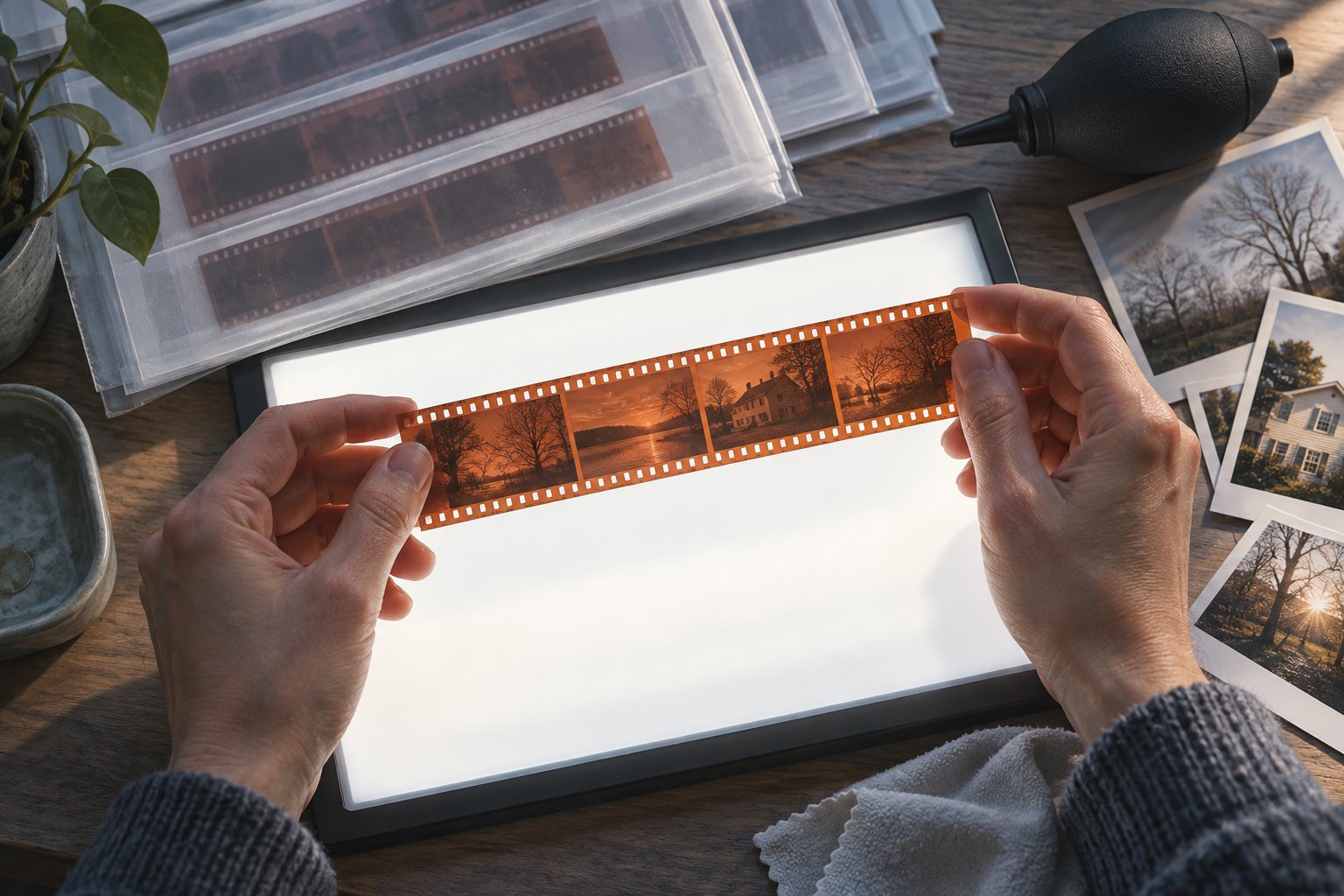
Organization deserves attention from the start. Keep a stable connection between each digital file and its physical strip. Record names, locations, and approximate dates when known, and distinguish a confident identification from a guess. An uncertain year should remain uncertain rather than becoming a false fact through a tidy filename.
Keep original captures separately from edited versions, retain the physical film, and maintain more than one copy of important files. These habits allow future reinterpretation without requiring every decision to be perfect today.
There is an affinity here with our commentary on John Wilson and the impulse to keep recording: images acquire significance through attention. An apparently incidental background can become the most interesting part years later. That is a persuasive reason to preserve a full-frame version before making a tighter crop for sharing.
The Verdict Depends on Repeatability
The Easy35 v2 deserves an assessment grounded in demonstrated handling and finished results. Without that evidence, a firm recommendation, upgrade verdict, or claim of laboratory-quality output would go beyond what can responsibly be concluded here.
My judgment about the larger issue is straightforward: the most valuable home scanning process is one that makes careful work repeatable. It should help its user move from an isolated successful image to a coherent, accessible collection.
The deeper value of digitization lies in making photographs available for another look. A scan is both a copy and a presentation, shaped by choices about tone, framing, and context. The best outcome preserves enough of the original to let the next viewer notice something the first viewer missed.
Original content by this site's editorial team. Published: September 24, 2026 at 09:46:55 PDT (Los Angeles time)