A Crested Butte-based ski film company is still taking its work on tour after three decades, according to The Colorado Sun. For moviegoers, the interesting part of that news is the continuing commitment to a shared screening: people gathering to watch a sport whose speed, scale, and physical uncertainty can make unusually compelling cinema.
Longevity deserves recognition, although it cannot establish the quality of an individual film. The more useful question is what a ski movie offers when the audience sits down together. My view is that the form becomes most rewarding when spectacular skiing reveals something about the people doing it—and when the filmmaking gives viewers enough space to understand their decisions.
This is spoiler-free commentary on the continuing tour and the craft of ski cinema, rather than a review of a specific film. No assessment of an individual movie’s scenes, dialogue, or ending is implied.
What three decades of touring actually tells us
The confirmed news establishes a durable connection between a ski film company, its Crested Butte base, and touring exhibition. It does not, by itself, explain the company’s finances, audience growth, current itinerary, or latest movie’s artistic success. Those distinctions matter because an anniversary can easily become a substitute for evaluation.
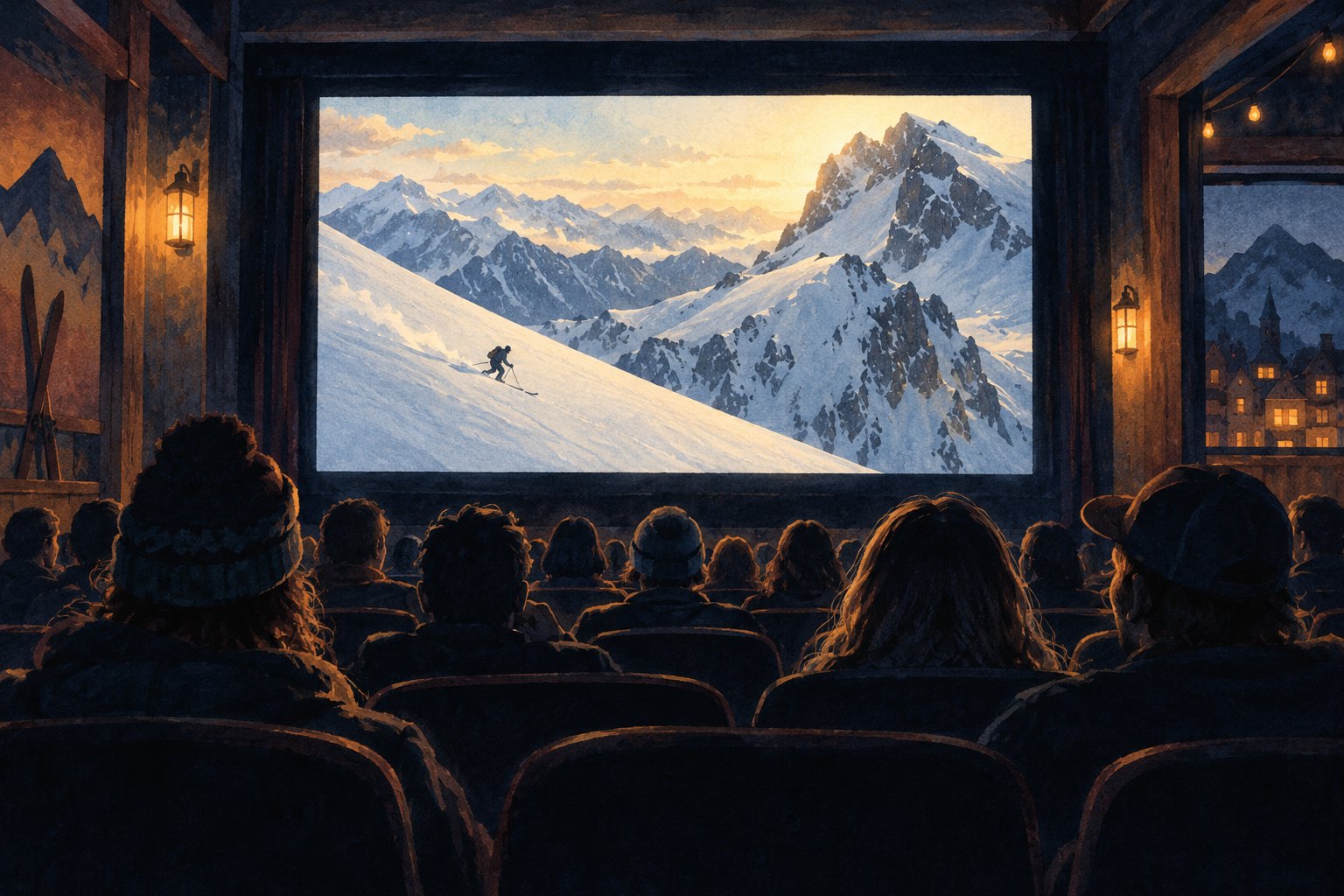
Still, continuing to tour makes the screening itself worth examining. A movie viewed in a room full of people has an additional rhythm: anticipation travels through the audience, a moment of uncertainty holds everyone in place, and a release of tension becomes audible. That response can draw attention to details a solitary viewer might overlook.
For a ski film, the relationship is especially interesting. The action on screen may depend on one person making a precise movement, while the experience in the theater depends on many people recognizing it together. The tour creates an opportunity for private concentration to become public excitement.
Our discussion of what a shared movie night brings to Young Frankenstein approaches a similar question through comedy. Laughter and suspense work differently, but both can change when viewers experience their timing together.
The skier needs to become someone we can understand
In a character-focused reading of ski cinema, the first task is to separate athletic ability from characterization. An impressive descent demonstrates skill. It does not automatically tell us what the skier wants, how they respond to doubt, or what their relationship with other people might be.
Those dimensions emerge through choices. When a film includes preparation, conversation, hesitation, or a decision to stop, the viewer gains a basis for understanding the person inside the performance. Such material can give a later action sequence emotional weight without forcing a conventional dramatic storyline onto real lives.
Consider a hypothetical editing choice: a descent could begin with the skier already moving, or it could begin with a sustained look at the terrain and the skier’s response to it. The first approach emphasizes velocity. The second invites us to think about judgment. Neither is inherently superior, but they create different relationships with the person on screen.
That is why I would look for specificity rather than insist on confession. A film does not need to extract a traumatic backstory from every athlete. Humor, patience, attentiveness to a companion, and the way someone handles disappointment can be equally revealing. Character develops when people become distinguishable beyond their clothing and technique.
Beautiful footage needs readable geography
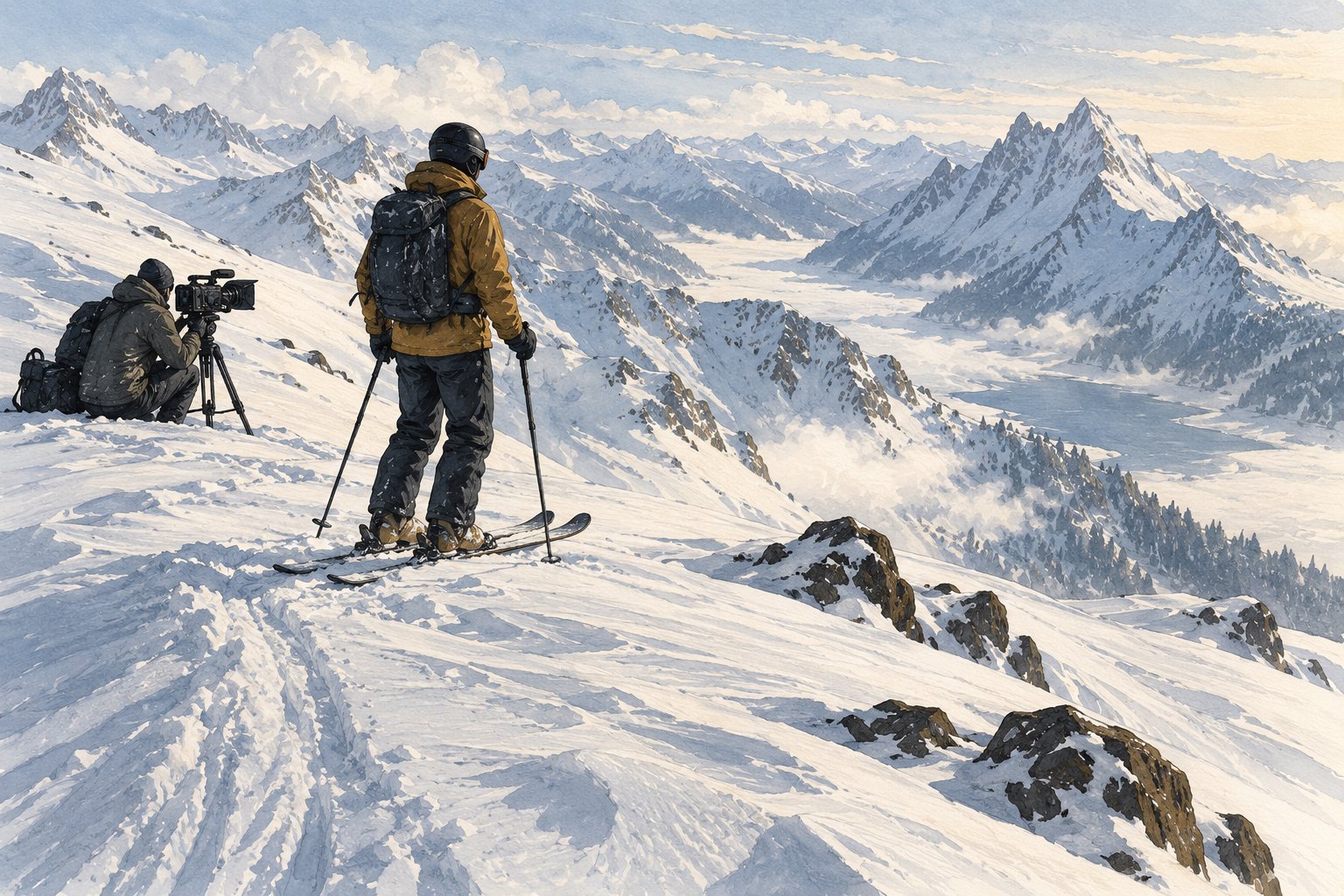
Ski cinema also presents a practical storytelling problem: the audience needs to understand where a person is going. A beautiful mountain image can establish scale, but an action sequence becomes more legible when the film connects the starting point, the route, and the destination.
A wide shot can help viewers locate the skier within the terrain. A closer angle can show movement and adjustment. A continuous passage can preserve the relationship between a decision and its consequence. These are tools for making skill visible, particularly to viewers who do not know the sport’s technical vocabulary.
Rapid cutting can create energy, yet it can also conceal the very achievement the sequence wants us to admire. If the viewer cannot follow the route, excitement may come primarily from music and montage. That can be pleasurable, but it offers less opportunity to appreciate how the skier responds to the mountain.
My preference is for enough visual continuity to let the action explain itself. The most revealing question after a sequence is whether I understand something about the performance that I could not have understood from a single striking photograph.
Listen to what surrounds the action
Sound deserves the same attention as landscape. Music can unify a sequence and establish momentum. When it dominates every moment, however, it can leave little room for changes in mood or physical texture.
Where a film includes them, the sounds of skis moving across snow, breathing, wind, and conversation can redirect attention toward effort and presence. A quieter passage may make the next burst of motion feel stronger simply because the film has allowed its rhythm to change.
This connects with the question of performance explored in our commentary on Cameron Winter at Carnegie Hall: what does a camera help us notice about a person working in front of it? In ski cinema, as in filmed music, close attention to timing can reveal more than a constant insistence on intensity.
Four questions to bring to a tour screening
The continuing Crested Butte tour provides a useful occasion to watch ski films with both enthusiasm and curiosity. These questions can help distinguish an enjoyable collection of images from a movie that leaves a lasting impression:
- Who stays with you? Notice whether you remember an individual’s attitude, decisions, or relationships as clearly as their most impressive run.
- Can you follow the action? Look for shots that establish the terrain and help you understand what changes during a descent.
- Does the film vary its pace? Consider whether quieter passages deepen your attention or merely occupy time between highlights.
- What earns the audience’s response? After a cheer, ask whether the excitement came from visible skill, suspense, recognition, musical emphasis, or a combination.
None of this requires treating pleasure with suspicion. A ski movie is allowed to be funny, exuberant, and visually extravagant. Critical attention can sharpen that pleasure by making its sources easier to recognize.
The deeper promise of returning to the theater
Three decades of touring gives this story a sense of continuity. Its broader significance, in my reading, lies in the possibility of repeated encounters: returning to a form of filmmaking while bringing different experiences, expectations, and companions to it.
A mountain can fill a screen with apparent freedom. A thoughtful ski film can also help us see the choices, coordination, and human limitations within that image. Holding those elements together gives athletic spectacle a richer meaning.
That is the artistic promise worth carrying into a screening connected with Crested Butte’s continuing ski film tradition. The memorable movie will give us a descent to admire and a person whose experience makes that descent matter.
Original content by this site's editorial team. Published: October 2, 2026 at 21:04:00 PDT (Los Angeles time)