
The Take brings Denzel Washington and Robert Pattinson together in a heist movie, according to Netflix’s announcement. That pairing supplies an immediate reason to pay attention: both actors can make a character’s outward composure feel like something an audience should question. Put that quality inside a story about stealing, bargaining, and assessing risk, and even an ordinary conversation could become the main attraction.
This is spoiler-free casting commentary. A judgment on the finished performances, specific character arcs, or the ending requires the film itself. For now, the useful question is what makes this combination promising—and what a heist story would need to do to fulfill that promise.
Why Washington and Pattinson are an interesting combination
To my eye, Washington’s appeal often involves the relationship between confidence and authority. He can make certainty persuasive: a steady voice or an unhurried response encourages us to believe that a character understands the room. The dramatic tension begins when we wonder whether that confidence is justified, manufactured, or concealing something.
Pattinson interests me for a related but distinct reason. His screen presence can make someone difficult to read without making that person emotionally blank. A character may appear to be listening while seeming preoccupied with a private calculation. That uncertainty invites attention to the gap between what someone says and what their behavior suggests.
These are subjective observations about their appeal as performers, not descriptions of their roles in The Take. The casting announcement alone does not justify assigning either actor a particular position in the robbery or predicting who will outmaneuver whom. In fact, the most interesting possibility is that the film could complicate the expectations audiences bring to both men.
The distinction between a recognizable star and a convincing character also informs our discussion of what audiences should look for beyond an actor’s familiar mannerisms. Recognition gets us into a movie. Specific choices give us someone to follow once we are there.
A heist needs motives as much as mechanics
A robbery provides a clear external objective. That clarity is useful because it leaves room for messier internal objectives. Two people can agree about obtaining the money while disagreeing completely about what the money means, what risks are acceptable, and who deserves to walk away with it.
For a character-driven heist film, the revealing question is often what each participant believes the job will fix. Financial security, wounded pride, independence, and the desire to prove competence would produce very different decisions. These are possible dramatic motives within the genre, not established details of The Take.
My standard for the finished film would be whether its characters’ decisions remain intelligible under pressure. A reckless choice can be convincing if it follows from an understandable fear. An apparently brilliant maneuver can feel hollow if the screenplay gives someone knowledge simply because the next twist requires it. Cleverness becomes satisfying when it belongs to a person.
This is where the Washington–Pattinson pairing has potential. An exchange between them could carry competing definitions of success without either character explaining everything aloud. The film would need to establish those differences through behavior: who needs reassurance, who treats questions as insults, and who notices when the terms of an agreement quietly change.
Trust should have a visible cost
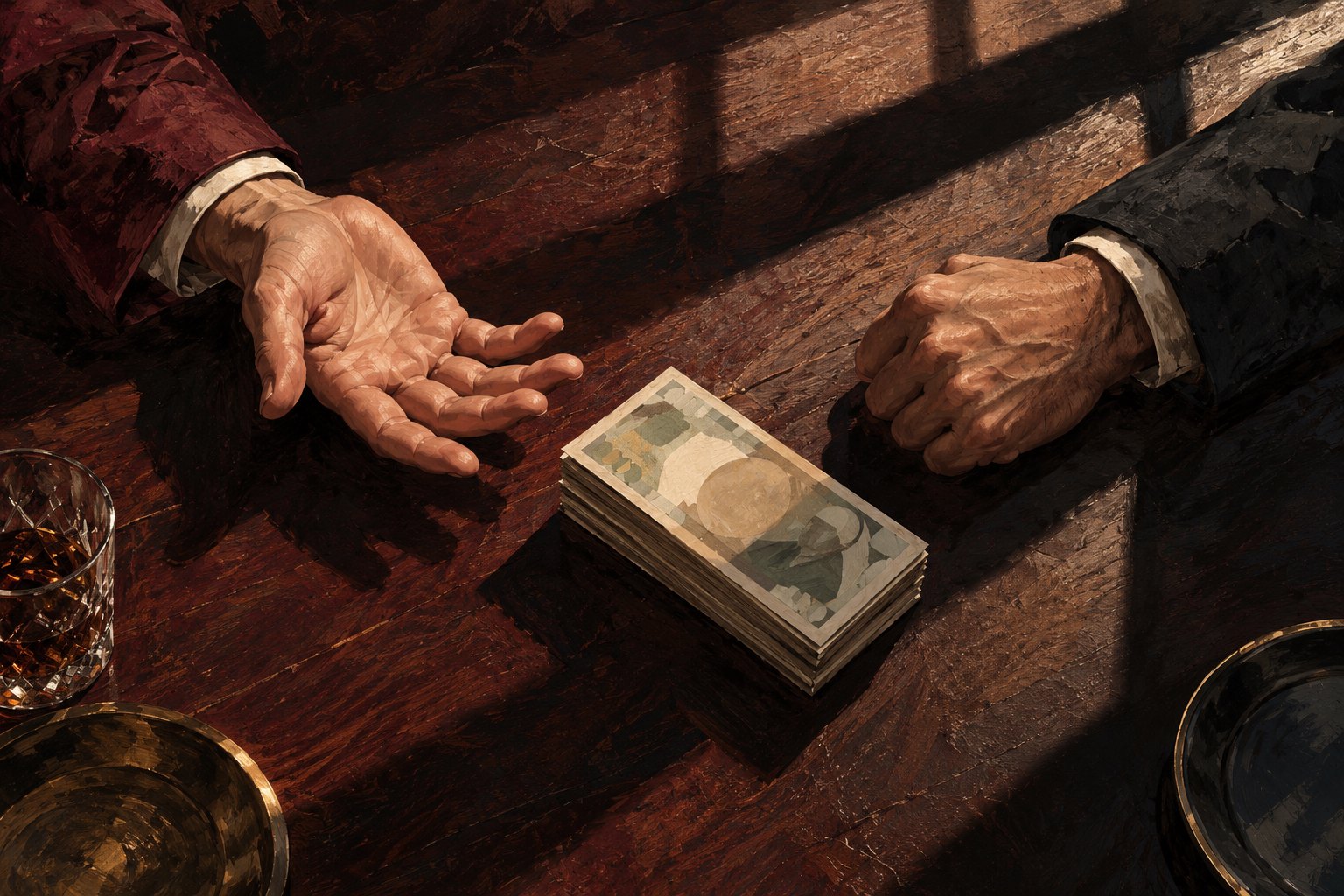
Trust becomes dramatic when someone gives something up to extend it. Sharing information, accepting another person’s timing, or surrendering the ability to leave can turn an abstract alliance into a consequential decision. Without that vulnerability, repeated assurances of loyalty have little weight.
For The Take, I would look for a relationship that changes through such decisions. If the characters cooperate, what makes cooperation necessary? If they distrust each other, what prevents them from separating? Those questions can make a partnership compelling well before the robbery reaches its most dangerous stage.
The audience’s trust matters, too. A film can encourage us to mistake calm for competence or nervousness for dishonesty. Used carefully, those assumptions create an opportunity for criticism as well as suspense: why did we believe one person so quickly? What did another have to do to earn the same benefit of the doubt?
That habit of examining persuasive behavior connects with our analysis of how an intimate view of someone can complicate our sense of the truth. In a heist thriller, proximity to a character can feel reassuring even while important motives remain concealed.
What would make the suspense feel earned?
My preference is for suspense built from understandable constraints. Viewers do not need a technical manual, but they should understand the obstacle, the available choices, and the likely consequence of failure. Once those elements are clear, a small delay or an unexpected question can carry considerable force.
Character perspective should shape that clarity. One participant may understand a physical risk while overlooking an emotional one. Another may recognize that an alliance is collapsing before anyone else notices. Letting the audience share those different limits can create tension without making every scene depend on a surprise.
The same principle applies to dialogue. A memorable line earns its place through the situation around it: a promise becomes uncomfortable, an instruction reveals contempt, or a casual observation exposes a weakness. There is no verified film dialogue to quote here. What matters in assessing the eventual screenplay will be whether its words deepen the relationships as well as sounding sharp.
The deeper possibility behind the title
As a title, The Take invites an interpretation centered on entitlement. Beyond the proceeds of a robbery, a take can suggest an individual share: what someone believes belongs to them. That is an editorial reading of the title, not a claim about the film’s intended message.
It offers a useful question for approaching the finished movie, however. Does each character distinguish between what they want, what they have earned, and what they are willing to take from somebody else? A strong heist story can make those categories drift apart until an apparently practical decision exposes a moral boundary.
That is the promise worth watching in this casting. Washington and Pattinson give The Take an appealing starting point; the lasting impression will depend on whether the people they play have distinct desires, meaningful vulnerabilities, and choices that cost them something. The most compelling prize would be a thriller in which understanding the characters makes the robbery more tense.
Original content by this site's editorial team. Published: October 29, 2026 at 09:08:25 PDT (Los Angeles time)