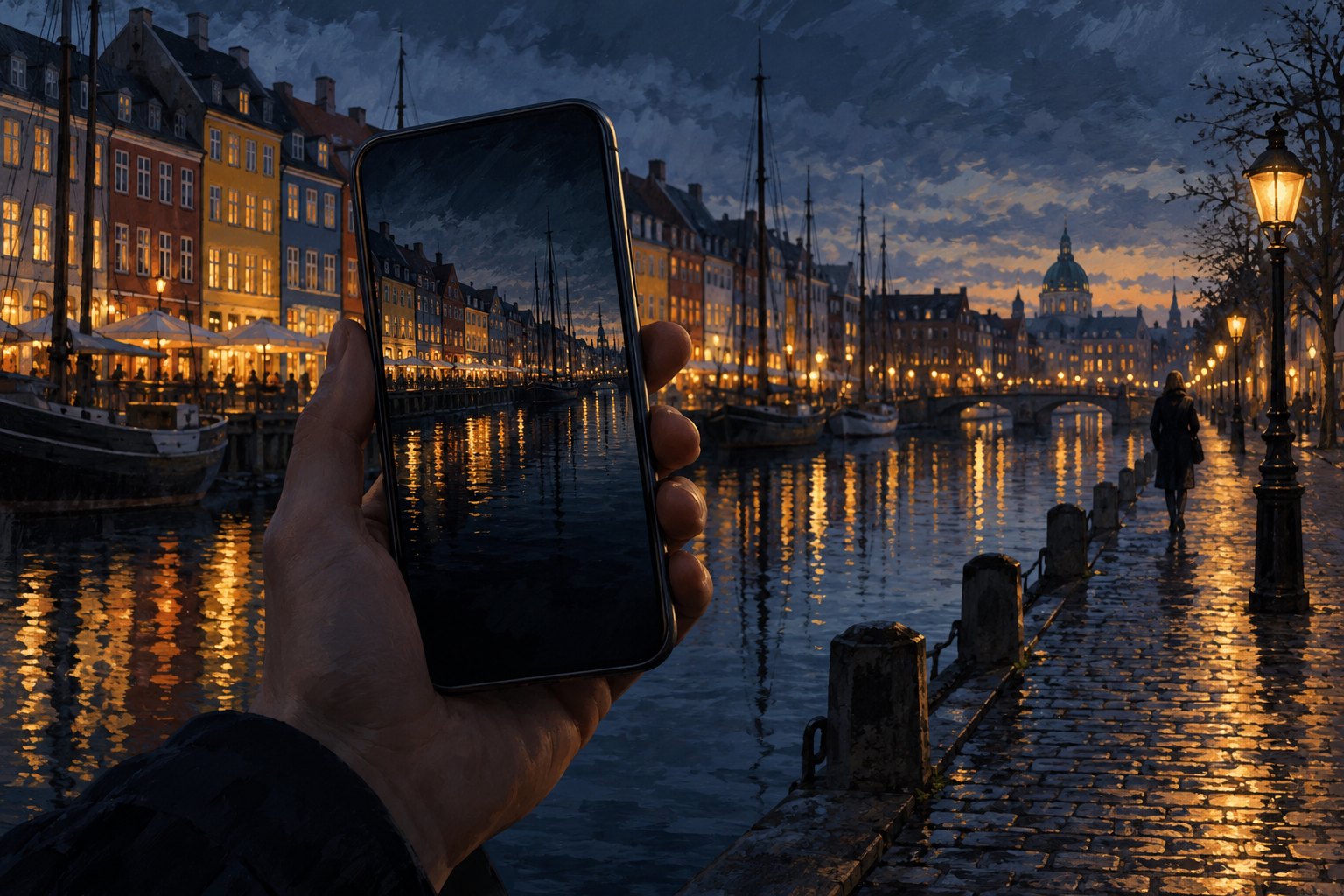
The Influencer Project builds its horror around a disturbing contradiction: being visible can support a career without offering any protection. Directed by Mike Nybroe, the film follows real-life creator Chiara King in a fictionalized story about a Copenhagen visit, a documentary crew, and an obsessive stalker. The distributor’s synopsis establishes a situation in which recording a public life becomes inseparable from documenting its invasion. [Rialto Film’s official synopsis](https://www.rialto.dk/the-influencer-project)
The most useful way into that premise is through Chiara’s predicament. What happens when the attention she has learned to welcome becomes attention she cannot refuse? That question gives the story a stronger critical foundation than a blanket argument that social media is dangerous.
Spoiler note: This article discusses the setup, opening, and developing threat, including a reference to suicide. It offers a critical reading of documented story details, rather than a screening-based verdict on acting, editing, or the effectiveness of individual scares.
Chiara’s Public Persona Is Also Her Job
In Dennis Harvey’s Variety review, Chiara’s Copenhagen itinerary is described as a tourism promotion involving shopping, sightseeing, and nightlife. Her manager, Alice, offers a revealing reassurance: “Your followers love you being you.” The review also describes threatening posts followed by images demonstrating that the stalker is physically tracking her. These details establish the shift from professional exposure to personal danger. [Dennis Harvey’s review](https://malaysia.news.yahoo.com/influencer-project-review-found-footage-172929371.html)
Alice’s line sounds supportive, but its commercial implications are uncomfortable. For someone whose livelihood depends on presenting a recognizable personality, being herself has become an obligation to other people. A private mood, a difficult day, or a wish to disappear can interfere with the product audiences expect.
My reading is that this makes Chiara’s work more dramatically interesting than a simple diagnosis of vanity. Her public identity has practical value. Withdrawing from it can feel like abandoning professional responsibilities, disappointing collaborators, and losing control of the story others tell about her.
None of that makes exposure consent to harassment. Keeping that distinction clear is essential to interpreting an influencer protagonist fairly. A character can enjoy attention, make questionable decisions, and still have an absolute claim to safety. Horror becomes morally thin when it treats a woman’s visibility as an invitation to punishment.
The Threat Changes the Meaning of an Ordinary Image
A photograph can advertise a destination, preserve a pleasant experience, or demonstrate that someone has been followed. The subject may look identical in all three cases. What changes is the relationship between the person taking the picture and the person inside it.
That is the premise’s strongest conceptual move. From Chiara’s perspective, a familiar tool becomes difficult to interpret. Being photographed no longer reliably means recognition or approval. It can mean that a stranger has access to information she cannot retrieve or control.
There is a useful distinction here between mystery and vulnerability. A mystery asks who is responsible. Vulnerability asks what the threatened person can still do. Identifying an anonymous account might advance a plot, but the more compelling character question concerns Chiara’s freedom of movement: whether she can work, socialize, or simply exist without turning every surrounding face into a possible danger.
This emphasis on the person being watched connects with our discussion of looking and vulnerability in Portrait of God. Horror gains emotional force when looking changes someone’s circumstances, rather than merely supplying an unsettling image.
A Documentary Crew Cannot Be a Neutral Presence
The documentary framework introduces another relationship worth examining. Chiara has agreed to be filmed, and the crew has a reason to remain close. That arrangement initially makes their presence understandable. Once danger enters the picture, however, proximity creates responsibilities that a camera cannot fulfill on its own.
Recording may preserve evidence. It may also consume attention that someone needs for making decisions or helping another person. Those possibilities can coexist. A serious reading of the setup should resist assuming that every act of filming is either automatically exploitative or automatically useful.

From a crew member’s perspective, the difficult question is when the original agreement ceases to be enough. Consent to a documentary about working life does not settle every decision about recording distress. A subject’s willingness to continue can itself be complicated by professional pressure or uncertainty.
This is where the familiar found-footage question—why keep recording?—can acquire substance. The answer needs to emerge from a relationship, a necessity, or a consequential choice. Merely giving every character a device explains how images exist; it does less to explain why those images deserve our attention.
The Opening Puts a Price on Going Viral
Harvey reports that the prologue introduces a young woman who announces, “Today is the day we are going to go viral,” before a fatal act of self-harm. That juxtaposition makes the language of online achievement disturbing before Chiara’s story develops. [Variety’s account of the opening](https://malaysia.news.yahoo.com/influencer-project-review-found-footage-172929371.html)
The critical question is what viewers are invited to recognize in that moment. Visibility measures whether something circulates. It cannot, by itself, distinguish admiration from mockery, concern from voyeurism, or a person’s welfare from the spectacle surrounding them.
Placed beside Alice’s reassurance, the opening line suggests two different promises of being seen. One links recognition to an extreme act; the other presents recognition as affection for a personality. My interpretation is that both deserve scrutiny because an audience’s presence does not establish the quality of its care.
Our analysis of accountability and spectacle in Primetime approaches a related problem: recording something troubling does not automatically resolve the ethical questions involved in making it watchable.
Why the Character Logic Matters More Than the Premise
Harvey’s unfavorable assessment raises a specific reservation about the story: Chiara remains on the trip as the threat escalates. That is a useful criticism to consider without borrowing his overall verdict. [Harvey’s discussion of the escalating danger](https://malaysia.news.yahoo.com/influencer-project-review-found-footage-172929371.html)
Remaining in danger can be psychologically plausible. People minimize threats, rely on others’ reassurance, or struggle to accept that ordinary life has become unsafe. But a screenplay must make the relevant pressures legible. An audience should understand the character’s reasoning even when it disagrees with the decision.
The distinction matters especially here. Professional dependence on visibility could explain hesitation, but a viewer should not have to invent that explanation on the film’s behalf. A strong premise creates possibilities; characterization turns those possibilities into believable behavior.
The Deeper Issue Is the Right to Withdraw
The most productive interpretation of The Influencer Project centers on withdrawal. Chiara’s predicament asks whether a person who has built a public identity can place limits around it without having those limits treated as a provocation.
Seen that way, the fundamental conflict concerns power over access. A follower may know a face, a routine, or a preferred destination while knowing almost nothing about the person’s boundaries. Familiarity becomes threatening when it is mistaken for entitlement.
That is the standard by which this story deserves to be examined: how fully it treats Chiara as someone entitled to make decisions about her own visibility. The premise’s deepest fear is easy to recognize. Someone can be watched by thousands and still struggle to find a person who will listen when she wants the watching to stop.
Original content by this site's editorial team. Published: October 2, 2026 at 00:05:26 PDT (Los Angeles time)