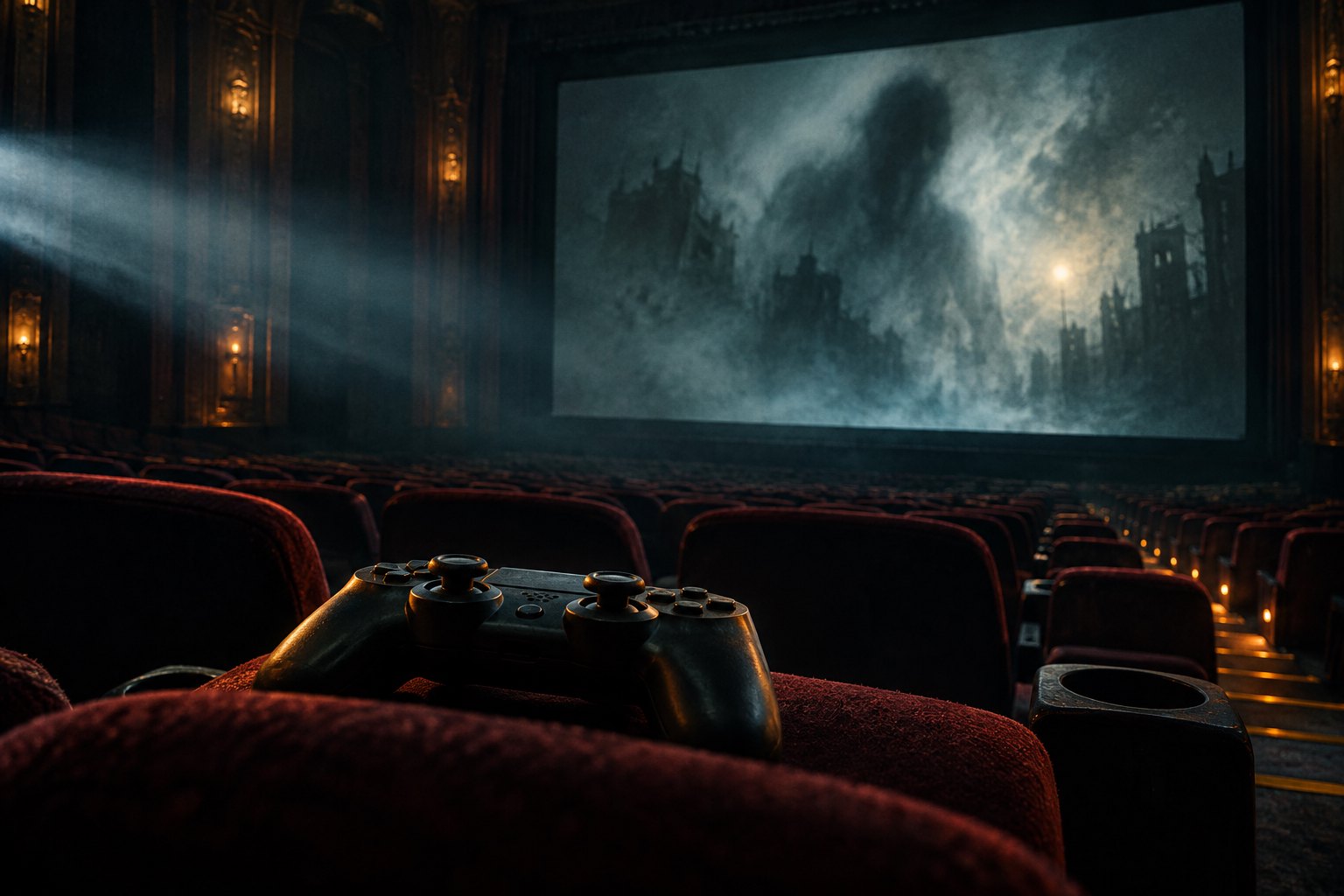
The Headliners is getting a feature adaptation from Studiocanal’s Sixth Dimension, according to Variety. For viewers following the horror video game’s move into movies, that is the central news. The more interesting critical question is what happens when a story built for participation becomes an experience in which the audience can only watch.
A horror game can make a decision frightening because the player must make it. A movie needs to make someone else’s decision feel equally urgent. That shift will be a useful measure of The Headliners: whether its characters can sustain the attention that interactive play gives players a direct reason to maintain.
This is a spoiler-free adaptation preview, not a review of a completed film. The discussion below evaluates the creative challenge raised by the announcement. It does not describe confirmed movie scenes, dialogue, performances, or an ending.
What the adaptation announcement establishes
The essential reported information is specific: Sixth Dimension, associated with Studiocanal, has set a feature adaptation of the horror video game The Headliners. That establishes the project and its source material. It does not, by itself, establish how the finished film will look, whose perspective it will prioritize, or how closely its narrative will follow the game.
A development announcement also should not be mistaken for a release notice. This preview offers no release date, cast list, production schedule, or viewing platform because those details are not established by the announcement discussed here. Readers looking for an immediate recommendation about whether to watch the movie will need evidence from the movie itself.
Still, the news creates a worthwhile subject for film analysis. Adaptation involves choices about what an audience needs to understand, what it should fear, and whose experience will organize those feelings. Those choices can matter more than the number of recognizable details carried across.
The first challenge: making another person’s fear feel personal
In interactive horror, attention has a practical purpose. Looking closely, hesitating, or taking a risk can affect what happens next. Cinema redistributes that responsibility. The filmmaker controls the view, while a character carries the consequences of action.
For The Headliners, my strongest hope is that the adaptation makes its central characters’ reasoning legible. A viewer does not have to approve of a dangerous choice to understand it. Curiosity, obligation, pride, and loyalty can all make someone continue when retreat appears sensible. The screenplay’s job would be to establish whichever motives actually belong to its story.
That distinction matters because fear alone rarely differentiates characters. Several people can react to danger with the same alarm. They become dramatically distinct through what each person considers worth risking, whom each trusts, and what each refuses to admit.
Our guide to finding a film’s theme through a character’s hardest choice offers a useful standard here. An adaptation’s meaning emerges through decisions and their costs. A speech explaining the theme cannot substitute for those pressures.
Perspective can do work that spectacle cannot
A film version of The Headliners will have to decide how much viewers know in relation to its characters. Sharing their uncertainty creates one kind of suspense. Seeing a danger before they notice it creates another. Neither approach is inherently superior, but switching between them without purpose can weaken both.
Consider the general cinematic problem of a doorway. If a camera shows what waits beyond it, the suspense becomes a question of when the character will discover the threat. If the camera stays behind the character, viewers must interpret hesitation, sound, and limited visibility. This is an illustration of technique, not a description of a scene in The Headliners.
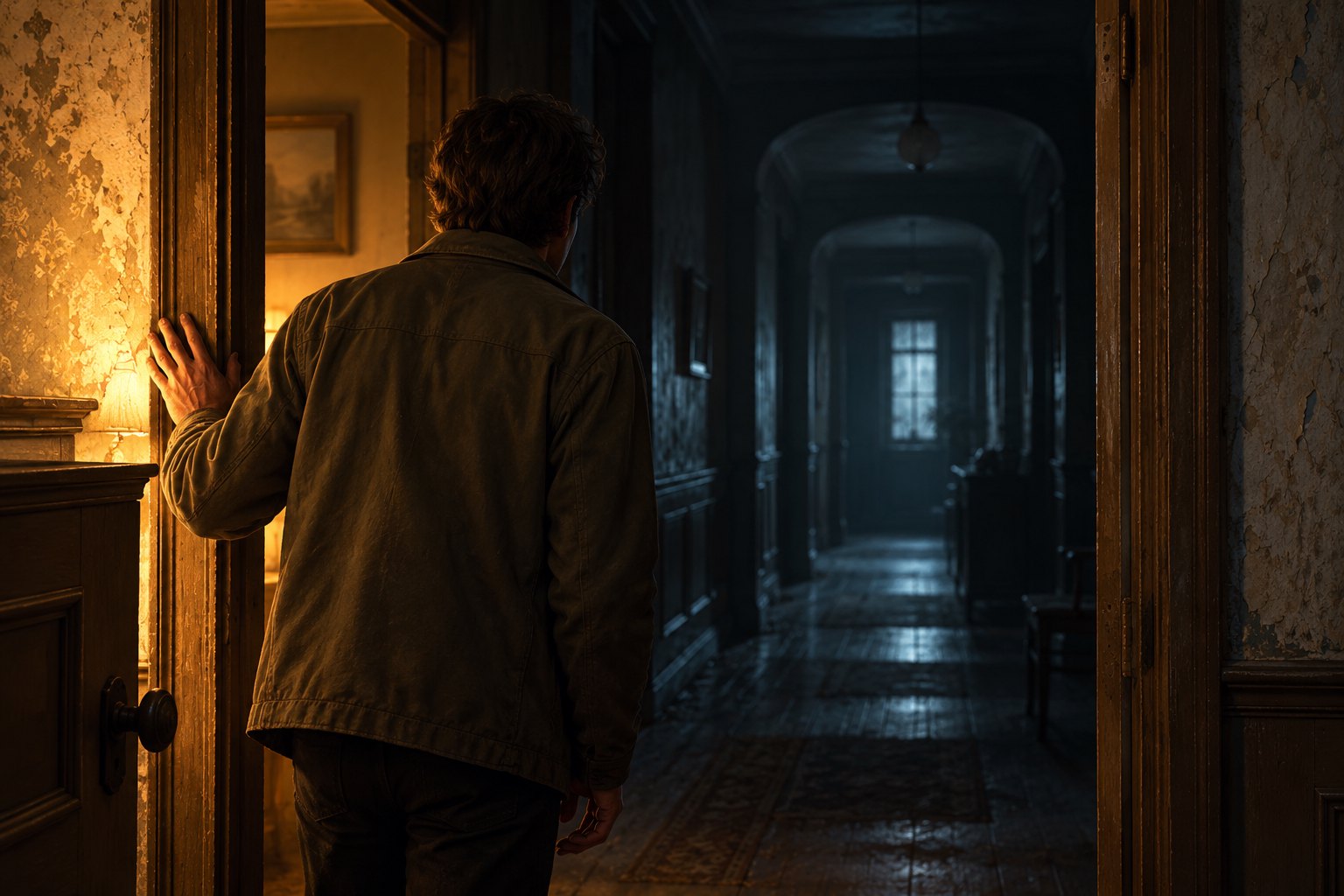
My preference would be for a visual approach that makes restricted knowledge feel deliberate. Darkness becomes dramatically useful when we understand what a person is trying to see. A withheld image becomes suspenseful when seeing it would change a decision. Otherwise, obscurity can feel like a temporary obstacle placed between viewers and the story.
Sound offers a related opportunity. An unseen disturbance can redirect attention without explaining its cause. The important question is how a character responds: listens, dismisses it, warns someone, or stays quiet. Technique becomes characterization when it exposes a pattern of behavior.
Faithfulness should include the experience, not just the imagery
Discussion of game adaptations often begins with visible resemblance. Familiar objects and environments are easy to compare. Emotional resemblance requires a more demanding question: does watching the film produce an experience meaningfully connected to what makes the source compelling?
That does not mean every interaction needs a cinematic equivalent. Repetition can serve play by allowing experimentation; repeated sequences in a feature need dramatic variation. A discovery can reward exploration in a game; a movie must place it where it changes our understanding or increases pressure.
The most useful standard for The Headliners would therefore be selective faithfulness. Preserve the qualities that give the property its identity, while building scenes that earn their place as cinema. Without verified details about the adaptation’s story, it would be premature to declare which specific elements meet that standard.
The distinction between recognition and emotional involvement also runs through our analysis of character relationships in Street Fighter. Familiarity can bring an audience into a film. Relationships give that audience a reason to care about what follows.
What would make The Headliners worth watching?
As more substantial material becomes available, three questions should guide expectations. Does the story establish a convincing reason for its characters to act? Do its suspense sequences change their circumstances or relationships? Does its presentation give newcomers enough context to care without requiring prior attachment to the game?
Those questions leave room for different tones and filmmaking styles. They also resist the temptation to evaluate a feature through isolated images. A striking threat can sell a premise, but sustained horror depends on how anticipation, discovery, and consequence connect.
The deeper opportunity in The Headliners is the transfer of responsibility from player to character. In a game, participation can make fear immediate. In a film, understanding another person can make that fear linger. Sixth Dimension’s adaptation will earn its strongest claim to cinematic life if the audience leaves thinking about why someone acted, and what that action cost, as much as whatever frightened them.
Original content by this site's editorial team. Published: October 22, 2026 at 01:10:51 PDT (Los Angeles time)