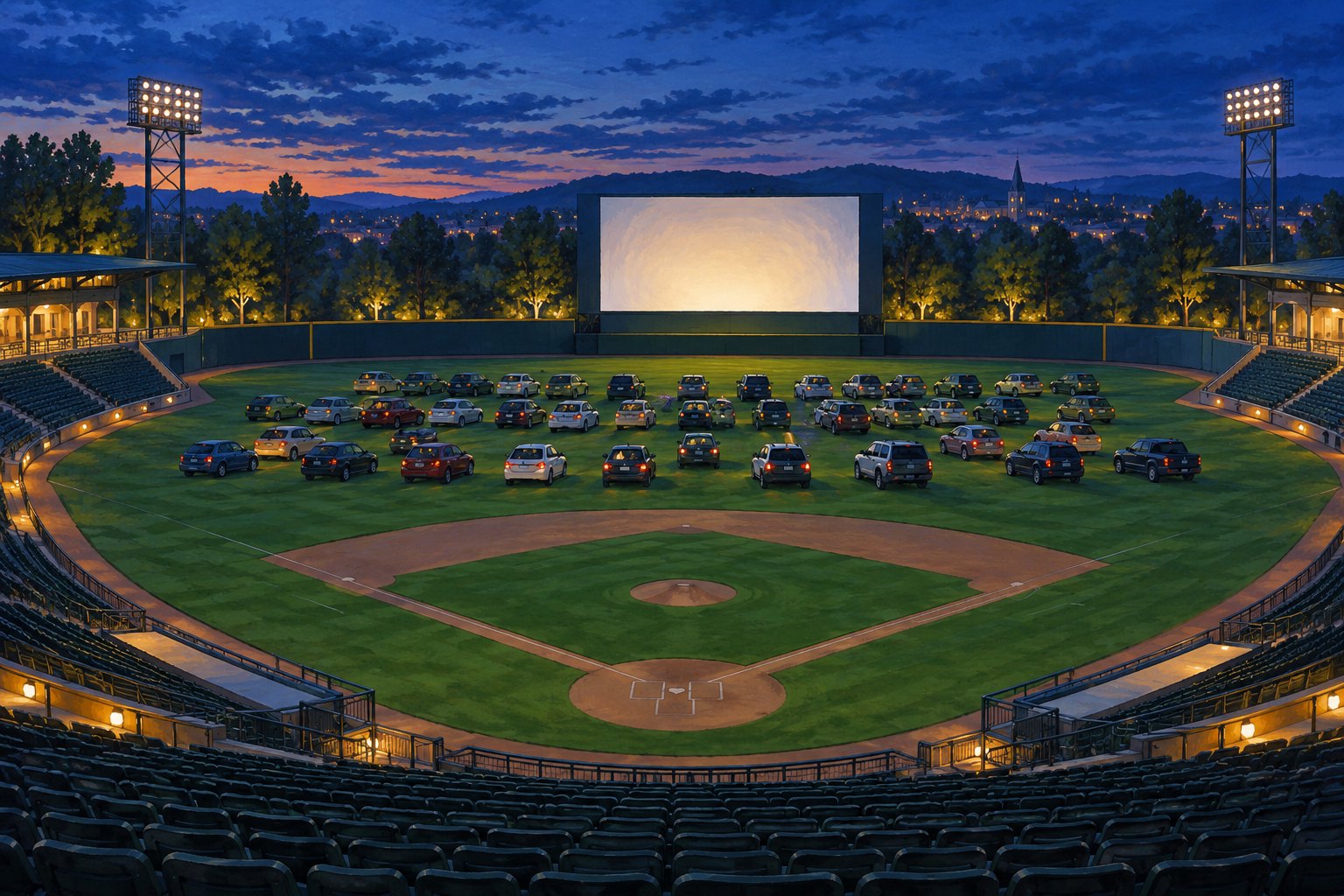
Springfield Cardinals leadership says the natural grass field can handle drive-in movie nights, according to KY3. For anyone wondering whether the playing surface rules out the idea, that is the team's stated position. It is an assurance about the field's suitability, however, rather than evidence of its condition after an event.
For moviegoers, the statement opens another conversation. A baseball field offers an appealing change of scenery, but the quality of a screening depends on what happens once everyone stops admiring the setting. Can viewers follow a quiet exchange? Can passengers see the whole frame? Does the evening give the film enough attention to become more than background entertainment?
This is commentary on the screening concept and audience experience, rather than a review of a particular film or an assessment of a completed event.
What the Cardinals' assurance establishes
The central reported fact is narrow: Springfield Cardinals leadership considers the natural grass capable of accommodating drive-in movie nights. That position deserves accurate attribution. It should not be stretched into a claim that every vehicle arrangement, weather condition, or frequency of use would produce the same result.
Equally, the presence of natural grass does not by itself establish that the proposal is unsuitable. A useful discussion needs more than confidence on one side and an alarming mental picture on the other. The relevant questions concern the actual operating plan: where vehicles travel, where they remain, how conditions are assessed, and who decides whether adjustments are needed.
Those are questions for the people responsible for the venue. This article does not independently establish the field's tolerance or the event's eventual effects. From an editorial standpoint, the strongest reassurance would connect management's judgment to an understandable plan and subsequent observations.
The field is part of the attraction—and part of the responsibility
The appeal is easy to imagine. A space associated with watching players becomes a place where the audience gathers around a different kind of performance. Familiar surroundings acquire a new purpose, and the trip itself can make a movie feel like an occasion.
That possibility is worth taking seriously. My view is that unusual screening venues earn their place when they add pleasure without treating their everyday function as expendable. Here, that means respecting both the people who want an outdoor movie night and those who expect a well-maintained baseball field.

A practical standard would be to ask how the surface is evaluated before and after use, and how any necessary work fits into the venue's responsibilities. These are proposed measures of accountability, not claims about procedures the Cardinals have announced.
The same respect for a place's ordinary purpose informs our commentary on filming disruptions in Livingston. Screen entertainment happens somewhere, and the value of an event includes how thoughtfully it shares that space.
A good parking space must also be a good seat
For a drive-in audience, the parking arrangement becomes part of the presentation. A space can be easy to enter yet offer a disappointing view. Organizers therefore have two related jobs: placing vehicles efficiently and giving the people inside them a useful relationship to the screen.
Consider a hypothetical group arriving in a small car. A taller vehicle ahead could change what they can see, while rear-seat passengers may have a different view from the driver. A layout that looks orderly from above still needs to be considered from those individual positions.
The editorial test is straightforward: judge the arrangement from an ordinary attendee's seat. Can viewers see the edges of the image? Would subtitles remain readable if a selected film uses them? Are instructions about vehicle height, positioning, and open liftgates clear before people settle in?
These details also matter to criticism. A filmmaker can place a reaction at the edge of a frame or let an expression carry a scene. A screening should preserve the audience's chance to notice that work.
Sound determines whether viewers can follow the characters
Movie nights are often promoted through their atmosphere, but dialogue deserves equal attention. Whatever sound system an organizer chooses, viewers need clear instructions and intelligible playback. No particular audio arrangement is assumed here.
A useful presentation check would include an understated conversation, rather than relying exclusively on a loud trailer or musical passage. The question is whether a viewer can understand a character speaking softly without struggling through the scene.
That matters because performance is frequently built from small decisions: a delayed answer, a change in emphasis, a sentence that trails away. When those details disappear, an audience can lose the reason a character seems hurt, evasive, or unexpectedly sincere. Protecting sound quality protects the story's emotional logic.
The setting should support the film selection
A baseball venue naturally invites thoughts about thematic programming. Still, selecting a film solely because it matches the surroundings would be a limited approach. The stronger question is what kind of attention the evening can offer, and which films would benefit from it.
A lively comedy could suit a sociable gathering. A more restrained drama could also work beautifully if the audience has a clear view and can hear its quieter passages. These are programming judgments, not a report of titles booked for Springfield.
Our discussion of choosing films from the Denver Film Festival lineup approaches a related issue: the best viewing choice connects curiosity with the experience a film asks of its audience. A distinctive venue should deepen that connection.
What attendees should confirm before making plans
The statement about grass does not answer the practical questions involved in attending. For any advertised screening, viewers should check the event's current instructions, especially these details:
- The program: Confirm the film title, rating, running time, and actual screening time.
- Admission: Check whether the price applies per person or per vehicle, and whether reservations are required.
- Viewing arrangements: Look for vehicle restrictions, parking guidance, and rules about sitting outside the car.
- Sound and access: Confirm how audio works and ask about accessibility arrangements relevant to your group.
- Weather changes: Check how cancellations, postponements, and refunds would be communicated.
These are planning questions, not confirmed terms for the Cardinals' event. Getting answers beforehand helps viewers decide whether the format suits them and reduces distractions once the movie begins.
The best outcome is an evening worth repeating
The Springfield Cardinals' assurance makes the field's capacity the immediate subject. The more interesting cultural question is what a successful use of that capacity would accomplish. A movie night could invite people to experience a familiar place differently while giving a film the shared attention that makes public screenings rewarding.
My standard would be an evening where the grass receives appropriate care, the arrangements make sense, and viewers can become absorbed in the characters. The setting supplies the first moment of excitement. The presentation must then give the movie room to create the next one.
Original content by this site's editorial team. Published: October 3, 2026 at 17:06:09 PDT (Los Angeles time)